What does the future hold for London? We've put together a timeline, stretching out into the 23rd century.
The chronology includes real-world plans, but also fictional happenings and skyline visions of the city's future. The fictional entries are given blue dates and italicised, just to be clear.
Obviously, the dates given could slip or projects could be cancelled, but this is our best stab at mapping out the future as it appears in mid-2026 (updated from previous versions in 2019, 2020 and 2023). Almost every non-fictional entry below has changed since 2023, due to delays or cancellations, showing just how tricky it is to predict the future.
2026: (28 November) The London Museum opens in its new home at Smithfield. Details here.
2026: London is a city 'all in the air', as aeroplanes and blimps weave between the tall buildings. That's according to this transport poster from 1926. Full story.

2027: London is on the brink of collapse in a worldwide infertility crisis. Asylum seekers are met with brutal treatment by the police state. Meanwhile, Battersea Power Station has been converted to an art archive. (Children of Men)
2027: London Tunnels, a vast complex of 1940s tunnels beneath Holborn, opens to the public as a visitor attraction. (They've been a bit quiet in recent months, so not sure about this one.)
2030: Fulfilling a pledge he made in 2025, Mayor Sir Sadiq Khan has ended rough sleeping in London.
2032: (Speculative) The House of Commons vacates the Palace of Westminster for up to 20 years while essential maintenance is carried out. The new chamber could be in Richmond House.
2032: Work on the British Library's extension is completed.
2032: An underground train packed with explosives is detonated in Westminster, destroying the Houses of Parliament. (V for Vendetta). Fortunately, MPs are still sitting at Richmond House and are thus unaffected.
2033: One London, previously called 1 Undershaft, is completed. It is now the tallest building in London, fractionally loftier than the Shard.
2034: The DLR extension from Beckton to Thamesmead opens.
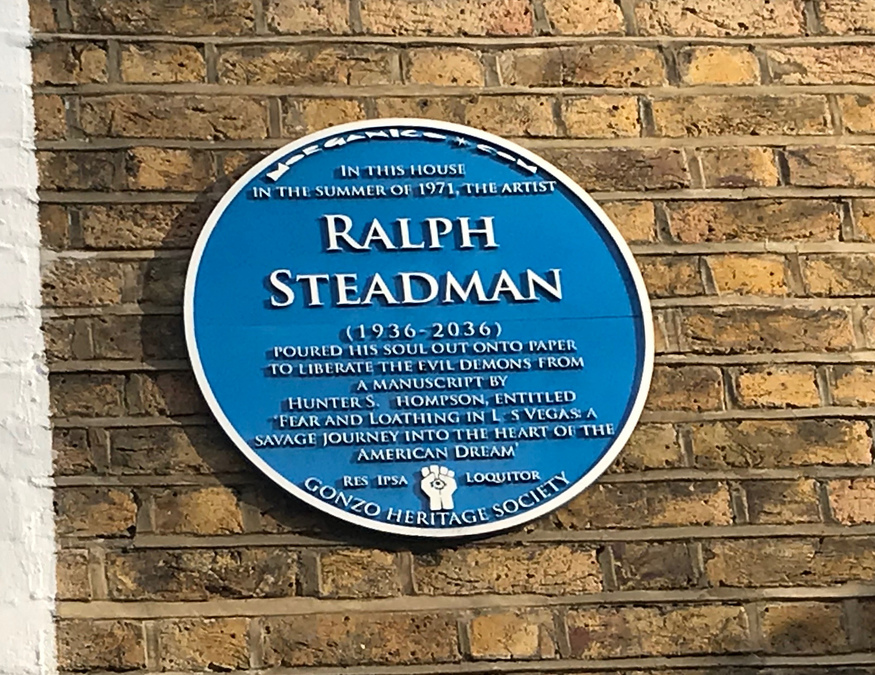
2036: Death of artist Ralph Steadman at the age of 100. This according to his own plaque in Parsons Green.
2036: London gets a major expansion of the Overground network, with the opening of the West London Orbital.
2037: High Speed 2 finally opens after years and years of delay. It links Old Oak Common to Birmingham. The new Old Oak Common station connects HS2 to the Elizabeth line and the Great Western Mainline.
2040: The Bakerloo line extension to Lewisham finally opens after years on ice, before construction finally started in the early 2030s (speculative).
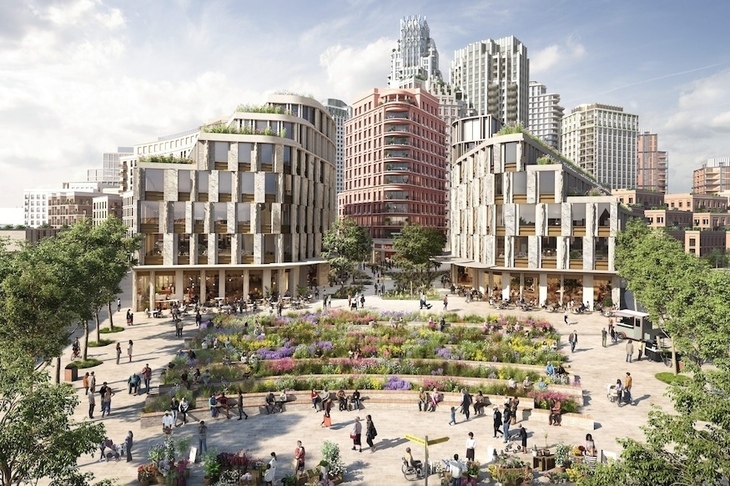
2041: The huge Earls Court redevelopment project reaches its conclusion.
2041: Soho tailor Tom Baker dies, according to his own plaque. Despite the coincidental name, he is not a Timelord.

2051: The largest celebration in London's history, as the city marks its 2000th birthday, plus the anniversary of the Great Exhibition (1851) and Festival of Britain (1951), as well as 150 years since the end of the Victorian era. We called it first, and expect a seat on the organising committee.
2052: The Bakerloo line is further extended to Bromley (highly speculative).
2060: Construction work begins on a replacement for the Thames Barrier.
2061: It's the 2000th anniversary of the destruction of Londinium by Boudica. Expect lots of holographic chariot-racing events along the Embankment.
2070: The Thames Barrier comes to the end of its expected lifespan. The replacement flood defences have to account for increases in sea level caused by climate change.
2092: London abandoned after plague wipes out almost entire population. (Mary Shelley's The Last Man.)
2100: London is dominated by dozens of Shard-sized statues in the form of classical sculptures. The structures were built to filter air quality. (The Peripheral)
2104: Londonist turns 100 years old. Happy future birthday to us. Matt says he's sorry he couldn't be there.
2117: Big Ben (rebuilt after the 2032 atrocity) has gone digital. Meanwhile, the West End is a forest of skyscrapers. One of several visions created to promote an interactive game. Good to see that early 21st century buses, drones and adverts are still part of the city's tapestry.

2121: London has become a blurry 'ecovillage', with its surviving landmarks re-erected in new places for some reason. This vision was created by Alan Marshall, and displayed at a previous Museum of London exhibition.

2145: Scientists visit the flooded remains of London after global warming causes sea levels to rise. (JG Ballard's The Drowned World)
2150: London is left ruined by alien invasion. The Dalek aggressors are eventually vanquished by pockets of resistance based in former Underground stations. (Daleks' Invasion of Earth 2150 A.D.)
2210: Birth of Amanda Grayson, mother of Ambassador Spock, who would go on to live on Marnock Road, Brockley. Her life is commemorated by a blue plaque on that street.

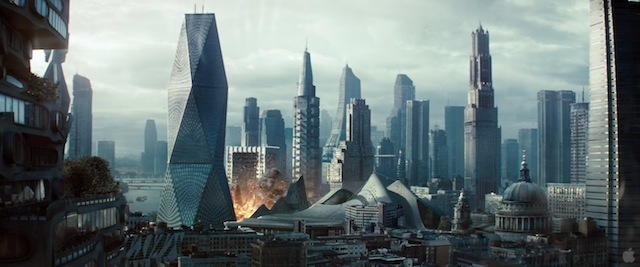
2259: Terror attack on a Section 31 facility by genetically engineered superhuman Khan Noonien Singh kills Admiral Christopher Pike. (Star Trek: Into Darkness, not necessarily in our timeline)
2999, 31 December: Crowds gather at Trinity Buoy Wharf to witness the final movements of Longplayer, the 1,000-year piece of never-repeating music, set in motion by Jem Finer on 1 January 2000.
6011: Back in 2011, experts warned that the Elizabeth Tower's slight lean could become a problem between 4,000 and 10,000 years in the future... so this is the earliest date.
802,701: Richmond, wider London and indeed the whole world appear to have reverted to green wilderness. Humanity has split into at least two sub-species known as the Eloi and the Morlocks. (The Time Machine by HG Wells)
4,500,000,000: The Sun implodes triggering a supernova. Any remnants of London are obliterated as matter from the star blasts into the Earth. There will be no further updates to this article after that date.
Anything to add? Suggest a future event from London fiction, or a real and expected development, and we'll add them to the timeline.