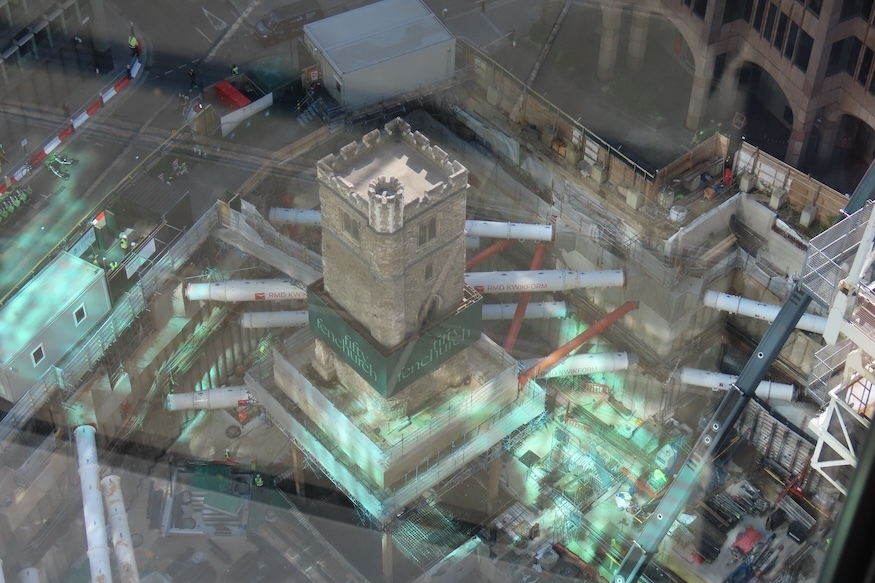
A very unusual approach to heritage conservation can currently be seen on Fenchurch Street.
A strange sight recently caught the eye of one of our team, while hanging out on the roof garden of 120 Fenchurch Street. It's an old church tower, raised on a stilted plinth, while all around is construction chaos. What's going on?
The church in question is the tower of All Hallows Staining, a remarkable survivor that predates the Great Fire, and remains with us from the 14th century. Consequently, it's got Grade I-listed status — one of the highest forms of conservation protection. It cannot be knocked down.
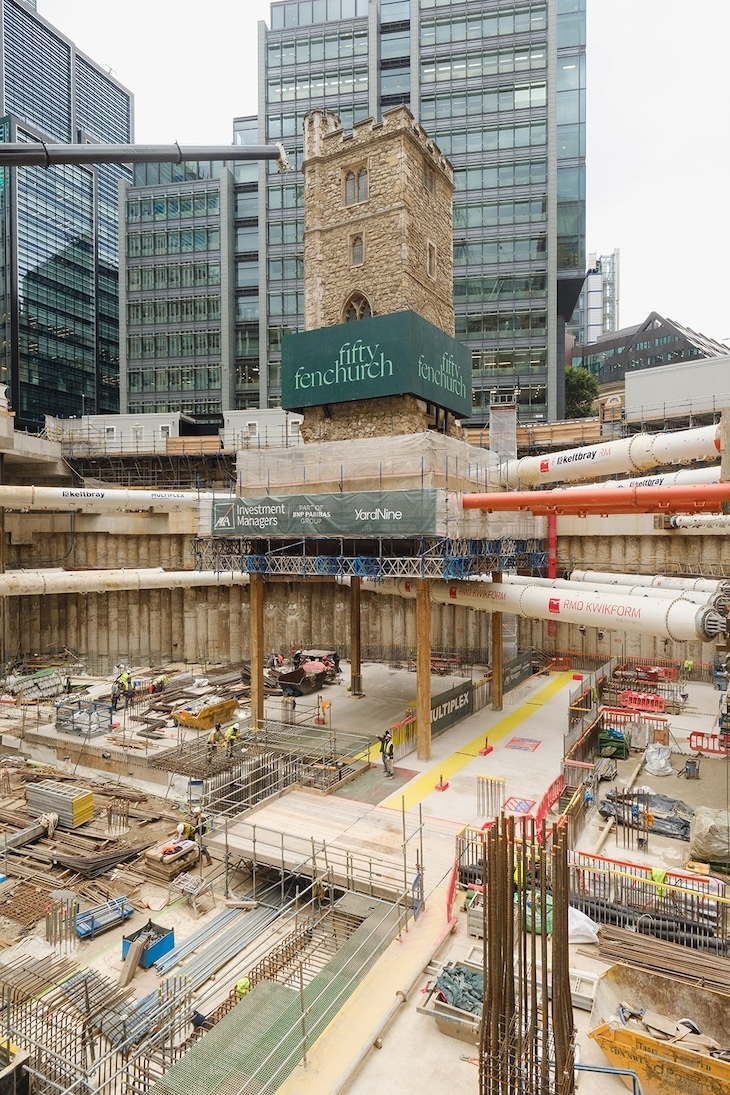
Hence, construction of a new mega-office on the site has had to tiptoe around this historic treasure. And underneath. We're told that 125,000 tonnes of earth has been scooped out in basement preparation. The site was also home to the Lambe's Chapel Crypt, dating from around 1200. This has been dismantled, but will be reinstated as part of the build.
The Fifty Fenchurch Street development is being carried out by AXA IM Alts — a leading investment management firm with the sort of name that Elon Musk might bestow upon one of his offspring. It comprises a new office tower (150 metres), as well as a new Livery Hall for The Clothworkers' Company (whose existing hall was demolished). It's all set for completion in 2028.
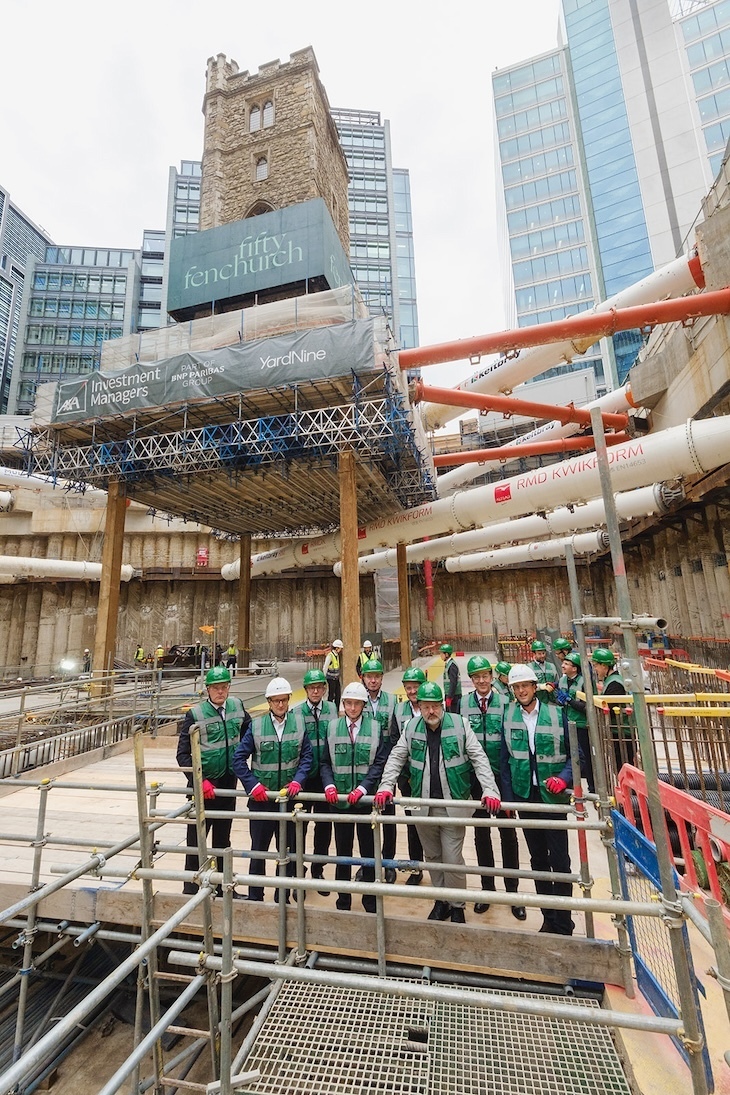
So how did the development get permission to dick about so intimately with these historic buildings? Part of the answer lies in what comes next. Previously, the church tower and hall had not been generally accessible to the public. Post-construction, they will be opened up to visitors, at the centre of a new public gardens.
In addition, the Lambe's Chapel Crypt is far from pristine. It was originally sited on London Wall, and has twice before been dismantled.
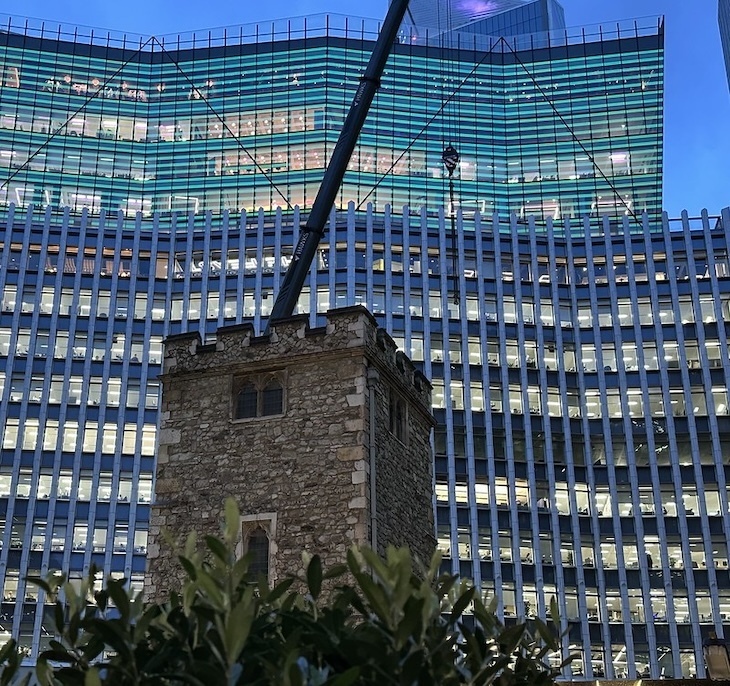
All Hallows Staining got its curious name as a reference to its stone construction (stone/stein/stain). Like the stone house in the Three Little Piggies story, its survived all that the world can throw at it, from fire to Blitz to redevelopment.
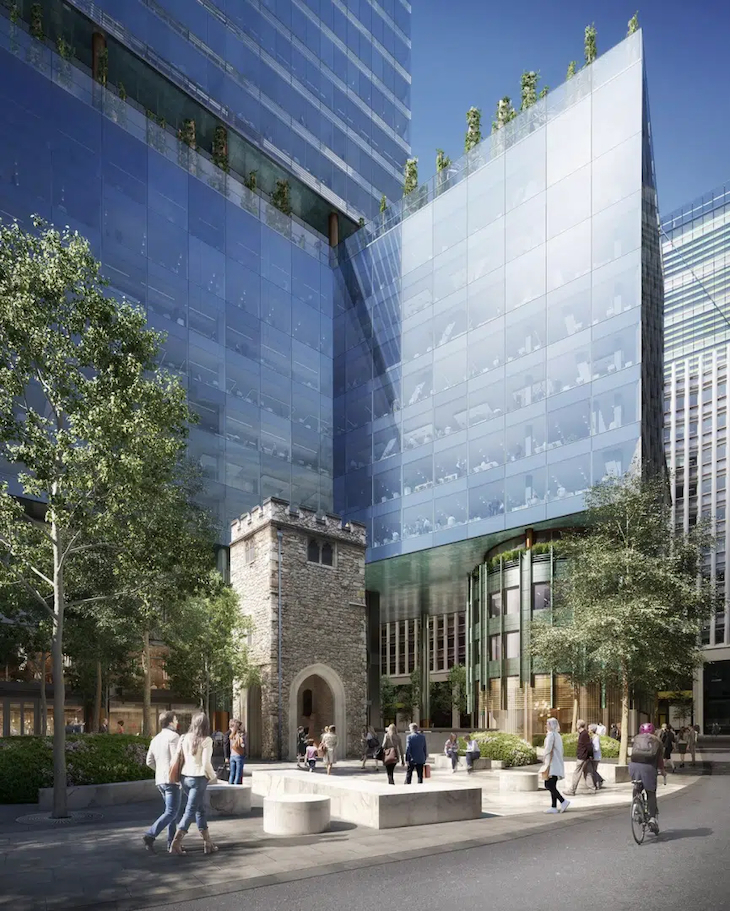
We eagerly await news of any archaeology from the site, and look forward to seeing the medieval buildings in their new setting.