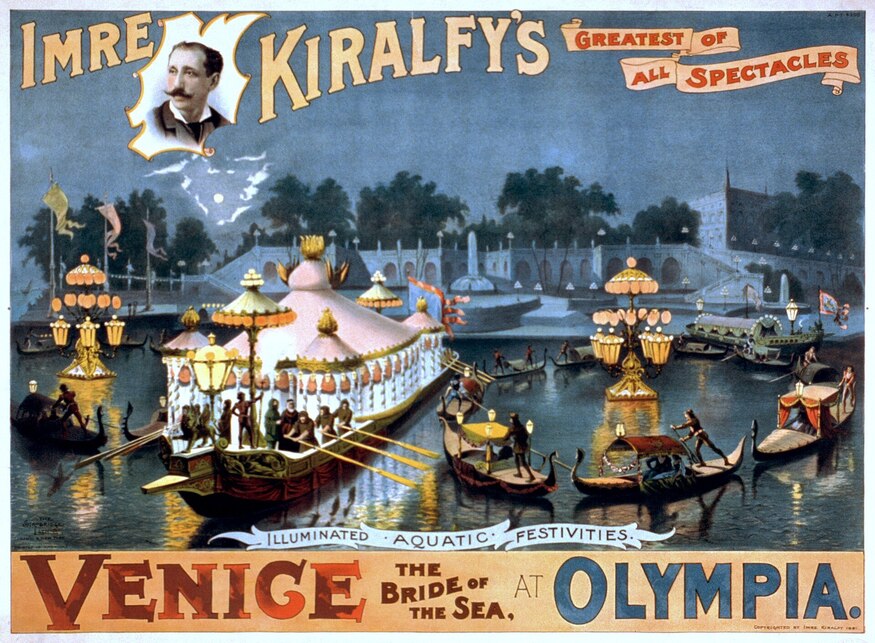
Rome wasn't built in a day, but a version of Venice was built in London in just four months.
To step into the Olympia Exhibition Hall on Boxing Day 1891 was to step halfway across the continent. A fleet of gondolas — manned by bona fide gondoliers sporting striped orange and black jerseys — waited to sweep you along the Grand Canal to the Café Rialto, where you could enjoy Italian dainties and wine; then onto the Venetian glassworks, Venetian pleasure gardens, and an art gallery bejewelled with choice specimens from the easel of the late Signor Faveretto.
Everywhere you looked, it was Venice: its houses, palaces, bridges, campaniles and waterways.
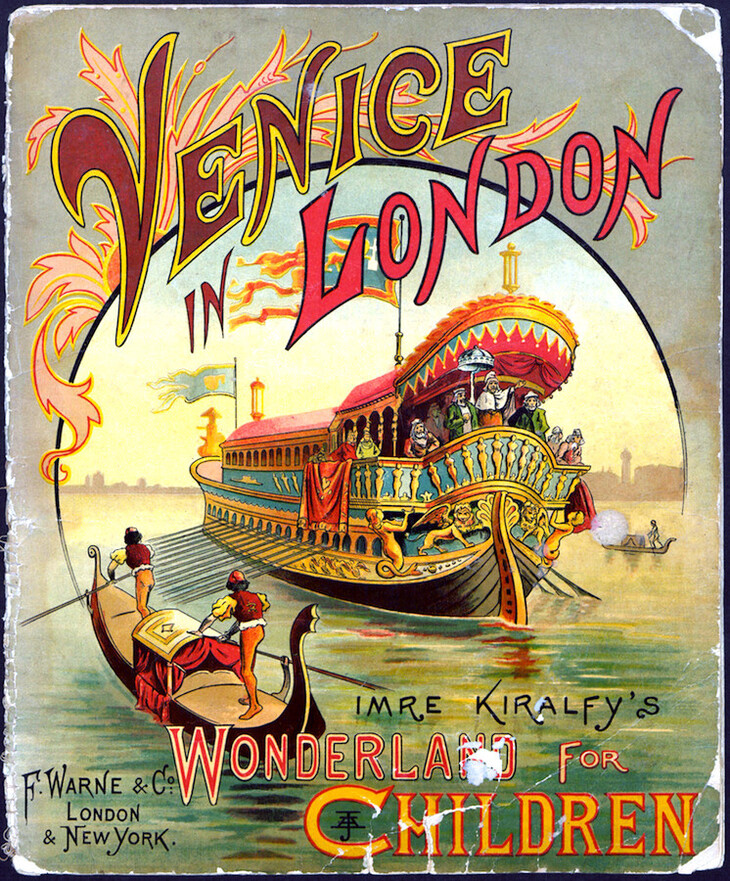
And things were just warming up. The main event on any given visit was Venice: The Bride of the Sea — "a Grand Historic and Romantic Spectacle and Aquatic Pageant" — overseen by the theatre impresario Imre Kiralfy. Set during the 14th century War of Chioggia, this was anything but understated; played out by some 1,400 performers, it featured triumphal processions, marine ballets, the launch of a ship, a grand banquet, a Venetian gondola regatta, and soldiers being hurled from bridges. "It is difficult," wrote the Times, "to give any idea of the gorgeousness from first to last of this performance." It cost a pretty penny too: today's equivalent of £4m.
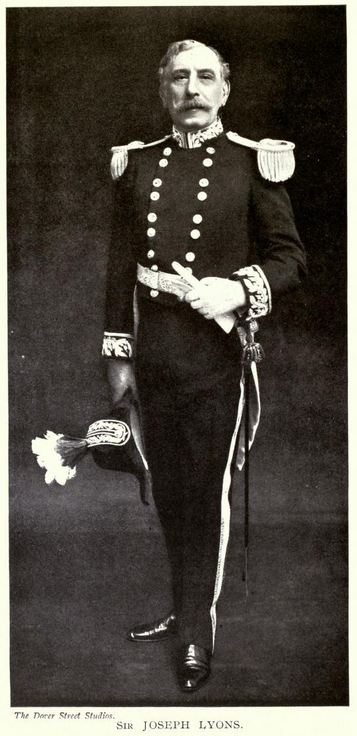
The two entrepreneurs behind the ambitious idea were the caterer Joseph Lyons and his business partner Harold Hartley. Fittingly, given the aquatic nature of the project, Hartley owned the Pure Water Company. In his 1939 memoir, Eighty-eight Not Out, he remembered:
One evening later on Lyons, who had never travelled, asked me if I had ever been to Venice, as he had an idea that it might be reproduced with its canals in an attractive form. Being well acquainted with Venice, I at once realised its possibilities and thus "Venice in London" was born. Visions of the Grand Canal, with its churches, palaces, and gondolas flashed through my mind.
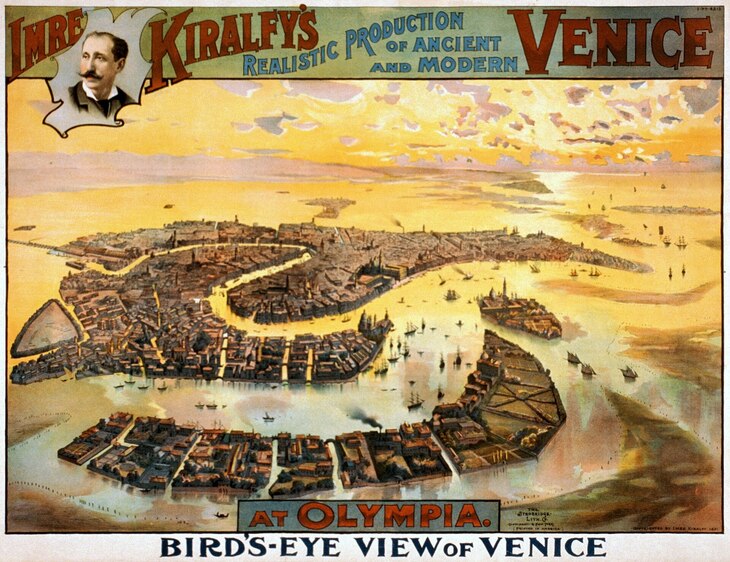
Venice in London was, naturally a great way for both men to flog their products on site; Hartley's Aerated Waters, Orange Champagne and Kola Tonic were on sale at the Olympia's bars, and you could get freshly-brewed pots of Lyons' tea, too. The aqueous theme continued in the ads that peppered the programme (available in its entirety online), including one for a Doulton toilet.
Victorian Londoners were enamoured by facsimiles of exotic locations — a few year earlier, a 'Japanese Village' was opened in Knightsbridge, only to burn down — and Venice in London was a triumph. The Daily Telegraph hailed it "the most marvellous show ever yet organised in any country or age", and some five million people were thought to have visited in its 13 months of opening — about 20 times the population of Venice in 2026.
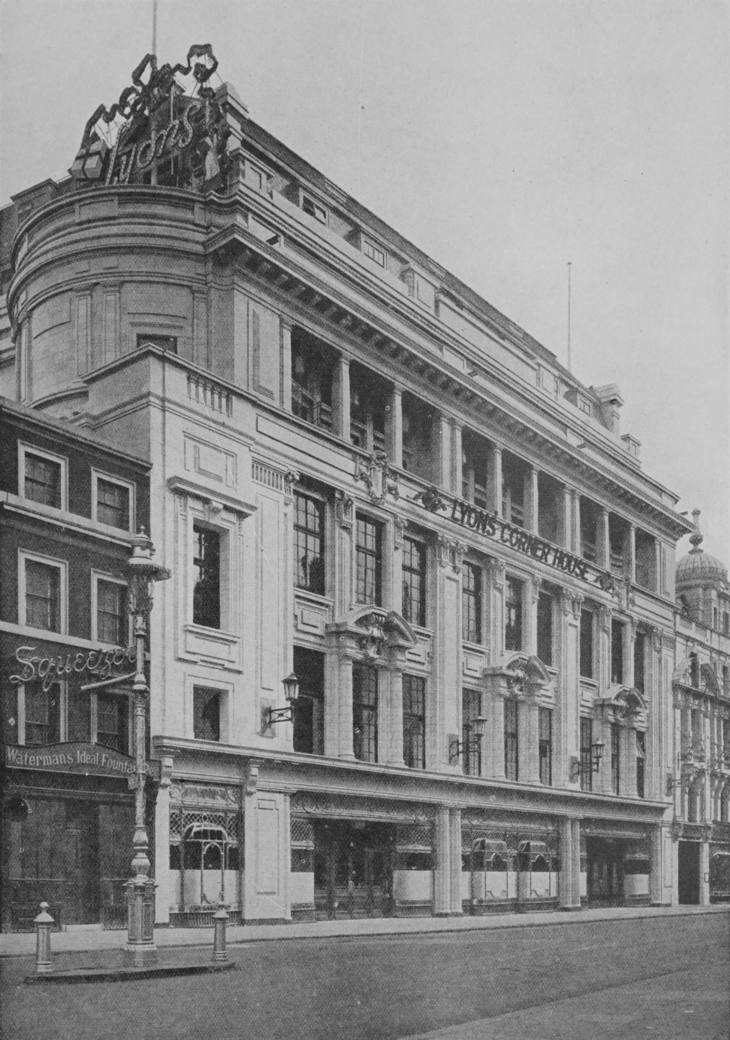
The show bowed out in January 1893, and was soon repurposed into 'Constantinople'. But London certainly hadn't heard the last of Joseph Lyons. The following year, he was conjuring up clamours of people again, this time with the opening of his first teashop on Piccadilly. This was the forerunner of the Lyons Corner House, to become a fixture of 20th century London. Anything involving water that this man touched seemed to turn to gold.