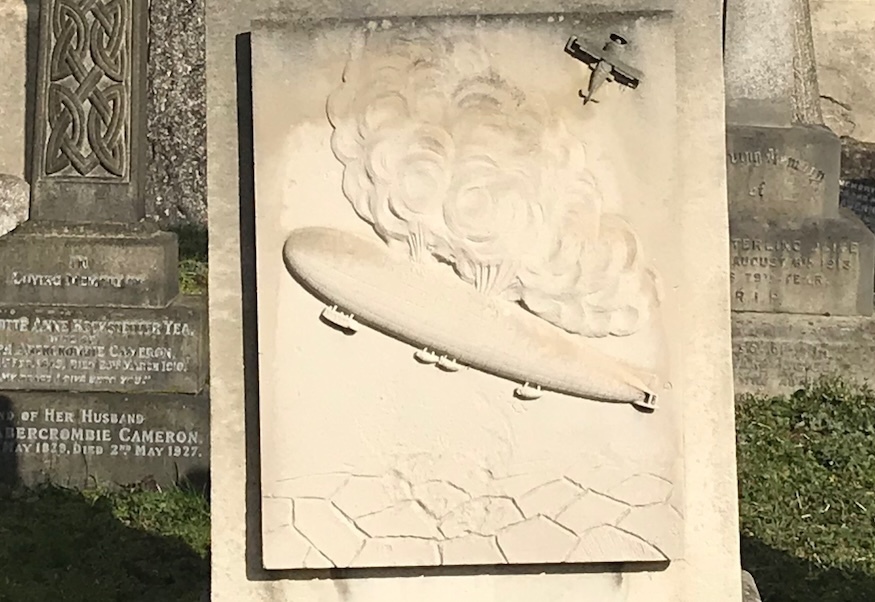
In Brompton Cemetery, an unusual reminder of an aerial menace.
Not many stonemasons, I'd wager, are asked to carve the image of a deflating Zeppelin. Still fewer get such a commission for a gravestone.
Perhaps the only such memorial in the world stands in Brompton Cemetery, west London. It adorns the grave of Flight Sub-Lieut Reginald Alexander John Warneford, who died in 1915 aged just 23. (Location map here.)
Warneford was an absolute hero. For months, Germany's fleet of Zeppelin airships had been terrorising England, and had made several raids on London. Nobody had been able to shoot these silent killers down. The aircraft of the time — little more than a decade after the Wright Brothers — had insufficient power to reach the altitude at which Zeppelins made their attack.
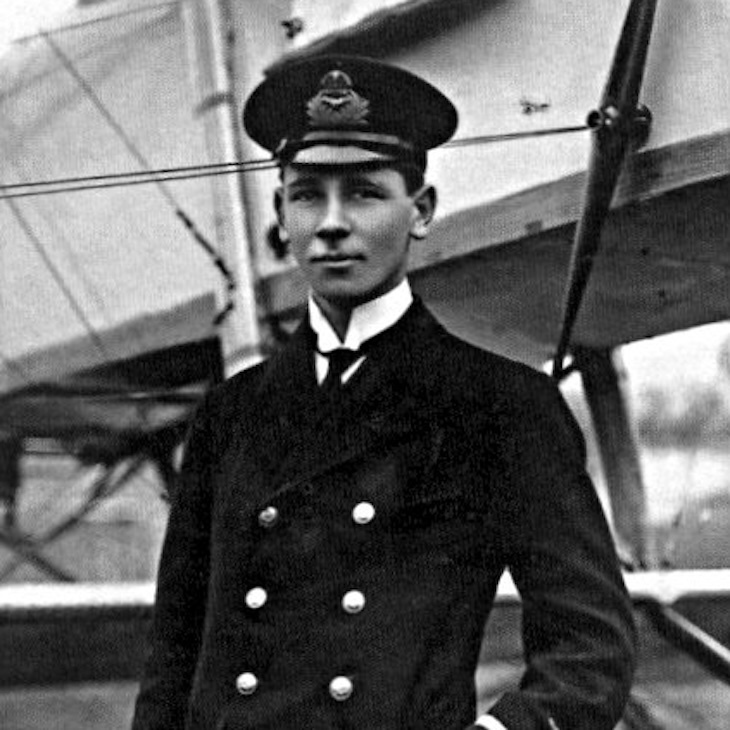
Warneford was more bolshy than most pilots. "This youngster will either do big things or kill himself," reckoned one of his training officers, if later accounts are to be believed. In the event, he did both.
On 7 June 1915, Warneford, who'd made attempts on Zeppelins before, spotted the airship LZ-37 making its way over Belgium on course for England, and at a lower altitude than normal. After evading its machine-gun fire, he was able to fly his small aircraft over the Zeppelin and unleash several bombs. One of these succeeded in breaching the Zeppelin's skin, and it went down in a ball of flames. This was the first time anyone had shot down one of the behemoths.
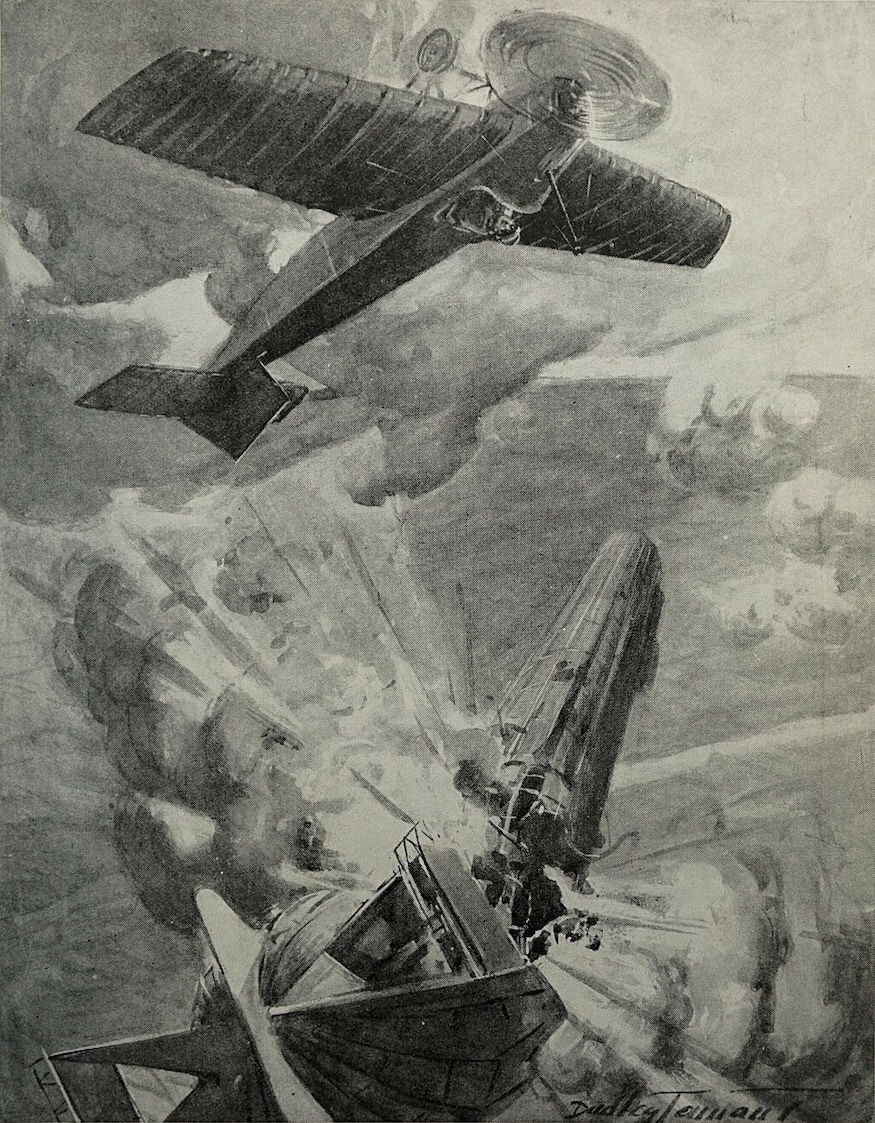
The heroic feat was not without consequences. The airship crashed down on top of a convent school killing two nuns (besides the eight Germans who went down with their ship). Warneford himself was almost among the causalities. The initial explosion had upended his light aircraft and he was forced to make an emergency landing behind enemy lines. According to the London Gazette of the time, the pilot was able to make repairs and take off again just as German troops arrived. "Give my regards to the Kaiser!", he supposedly shouted as, in scenes reminiscent of a Spielberg movie, he soared out over the sea to escape their clutches.
Warneford's achievement was widely celebrated. He was given both the Victoria Cross and the Légion d'honneur, and sent a personal letter from the King. It was even suggested in The Globe that his name should be perpetuated by making 'to Warneford' a verb, meaning to perform a gallant deed.
Sadly, however, the daredevil pilot didn't have long to enjoy the glory. Just 10 days after his strike on the Zeppelin, Warneford was killed during a test flight near Paris; slain by a maintenance mishap rather than by enemy fire. Le Figaro newspaper summed it up: "For a week Warneford lived in a blaze of glory, and now he dies the victim of ridiculous common place accident, far from the shot he had so often braved, and which he hoped to face victoriously in a few days".
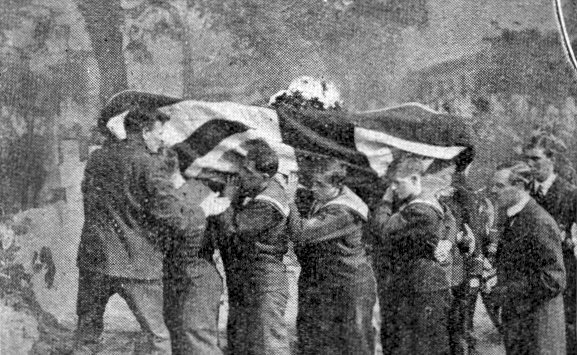
Instead, Warneford had a date with the soil of Brompton Cemetery. His funeral on 21 June was attended by an estimated 50,000 people, with many more visiting throughout the day to pay their respects. Among the forest of wreaths was one inscribed: "From a little one who might have been killed if that Zeppelin had not been brought down by this hero".
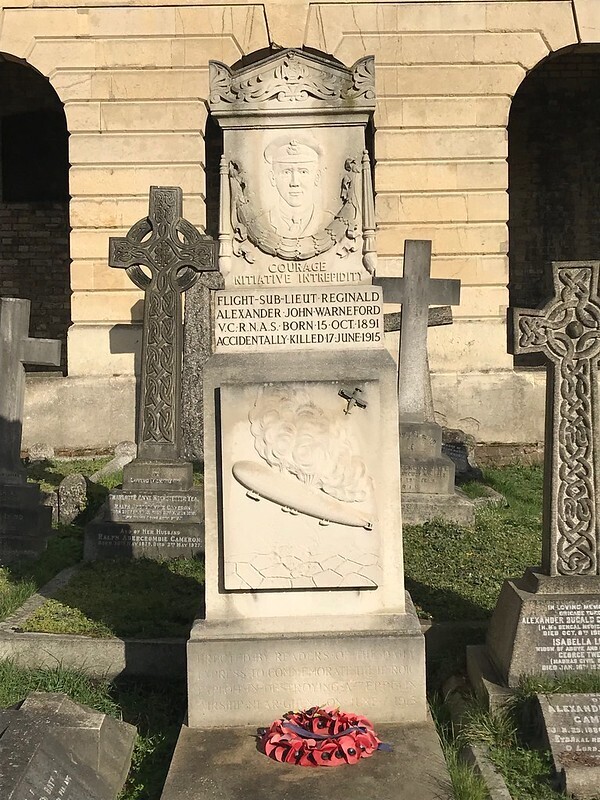
The remarkable gravestone showing the stricken Zeppelin was erected in 1916, and was sculpted by Frank Lynn-Jenkins. The artist had learned his trade from George Frampton, who'd recently designed the Peter Pan memorial in Kensington Gardens. While the master sculpted 'the boy who could fly', the pupil immortalised 'the boy who really could fly'.