This feature first appeared in November 2024 on Londonist: Time Machine, our much-praised history newsletter. To be the first to read new history features like this, sign up for free here.
The Lord (or Lady) Mayor’s Show is one of London’s most venerable traditions. Its origins lie in medieval times. It marks the occasion, each November, when a new Lord Mayor is sworn into office. With thousands of participants, including hundreds of horses, ambitious floats and three miles of route, things will inevitably go wrong from time to time. Here, we’ve rounded up some of the biggest bloopers from its history. But first… everyone loves a bad review.
Naysayers and grumpians
“Sir — one wonders how long metropolitan ratepayers will continue to endure the incalculable inconvenience and loss annually caused by this tomfoolery. What possible justification exists for its upkeep? From a spectacular point of view it is the most dismal of farces; economically it is rank insanity… It is doubtful if any single class of the community benefits by the show if we exclude the predatory collector of watches and trinkets.”
So opined an anonymous letter-writer to the Morning Leader in November 1909. The Lord Mayor’s Show was his (pronoun assumed) target. While much-loved today, the famous parade has drawn much criticism over the centuries. Another letter writer, this time in the Western Daily Press in November 1946, called for an end to the Show, which had “an element of childishness about it”. The most famous naysayer of all is diarist Samuel Pepys, who described the pageant in 1660 as “poor and absurd”.
A common criticism was the harm done to traffic flow, and to businesses along the route. Many had to close during the parade. “Why not suggest that the Lord Mayor’s Show should in future be concentrated at Olympia,” was one radical idea from the Mirror in 1927. Olympia was, and is, one of London’s largest exhibition centres, out in Kensington. “Those who wanted to see it could then go and see it, while it would not make the City man swear.” Happily, the Show did not decant to west London. From 1959, it was moved to the second Saturday in November, rather than the fixed date of 9 November, meaning it would never again clash with weekday traffic and commerce. Some people will always moan, but today the Show is widely considered a cherished part of the London calendar.
Elephant stampede
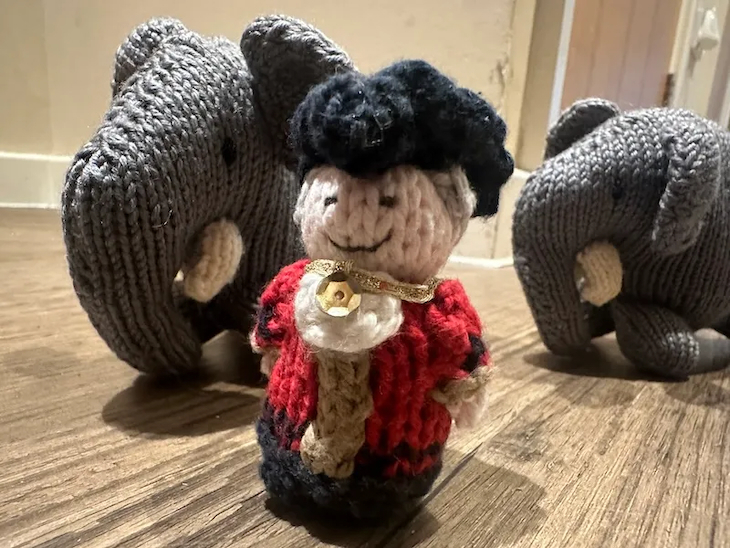
Did you hear about the time a lion caused an elephant stampede at the Lord Mayor’s Show? It sounds like an urban myth, but this bizarre incident really did take place. The culprit was a crimson model lion called Reggie, the mascot of King’s College London. In 1930, a group of students smuggled him out of the campus and on to the Embankment where the Mayor’s procession was in full swing. That year’s Show happened to include a group of four elephants. The parading trunksters took fright at the facsimile predator, and charged towards the crowd in panic. Fortunately, the beasts were becalmed before much harm could be caused, though some minor injuries were sustained. Reggie, however, took a pummelling. One of the elephants stepped upon the rubicund cat. Reggie survived the ordeal, and the repaired lion can still be seen today inside the Macadam Building off Strand.
Sodden marchers and hidden mayors
The pageantry takes place whatever the weather. Inevitably, this means that some parades can be rather damp affairs. In 1887, for example, “The rain poured down incessantly, and a draggle-tailed procession largely attired in cloaks and Mackintoshes was the result… The bunting hung heavy and limp, [and] the floral wreaths drooped”. Tragedy almost struck as the parade passed under Holborn Viaduct. The increased reverberation spooked the horses, who veered off wildly in panic. Fortunately they were brought under control before they could run into the crowds, who had assembled at this one point because of the shelter of the viaduct.
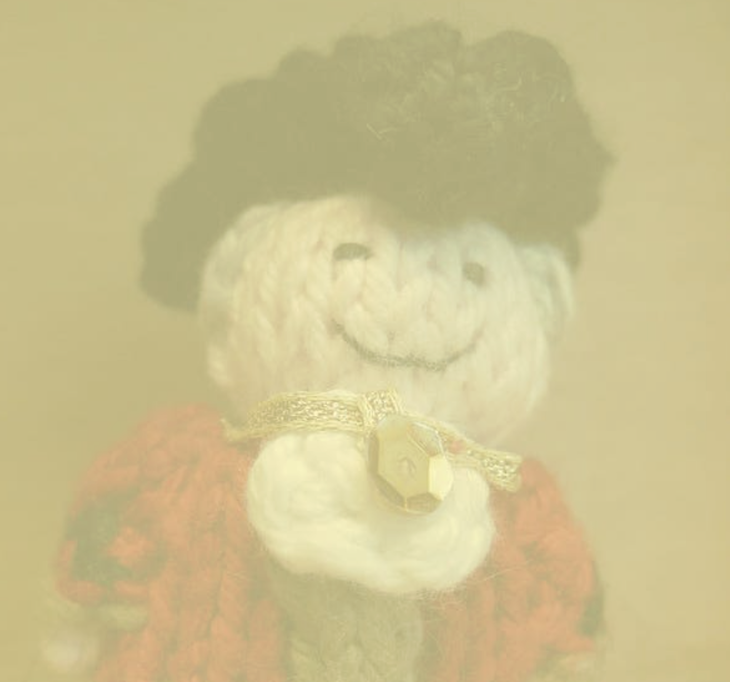
London’s famous fogs were also regular participants. The 1921 spectacle was marred by a fog “of the yellow-tinted order”, which obliterated views of the procession. “The music of the unusual number of bands in attendance alone afforded a clue to the whereabouts of the lost parts”. No photographs exist, but I’ve recreated the scene below.
Sixes and sevens
The word “float”, meaning a decorated vehicle in a parade, has its origins in the Lord Mayor’s Show. Until the 1850s, the Lord Mayor and his gilded entourage travelled to Westminster by boat. Thus did they float. Again, it sounds a bit like an urban myth, but I checked in recently with the parade’s Pageantmaster Dominic Reid, and he believes the story to be genuine.
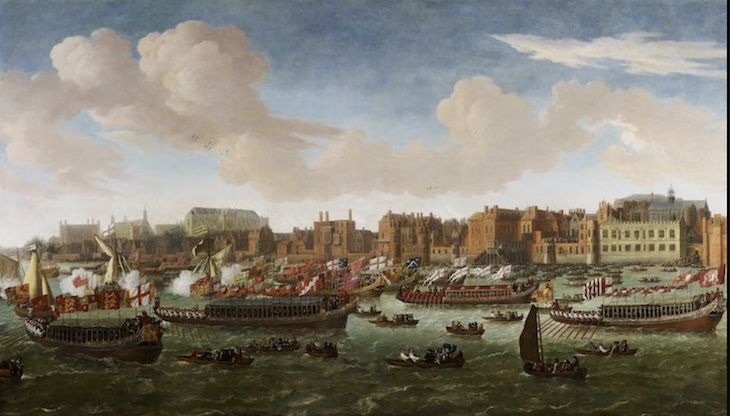
Anyway, not all floats floated so successfully. In 1483, the barges of the Skinners' and Merchant Taylors' Livery Companies collided mid-river while competing to pull closer to the Lord Mayor. The boats sank causing at least one death. Following this disaster, it was decreed that the two livery companies should alternate their positions of seniority each year, a tradition still kept alive today. Their ranks were 6th and 7th, and it’s said that this is where we get the expression “at sixes and sevens”.
Mayor’s mare scare
For all its glitz, the Show really has just one objective: to get the Lord Mayor safely to the oath-swearing at Westminster. In 1711, that objective was not met. Lord Mayor Gilbert Heathcote broke his leg when he was unhorsed during the parade. Unsurprisingly, the Lord Mayor was put into a coach the following year, and all years thereafter. That, at least, is the story told on the official Lord Mayor’s Show page. I’ve been unable to verify it. Heathcote, a well known figure in his day, is often referenced in old journals as the “last equestrian mayor”, but none of them mention a fall from his horse or a broken leg.
Slow coach
The most calamitous Lord Mayor’s Show in recent years happened in 2012 during the inauguration of Roger Gifford. On the return to Mansion House, his golden coach ceased up and would not budge. The embarrassed Lord Mayor had to continue his journey by Land Rover. Later inspections found that a piece of grit had got into an axle part, causing the wheels to jam.
Faulty train
In 1974, a tube train got stuck on the streets of the City. Not the tracks; the streets. London Transport had decided to show off its new rolling stock on the back of a lorry as part of that year's Show. The stunt was in anticipation of the Fleet line (eventually called the Jubilee line), which was then under construction. Unfortunately, the carriage proved too large for the City’s tight corners and had to be retired lest it get stuck. Ian Visits has the full story and pictures here.
The show doesn’t always go on
The Lord Mayor’s Show has taken place in one form or another for 800 years. Over that unfathomable time span, cancellations are vanishingly rare. But they have happened. Here are the ones known to historians.
1625: Cancelled because of plague
1639: Cancelled by Puritans
1665: Cancelled by the Great Plague
1666-1670: Cancelled because of the aftermath of the Great Fire. Heaped up materials for rebuilding made processions impractical.
1830: The parade was called off after fears of rioting, and intelligence of a planned attack on the Duke of Wellington, then Prime Minister. The Lord Mayor travelled to and from Westminster Hall in a private carriage with no fanfare, and no banquet to look forward to. According to press accounts, a few people turned up to goad the new Lord Mayor with cries of “No turtle today!”.
1852: The Duke of Wellington was again at the centre of a cancellation, this time owing to his own demise. The Iron Duke’s State Funeral filled the streets of the City, while the new Lord Mayor once again used his private coach to say his oaths in Westminster.
2020: Cancelled because of the Covid pandemic. A scaled-back version, to be restricted to Guildhall Yard, was comprehensively planned, but even that was called off after a fresh surge in infections. Lord Mayor William Russell made his way to the Law Courts in a motorised vehicle, and wore a suit rather than the robes.
2047: The procession is cancelled after The Right Worshipful GPT3000.2, the first artificial Lord Mayor of London, is accidentally deleted by water intrusion.