The surprising connections between London and Norway.
We've all heard of Tooley Street, the characterful road that slots between the Thames and London Bridge station. But did you ever wonder about the name? Turns out it's Norwegian.
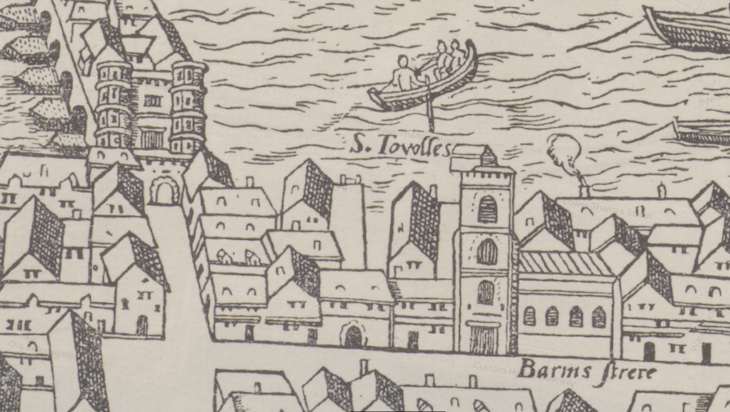
Tooley Street is a corruption of St Olave's Street. Try saying it fast. It comes out something like S’Tooley Street. We can see this gradual change from Olave to Tooley on old maps.
St Olave's was a prominent church on the south bank, next to London Bridge. Here it is in the 16th century 'Agas map', where it's labelled as St Tovolles.
The St Olave remembered in the church's name, and in Tooley Street, was Olaf Haraldsson, an 11th century King of Norway. Before he became king, Olaf/Olave/Olav helped Æthelred the Unready to recapture London from Danish forces. According to legend, Olaf's men tied ropes to the piers of London Bridge, then pulled away until the span collapsed, thereby weakening the defenders who had heavily fortified the bridge.
The history is murky, but Olaf's Thames adventure possibly formed the origins of the nursery rhyme 'London Bridge is Falling Down'.
Olaf went on to become not only a King in his own right, but also a Saint, thanks to his work in converting Norway to Christianity. At least five London churches were dedicated to his memory, including the one beside London Bridge and the one to the east of the City noted for its connections to Samuel Pepys.
This was arguably Norway's most important contribution to London's history, but the Scandi nation has always held close ties with the capital.
🇳🇴 Another medieval figure who loomed large over London was Cnut, famous for commanding the tides to recede (probably apocryphal), and his lewd anagram potential. Cnut was Danish rather than Norwegian. However, he later went on to unite Norway with his other Kingdoms in England and Denmark under one 'North Sea Empire'. Cnut captured London in 1016, and was crowned King of England here the following year.
🇳🇴 As a neighbouring country and maritime power, there would always have been some Norwegian presence in the bustling port of London. These communities needed churches, and they were well served by various iterations of a St Olaf. The current Norwegian church stands in Rotherhithe and was consecrated in 1927.
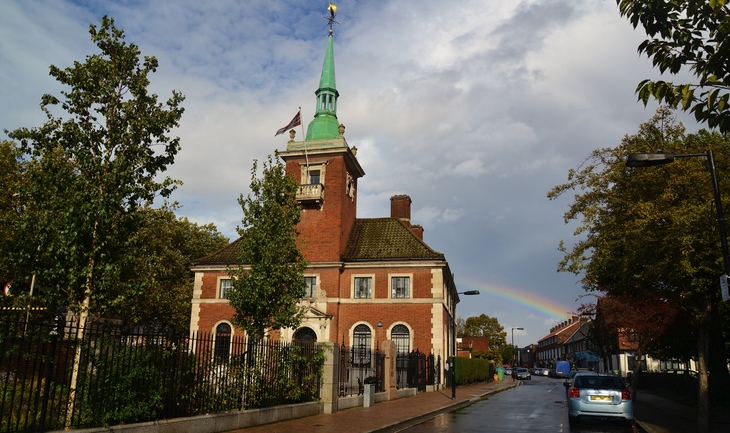
🇳🇴 Timber from Norway was a major plank of London's imports for centuries. From the 19th century, wood was shipped in to a dedicated basin in the Surrey Commercial Docks in Rotherhithe. Most of those docks have since been filled in, but a remnant of Norway Dock survives, now surrounded by housing.
🇳🇴 Another import was ice. During the 1850s and 60s, ice cream pioneer Carlo Gatti imported huge blocks, which were sailed across the North Sea, up the Thames and along the Regent's Canal to his ice wells in King's Cross. (You can still seem them at the London Canal Museum.)
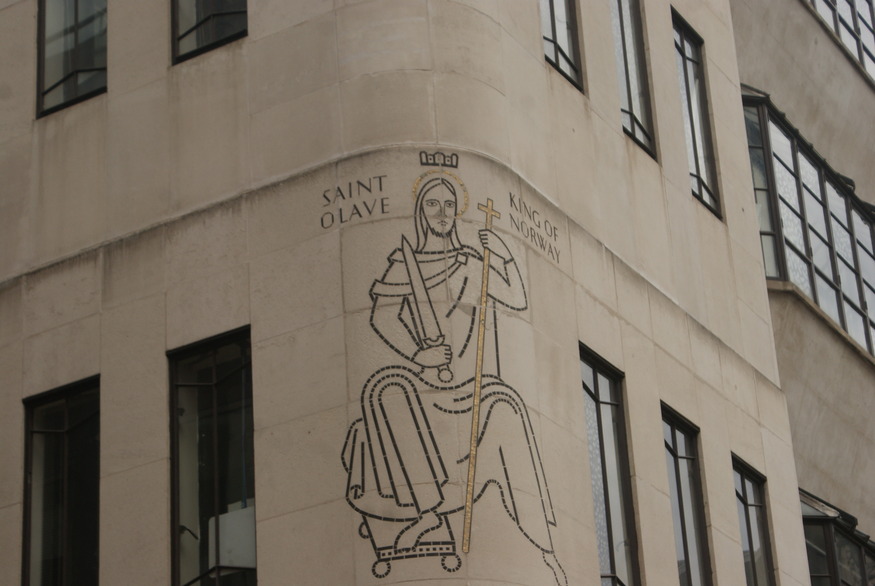
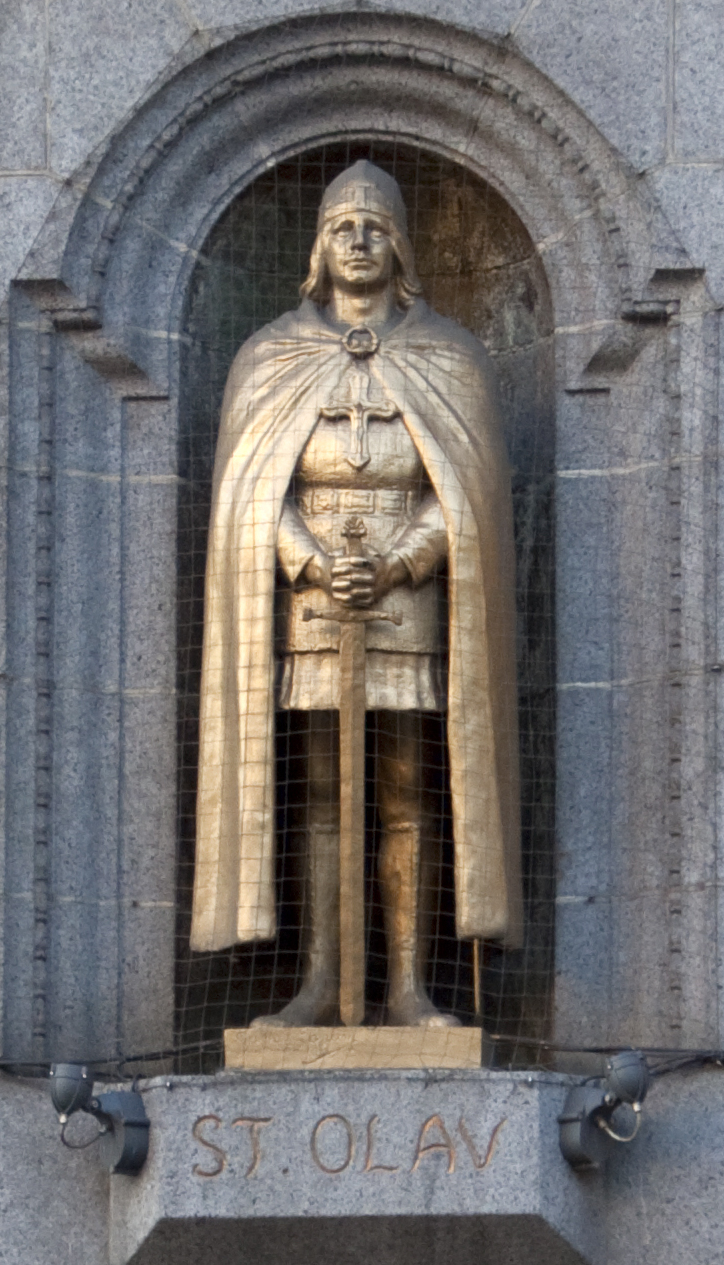
🇳🇴 Norway was invaded by the Nazis in 1940. Many political figures escaped and fled to London, where they continued as a Government in Exile. King Haakon VII led the government from his residence in Kensington (there's a blue plaque). They met regularly in Norway House near Trafalgar Square, where a golden Olav still gazes out:
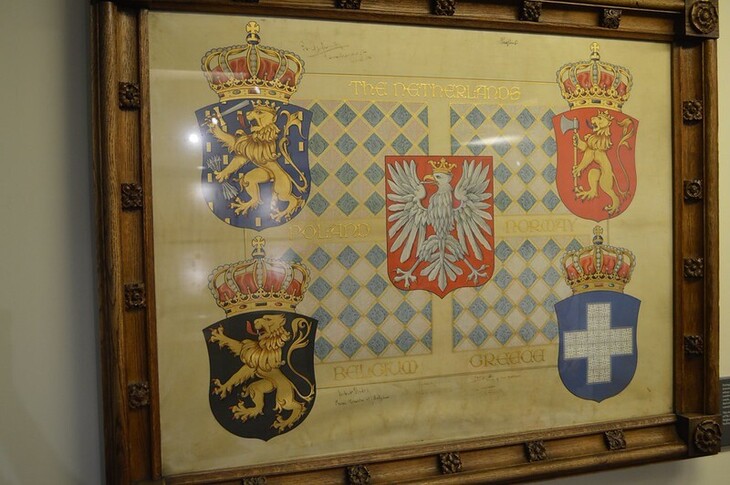
🇳🇴 Meanwhile, another plaque inside what is now the Supreme Court in Whitehall records the use of the building as a courthouse by the Norwegian Government in Exile, along with four other violated nations.
🇳🇴 Every year, Norway sends London a Christmas tree as a thank-you for assistance in the Second World War. This is the one erected in Trafalgar Square each December, to both acclaim and ungrateful sneering.
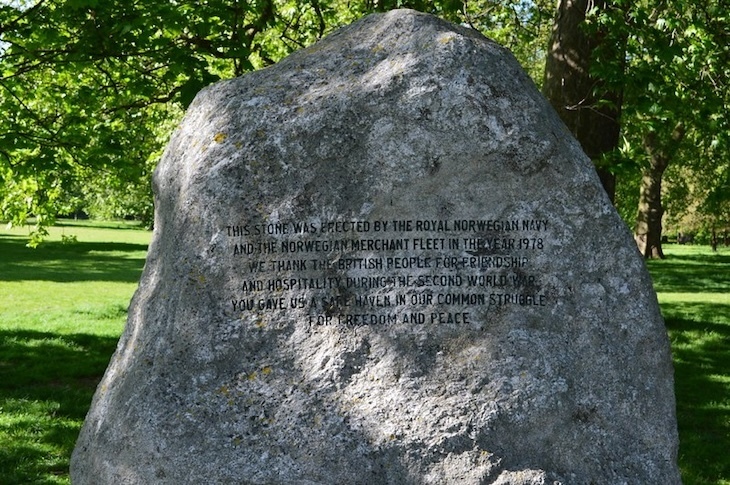
🇳🇴 Another, lesser-known 'thanks for the support' gift can be found all-year-round in Hyde Park. Here, just south of the Ranger's Lodge, stands a lump of pre-Cambrian granite, sent from Norway after the war in commemoration of naval ties.
🇳🇴 The Beatles recorded their most intricate ballad, Norwegian Wood, at Abbey Road Studios. The track included a sitar — the first time the instrument was played on a western record — which was bought on Oxford Street. According to Beatles lore, the title is a reference to cheap Scandinavian panelling, then in-vogue, including in the London bedroom of Peter Asher (brother of Paul's girlfriend Jane).
🇳🇴 Speaking of the Beatles, a short walk from Paul McCartney's St John's Wood home is the much-lauded Oslo Court Restaurant, which comedian Matt Lucas chose as his Desert Island Discs luxury. Not much doing in the way of Nordic food, alas; it's classic French fare here. Your best bet is ScandiKitchen.