How the Peter Pan statue flew all over the world.
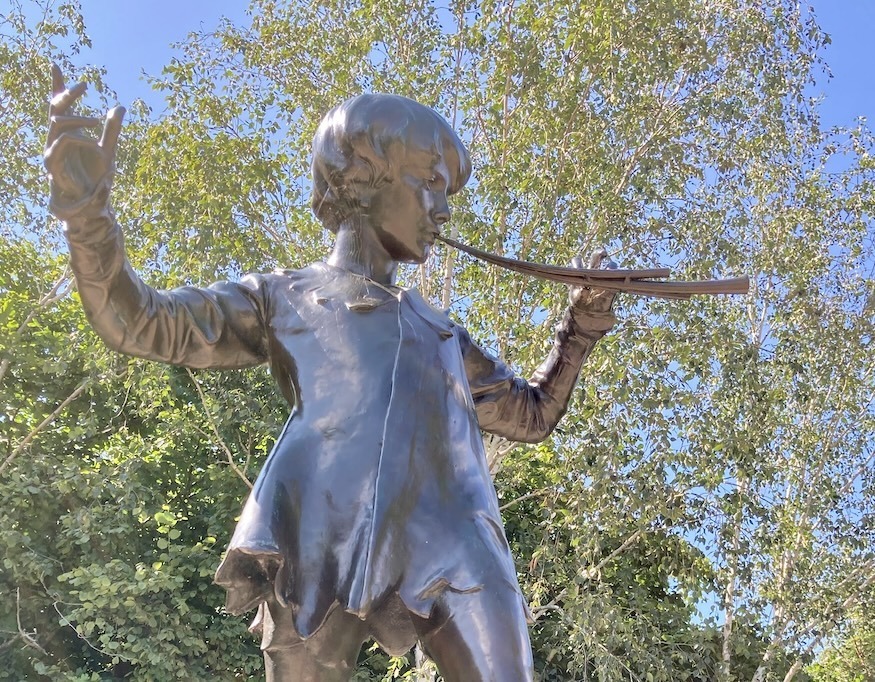
News reaches us that a full-size bronze replica of the Kensington Gardens Peter Pan statue is up for auction.
The original statue was erected in the royal park in 1912, close to the home of Peter Pan author J. M. Barrie. It appeared one morning, 'as if by magic', with no prior announcement. It's enchanted generation of children ever since (though it has also had enemies; the statue was tarred and feathered in 1928).
Peter Pan remains one of London's best-known statues. Less well-known is that it is one of many versions to stand around the world. Sculptor Sir George Frampton's original cast has lived a busy life, turning out six other full-size replicas in his lifetime. For the record, these are:
Brussels: In Egmont Park, gifted as a symbol of Anglo-Belgian friendship during the First World War.
Liverpool: England's other Peter Pan has stood in Sefton Park since 1928 (now beside the palm house), as a monument to the children of Liverpool. It's been vandalised several times, and the current version is a recast.
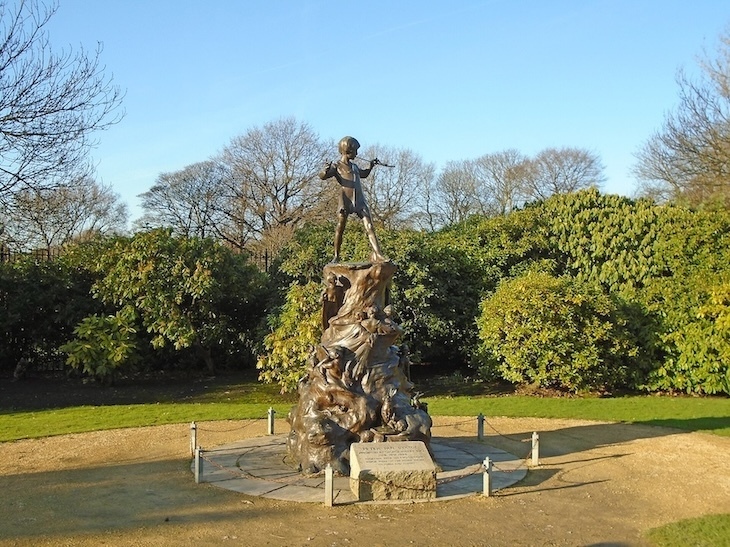
Perth, Western Australia: Erected in 1929 to celebrate Western Australia's centenary.
Rutgers University, NJ: The Camden, New Jersey campus has its own copy, erected in 1929, outside the Walt Whitman Arts Center.
St John's, Newfoundland: Erected in tribute to Betty Munn, a three-year old who died in a 1918 shipwreck.
Toronto: Another copy put up in 1929, in Glenn Gould Park (which for a time was known as Peter Pan Park).
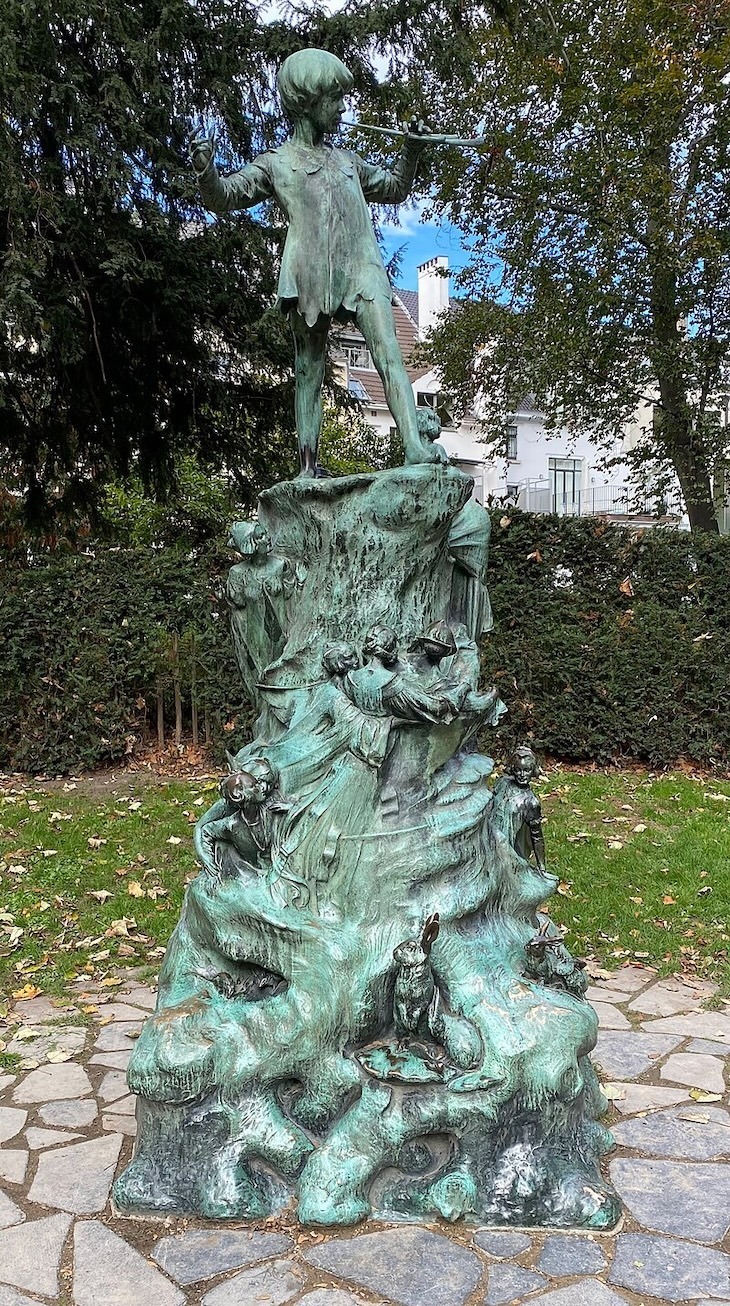
The seven early versions have since been joined by a further eight castings, created in the 1980s by the Morris Singer Foundry for the Fine Arts Society. These are mostly in private hands, though one now stands in Lister Park, in Bradford, with another going to Sefton Park to replace the damaged original.
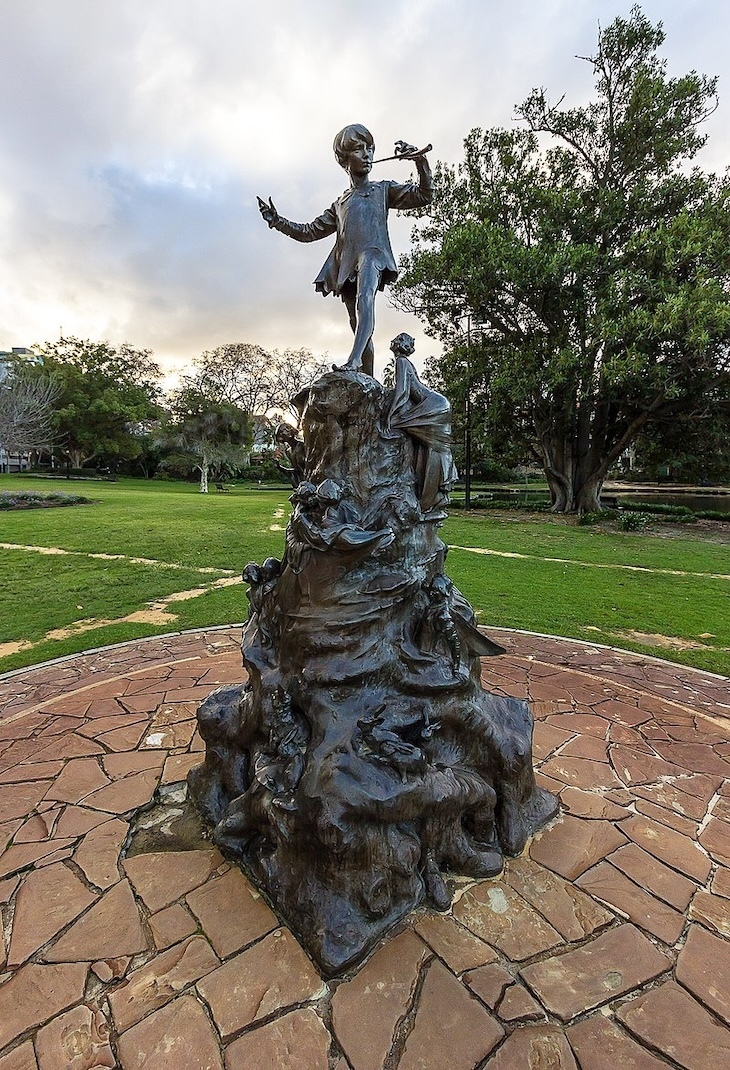
If you've got magically deep pockets, you can bid for your very own version on 11 September, when one of the 1980s castings goes to auction at Dreweatts.