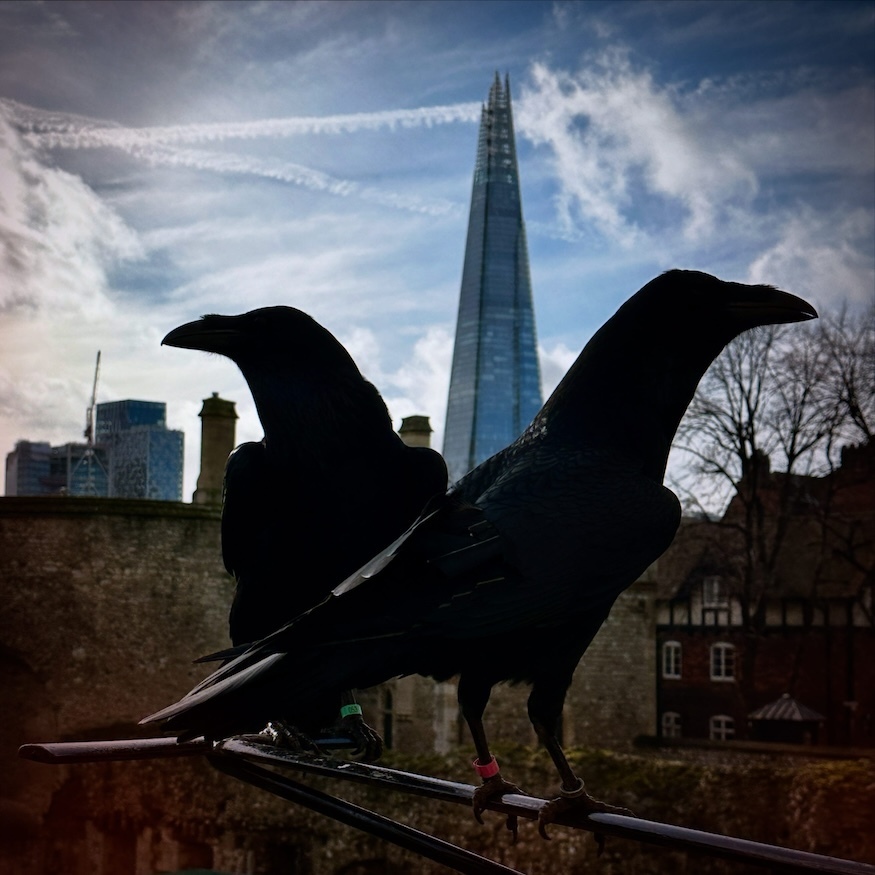
Ravens are back! The stocky, inquisitive birds have been seen in the wild in London... and we want your help to map them!
Today, the words "raven" and "London" inevitably conjure up images of the Tower of London. The fortress maintains a group of at least six who, according to tradition, protect the Tower from destruction. Consequently, their wings are clipped and they rarely leave the site.
Whizz back a few hundred years, however, and you'd have found ravens all over the place. The intelligent birds were common scavengers in medieval times, picking at human refuse and catching small mammals, much as foxes do today.
Then, they left. The last wild ravens were noted in Hyde Park exactly 200 years ago. A breeding pair were forced out of Hyde Park by a park-keeper in 1826 and, according to noted naturalist William Henry Hudson, that was the last the capital saw of wild ravens. Indeed, they've been absent from the entire south-east this past century or two. Until now, it seems...
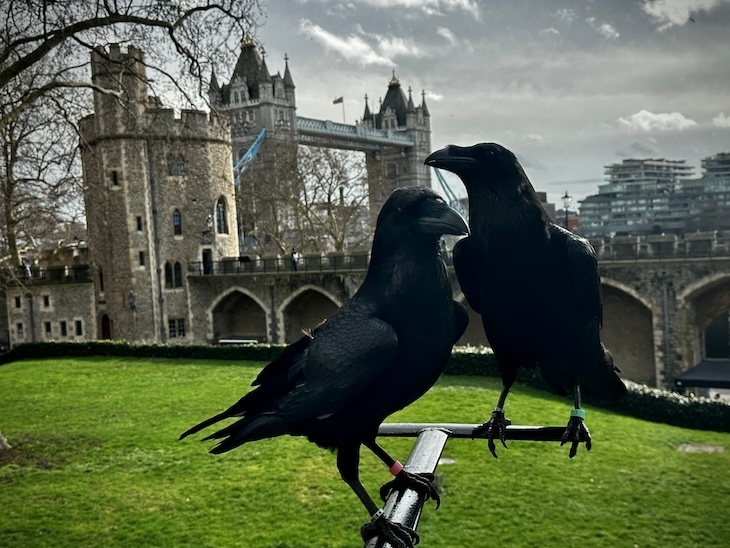
It's easy to find reports of "definitely a raven" all over the place, including in the very centre of London. Many of these sightings can be dismissed as mis-identified crows. The birds look very similar, after all, though ravens are much larger, with more powerful beaks.
Yet we can also find sightings by self-identifying birders — people who should be able to tell the difference. Writing on the Birdforum four years ago, for example, one keen ornithologist noted: "They are now regularly spotted in Richmond Park, Enfield, Rainham Marshes as well as parts of Harrow. Today I saw one in Rickmansworth."
Many sites confirm that Richmond Park is the best place in London to see them, including Royal Parks (who include ravens on their bird-spotting guide [PDF]), and Friends of Richmond Park:
Richmond Park is now home to ravens! At least two have been spotted around the Park in the past few years, and we have hopes of breeding. Look out for a huge, robust jet-black bird with a wedge shaped tail. 📷Jeremy Norris pic.twitter.com/oZVPWL4Rns
— Friends of Richmond Park (@FRPTweets) May 4, 2025
In 'official' birding circles, the London Natural History Society noted as early as 2011 that the birds were breeding in Berks, Bucks, Herts, Kent and Surrey, in a ring around London. Within Greater London, sightings were made in Rainham Marshes, Alexandra Palace, Totteridge Valley and Crayford Marshes.
Meanwhile, the RSPB confirms an eastward drift. Their distribution map suggests the birds have now reached the fringes of west London, having previously been common only to the east and north:
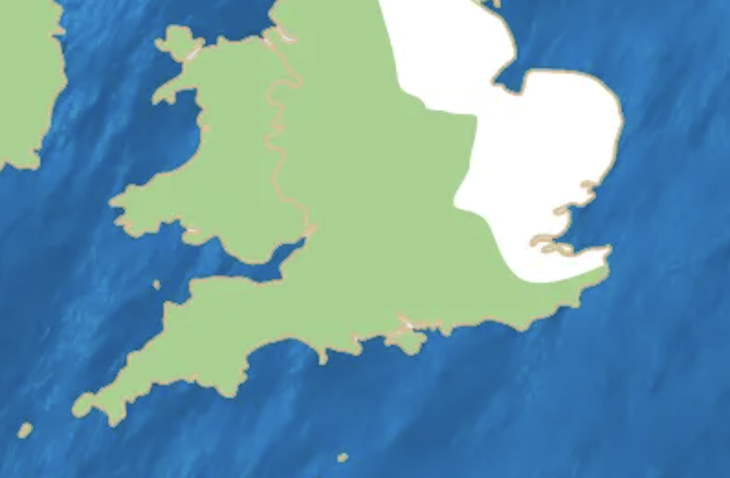
It seems clear, then, that the gregarious birds are now pecking away at the fringes of London, even if they're not yet nesting here. So, we want to know: have you seen a wild raven in London?
Know your ravens
Ravens are very easily mixed up with crows (and, to a lesser extent, rooks). Five key differences to look out for:
1. Size: ravens are, on average, about twice as big as crows, which is most helpful if you see the two species side-by-side.
2. Beak: ravens have larger, curvier beaks that look a bit like the head of a xenomorph from Alien... but with bristles. However, there's plenty of variation within the species, and the two can look similar from a distance.
3. Throat feathers: ravens often have somewhat ruffled throat feathers called hackles, while crows have smoother necks.
4. Tail shape: the best identifier is to look to the tail in flight. Crows have a classic fan shape, while ravens have more 'pointy' fans, sometimes described as a diamond.
5. The call: Corvids can make a range of noises (they can even mimic humans), but most commonly crows make a caw-caw sound, while ravens give out a croak.
This video provides an excellent summary, with help from a very charismatic raven:
I think I've spotted a raven!
Lucky you! But do tell us about it, as we'd like to put a map together. If you're reasonably sure you've seen a raven — not a crow — in the London area, please leave a comment below, or tell us on the social media threads for this article (links to come). If we get enough reports, we'll build a Google map of probable sightings.
Oh, and the ravens-at-the-Tower thing? Far from an ancient myth, the legend about the Tower crumbling if the ravens flee probably dates from the time of the Second World War. Indeed, there's no record of any raven at the Tower before the mid-19th century.