Continuing our beastly series of animals in London.
London has an uneasy history with whales. The capital was a major hub of whaling from the 17th to 19th century. The majestic animals were imported to Greenland Dock in Rotherhithe, and rendered into oil for lamps and machinery. Their baleen was used in corsets. That industry is, happily, long gone, but whales and dolphins live on in the capital in other ways...
See also: Around London in 12 elephants - Around London in 12 dragons - Around London in 13 tigers - Around London in 11 swans - Around London in 11 horses - Around London in 12 rabbits and hares - Around London in 13 pigeons - Around London in 14 lions and lionesses - Around London in 9 camels - Around London in 11 bears - Around London in 12 snakes - Around London in 11 mice and rats
1. The Embankment dolphins
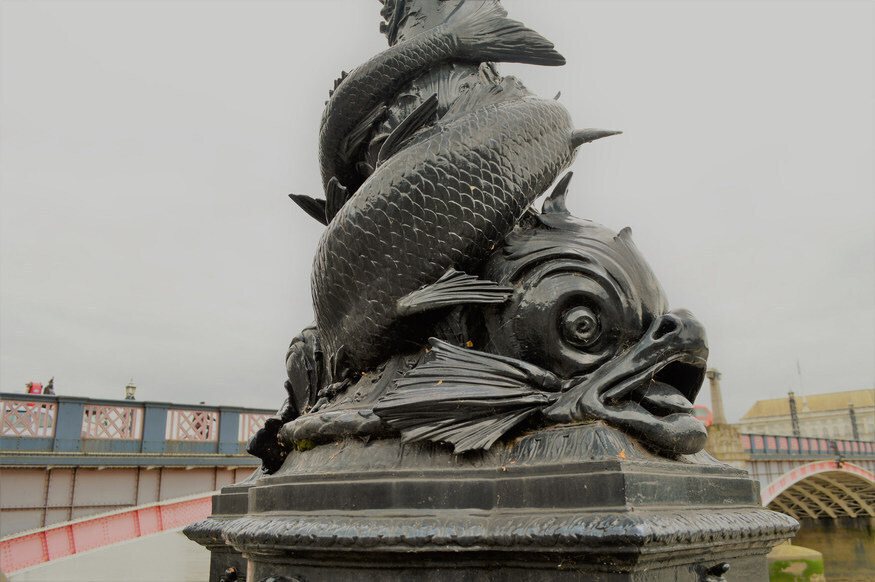
London's most-viewed dolphins are rarely recognised as such, on account of them looking nothing like dolphins. These characterful creatures ☝️ are present on all the Victorian lamp posts along the embankments. They have scales like fish. They have ribbed fins like fish. The mouth and eye both look fishy as hell. And yet these cast-iron creatures are officially described as heraldic dolphins. Like a captive orca, you'd have to jump through hoops of the imagination to see any resemblance.
2. The Thames whale
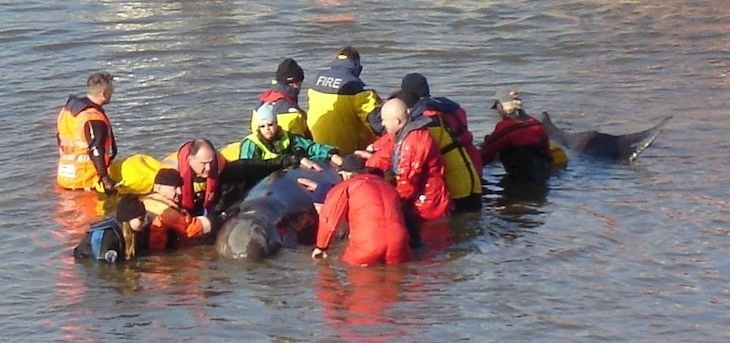
"By 'eck, you won't believe what's f*cking swimming in the Thames," John Prescott shouted to fellow MPs in one of the Palace of Westminster bars (or so we have it on good authority). Prezza was one of the first to spot the ill-fated northern bottlenose whale, which swam far up the Thames in 2006. The creature languished in the river for several days before would-be rescuers took her out of the water near the Albert Bridge and ferried her back to deeper waters. Despite their best efforts, she did not survive the ordeal.
While still uncommon, whales, dolphins and porpoises are now occasional visitors to the river, which is much cleaner than a few decades ago.
3. Hope, the NHM whale
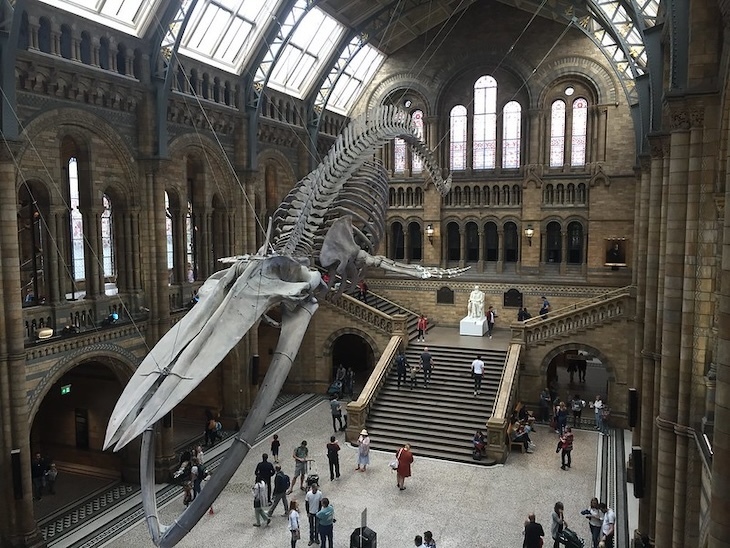
Something of an outcry ensued when, in 2017, the Natural History Museum's iconic 'Dippy the Diplodocus' cast was removed from the main hall. Happily, it was replaced by something even more magnificent: the skeleton of a blue whale, dubbed 'Hope'. Virtually nobody visits the NHM without photographing it.
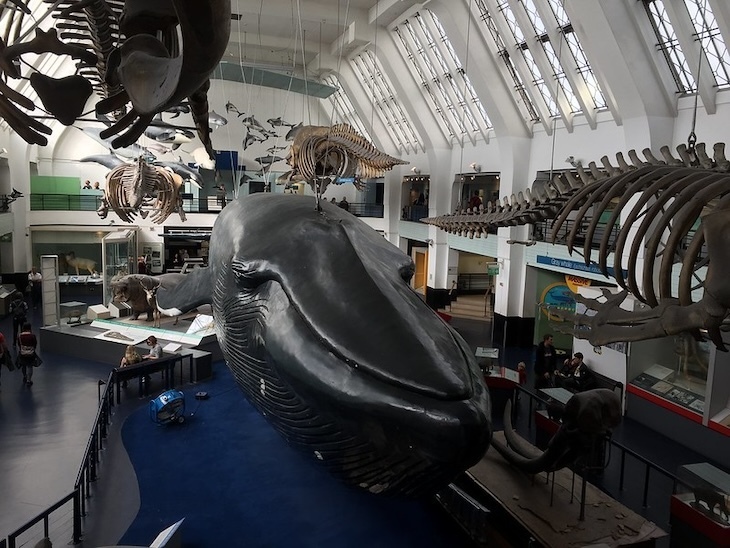
A lesser known whale, complete with simulated flesh, can be found in the Mammals Gallery.
4. Boy With a Dolphin
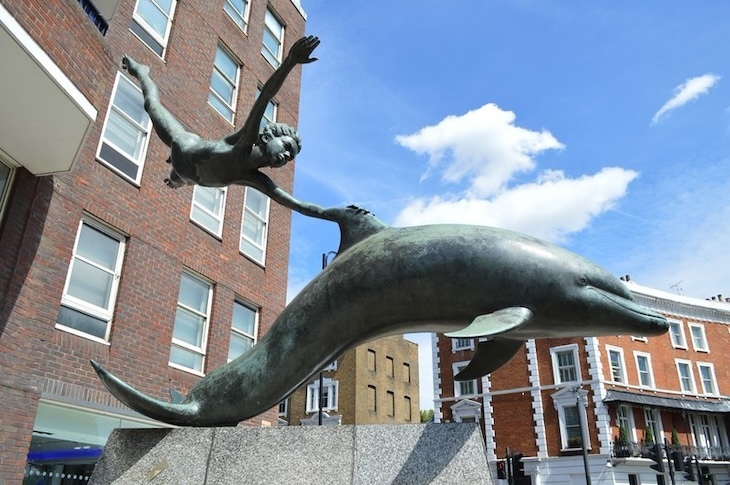
This free-flowing sculpture at the northern end of Albert Bridge, Chelsea, was created by animal-loving sculptor David Wynne in 1974. The Peter-Pan-like boy is modelled on Wynne's son Roly, one of the founders of rock band Ozric Tentacles (after Roly took his own life in 1999, the sculpture was dedicated to him). In further trivia, David Wynne is the man who introduced the Beatles to the Maharishi Mahesh Yogi... but all of this has very little to do with cetaceans.
5. Girl With a Dolphin
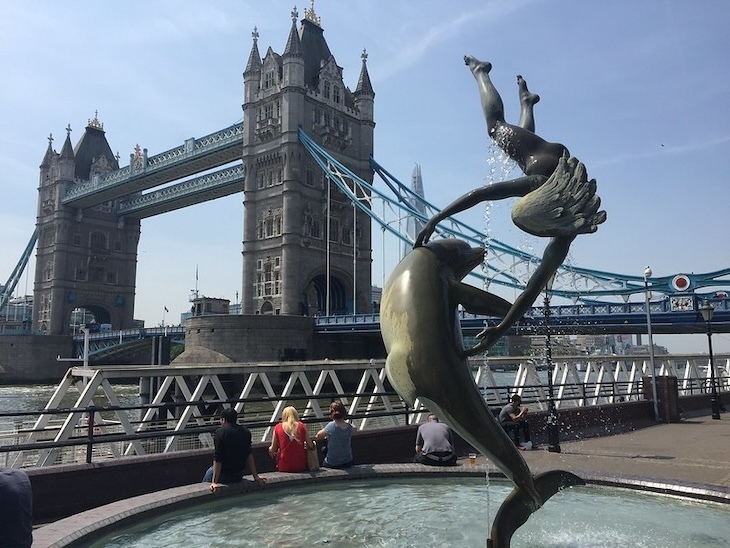
The boy with a dolphin has an elder sister. Also created by Wynne, a year before his Chelsea sculpture, Girl With a Dolphin is a well-known sight near Tower Bridge.
6. The Wharf whale
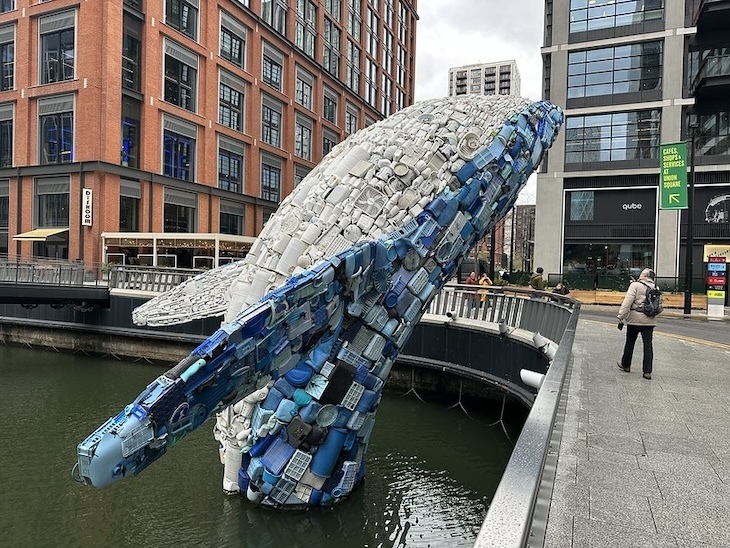
Located in Wood Wharf, the eastern annexe to Canary Wharf, this towering cetacean was installed in April 2025. Called 'Whale on the Wharf (Skyscraper)', the animal is crafted from plastic found on Hawaiian beaches. Artist/architect duo Jason Klimoski and Lesley Chang worked with the Hawaii Wildlife Fund to repurpose the rubbish, to highlight the problem of plastic in our oceans. Kids (and adults) will have fun identifying the repurposed flotsam and jetsam, which includes everything from fans to skateboards.
7. The Stratford whale
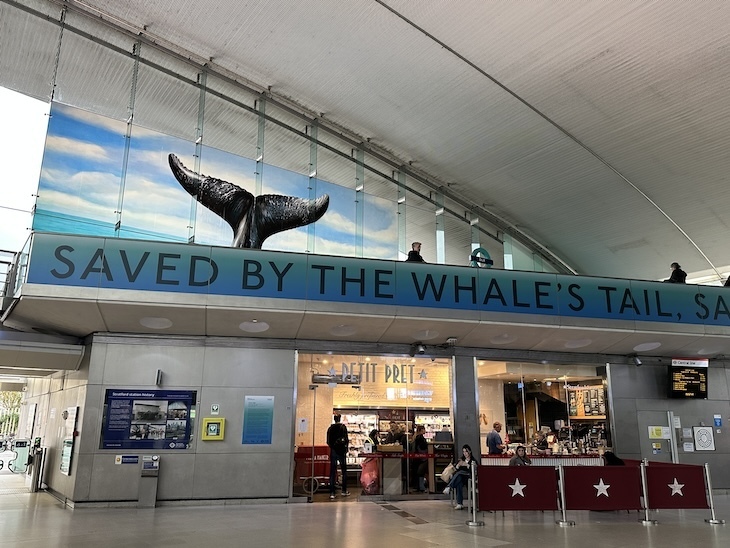
Meanwhile, a few stops up the Jubilee line at Stratford station, this fellow appeared in September 2025. The 2-D representation is known as 'Saved by Art, Saved by the Whale's Tail', and is by Kurdish conceptual artist Ahmet Öğüt. Why here, on the concourse beside the DLR platforms? Well, it comes with quite a back-story. The inspiration was a 2020 incident in Rotterdam, when a giant sculpture of a whale's tail prevented a malfunctioning train from ploughing over the end of a viaduct, thus providing one of the most improbable transport images of all time. The Stratford art is two-dimensional, however, and won't be saving any rogue DLR trains (of which there have been some of late).
8. The Barnet whalebones
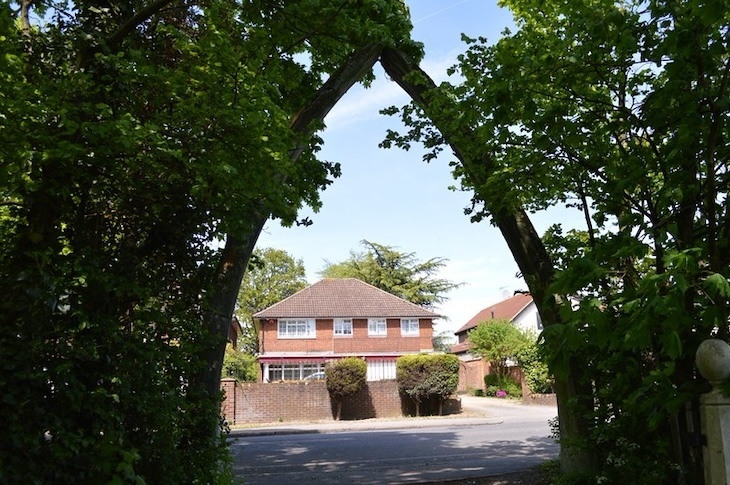
Given it sits on one of the highest hills in north London, you wouldn't expect Barnet to yield much in the way of marine life. But here, round the corner from Barnet Hospital, stands an arch made from the jaw bones of a blue whale. The grim portal was erected in 1939, to replace an earlier set of bones, then decayed. The earliest known reference to these bones is 1879.
This gigantic bones are not the only whale remains in London. Visitors to Dagenham's Valance House Museum can see further specimens, and another arch stands inside London Museum Docklands.
9. The Dolphin pub
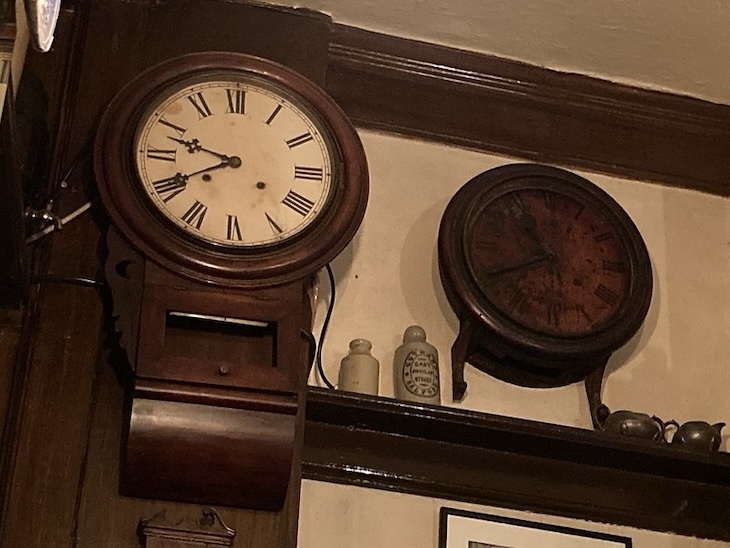
This tiny, traditional pub near Holborn is notable for its unchanged interior, precipitous steps to the toilets, and a haunted clock. Said clock was pulled from the rubble following a First World War Zeppelin raid on the area, which badly damaged the pub. Its hands are still set to the time of the blast, over 100 years later. It's said to emit the whistle of the falling bomb on the anniversary of the incident. Other notable Dolphin pubs can be found in Sydenham and Hackney.
10. Moby Golf
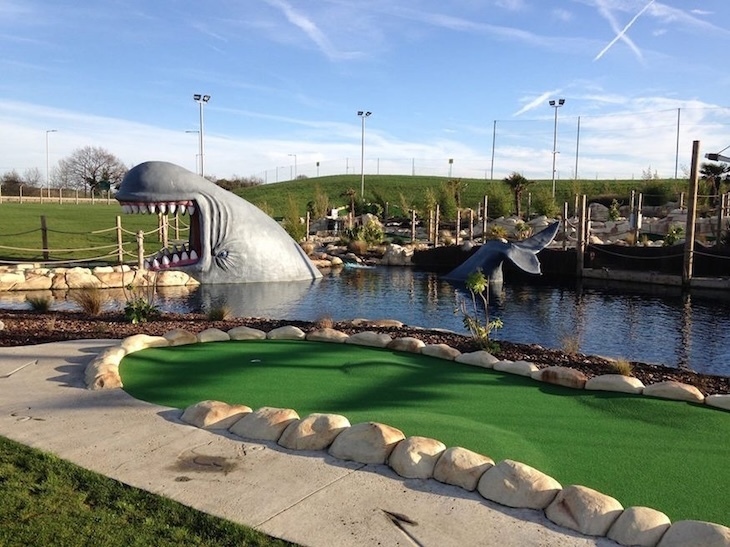
London's least-convincing whale model forms part of a mini-golf course near Chadwell Heath. The course was previously known as Moby Golf, but it's since changed to the more workaday Golf Kingdom. The model and former name recall a famous set of whalebones that stood in the area for centuries. The remnants are now in Valance House Museum, and the connection is also remembered in Whalebone Lane.
11. Dolphin Square
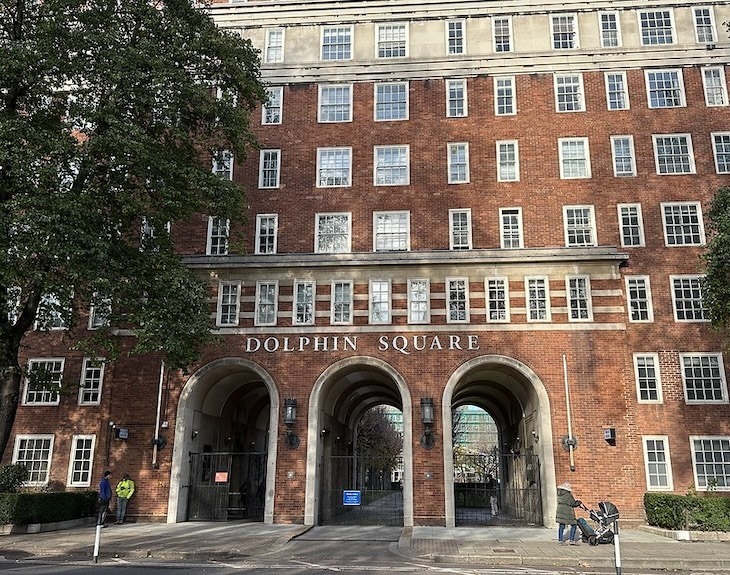
And finally... the (in)famous housing block in Pimlico — known for its Cold War spy escapades — was one of London's largest residential developments when constructed in the 1930s. It was named by a visiting head-teacher from Colwyn Bay who was related to the site owner. He suggested Dolphin Court, after the name of his school magazine. It became Dolphin Square to match the shape of the development. An attractive dolphin fountain stands within the grounds.
FIN