Continuing our series on London's heritage murals.
Barking has a long and eventful history. From Anglo-Saxon times, the town was home to an important abbey, whose remains are still a prominent part of the townscape. In more recent centuries, it became a major centre of fishing and manufacturing industries.
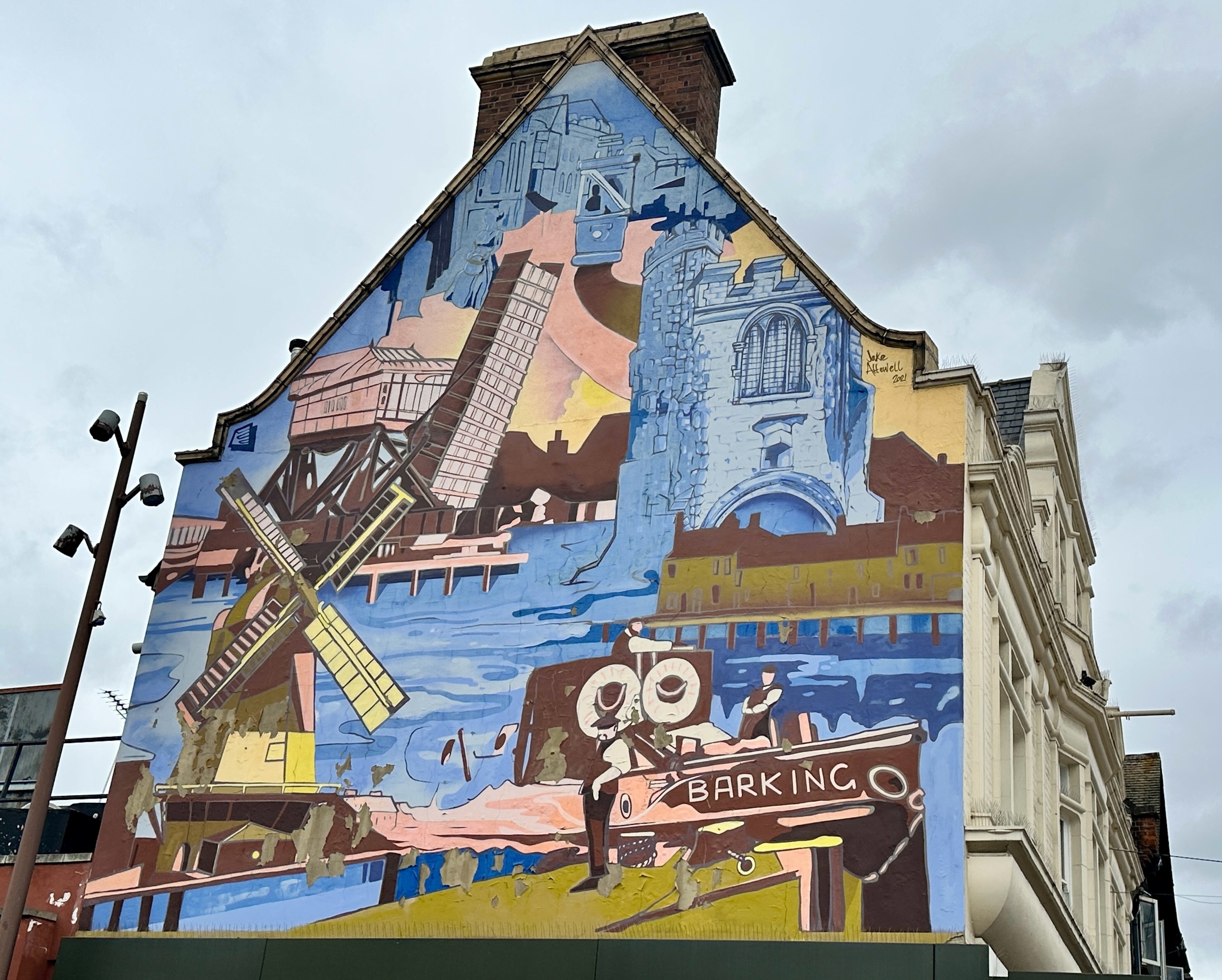
This history is celebrated on the Barking Heritage Mural, which was painted on a gable end in East Street in 2021 by artist Jake Attewell. Let's dig the details.
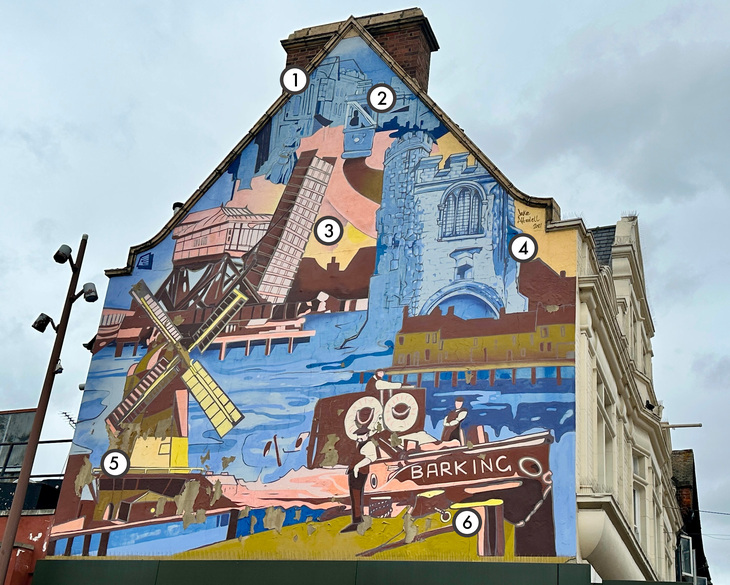
1. East Street. It's a little hard to make out detail, but the row of shops and houses shown here represents early 20th century buildings on East Street, the road upon which the mural stands. East Street is an ancient thoroughfare that led from Barking Abbey off to Dagenham. Its heyday came in the early 20th century, when big stores like M&S, Burtons and Woolworths lined the street. Now pedestrianised, it remains the main shopping street of the town.
2. Electric tram. For a brief time, Barking had its own tram network. Opened in 1903, the system was one of the shortest in the country at 2.8 miles. The lines were never profit-making and closed down in 1929.
3. Barking once possessed a bascule bridge — not quite a rival to Tower Bridge, but impressive nonetheless. The bridge was built between 1898 and 1903 to carry the trams over the River Roding to Beckton Gas Works. It proved costly to maintain, and it was demolished in 1929, along with tram services to Beckton (workers hereafter used a bus). Remnants of the bridge's footing can still be seen on the south-western bank of the Roding.
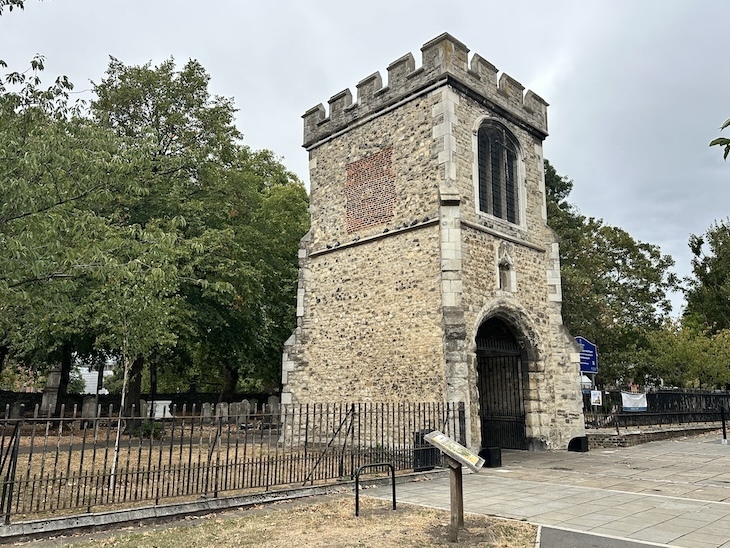
4. This is Barking's most famous landmark: the Curfew Tower of the old abbey. The abbey was set up by brother-and-sister saints Earconwald and Ethelburga some time around AD 666. It is, therefore, one of the oldest establishments in the London area. Not much of the abbey is left today, thanks to a certain beardy, rotund monarch, though extensive foundations are on display just north of St Margaret's church. One exception is the Curfew Tower, a medieval gateway into the abbey. The current version was built in 1460, making it Barking's oldest building. Such is its importance, that it surmounts the coat of arms of the London Borough of Barking and Dagenham.
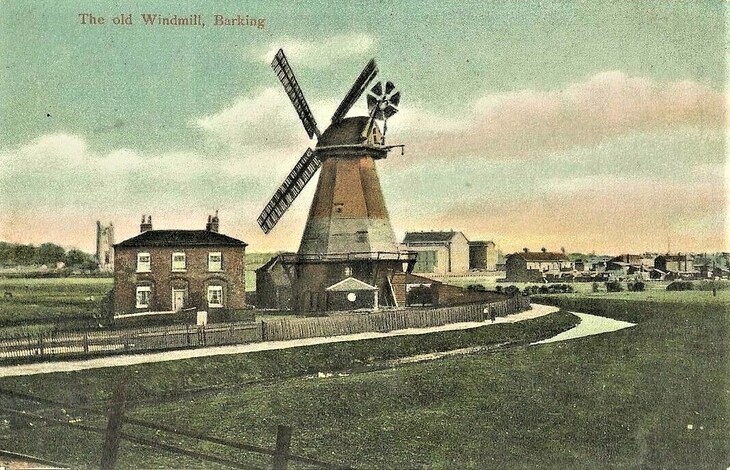
5. Another lost landmark of Barking, this is the Wellington Windmill, named in honour of... well, the usual Wellington. The mill stood over the Roding in what is now Duke's Court. It lasted until July 1926 when it was pulled down by a traction engine after standing for 200 years.
6. A scene showing Barking Quay, when it was still a working wharf, serving fishing boats and support industries. The mural image is taken from an old postcard.
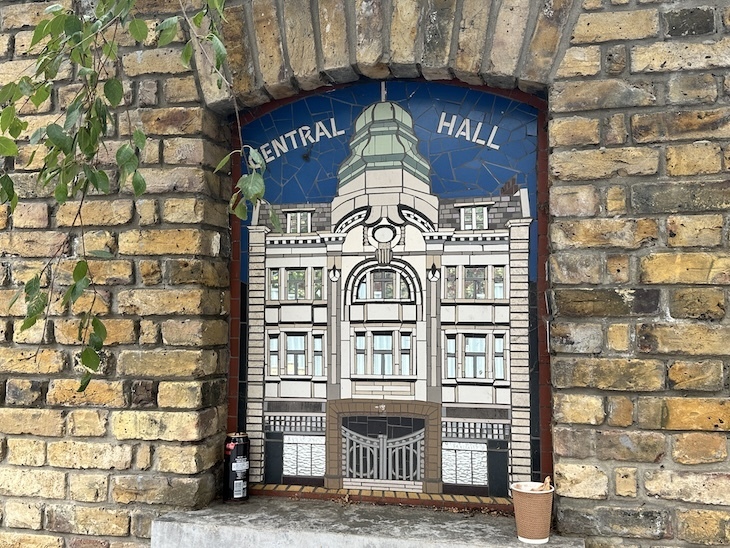
Directly opposite the mural stands one of several mosaics in the area by Tamara Froud. This one shows Barking Central Hall, which stood on this site from 1928. The short-lived building was ruined by a V2 strike in the Second World War and pulled down soon afterwards.
More information about Barking's rich heritage can be found on the BeFirst website.
See our full series on London's best murals, including:
- The Battersea mural
- The Fitzrovia mural
- The Battle of Cable Street mural
- The Sutton Heritage Mosaic
- Dalston's Hackney Peace Carnival mural
- Kingsbury's George Michael Mural
- New Cross's Riders of the Apocalypse mural
- Brixton's Nuclear Dawn mural
- Peckham's RUN mural
- Whitechapel's Sidney Street mural
- The Tolpuddle Martyrs mural near King's Cross