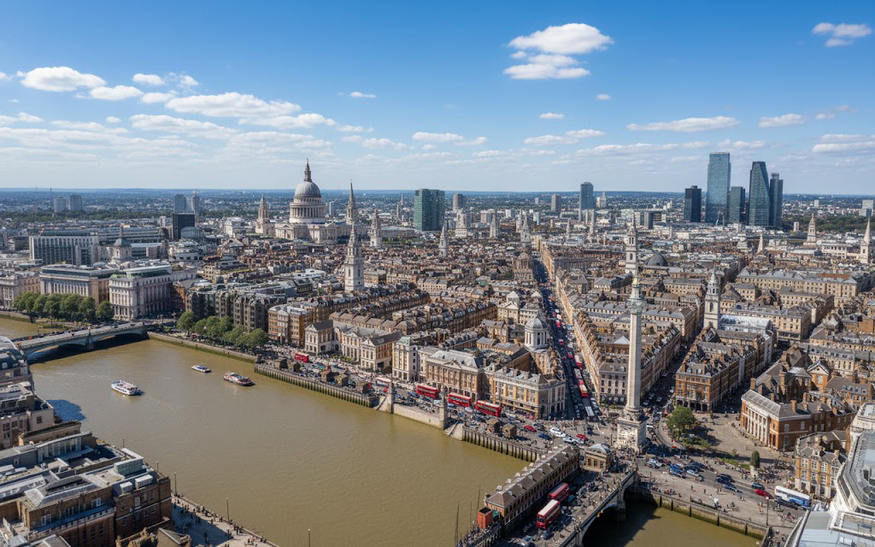
An AI video brings Wren's unbuilt London to life.
London pre-Great Fire was a congeries of rambling, filth-strewn lanes and alleyways, punctuated with only a few pockets of real grandeur, such as Inigo's Jones' Covent Garden.
But after the conflagration of 1666, architects leapt into action, excited by the clean slate that fate had gifted them. Chief among them was Christopher Wren, who dreamed of Continental-style boulevards and open squares — a London of "pomp and regularity". Charles II himself was sweet on Wren's bombastic blueprints.
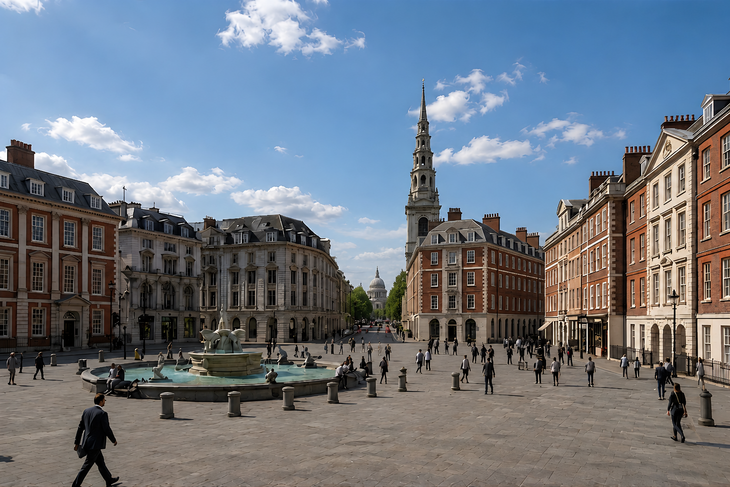
However, this wholesale grand scheme had many hurdles to overcome: scores of powerful people to win over, financial frailty and the ticking clock that was a London desperate to get back to work. Although fragments of Wren's masterplan were realised — not least, St Paul's Cathedral — the majority remained a pen and ink teaser of what might've been.
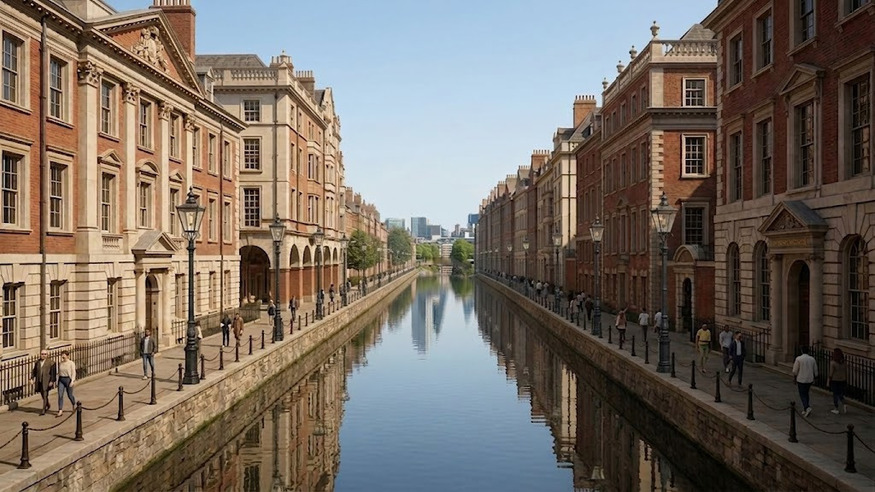
Cue Daniel Coughlin, a writer/researcher who has pulled together old drawings and engravings, maps, historical plans and archival photos to "build" Wren's alternative London using AI.
Slop this is not. In the video above, you will see photorealistic renderings of:
🏛️ The Monument on the banks of the Thames, broad avenues radiating from it like rays of sunshine. (The Wren/Hooke-designed Monument was built, but is stashed away on Fish Street Hill, once the approach to London Bridge, but now more hidden.)
🏛️ A baroque Royal Exchange framed by its own Rome-inspired piazza. (A baroque Exchange sans piazza was built in 1669 to designs by City surveyor Edward Jerman, but it burned down in 1838.)
🏛️ A be-fountained piazza to the west of St Bride's church, with an uninterrupted avenue pointing towards St Paul's. (Instead we retained the less grandiose Fleet Street.)
🏛️ The fetid Fleet river cleaned up, widened, straitened and transformed into a grand canal peppered with picturesque bridges. (A scaled-back version of this canal was constructed, but was not a success; instead the river was culverted and now runs underground as a sewer.)
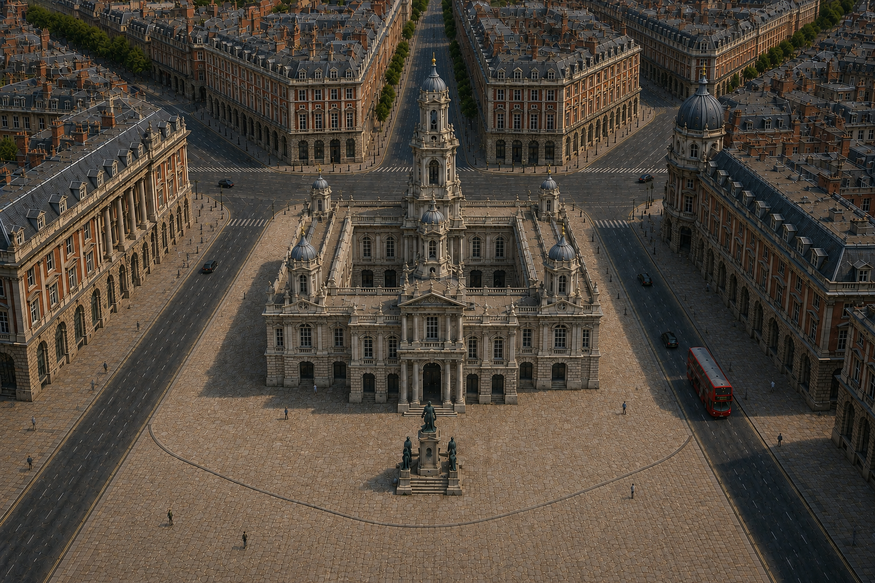
What we love about the video most of all? The decision to set these scenes in 21st century London: by adding in skyscrapers and red buses, we can get a feel for the metropolis we're missing out on. Begging the question: which do you prefer — Wren's London, or the one we ended up with?