The Covent Gardener magazine is celebrating 10 years in independent print. To mark the occasion, they're publishing a special bumper issue featuring 10 favourite stories from the past decade. And here's one of them — a piece on the visionary Inigo Jones, the man who shaped Covent Garden as we know it.
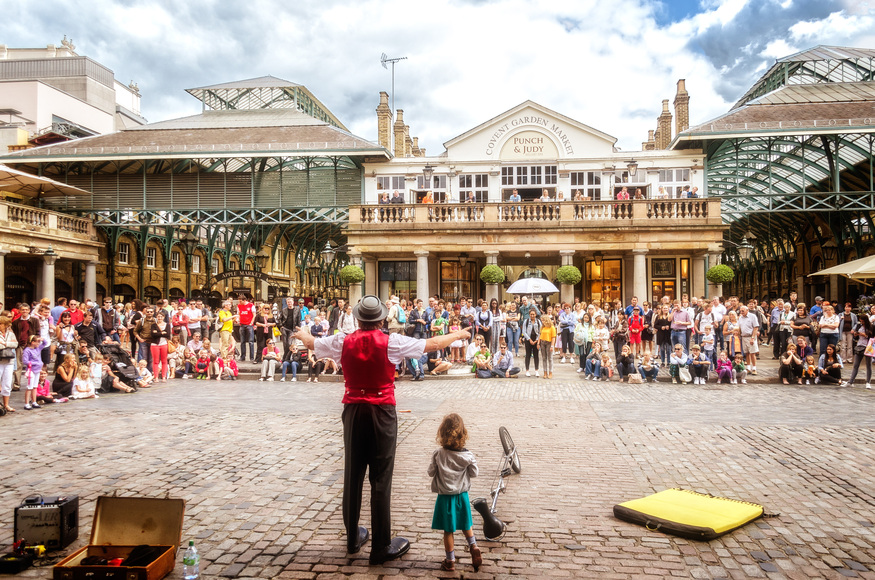
Inigo Jones. Funny old name Inigo, isn't it? Unique, surely?*
It's unclear how he acquired his moniker, although one story has it that his family came from Wales and he was named Ynyr, but the Saesons** couldn't get their tongues around that, so he morphed into Inigo. They weren't making life easy for themselves, were they? Why didn't they just call him Bob?
Anyway… Many people misread his name as Indigo, but the only time Inigo became indigo was when Inigo was indignant. Usually at being misnamed. Fortunately, he had a rather more mundane surname: Jones (which somewhat backs up the Welsh ancestry claim). And, as befits a person with a fascinatingly constructed name, he became a quite outstanding architect.
The Piazza at the heart of Covent Garden, St Paul’s Church next door and, down the road, the Banqueting House in Whitehall were all designed by the local boy made good. Born in 1573 just over the River Fleet in Smithfield, it seems Inigo was entirely self-taught.
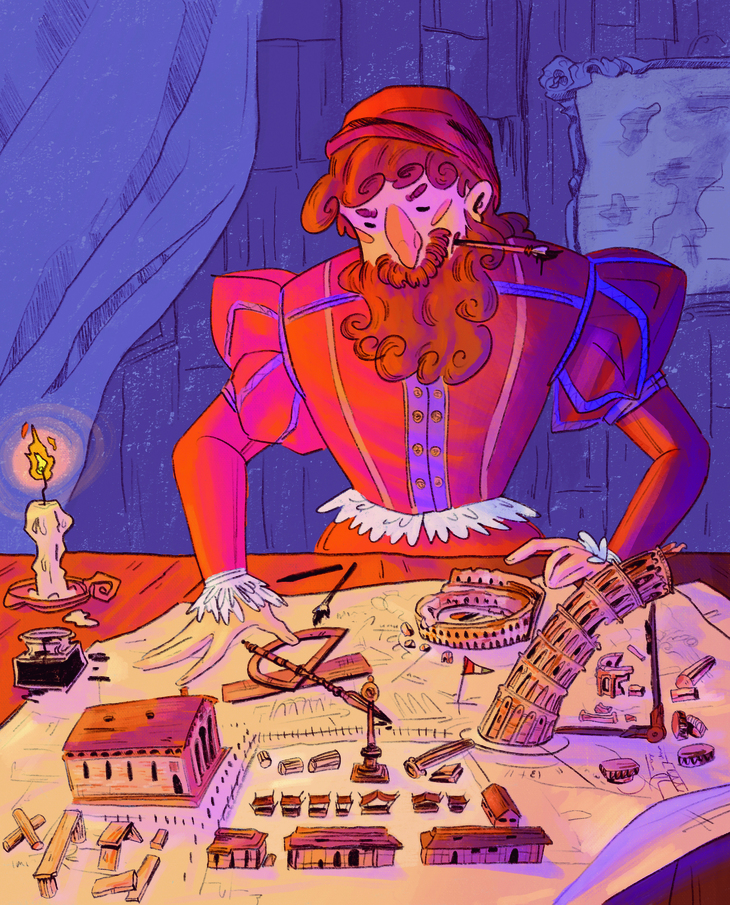
All those architectural gems listed above were inspired by his personal voyage of discovery, metaphorically but more importantly, literally. Even if you know nothing about architectural history, you almost certainly won't be surprised to hear that Inigo travelled to what is now Italy. Take a look around Covent Garden's piazza today. Commissioned in 1630 by the 4th Earl of Bedford, London's first planned square is Italianate to a T, surrounded by arcaded walkways based on the piazza in Livorno. But until Inigo turned up with his Roman-inspired plans, nobody in England had seen the like of it.
He spent no time in an architectural or academic institution. His first job was as a carpenter's apprentice at St Paul's Cathedral and here he caught the eye of a wealthy patron — possibly either the Earl of Pembroke or the Earl of Rutland — who was so impressed by the sketches he was producing that he paid for his passage to Italy so he could study drawing and architecture. Inigo clearly had great potential.
While there he also impressed British diplomat Henry Wotton who lived in Venice. Wotton paid for Jones to visit Italy again in around 1606, where he studied classical architectural styles pioneered by the Venetian Andrea Palladio and travelled to Rome, Padua, Genoa and Florence. Inigo made a final visit in 1613 shortly after being appointed Surveyor of the King's Works. His rise had been meteoric.
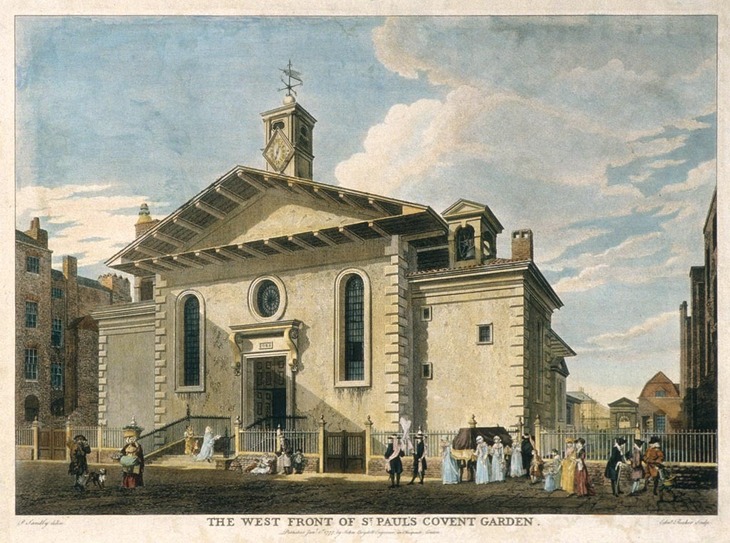
While best known for Covent Garden's Piazza and St Paul's (the Earl of Bedford had told him to economise when building this church, saying a 'barn' would suffice, but Jones retorted that "his lordship would have the finest barn in Europe"), Jones' designs were in demand everywhere and he inspired the likes of John Nash (of Regency terraces fame) and William Kent (who, like Inigo, embraced the Palladian style).
Of course, as somebody who was curious, Inigo was never going to stop at architecture. He is credited with introducing movable scenery to English theatre and collaborated with playwright Ben Jonson with whom he argued over whether the script or the scenery was more important, and almost certainly won. And then he became an MP, a justice of the peace, was seized by Cromwell's forces in the Civil War, and even had time to decline a knighthood from Charles I. Oh, and of course, he tutored himself in Italian.
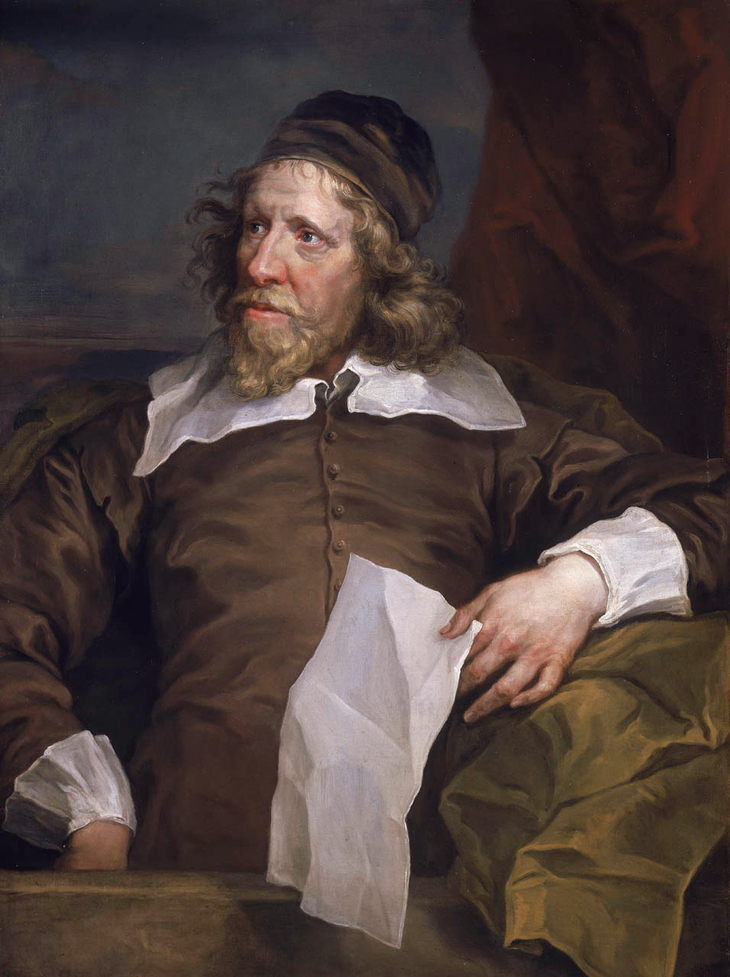
Inigo Jones was, in simple terms, a self-taught man of the Renaissance, bringing the culture of that movement to the British Isles. The first significant architect of the modern era, he never stopped learning. Throughout his life he read, surrounded by books full of annotations and sketches. Apparently if he forgot something he would place a note in his shoe. The feeling of the crumpled paper would remind him of the forgotten fact.
It's never too late to learn, although the author’s wife seems keen to tell him some people never do. Mostly when it starts to rain and the washing stays on the line. But Inigo wasn't a journalist who writes about things because he can't do them himself. He studied instead. He'd have invented a device for moving washing indoors when the skies opened.
*Apparently not. An internet search shows up numerous Inigos. Most are Basque. And there was even another Inigo Jones (a British Army Officer who fought in the Boer War) and an Inigo Owen Jones (an Australian meteorologist and farmer).
** For any unaware anglophone, that's what the Welsh call the English (when they are being polite).
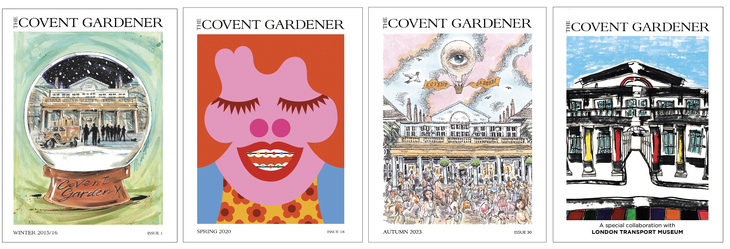
The Covent Gardener anniversary issue is available to pre-order now, or can be picked up from the London Transport Museum, Benjamin Pollock's Toyshop, the Royal Opera House, Stanfords and the Royal Academy.