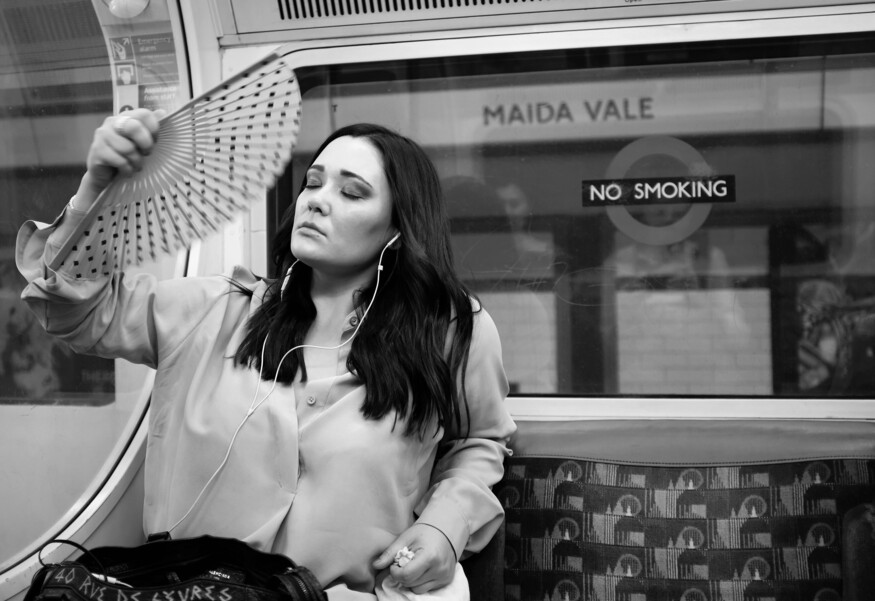
Cramped into the Piccadilly line is the last place you want to be during a heatwave. But that wasn't always the case...
"The coolest resort in London, with the exception of the refrigerator, was in the underground subway of tube stations," reckoned the Daily Mirror during an unseasonable hot spell in May 1916.
The temperature inside a "stuffy West End shop" was 31.7°C, while one of the deep-level Tube lines was just 23.9°C (or 89°F versus 75°F in ye olde units of the report).
So, a heatwave day in May 1916 saw the Tube hit almost 24°C. According to London Datastore numbers, an *average* May day on the deep-level lines today is 26.6°C (Bakerloo) or 27.5°C (Central). These can easily exceed 30°C during a heatwave.
Another news item from 1914 recorded the subsurface temperatures on the Metropolitan line.
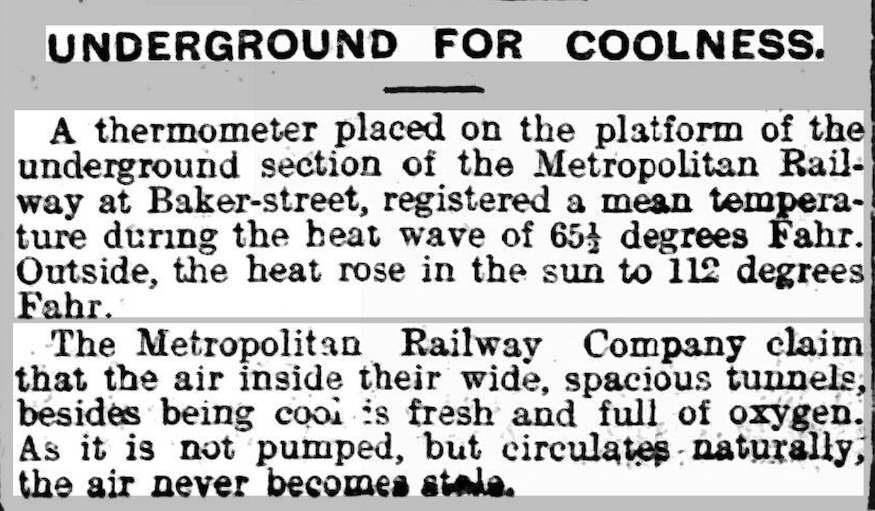
That's 18.6°C below ground, while the direct-sunshine temperature was 44°C. (If that sounds high, it's because modern temperature reporting measures in the shade.) The shallow lines like the Met were, and are, somewhat cooler because of easier ventilation.
Even as late as 1925, people still considered the Tube as a cool refuge. This from the Liverpool Echo, 12 June 1925:
"Thousands of people indulged in rides on the tubes in their search for a cool place, whilst not a few took tickets in order just to go down the lifts to sit down below in comfort and coolness. When moved on these heat refugees passed to the next station and there found sanctuary for a little while longer."
Clearly, the Tubes and subsurface lines were the place to go if you needed to get out of the heat. Today, the reverse is true. All sensible people avoid the Tube in a heatwave, unless they have no choice. What changed?
Well, the ground heated up. Decades of train movements have imparted the tunnels and surrounding clays with extra heat, generated mostly by friction. Many of the tunnels have been in near-constant use for over 120 years, so the heat never gets a chance to dissipate.
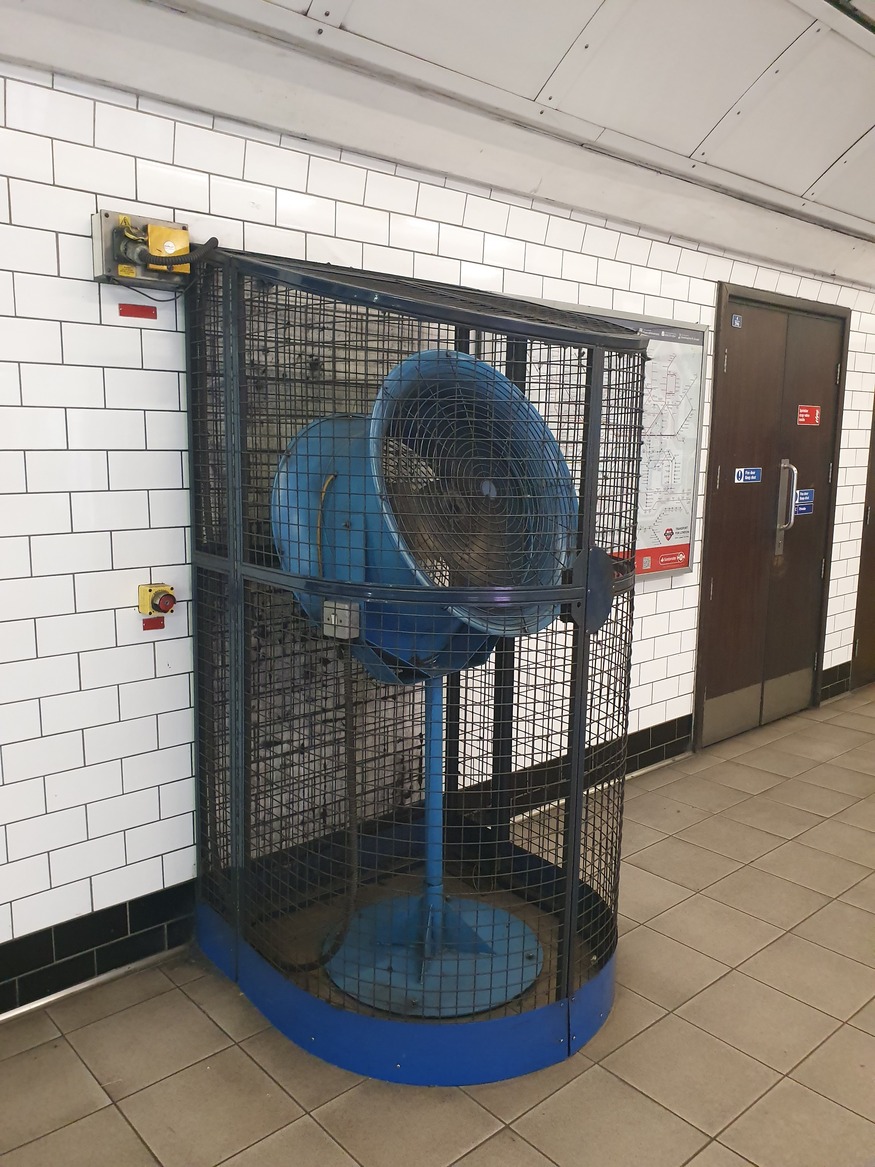
Despite the rising temperatures, travelling underground is not always as sweaty as it used to be. The subsurface lines (Circle, District, H&C and Metropolitan) now have a form of air conditioning that can make the trains relatively pleasant to ride. Meanwhile, the Elizabeth line came with cooling built in.
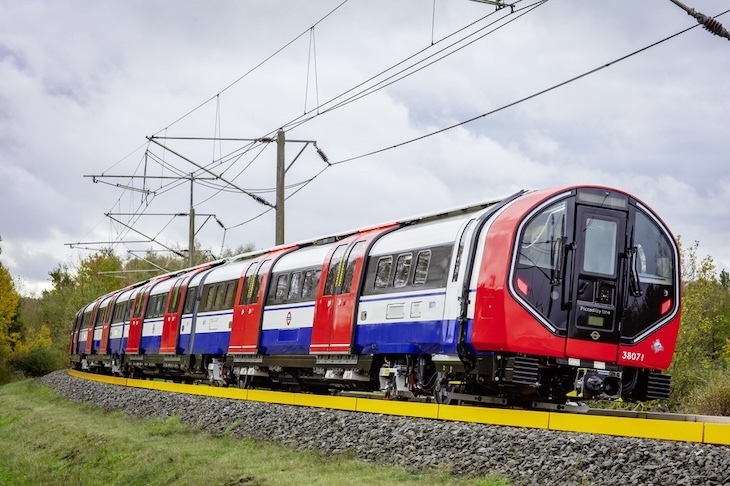
The older deep-level lines (Central, Bakerloo, Jubilee, Northern, Piccadilly, Victoria) are harder to cool because of the narrower tunnels. The problem should slowly be alleviated by the introduction of the new 2024 stock trains, first on the Piccadilly line, then other lines.
That will take many years to fully roll-out, though, and will not cool down the platforms. Sweaty summer Tube rides will be with us for a little while yet.