Which parts of London are already pedestrianised, who objected, and what happened next?
After years, nay decades, of talk, Oxford Street is finally gearing up for (partial) pedestrianisation. The scheme, spearheaded by Mayor Sir Sadiq Khan, is controversial. Inevitably. These things always are. But it's not as if London hasn't done this kind of thing before.
Partial pedestrianisation probably goes back centuries, when streets would close to horse-drawn traffic for market days or festivals. Permanently traffic-free streets were a rarity, although occasional examples like Woburn Walk in Bloomsbury can be found. Purpose-built for shopping, Woburn Walk never carried traffic and it remains a pleasant space today. Cosmo Place and Cecil Court might be considered further examples, though here we're on the blurry line between 'alley' and 'pedestrian street'.
The pedestrianisation of roads that had previously carried traffic only gained traction in the second half of the 20th century, as people began to realise the downsides to motor vehicles. One of the earliest, in 1973, was Carnaby Street, at the time struggling with the hangover of its 1960s heyday. Plans to pedestrianise large parts of Soho soon followed, though only a few projects were taken forward.
In the decades since, numerous other streets have given up their vehicles to prioritise the walker (and sometimes cyclist). What follows is a recap of some of the more important projects. Note that the list focuses on central London and is not comprehensive. We use the term 'pedestrianised' here as a convenient shorthand for a ban or partial ban on motor vehicles — such spaces often allow cyclists too, or permit motor vehicles during quieter hours.
In chronological order...
Carnaby Street
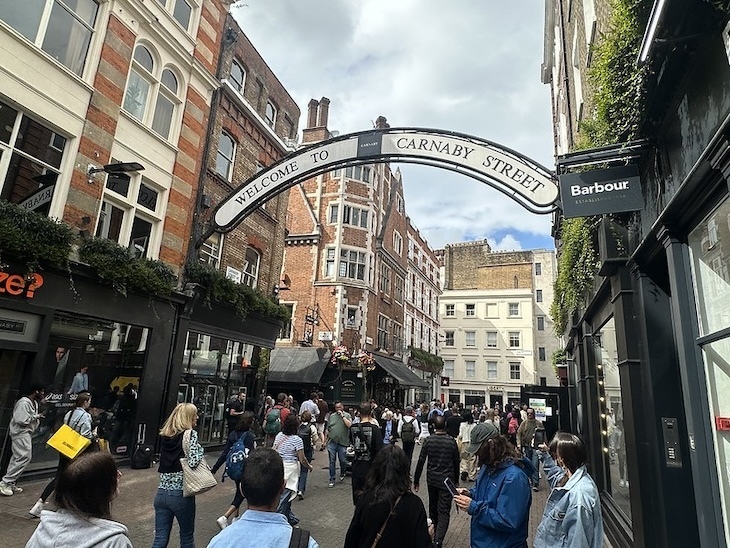
When was it pedestrianised? October 1973 (though an experimental closure ran through 1972).
What happened? Westminster Council spent £60,000 eliminating motor traffic from the famous Soho street during peak hours, along with many of the side roads, including Foubert's Place and Ganton Street. Rather than tarmac, Carnaby Street was 'paved in nylon', with funky geometric patterns described by the Daily Mirror as "Like the bathroom of some trendy giant".
The scheme was largely welcomed by the press and public. Initial concerns that the scheme would put off shoppers, who could no longer park outside their favourite stores, did not play out. The street saw a huge increase in footfall, and remains one of the busiest parts of Soho today (though the geometric patterns are long gone).
Downing Street
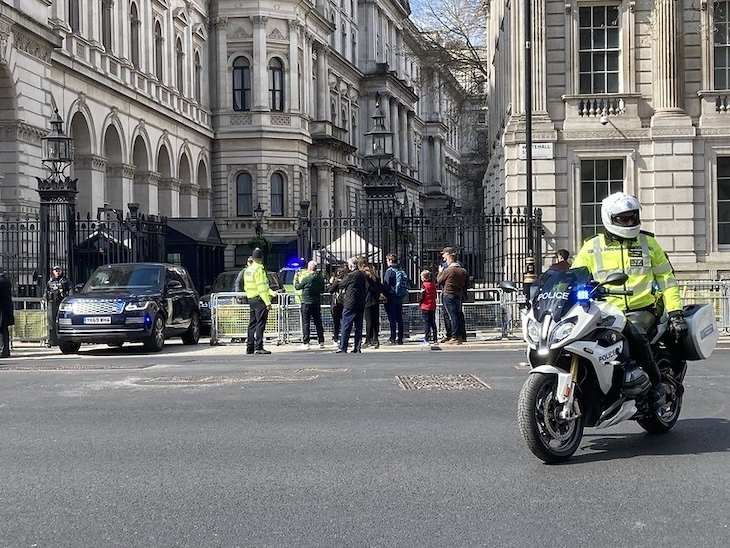
When was it pedestrianised? 1973
What happened? It seems incredible now but, until 1973, anyone could drive a vehicle right up to Number 10. In that year, barriers were installed to restrict access, but pedestrians could still wander in.
The blockade seems to have caused few problems. More fuss was made in 1989 when pedestrian access was curtailed by large security gates at either end. Prime Minister Margaret Thatcher was accused of acting like a Head of State in sealing off her domain, and the barrier (which didn't close properly) was dubbed Thatchergate. Tony Blair toyed with removing the gates, but they remain today.
Leicester Square
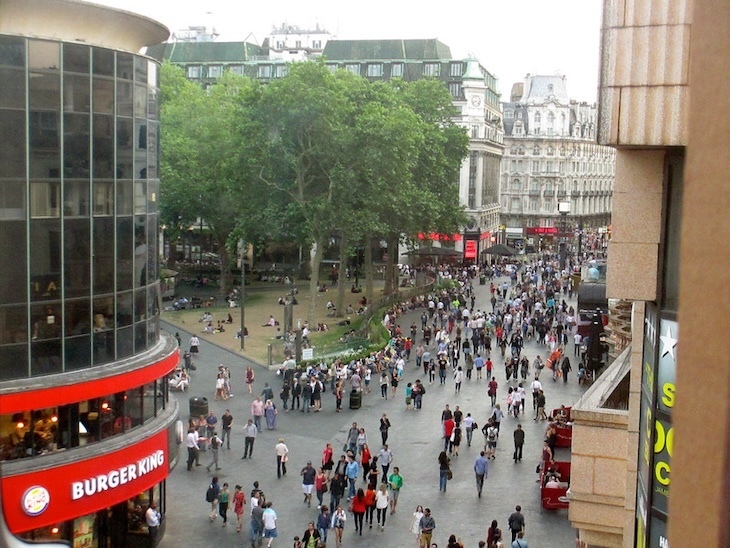
When was it pedestrianised? 1975 (weekends) 1987 (full)
What happened? It seems almost unthinkable now, doesn't it, but it was once possible for any motorist to drive right around Leicester Square. The first experiment took place in the summer of '75, when the north and south of the square were blocked off at weekends (driving down the east and west flanks was still permitted). The inaugural weekend was celebrated with Morris dancing, 'coloured lights', and 'some pretty "dolly" girls'. Um.
The London Evening News ran quotes from various restauranteurs who were horrified at the idea. "We get as many as 20 coaches a day on weekends. This scheme will mean we won't get any." Their fears were ill-founded, and the square could hardly be accused of lacking places to eat and drink.
The experiment proved popular by most accounts, but Westminster Council did not take things to their natural conclusion for 12 more years. October 1987 saw the full closure to motor vehicles of all four sides of the square (except for loading and unloading before 11am).
Covent Garden
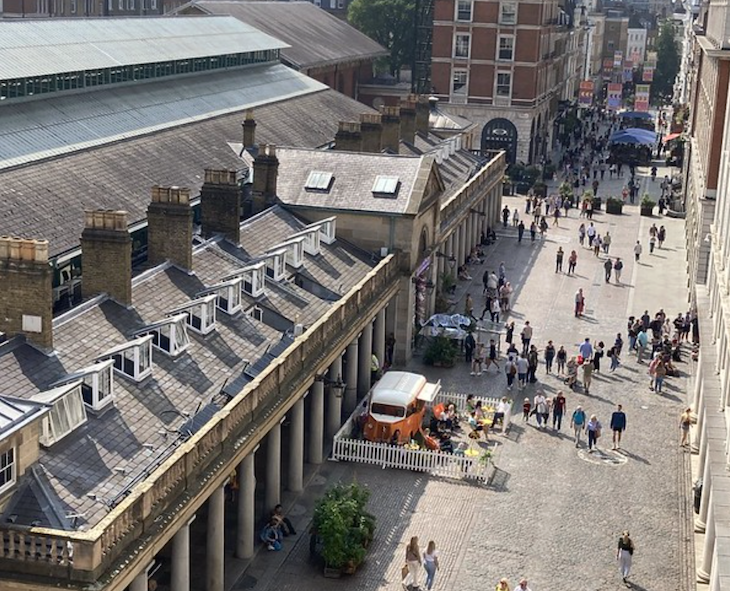
When was it pedestrianised? 1980
What happened? For centuries, Covent Garden had been London's chief market for fruit and veg. To function, the market needed a constant turnaround of vehicles, for which the area's narrow streets were ill-suited. The logjam was part of the reason the market was moved out to Nine Elms in the 1970s. When the area reopened as a food, drink and retail hub in 1980, the streets around the market building were largely off limits to vehicles. Further restrictions would later follow on nearby roads such as James Street and Floral Street.
Such a kerfuffle was caused by wider aspects of the scheme, that few words of protest about the pedestrianisation were registered. Indeed, one much-loathed plan for the market site had been to run a major road through the area, so its eventual pedestrianisation was no doubt welcomed by many. Today, it seems impossible to imagine cars circling round the old market buildings, although Henrietta Street to the south-west was until recently open to vehicles.
Chinatown (Gerrard Street)
When was it pedestrianised? October 1985
What happened? By the mid-1980s, the area south of Soho was widely known for its Asian restaurants and had adopted the moniker of Chinatown (a term previously applied to a corner of Limehouse). The whole of Gerrard Street and part of Macclesfield Street were paved over, with highly restricted access for vehicles. At the same time, Chinese-style gates were erected at each entrance to the zone, along with themed street furniture. The scheme, which cost £235,000, was declared open by the Duke of Gloucester. (Incidentally, Carnaby Street's geometric paving, laid as part of its initial pedestrianisation, was also replaced around this time.)
The curbs seem to have been taken without too much grumbling. However, barriers had to be erected four years later to prevent rule-breakers who ignored the no entry signs. Weirdly, the eastern end of Gerrard Street (Newport Place) is still open to vehicles and has long been home to a subterranean car park.
Trafalgar Square (north side)
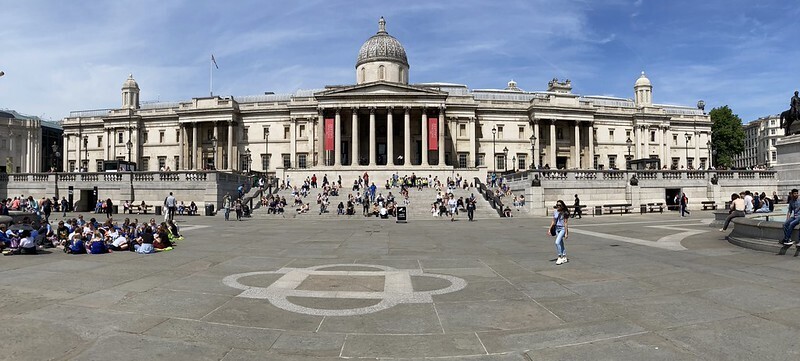
When was it pedestrianised? 2003
What happened? Previously, London's most famous square was effectively a giant roundabout with pedestrian crossings. To get between the National Gallery and the Square, the pedestrian had to negotiate three lanes of traffic. It was horrible. Plans to pedestrianise the northern stretch were first mooted by Richard Rogers in 1986, but it took the arrival of New Labour and then the Mayor of London (Ken Livingstone) to break through the inertia. The £50 million scheme, which also included a grand flight of steps and various amenities, was masterminded by Norman Foster's firm. It utterly transformed the Square.
Many voices had been raised in objection at the hit to the motorist, especially from taxi drivers. Simon Milton, leader of Westminster Council, also warned of an increase in "crime, aggressive begging, drug-dealing and other forms of anti-social behaviour" that a new public plaza would bring. The claim was dismissed by Transport for London as "wild supposition".
The works themselves took 18 months to fulfil, leading to heavy snarl-ups throughout this part of London. Many bus routes were caught up in the carnage. It was a mess. However, once complete, the scheme was met with near-universal praise. Timed to coincide with the introduction of the Congestion Charge, the remaining three-sides of traffic were less choked up than they might otherwise have been.
The scheme was still getting some criticism long after its completion, however. One high-profile naysayer was Nicholas Penny, Director of the National Gallery from 2008 to 2015. He lambasted the pedestrianisation and, in 2012, called for its reversal. As he told the Standard at the time: "It's impossible for anyone in my position not to want the traffic back. The chief result of pedestrianisation has been the trashing of a civic space."
Lower Marsh
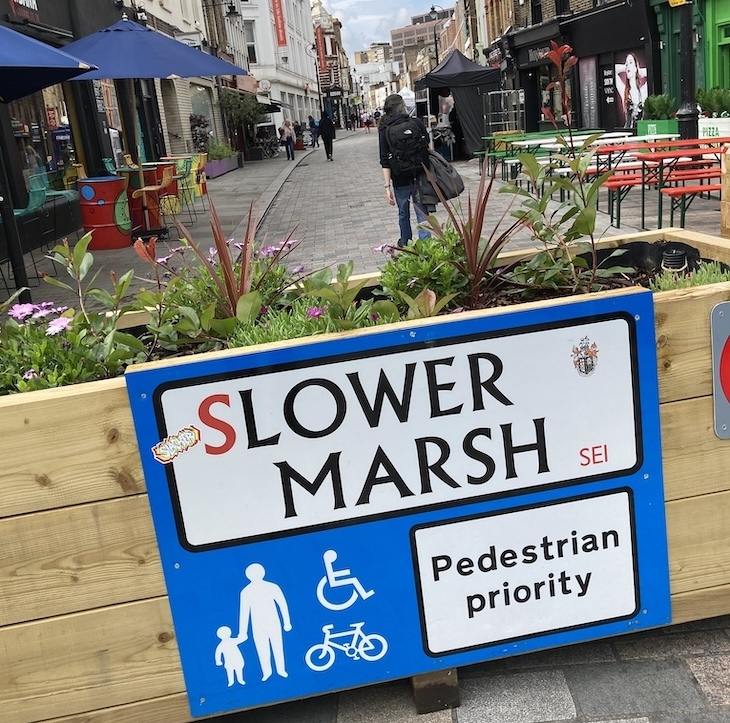
When was it pedestrianised? August 2020
What happened? Lower Marsh was one of many minor roads that were part-pedestrianised during the Covid era. Barring traffic allowed diners to spread out into the street rather than crowding together indoors. The look suited Lower Marsh — never a busy street — and it's retained its barriers ever since. The addition of 'Slower Marsh' signs on planters has made the characterful street even more of an Instagrammer's friend than it was before.
Strand (south of Aldwych)
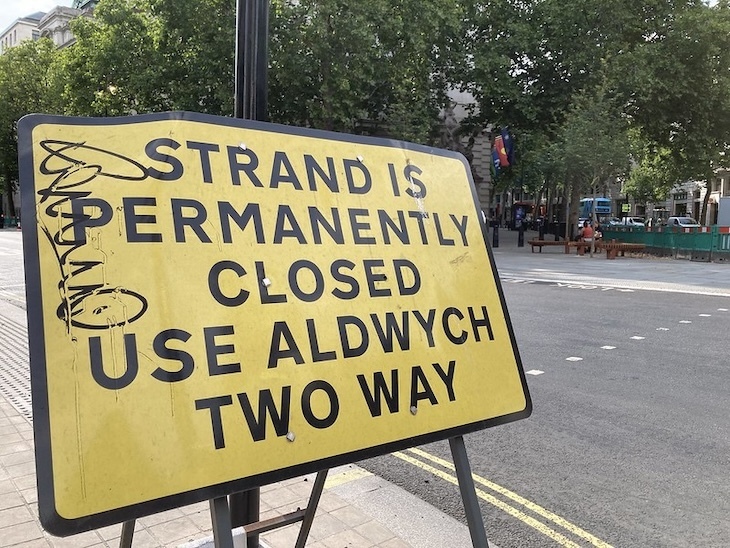
When was it pedestrianised? 2022
What happened? The section of Strand outside Somerset House and King's College has always been choked with traffic. Not any more. Cars etc. are now diverted onto Aldwych, leaving the space clear for pedestrians and cyclists. The area has been transformed with cherry trees, planters and colourful benches — so successfully that it's since won a Green Flag award. Meanwhile, the church of St Mary-le-Strand has been rescued from its erstwhile traffic island and (following renovations) is set to become a much more accessible community space.
The scheme attracted a fair deal of criticism during the planning and implementation. The most notable objection, as ever with these things, was the expected increase in congestion elsewhere, particularly along Aldwych and Kingsway. Cyclists were also concerned about the lack of protected cycle lanes along Aldwych. The cost of £32 million was also criticised. This was entirely funded by taxpayer money. Labour councillors (in opposition in Westminster) argued that private funding should have been sought, especially from "the fabulously wealthy King's College", which benefits the most.
Sadly, a King's student was killed in March 2025, and several others were injured, when a van turned at speed into the pedestrian zone. A petition is ongoing to make changes to how access is granted.