While the eyes of the country are often trained on the famous black door of 10 Downing Street — just across the road lies a far less well-known, but no less fascinating address: Duck Island Cottage.
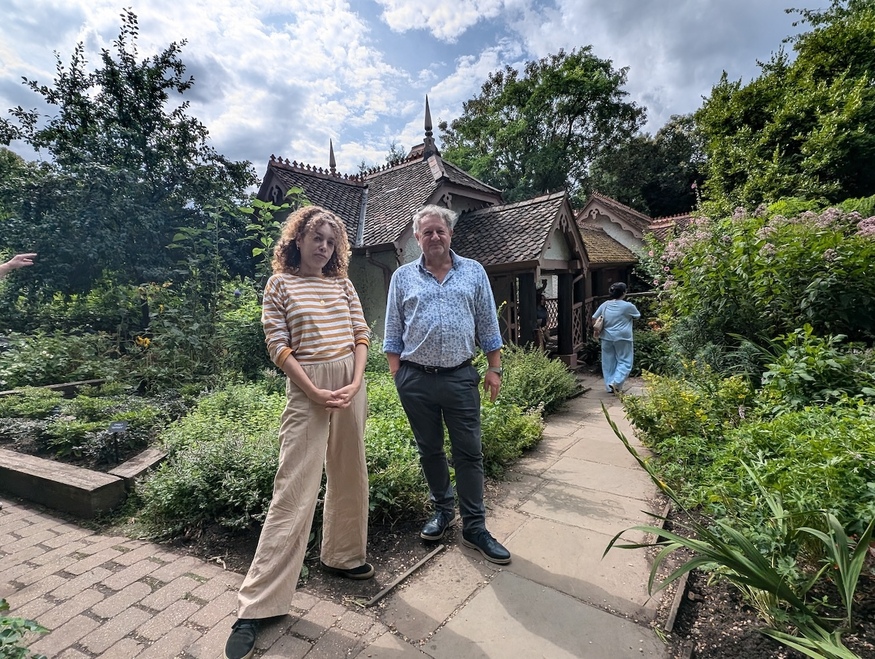
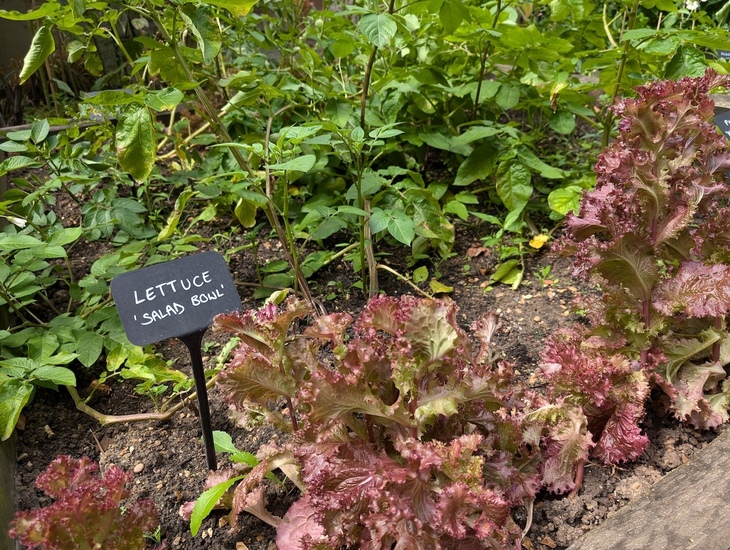
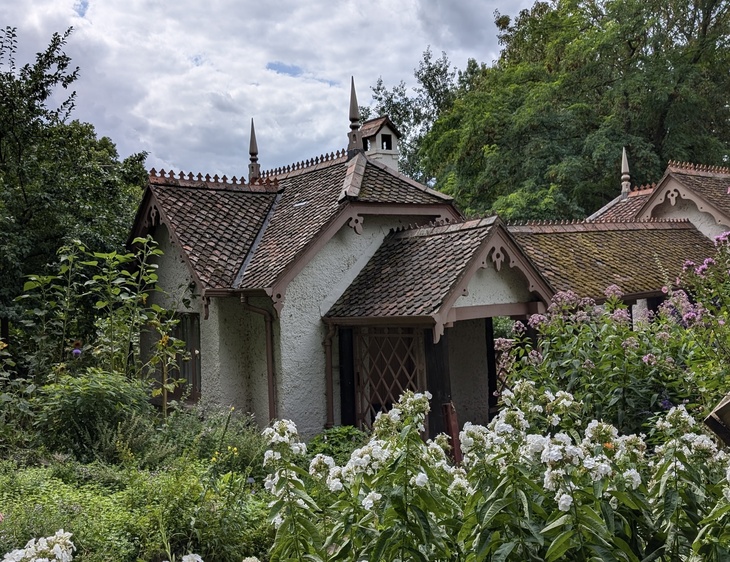
The buildings could hardly be any more different. Downing Street has its sensible name, its dour black brickwork. Duck Island Cottage — on the eastern fringe of St James' Park and fronted by the ruddy-coloured Horse Guards Road — is straight out of Hans Christian Andersen; a cottage orné confection surrounded by a healthy kitchen garden, with plump squash plants and tomatoes flourishing in raised beds, and butterflies flitting from leaf to leaf.
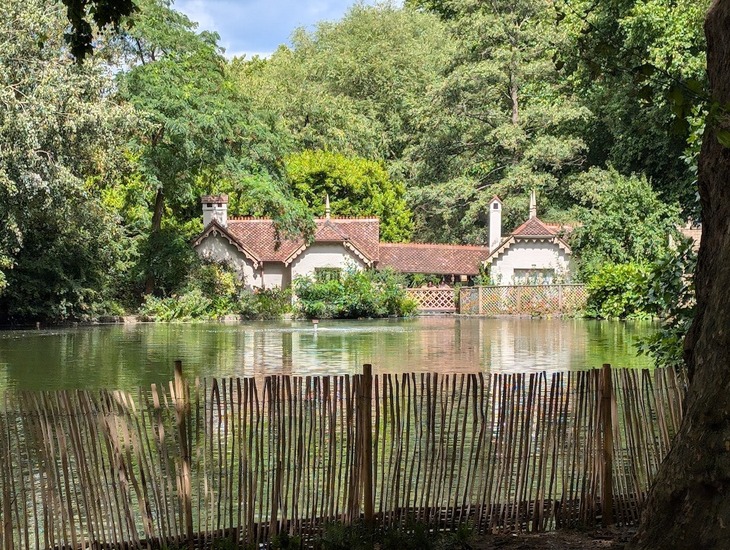
Duck Island Cottage is passed by many thousands of tourists a day, and many must linger by its gates, wondering about the origins of this twee little setup — and the purpose it serves today. The backstory is not disappointing; nearing 200 years old, the cottage itself has an eclectic history — although the full tale extends far beyond the building itself.
Duck Island's story begins in earnest with James I, who converted what was a swampy Tudor chase into formal gardens, populated by an array of birds, and a couple of crocodiles for good measure. James' beginnings were built on by the ostentatious Charles II, who put more aviaries along what is now Birdcage Walk, "stocked with numerous flocks of severall sorts of ordinary and extraordinary wilde fowle". While many of the birds were looked after by Edward Storey, 'Keeper of the King's Birds', not all lived such a prosperous life — and this is where Duck Island first comes in.
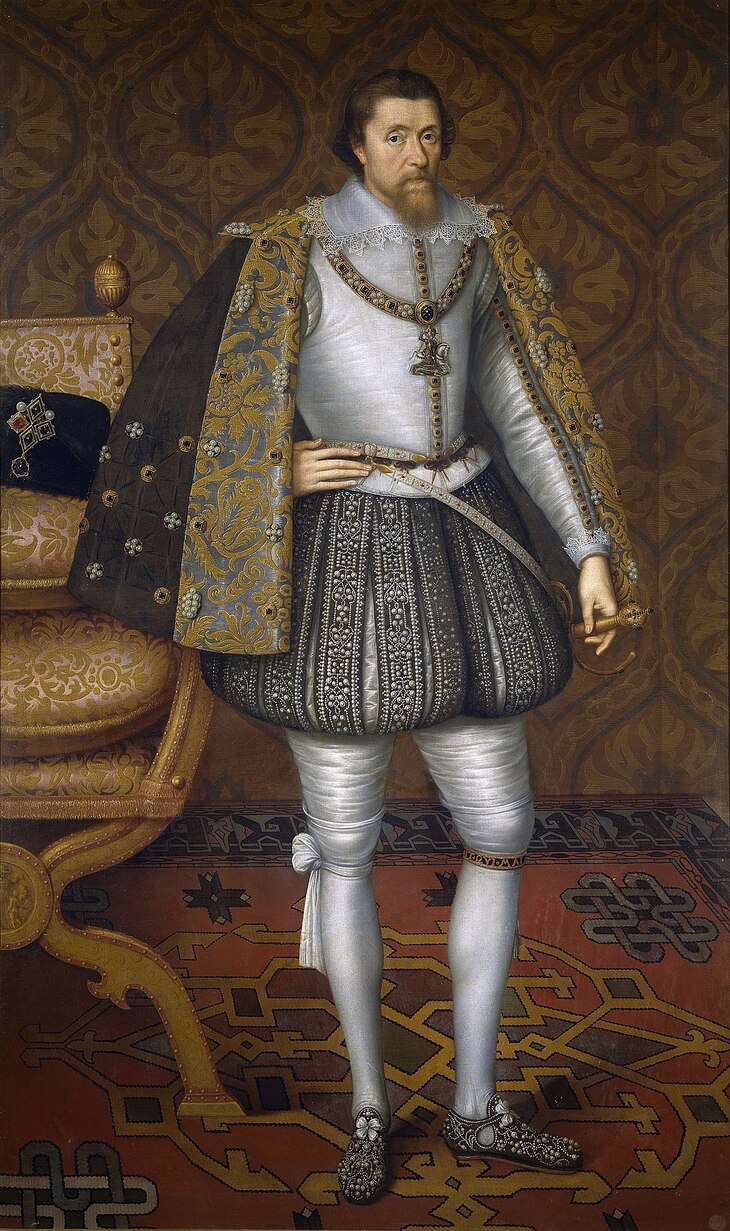
While Duck Island has long been all about the preservation of birds (there is even a sanctuary behind the house, where various fowl are taken to recover from ailments and injury), its origins were as a 'duck decoy', whereby irregular channels of water coaxed ducks into a dead end, where they were killed, to be cooked for the King's table. A 'Governor of Duck Island' was installed (a title later bestowed on the aptly named Stephen Duck), although he wouldn't have actually inhabited the island full-time; the first structure wasn't built on the island until the reign of William III — a teahouse in "one of the most enchanting summer retreats imaginable ... a paradise in miniature".
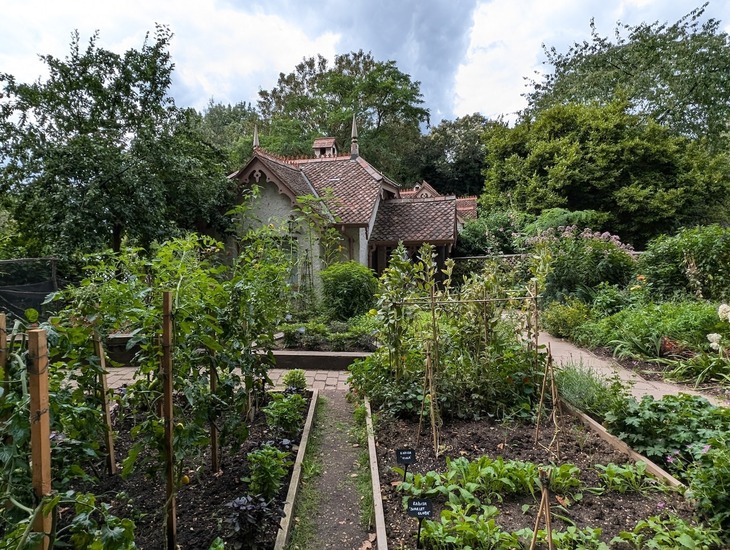
The cottage that hunkers down amidst the lettuce and sunflowers now — with its frilly bargeboards and spiky finials — was designed in 1840 by J.B. Watson, and built the following year at the bequest of the Ornithological Society of London "to serve as the residence of a keeper, upon the banks of the water". By this time, St James's Park had been heavily naturalised by John Nash, the architect who also remodelled nearby Buckingham Palace. From then on the Red Riding Hood-esque abode served as picturesque, if utilitarian, home for such bird keepers and park rangers — a kitchen and ornamental chimney stack added in 1884, from which the curling woodsmoke must've added another layer of fairy story kitsch.
Between 1900 and 1953, the cottage was the residence of 'birdman' Thomas Hinton (a bedroom was added in 1930, although there is no upstairs). Hinton could be seen from time to time plying the waters around his singular house in a row boat. After his death, a couple of 'spinster park keepers' called the cottage home up until 1980 (where's a BBC Archives documentary on this when you need it?), after which it became a store for confiscated bicycles.
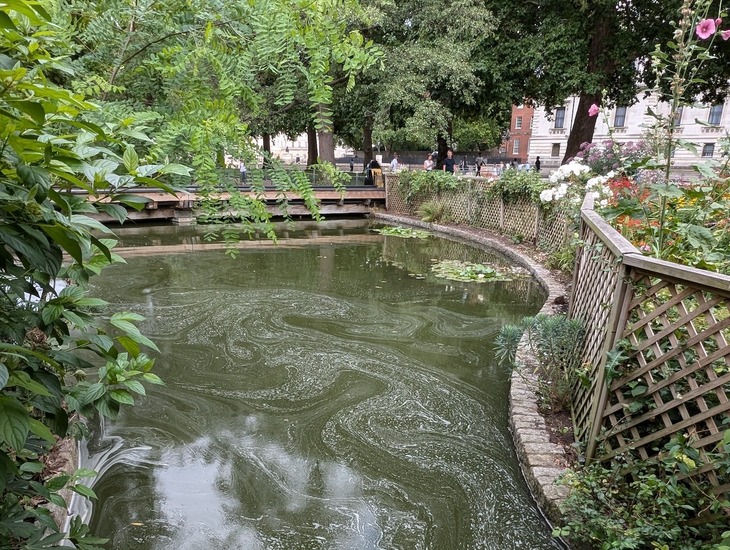
The question is: does anyone live here now? and the short answer is: no one calls Duck Island Cottage home anymore... and yet it remains very much occupied.
"It feels quite special when you come out of the cottage and hear kids going 'Ohhh, do they live there?!'" Jordan Gaughan from the London Parks & Gardens charity tells me. "I know if I was a kid I'd be imagining this glamorous princesses' house or king's house — so you feel quite special."
We're sitting in the office space that's occupied by Jordan, along with Tim Webb, Director of London Parks and Gardens — plus various volunteers who dip in and out.
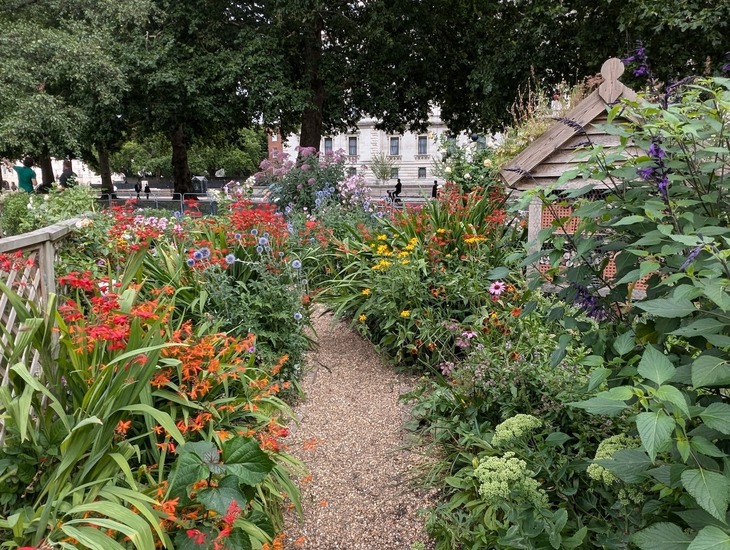
The cottage was occupied 'temporarily' by London Parks & Gardens in 1994, and for over 30 years now, has been the setting in which their small team pores over ways to celebrate and protect heritage green space across the city.
"It's trying to grow the love for green space in Greater London," explains Tim, "We need protection from climate change, development, infrastructure... we're losing green space. It's being nibbled away at the edges."
There could hardly be a more fitting place for them to be based; Jordan and Tim need only glance out of the window to see exactly what they're fighting for. "I'm very much an inner city kid," says Jordan, "My whole life growing up, my exposure to things like beautiful parks was because it was free stuff to do — I think it's so important to have inclusion for everyone in parks and gardens, and space for everyone to learn about what to eat, and how to grow things is so important. And that all comes off what we do."
Adds Tim: "Working in this location is a reminder of the value of it — because you see how much people love it. But you're also aware of the history, being in this building, and realising that heritage is not a static thing, it's not stuck in aspic. It's constantly evolving and changing.
"This used to be marshland, then it was a garden, then it was duck decoy for food — now it's a place where people come and enjoy it for leisure, and see the wildlife."
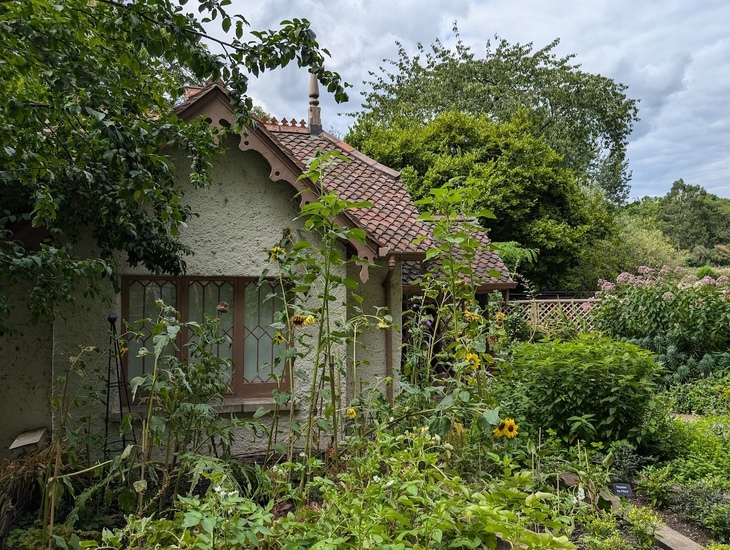
As well as enticing all sorts of wildlife — feathered varieties including Grey Herons, Great Cormorants, Kingfishers, and Rose-ringed Parakeets among many others — the garden and its folksy dwelling are also a magnet for curious children. As well as pinching the occasional wild strawberries, youngsters are prone to venturing across the loggia, and over to the cottage entrance. "You can hear them coming up to the door and then someone will open it, and then a parent going 'oh my god, I'm so sorry...'" laughs Jordan.
"If I'm coming in, and a kid wants to look, I'll go 'It's very boring inside, but you can poke your head in,'" says Jordan, who has put a small sign on the door declaring it a private office — to some, but far from total, success.
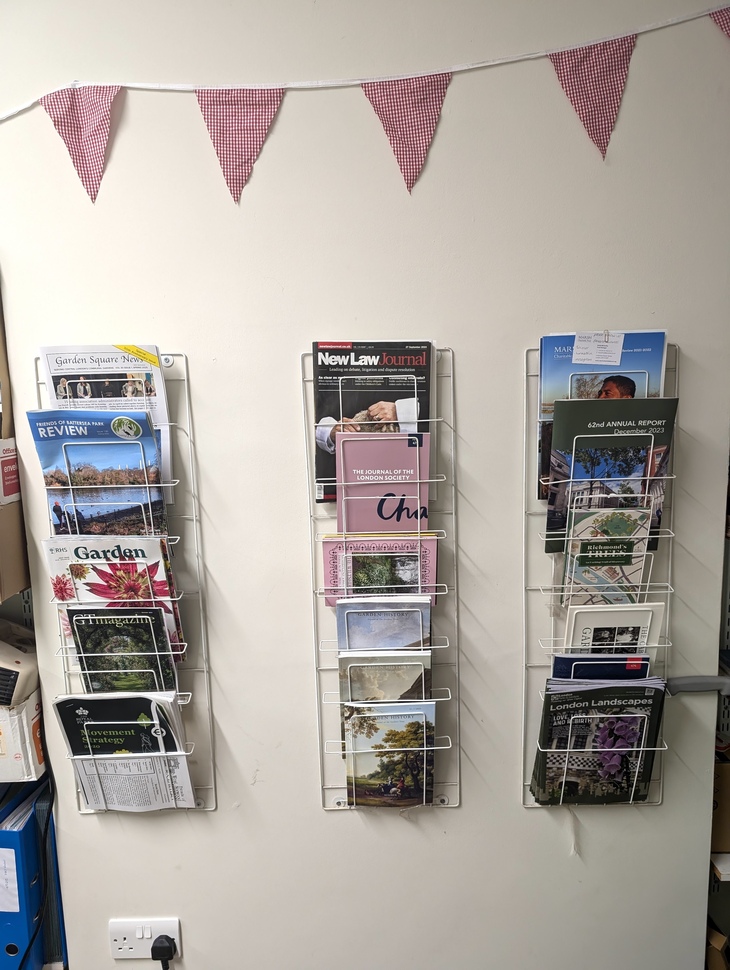
It's true, the cottage is nowhere near as whimsical as the exterior might suggest. A few desks are squeezed into the magnolia painted office space; shelves are filled with ring binders and back copies of The London Gardener. Anyone hoping for a roaring log fire (it gets chilly here in the winter) or a kettle whistling on the stove, will be disappointed by the electric heater. Still, there are touches of Hansel and Gretel: gingham bunting draped on the wall, the intermittent swoosh of leaves in the wind through the lozenge-latticed glazing bars, the quack of a duck — or the parp of a brass band courtesy of the horsey neighbours across the way.
"Walking into such a beautiful English cottage style garden in the morning — even in winter when it's not as lush and green — is something I've never experienced in the many different careers I've had," says Jordan, "And the wildlife is amazing. If you need a moment away — even just to stand on the bridge just outside the front door — one way you can see the pelicans being fed, you might look another way and there's a heron on a rock.
"In autumn and winter you see bats in the trees, with the sun setting."
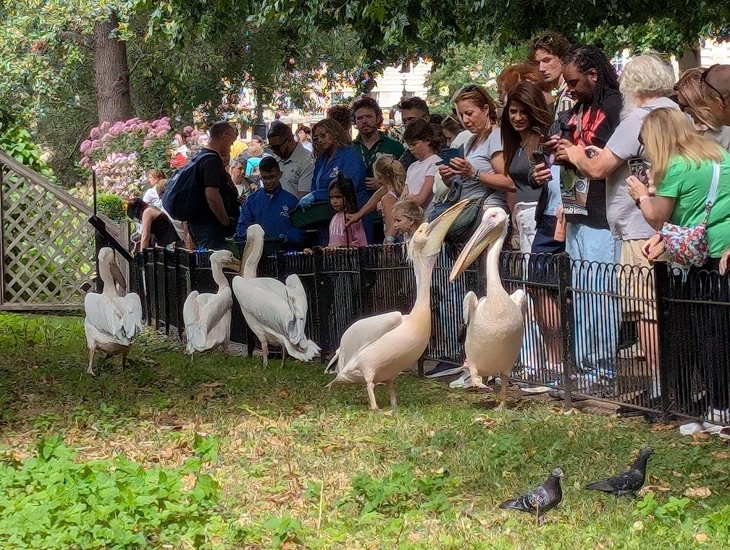
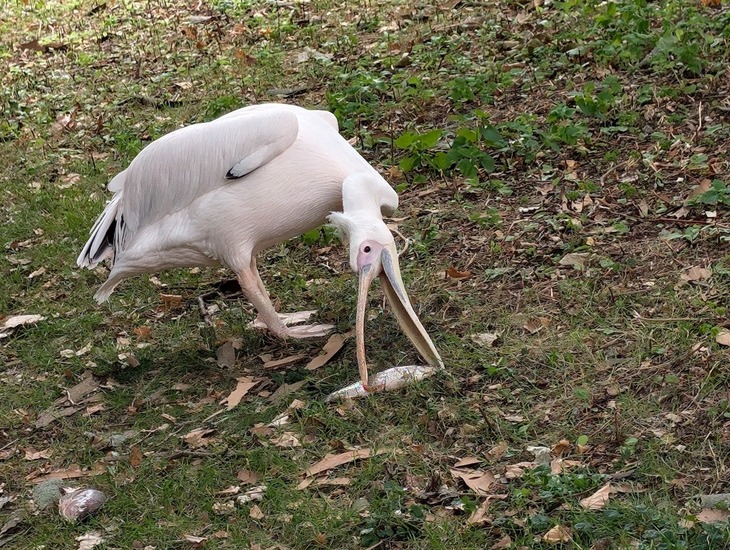
This might be Duck Island, but make no mistake, it's those Great White Pelicans — six birds named Isla, Tiffany, Gargi, Sun, Moon and Star — who are the park's star attraction. The time to catch them is around 2.30pm-3pm each day, when they gobble up whole fish tossed to them by the park keepers, and strut about in preening Mick Jagger fashion, showing off their dashing 'haircuts'.
There have been pelicans in St James's Park since a pair was gifted to Charles II by the Russian Ambassador in 1664, and three centuries after, one of them caused a kerfuffle when it was blown through a Whitehall window, rudely interrupting a War Office meeting. When they had to be kept in their enclosure because of a bird flu outbreak recently, says Tim, people were asking "Where are the pelicans?" There's that heritage in action.
It is strange to think this quaint Victorian cottage is also in the tourism heartlands of one of the world's most visited cities. Across the road, foreign dignitaries pull up in black Mercedes round the back of Downing Street, greeted by armed guards. (Testament to its central London location, in the 1890s Duck Island also briefly housed a bomb disposal unit, where explosives were snuffed out using a hydraulic press and a mercury bath contraption.) "It's very unusual I suppose to work this close to central London and Parliament and feel so secluded once you step into the office," says Jordan, "It's quite magical." If the cliche goes that London's a city of contrasts, then here's the proof.
Another perk of working here, says Jordan, is occasionally being offered vegetables and plants from the Royal Parks gardeners, although other aspects of life in the cottage are perhaps a little too rustic; there is no running water (a morsel of trivia which almost makes me spit out my tea), and if you need the toilet you have to dash over to the park's public facilities. "It is the glamping version of office work," Jordan grins.
By the way, if you're looking to purchase the place, in 1997 the island and house were valued at £2m. Given the precipitous rise in London property prices since then, you could perhaps bung a zero on the end. But anyway, it's not for sale — so that's for the birds.
Though Duck Island Cottage itself is strictly private, you can visit the gardens out the front, and a gift shop is open in the front portion of the building Thursdays-Sundays. Read more about the history of Duck Island Cottage on the London Parks & Gardens website.
All images by Londonist, unless otherwise stated.