The latest book by Paul Talling — the man behind Derelict London — is an epic pub crawl of London's drinking establishments which have bitten the dust. But within this sad story, there's a more positive narrative; the pubs that've risen from the dead, and in many cases, are now in finer fettle than they've ever been before.
Here, Paul takes us to 10 such resurrected boozers.
1. Clayton Arms (now the Prince of Peckham), Peckham
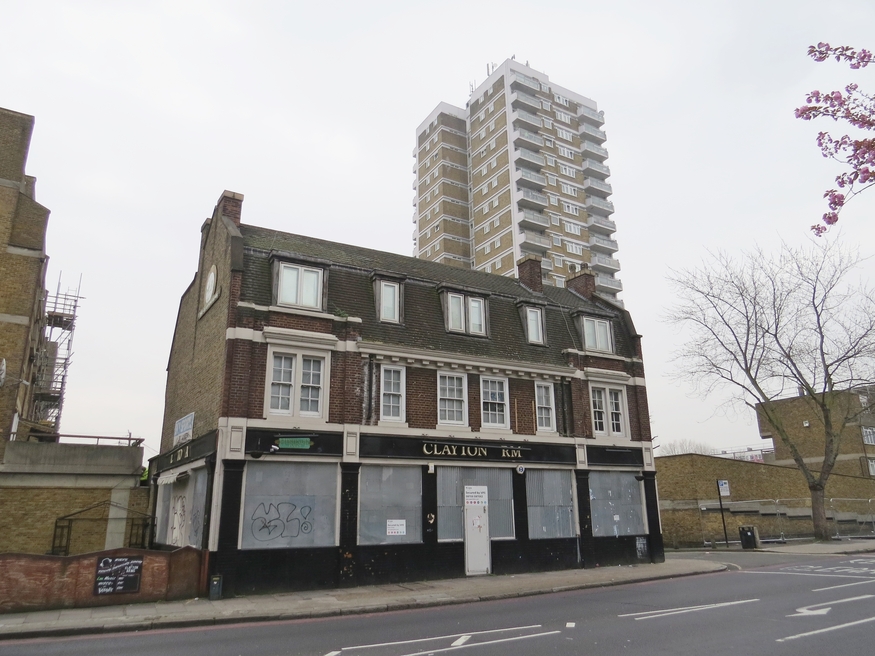
The Clayton Arms has a history tracing back to at least 1867. A tragic incident occurred at the pub in 1948 when a patron, Mrs. Annie Newson, mistook the door to the wine cellar for the ladies' restroom. She fell down the stairs and later died in the hospital.
During the 2011 riots, the pub was ransacked by a group of 50 youths, leaving it in a severely damaged state. This decline ultimately led to its closure in 2013.
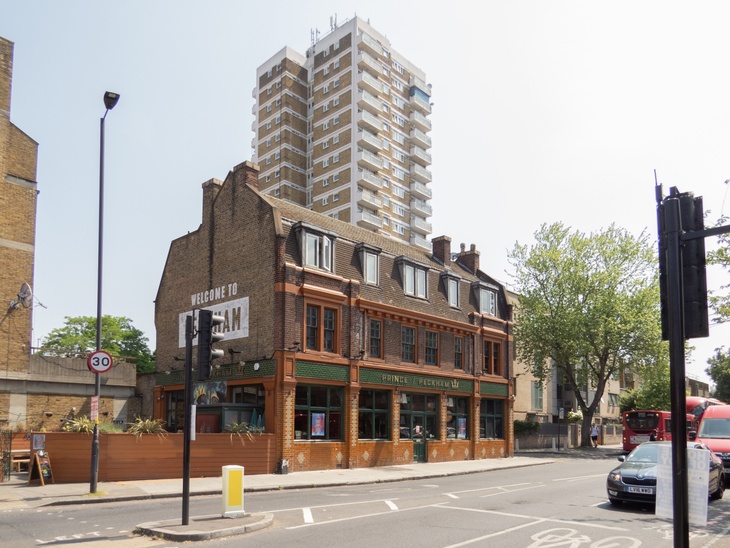
The pub briefly reopened in 2015 as the Dolls House which was part cocktail bar/gastro pub with a members club type private area. It promptly closed and re-opened again in 2016 as the Clayton Arms before being taking over by businessman Clement Ogbonna who sold his flat to finance the venture renaming it the Prince of Peckham. The name is inspired by 90s TV show, Desmond's and its character Lee 'The Peckham Prince' Stanley.
The Prince of Peckham has been a roaring success and recently Time Out magazine voted it the 19th best pub in London. It's been used to film TV programmes such as Sky's drama, Temple, as well as being used for numerous commercials, music videos and photo shoots.
Prince of Peckham, 1 Clayton Road, Peckham, SE15 5JA
2. Greyhound, Sydenham
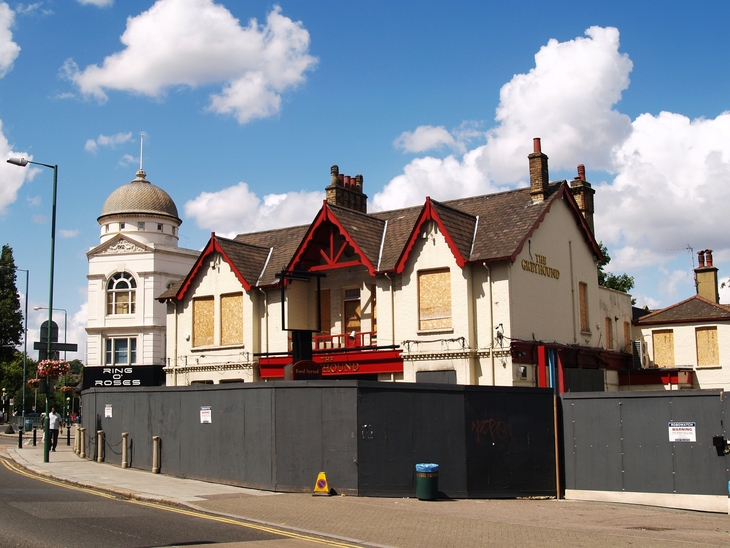
An inn has occupied this site since at least 1730, originally serving as a meeting spot for local hunters when the surrounding area was an ancient forest. Greyhounds were used for hunting here, valued for their speed and sharp vision. Business at the Greyhound Inn thrived with the construction of the Croydon Canal, which operated from 1807 to 1836. The inn offered refreshments to the navvies who built the canal and served as a rest stop for those using the canal for work or leisure. An early painting depicts pleasure boats moored at a landing stage near the inn.
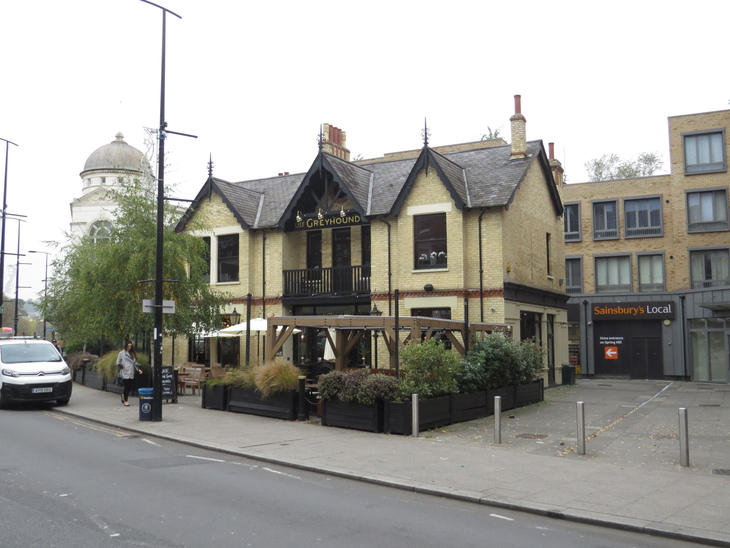
In the 1990s, the Greyhound was renamed the Fewterer and Firkin, but reverted to its original name in 2001. The pub later closed as plans emerged for a development of flats, and it caught fire while vacant later that same year. In 2012, the 18th century building was demolished without authorisation, leaving only the front wall standing. The construction company was fined by the council, and the pub was subsequently rebuilt and reopened in 2018.
Greyhound, 313-315 Kirkdale, Sydenham, SE26 4QB
3. Hope & Anchor (now Cafe Koko), Camden Town
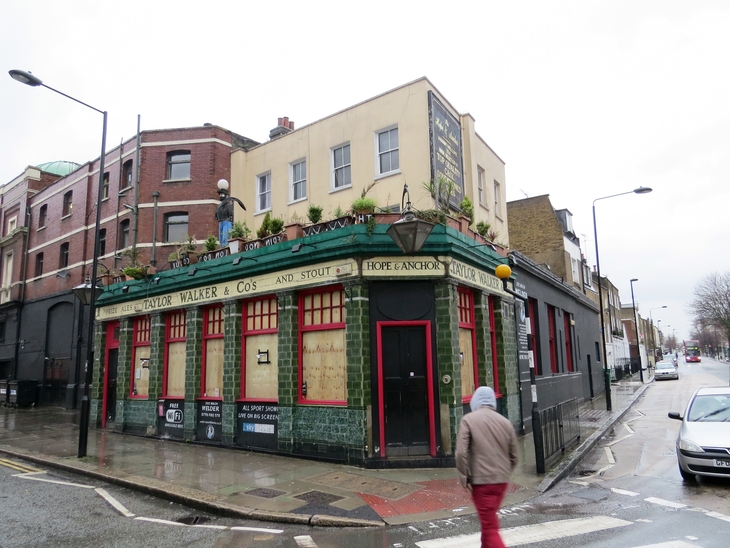
The Hope and Anchor opened in the 1860s. The name comes from the Epistle to the Hebrews of the New Testament: "We have this as a sure and steadfast anchor of the soul, a hope."
By 1900 the Camden Theatre opened which gave the pub increased trade. Over the years the Theatre changed into a nightclub, now Koko. During recent decades the pub's staff and locals endured clubbers popping in for a drink but were pretty hostile to the ones in the queue solely coming in to make use of their toilet facilities. In fact, the pub often seemed hostile to any passing trade. Old school Camden was quite rough and ready but some of the regulars of this pub were quite abrasive right up until its closure in 2013. I used to come here after walking tours but ceased to visit after a near altercation at the pool table when heading to the gents toilet. In happier times bands like Madness and Radiohead had been known to stop off at the pub before a gig.
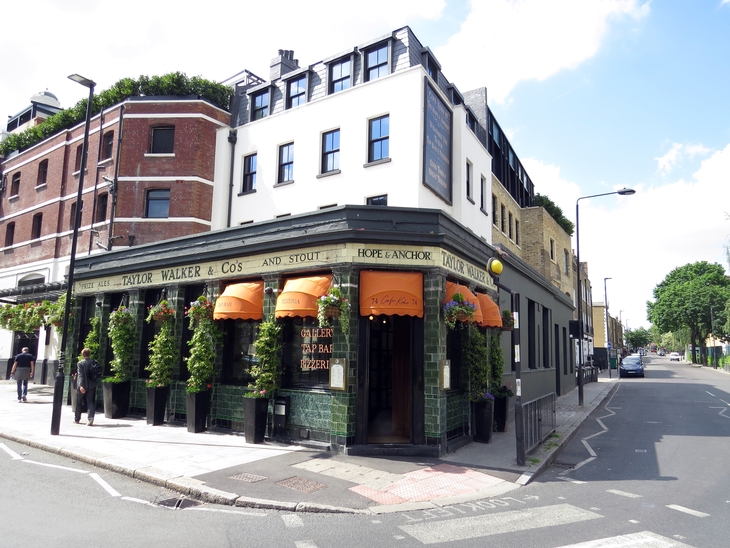
After abortive plans to convert it into flats the pub has been renovated and reopened in 2022 as Cafe Koko, a tap bar and pizzeria. It's certainly friendlier than the old place, though quite upmarket.
Cafe Koko, 74 Crowndale Road, Camden Town, NW1 1TP
4. Jolly Sailor, South Norwood
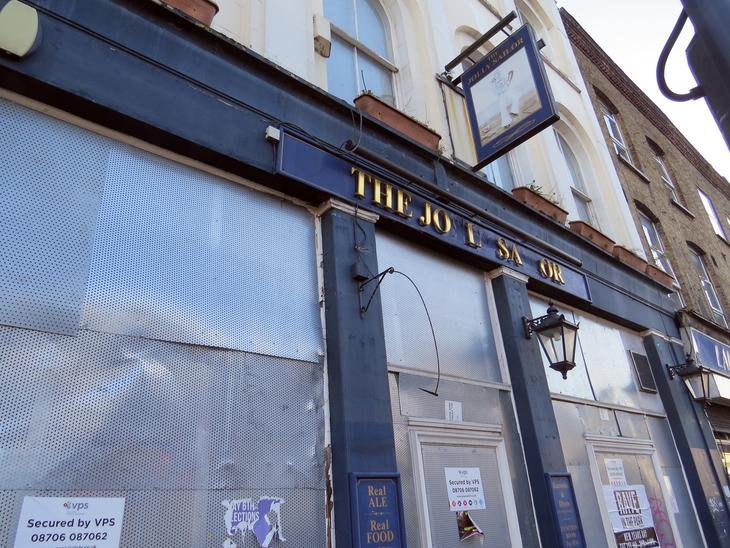
The pub has a rich history, first opening in 1810 alongside the newly completed Croydon Canal and later being rebuilt in its current form in the late 1860s. Legends surround the pub, including tales of a haunted cellar once used by smugglers to stash contraband, and the original building even featured a boxing gym upstairs. In 1828, the London and Sporting Chronicle reported on a notorious prizefight between Ned Savage and Peter Sweeney, who trained at the Jolly Sailor, a bloody match held on the canal banks that shocked the local community.
The Croydon Canal, however, proved a financial failure and closed in 1836. A railway line from London Bridge to Croydon was constructed, roughly following the canal's path. South Norwood's first station opened in 1839 and was initially named The Jolly Sailor after the pub, before being renamed Norwood in 1846 and the current name of Norwood Junction by 1856.
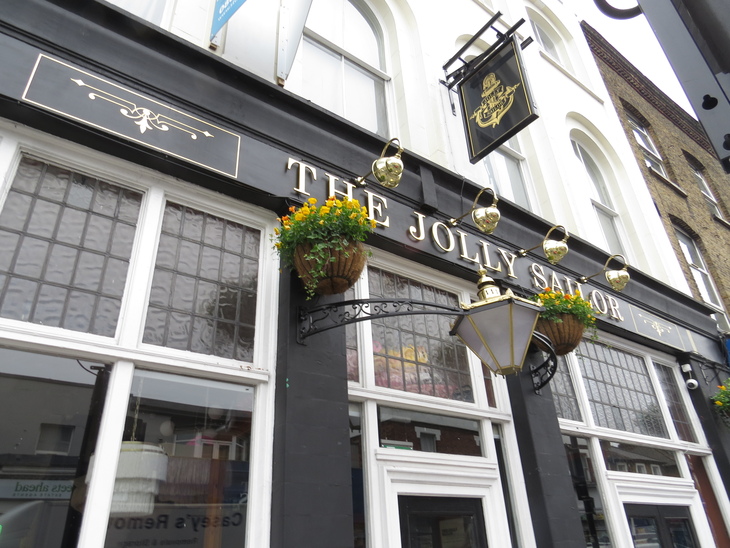
The Jolly Sailor closed in late 2019. A harsh review on Beer in the Evening described it as "a local pub for local people, like the Slaughtered Lamb in American Werewolf," though in my experience, it was a cozy little pub, and the landlady, Val, was friendly, even inviting me to a free BBQ shortly after. The only downside was the 1990s blue and purple lighting. Popular with Palace fans on game days, the pub featured football on TV, a darts board, and a pool table. Evenings included karaoke and occasional live bands playing ska and reggae. After a period of uncertainty, the Jolly Sailor reopened in 2023.
Jolly Sailor, 64 High St, South Norwood. SE25 6EB
5. Kensington Park Hotel (now the Knight of Notting Hill), Ladbroke Grove
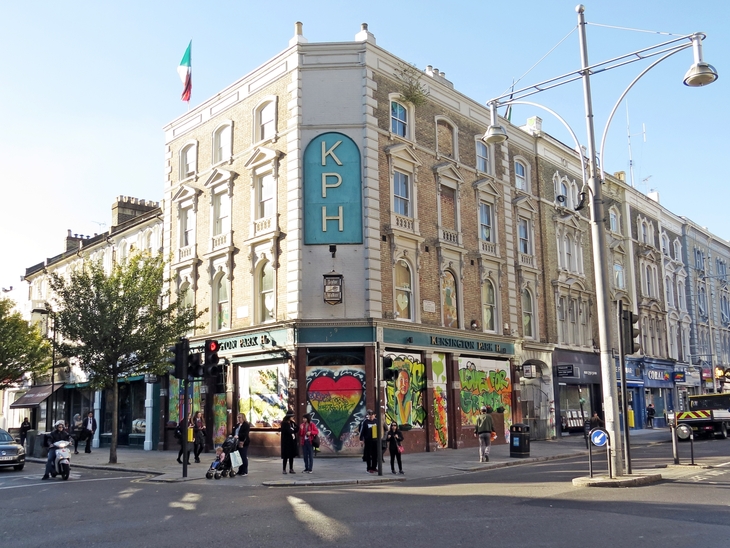
The Kensington Park Hotel, widely known as the KPH or "Keep Paddies Happy", was built during the 1860s, catering to Irish labourers who built Notting Hill. In 1956 a 19-year-old labourer from Dublin who had been performing songs in the saloon bar left the pub and was found stabbed to death on the pavement a few yards away. In 1929 a theatre was opened on the first floor of the KPH, where Tom Jones sang his first London concert in 1960.
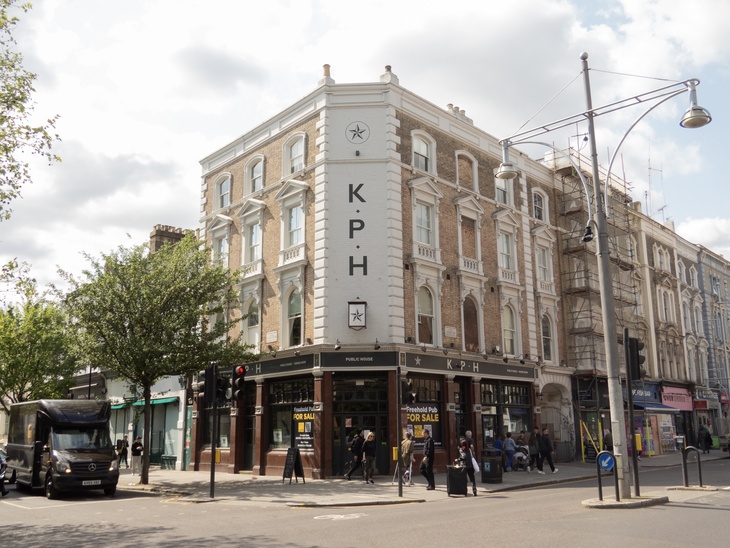
One regular drinker here was Timothy Evans, who was wrongly hanged in 1950 for murders committed by serial killer John Christie at 10 Rillington Place. Other regulars over the years have been Oswald Moseley, Cerys Matthews, Eddie Izzard and members of The Clash and Thin Lizzy.
The survival of the pub had been in doubt for over a decade. The landlord who ran it for 40 years became too ill to run the pub and management was, in 2013, handed over to music venue and festival entrepreneur Vince Power though a new freeholder set about terminating the lease. After closure in 2017 the KPH reopened two years later but had closed down again by 2022. The pub reopened as the Knight of Notting Hill in 2023.
Knight of Notting Hill, 139 Ladbroke Grove, Notting Hill W10 6HJ
6. Lord Napier (now Lord Napier Star), Hackney Wick
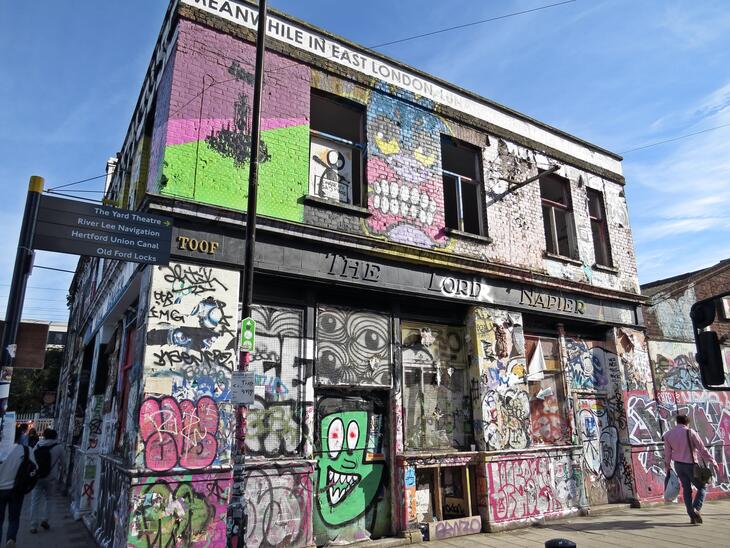
This pub opened in 1865 as The White's Arms, named after its original owner, Mr. White, but was soon sold and renamed the Lord Napier. Together with the nearby Lea Tavern — demolished 15 years ago — it was one of two 19th century pubs serving a district of Victorian houses and industrial sites. Across the street stood a distillery operated by the Carless, Capel & Leonard Company, a leading British producer of American crude oil. The company is best remembered today for coining the trade name "petrol" in the 1890s to market its fuel.
The adjacent railway station, visible in the background of this photo, has a dark history. In 1864, the body of Thomas Briggs was discovered on the line between Bow and Hackney Wick: while aboard the train from Fenchurch Street, he had been robbed and murdered by a German man named Franz Müller.
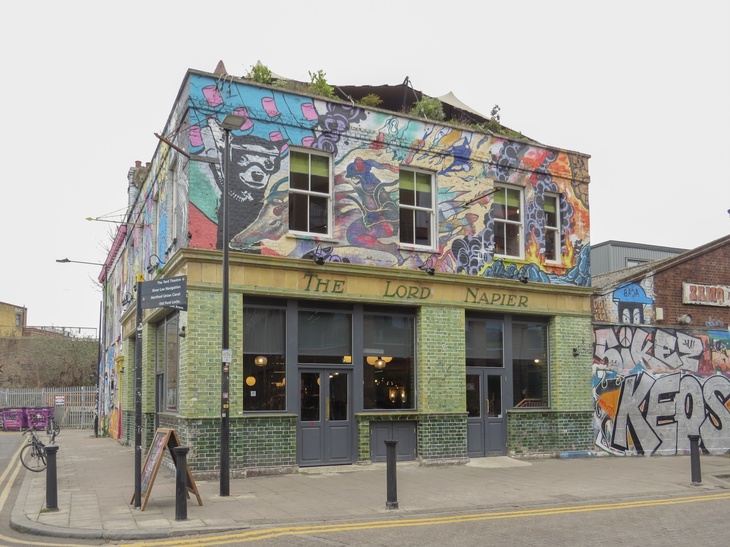
The Lord Napier finally closed in 1995. Along with the adjoining two derelict houses, it is one of the sole survivors of the original 19th century development. The pub was squatted for many years and was noted for its rave parties, becoming a Hackney landmark thanks to the colourful street art on its walls. But the area has rapidly gentrified, and the pub reopened in 2021 as a lively and successful pub.
Lord Napier Star, 25 White Post Lane, Hackney Wick, E9 5EN
7. Red Cow (now the Copper Tap), Peckham
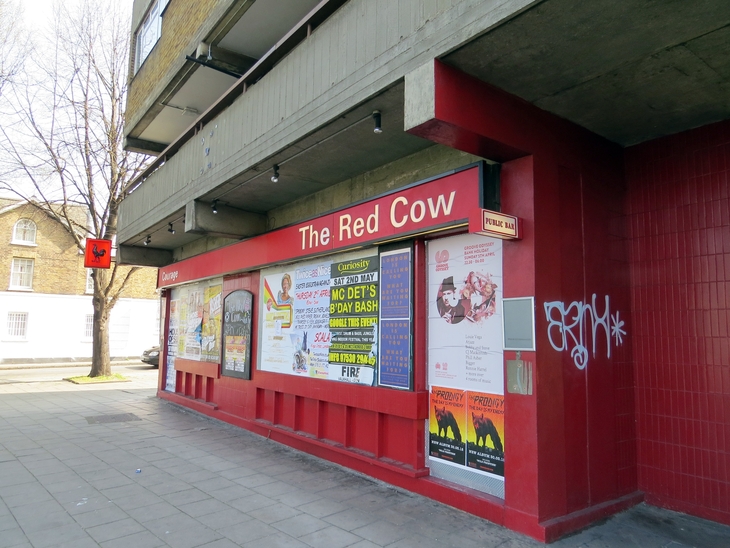
The history of the Red Cow in Peckham goes back over 200 years. Peckham was mostly a farming community and drovers used Peckham as a stopping place before going onto the markets of London. Their herds were put out to graze while the drovers took refreshments at the various inns. Rebuilt in Victorian times, the Red Cow stood here as a grand three-storey pub at the junction of Peckham High Street and Consort Road (originally called Cow Walk) until being demolished in the late 1960s to build a housing estate. The replacement pub sits beneath a local authority housing block.
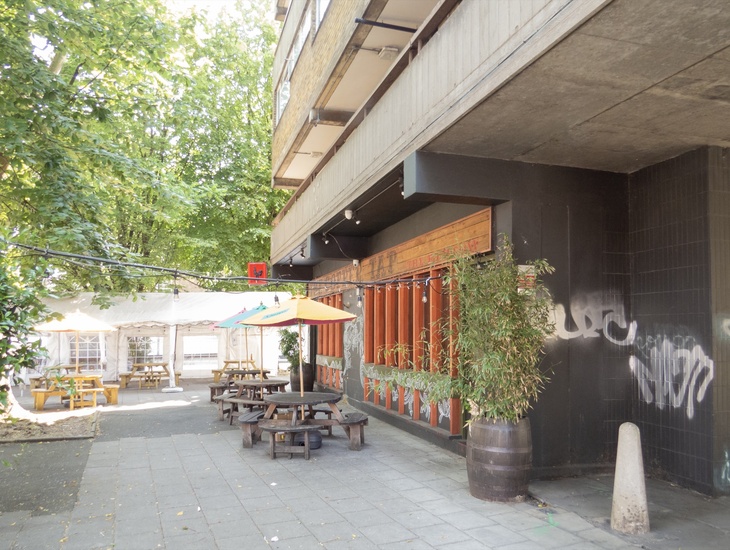
During the early 1980s the landlord of the Red Cow was Joey Singleton, a former British light-welter champion, winner of the Lonsdale Belt and known as "Joey the Jab" to his friends.
The Red Cow, which had a typical estate pub vibe, closed in 2015 but reopened only a year later after refurbishment to give it a more rustic feel, and was renamed the Copper Tap.
Copper Tap, 190 Peckham High Street, Peckham, SE15 5EG
8. Star of the East, Limehouse
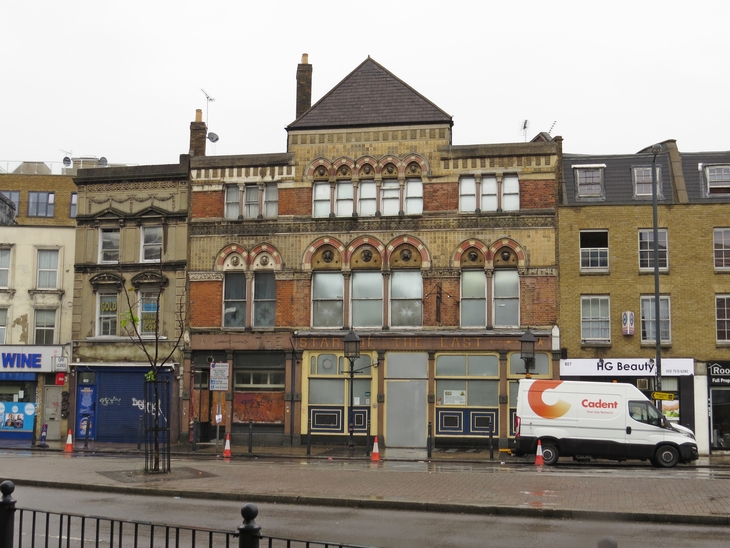
The Star of the East, built in the 1840s and Grade II listed in 1973, has a fascinating history. During Victorian times, it served as a venue for coroner's inquests. From the 1870s into the 20th century, the pub was managed by the Baxter family. In its early years, Mr. H.W. Baxter drew visitors by showcasing an unusual attraction: the purported 2,000-year-old Peruvian mummy of a teenage girl.
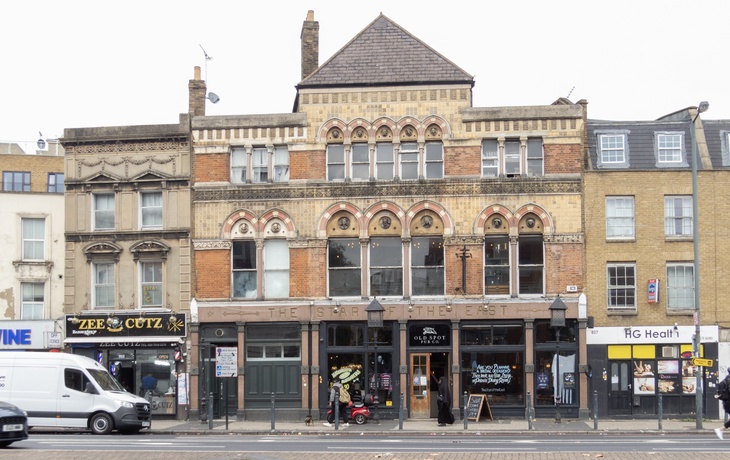
The pub closed down in 2008, reopened, then limped on until 2016. Most of the times I went in this place it was pretty dead with a couple of regulars and the pub cats. Sometimes very friendly though I stopped going there as the lager didn't taste right, the Guinness was lumpy and the red wine was terrible.
After renovation the pub reopened, and it is very different to the old days, having been reinvented as a gastro pub.
Star of the East, 805A Commercial Rd,Limehouse, E14 7HG
9. Well & Bucket, Bethnal Green
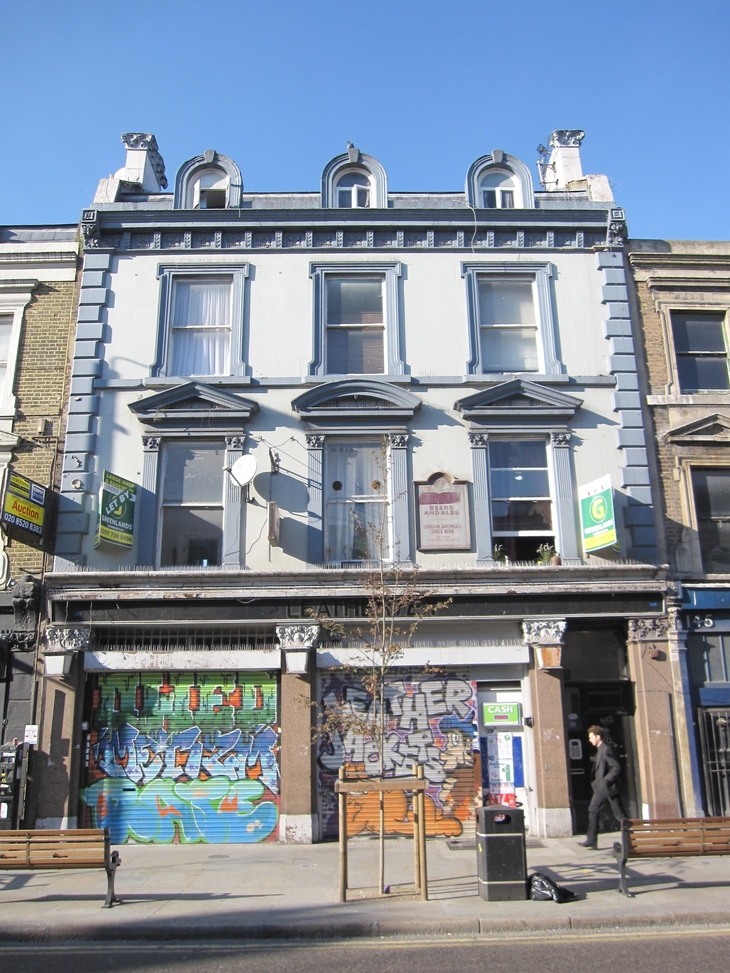
The Well & Bucket goes back to the early 19th Century when this road was originally called Church Street. According to What's in a London Pub Name? by James Potts and Sam Cullen, the name Well & Bucket is thought to originate from the fact there was a well by the site of the pub, which potentially even supplied the water to help make the beer here.
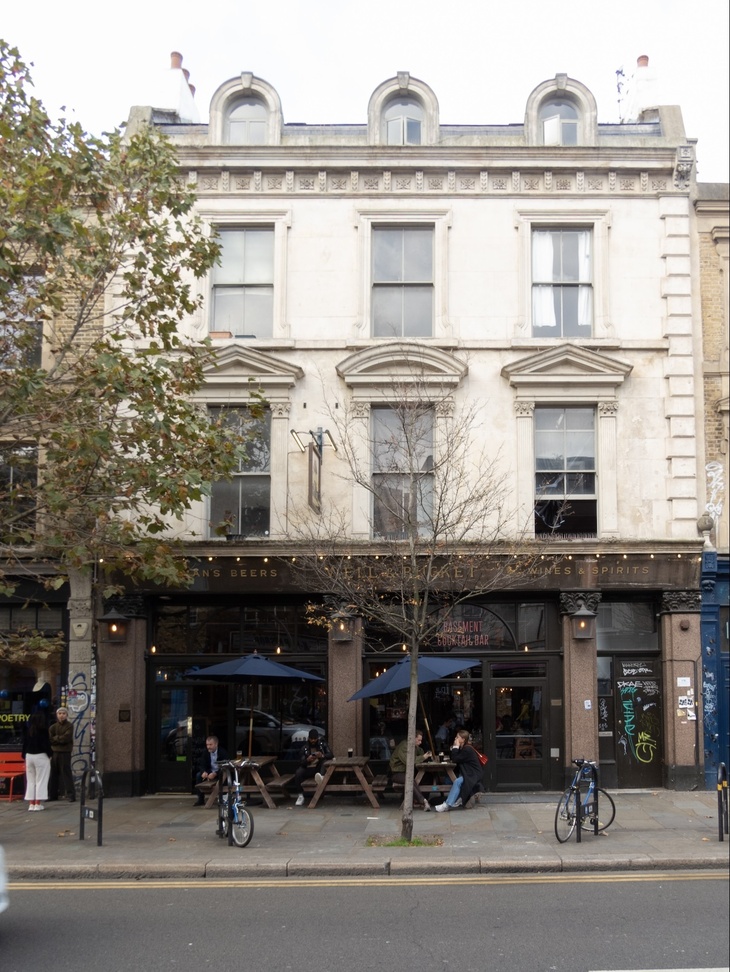
During the 1970s the Stage newspaper described the pub as the "cheerful little Well & Bucket" and several articles talk about when singers and comedians performed charity shows. Live music became a mainstay of the pub when it was renamed the Stick of Rock in 1988, run by Steve Bruce the drummer from Cock Sparrer who hosted metal and punk bands here, including Tenpole Tudor, U.K. Subs, Demented Are Go, The Adicts and Blitz. The popularity of the venue led to Steve getting offers to reform Cock Sparrer, which he did and they performed a warm up gig/rehearsal in the pub in 1992 just before playing the 2,000 capacity Astoria that evening. They're playing gigs around the world to this day.
The Stick Of Rock closed in 1993. The ground floor was later used as a leather wholesalers who had vacated by 2011, before being converted back to the Well & Bucket in 2013.
Well & Bucket, 143 Bethnal Green Road, Bethnal Green E2 7DG
10. Tipperary, Fleet Street (reopening again in 2027)
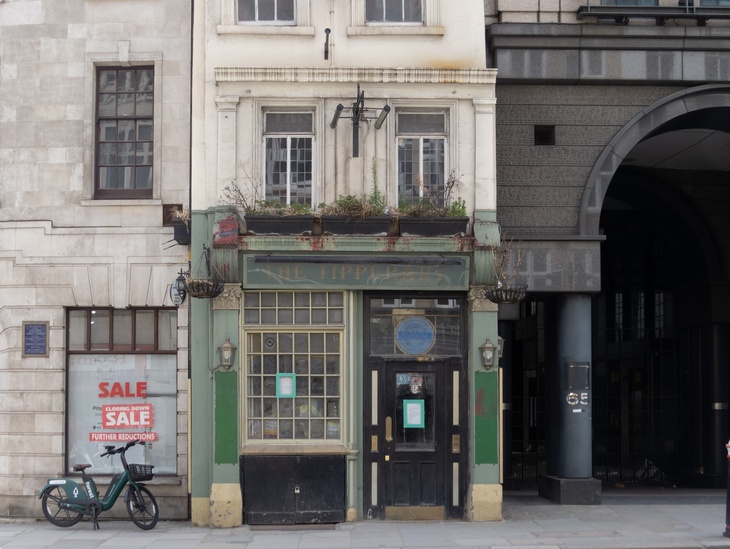
The Tipperary was declared as 'London's original Irish pub' on signage by the door — though, that's incorrect, as I'll explain in a minute. For many years it was a well-known haunt for editors and journalists, alongside barristers from the nearby chambers.
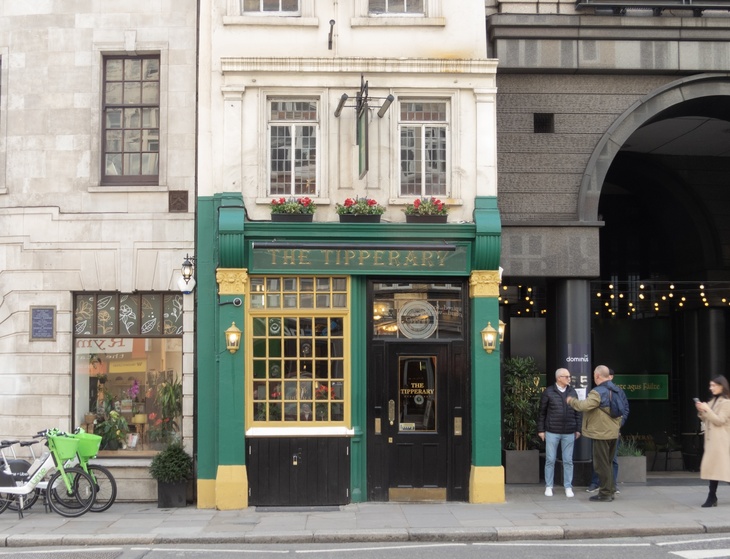
Originally there was a 15th century inn here called the Boar's Head adjacent to the site of a Carmelite friary known as Whitefriars. Although the front of the pub is early 20th century, the main building dates from 1667 after being rebuilt after the Great Fire of London. Dublin based Mooney's Irish House acquired its first pub in London in 1889 on The Strand, and the Boar's Head was its fourth London outlet, taken over in 1895. The pub was renamed The Tipperary in 1968. The pub claimed to be the first pub outside Ireland to have bottled Guinness, and later draft, though Guinness was actually exporting to inns in Bristol from earlier that century in both cask and bottle.
The pub shut in 2020, having struggled to cope with the lack of office workers in the City. However, with workers returning, the pub reopened in 2024. Since then it has closed once again, but plans are afoot to reopen once more in 2027.
Tipperary, 66 Fleet Street, Temple, EC4Y 1HT
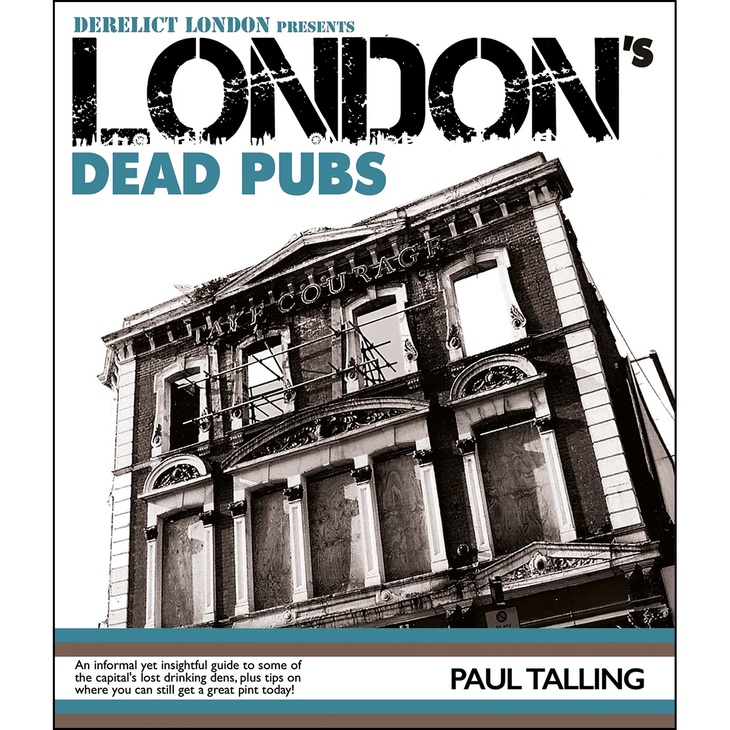
London's Dead Pubs by Paul Talling, published by Damaged Goods on 25 June 2026 — available for pre-order now.
We featured this book because we know it's the kind of thing our readers will enjoy. By buying it via links in this article, Londonist may earn a commission from Bookshop.org — which also helps support independent bookshops.
All images in this article © Paul Talling.