A guide to the London 2028 Mayoral elections.
When are the next London Mayoral Elections?
4 May 2028. Cue lots of tired jokes about it coinciding with Star Wars Day.
Who are the main candidates?
Labour: Sir Sadiq Khan has made noises about once again entering the race. Khan will have served 12 years as Mayor of London by this point, four more than any previous incumbent. However, he was recently appointed a Lord, and may well decide to move on to pastures new (or old and erminey).
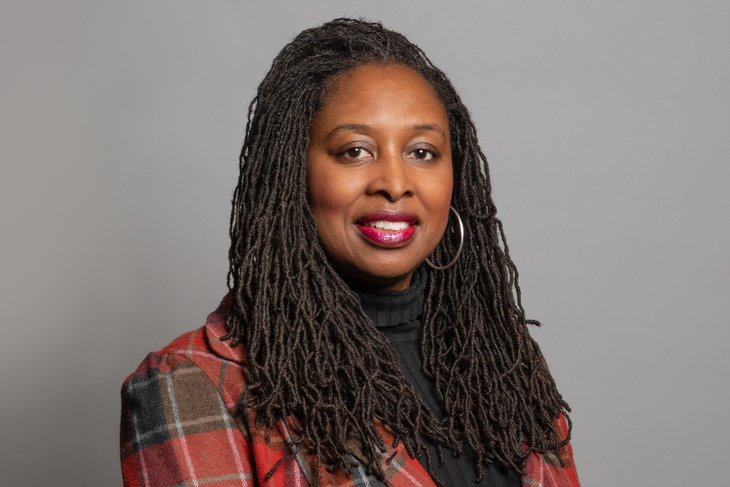
Were Khan to drop out, we'd probably see quite a few names put themselves forward. Brent East MP Dawn Butler has already indicated that she would stand if Khan were to step aside (slogan: "a new Dawn for London"). Others would no doubt follow. David Lammy MP might be among them.
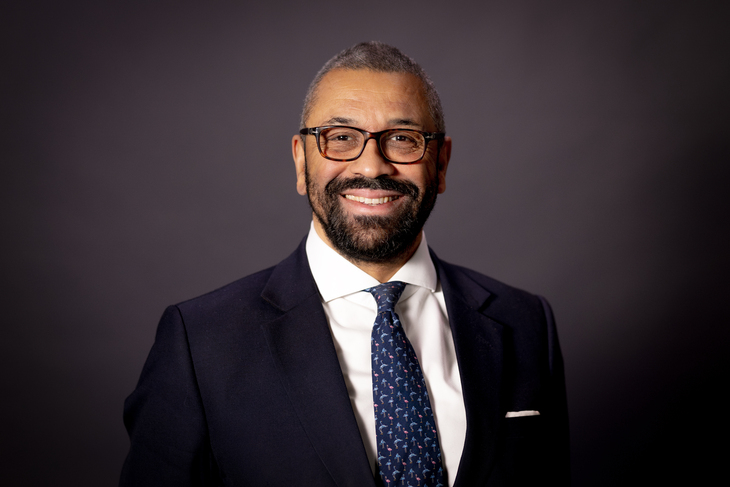
Conservative: Here, the most high-profile contender is Sir James Cleverly MP, who recently quit the Shadow Cabinet to build support for a Mayoral bid. Cleverly knows the territory well, having served as an Assembly Member for eight years (2008-2016). His time as both Home Secretary and Foreign Secretary make him a formidable figure, though his background as a staunch Brexiter won't help endear him to the London electorate.
Westminster councillor Festus Akinbusoye, who was also Britain's first black police commissioner, has also indicated his intention to stand. Alex Challoner, who made a bid at the last election, is back for more. His leading pledge is to put uniformed police officers in train stations to deter fare dodging.
Other candidates will no doubt emerge soon. Justine Greening and Nickie Aiken are often touted, as is Seb Coe, the former athlete and London Olympics supremo who certainly has plenty of recognition among the wider public.
Reform UK: In a decisive move in January 2026, the party put forward Westminster councillor Laila Cunningham as their candidate, without any internal election.
Lib Dems: Richmond MP Sarah Olney has thrown her hat into the ring. Her early policy suggestions include a Deputy Mayor elected by businesses, and a renewed focus on policing.
Greens: No one has formally put themselves forward.
Independents: Respected architectural journalist and former chair of the London Society Peter Murray has opened an independent campaign. Numerous other independents will likely follow suit, with comedian James Corden an unlikely possibility, and disgraced egoist Russell Brand an even more unlikely prospect.
Is this just a mayoral election?
Importantly, the election day is not just to determine the new Mayor. Londoners will also vote for London Assembly members — 25 in total.
What does each major party candidate stand for?
Unknown. We're still to far away from the election for any candidate to set out detailed plans. That said, both Cleverly and Cunningham have spoken out about the capital's increasing unaffordability, particularly around home ownership.
Quick reminder: Who were the previous Mayors of London?
Only three people have served as Mayor of London since the role was created at the turn of the millennium. The election takes place every four years (with one anomaly caused by Covid).
- Ken Livingstone ruled the roost from 2000 until 2008, having performed a similar role as head of the Greater London Council in the 1980s.
- Boris Johnson succeeded him in 2008, and remained in post for two full terms until 2016. (Although some would say his attentions had wandered elsewhere in the final years.)
- Sadiq Khan took on the mantle in 2016. He was re-elected in 2021 in an election delayed for a year because of Covid-19. He was once again returned to City Hall in the 2024 election.
What powers does the Mayor of London actually have?
For such a high-profile position, the Mayor of London has surprisingly limited direct authority — and most of this power is concentrated in a few pockets: transport, policing and housing.
And they can't just do as they please. The Mayor's initiatives are scrutinised and held to account by the London Assembly. Mayor and Assembly together form the Greater London Authority (GLA), which works closely with local councils and is required to follow central government guidance.
So while a Mayor has the power to, say, develop planning strategy, it's down to local councils to approve this — and, in turn, central government is in control of how these councils are allowed to raise the requisite funds.
This could change significantly in coming months. Prime Minister Andy Burnham (former Mayor of Manchester) wants to give city mayors greater powers over planning decisions, in addition to enjoying more 'fiscal devolution' (more cash from income tax, tourist tax and local other revenues).
An outline of the Mayor of London role can be found here.
How does Mayoral voting work?
We're back to the Supplementary Vote system. Voters will be asked to indicate a first and second preference for Mayor. If no candidate wins an absolute majority (i.e. more than 50%) of first choice votes, all but the top two candidates are eliminated, and votes for eliminated candidates are redistributed according to the voters' second-choice candidates.
Most London Mayoral elections have been contested this way. The 2024 election, however, was decided on a first-past-the-post system.
How does the London Assembly vote work?
You'll vote for your Assembly members at the same time as casting a Mayoral vote. Here, you get to vote twice:
1) Vote for a constituency member. London is divided into 14 constituencies, which are typically pairings of neighbouring boroughs, like Greenwich and Lewisham, or Croydon and Sutton. A number of candidates will stand in each constituency, and you select the one you'd most like to represent you. Again, first-past-the-post wins.
2) You also get a say in who gets to be London-wide Assembly Members. Here, however, you vote for a party rather than an individual. Once votes are counted, 11 London-wide Assembly Members are appointed based on party share of vote, with individuals drawn from pre-published lists.
Who can vote?
If you're over 18, registered to vote and live within one of London's 33 local authorities, then you're good. The ballot box beckons for all registered electors who meet those criteria, be they British, Irish, Commonwealth or European Union citizens (with caveats). Find out more about registering here.
Will I need ID to vote?
Yes, voter ID will be required, along similar lines to other recent elections.
Who's the favourite to win?
We're so far off that current polls are almost meaningless. That said, recent polls asking for voting intention along party lines show Labour to have up to a 15-point lead over rivals.
When will we know the result
Barring any mishaps, the votes should be counted and results announced the day after the election, 5 May.