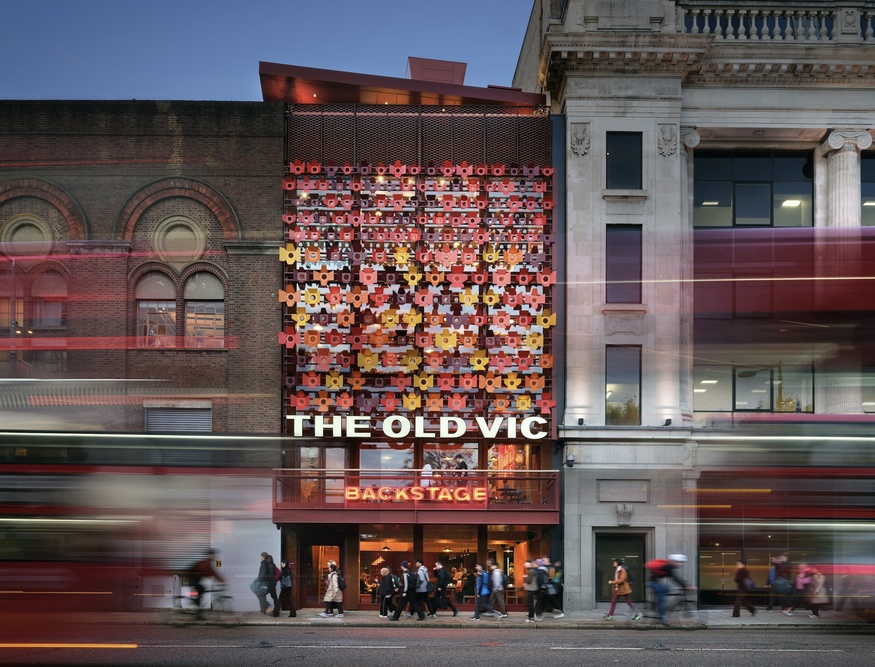
A £17.2m extension for Waterloo's historic Old Vic Theatre.
It has seen everything from Gielgud's Hamlet to the now-traditional annual airing of Jack Thorne's adaptation of A Christmas Carol. Now, the Old Vic Theatre has opened a major extension, the 'Backstage' building.
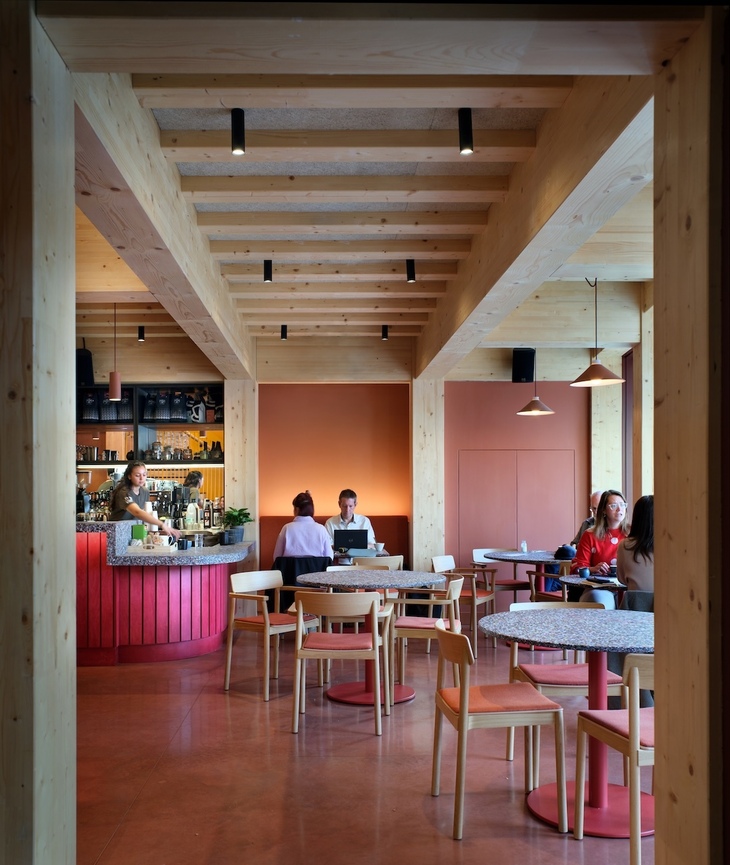
The new building — designed by Haworth Tompkins Architects, with frontage on Waterloo Road — features various spaces open to those in the theatre industry, as well as schools, colleges and the general public, including the Greene Studio (a rehearsal room/studio theatre), a free-to-use script library, a cafe and workspace which evolves into a bar/restaurant in the evenings, and a hireable events space featuring views of the London Eye.
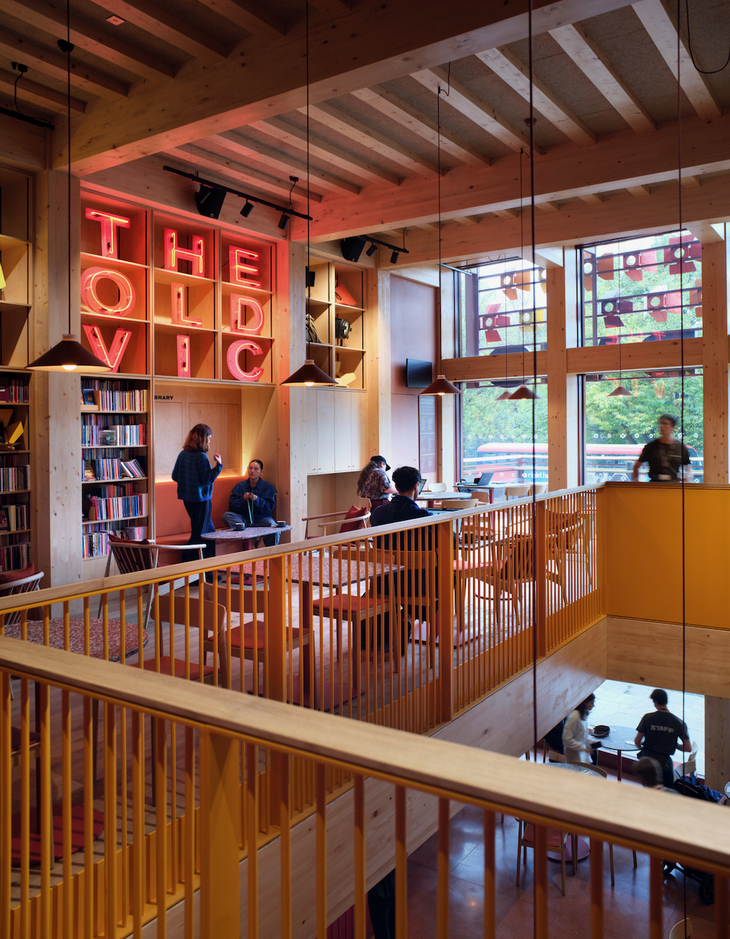
The extension is a momentous step in what the theatre describes as "a 10-year journey to transform the Old Vic into an unintimidating brand with an eclectic and accessible programme, and a bright and welcoming building." It is 10 years since Matthew Warchus became the Old Vic's Artistic Director.
Says Warchus: "It is a true honour to be a custodian of this magical theatre at such a momentous time in its 200-year history. For a decade, the team and I have been committed to making our theatre more welcoming, more adventurous and less intimidating through changes to the physical spaces, and through the work on and off stage.
"The Backstage building demonstrates this ongoing commitment and marks a new chapter in the life of this wonderful theatre."
A theatre on this site in Waterloo first opened as the Royal Coburg Theatre in 1818. That building was replaced in 1871 by the one we see today — originally named the Royal Victoria Palace, and later the Royal Victoria Hall; hence its long-standing nickname the 'Old Vic', which was eventually made official by the theatrical producer Lillian Baylis in 1912.