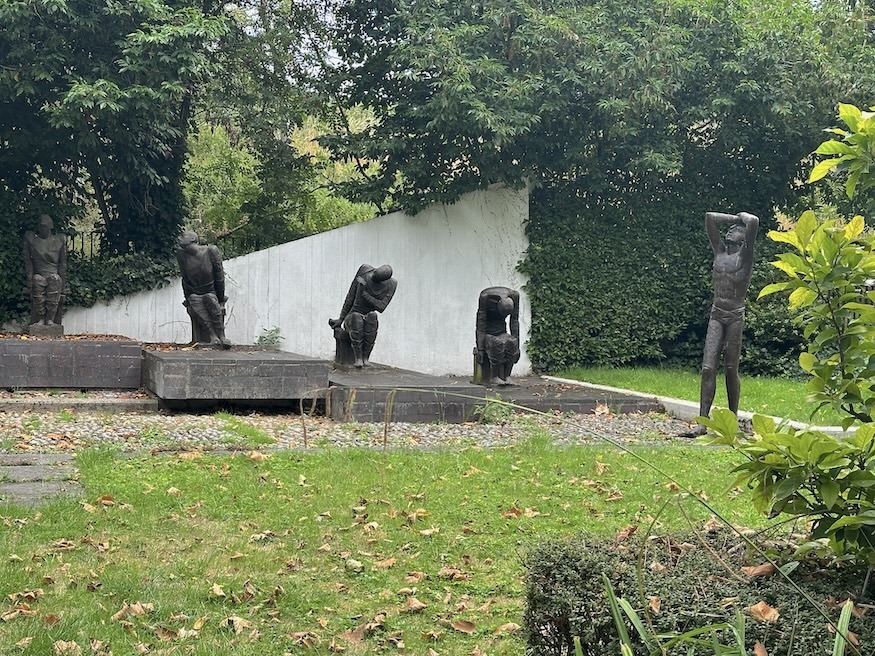
Hidden in a corner of Gladstone Park, one of London's most poignant memorials was the first to commemorate the Holocaust.
Few memorials capture despair like this sculptural group in Gladstone Park, Dollis Hill. The five fibreglass-resin figures are arranged in attitudes of woe, one doubled-over in dejection, others looking to the skies for salvation, all dressed in rags.
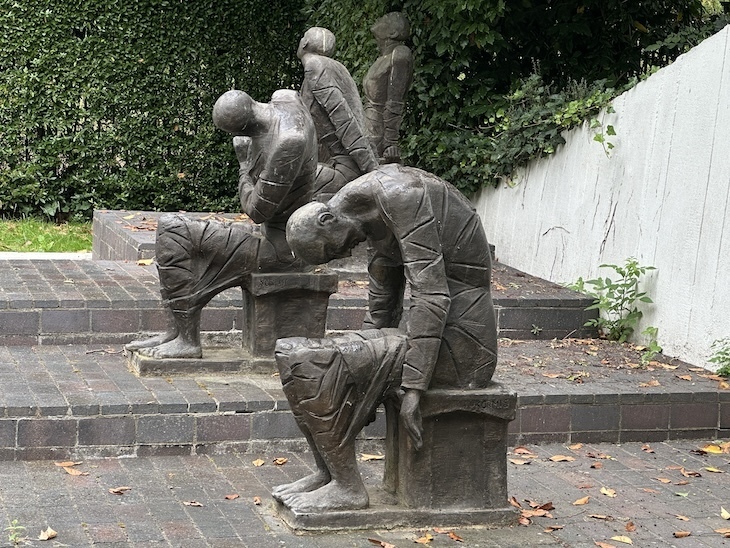
Their sorrow is understandable, for this is officially titled 'To the memory of prisoners of war and victims of concentration camps 1914–1945".
The artwork could hardly have a more appropriate sculptor than Fritz Kormis (1897-1986). Kormis served in the Austro-Hungarian army in the First World War, but was captured by the Russians and sent to a Siberian POW camp. Having survived those horrors, he moved back to Germany. He and his wife were Jewish, and they fled to England when Hitler came to power.
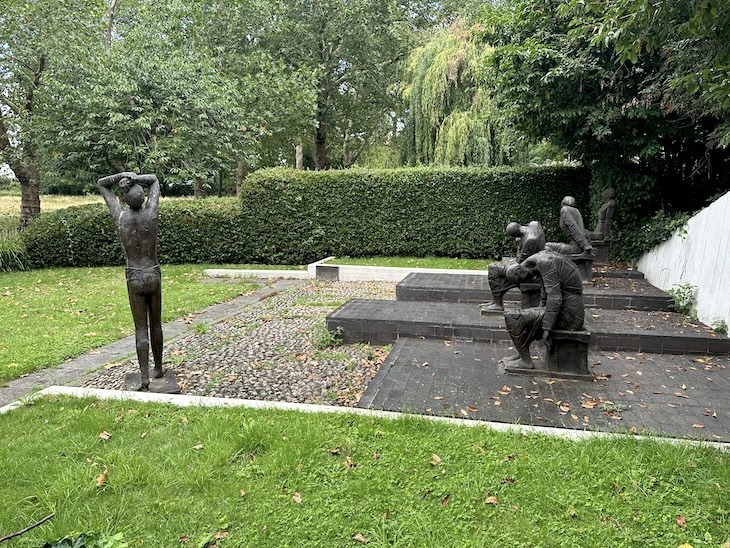
Deeply affected by his experiences, Kormis sought to make a memorial to those who'd suffered in prisoner of war camps, and later concentration camps. Subsidised by a bequest from a relative in Germany, Kormis started work on his sculptural group.
The five figures adopt what Kormis described as the five stages of imprisonment under an enemy: "a five-chapter novel, each chapter describing a successive state of mind of internment: stupor after going into captivity; longing for freedom; fighting against gloom; hope lost; and hope again.' They are set against a plain concrete wall, painted white.
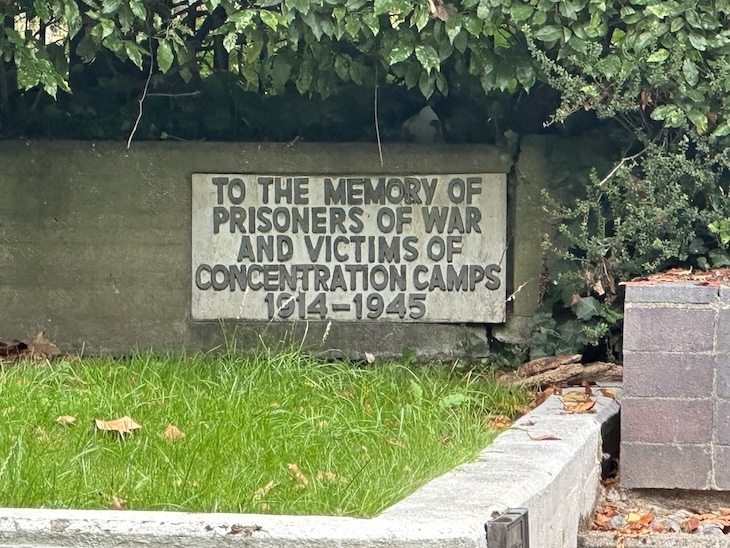
The memorial, in the north-west corner of Gladstone Park, was placed here thanks mostly to Kormis's personal connections. His friend Reg Freeson was leader of the recently created Brent Council. Freeson secured permission to erect the memorial in the park, and it was unveiled on 11 May 1969 to little fanfare. It is now Grade II-listed.
That date makes this the UK's earliest memorial to the holocaust (and POW camps). It deserves to be better known.