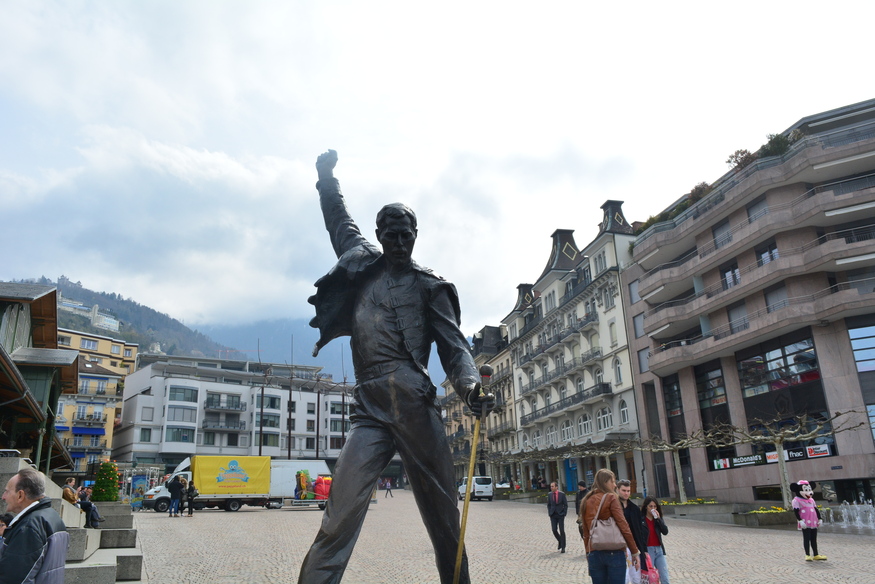
Though he grew up in Zanzibar, Farrokh Bulsara — or as he later became known, Freddie Mercury —lived in London for most of his life, after his family moved here in 1964, when he was 17.
Here are some of the spots in the capital associated with the Queen frontman's life and legacy.
Where did Freddie Mercury live in London?
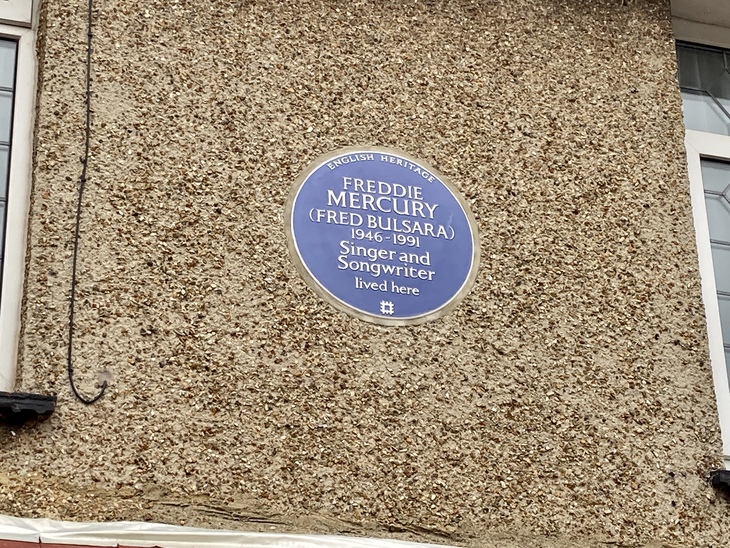
Freddie Mercury's first home in London, with his family, was in Feltham. They briefly lived in Hamilton Close and Hamilton Road, before settling in Gladstone Avenue, at a house which now bears the above Blue Plaque attesting to his time there.
After college, he spent the early stages of his music career in Liverpool before moving back to London, and living around Kensington. Not all addresses are recorded, but for a few years in the 1970s he lived at a flat on Stafford Terrace.
In 1980, Mercury bought Garden Lodge, a Georgian mansion on Logan Place in Kensington, its gardens and high-brick wall giving him some privacy as his fame skyrocketed. It was his final home, and he died here in November 1991. It quickly became a shrine, with fans leaving messages and letters on the outer walls for several years.
Mercury left Garden Lodge to his former fiancee and long-time friend Mary Austin when he died, and although it was put up for sale in 2024, as of 2026 it hasn't yet sold.
Freddie Mercury memorials in Feltham
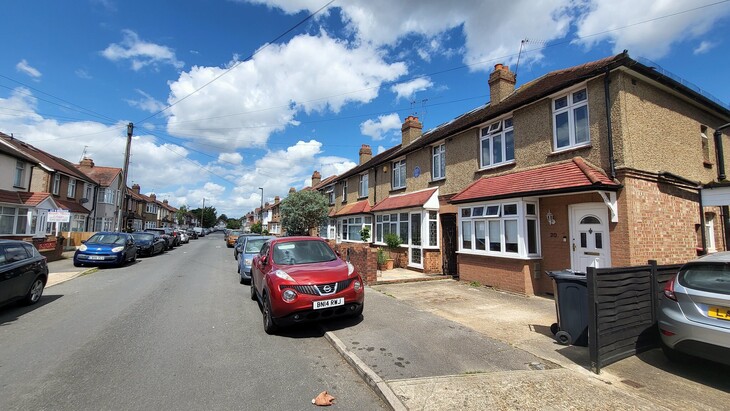
When Freddie Mercury first arrived in England, age 17, his family lived in Feltham (which was then — just about — still part of Middlesex). By coincidence, his future bandmate Brian May also grew up in Feltham.
In 2009, May joined Mercury's mother, Jer Bulsara, to unveil a star-shaped Freddie Mercury memorial in the shopping centre on Feltham High Street. This original memorial has since been removed, but a new memorial and community garden were opened in 2025.
Feltham is also home to a road called Freddie Mercury Close.
While living in Feltham, Mercury attended Isleworth Polytechnic (now West Thames College) before going on to study graphic design at the now-defunct Ealing Art College — which had also been attended by Pete Townshend of The Who and Rolling Stone Ronnie Wood prior to Mercury's studies.
Where did Freddie Mercury work in London?
Before finding success as a musician, Mercury worked several jobs, including running a stall in Kensington Market in the late 1960s-early 1970s with future bandmate Roger Taylor (who at the time was in rock band Smile with Brian May, often seen as a predecessor band to Queen).
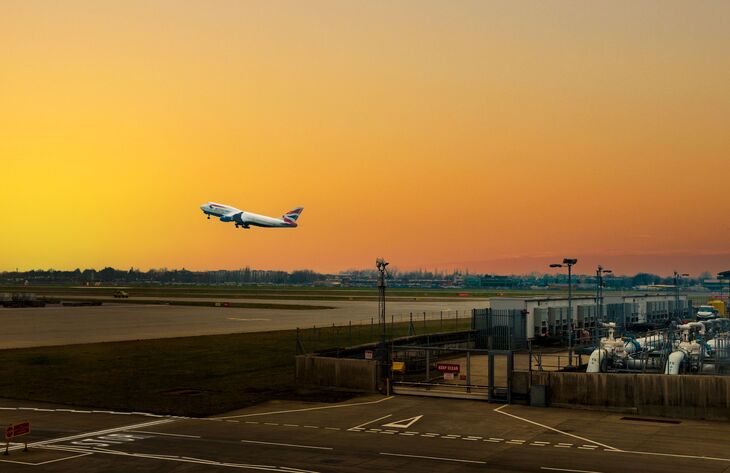
Perhaps most famous is Mercury's stint as a baggage handler at Heathrow Airport, shortly before he joined Queen in 1970 — a link which Heathrow Airport itself capitalised on in 2018, ahead of the release of biopic film Bohemian Rhapsody. It released a video of its baggage handlers dressed as Mercury, dancing to Queen hit I Want To Break Free:
That same year, also in celebration of the film's release, the Carnaby Street Christmas lights had a Bohemian Rhapsody theme, with lyrics from the song illuminated over the Soho thoroughfare, switched on by Brian May And Roger Taylor.
Freddie Mercury and Queen at Trident Studios, Soho
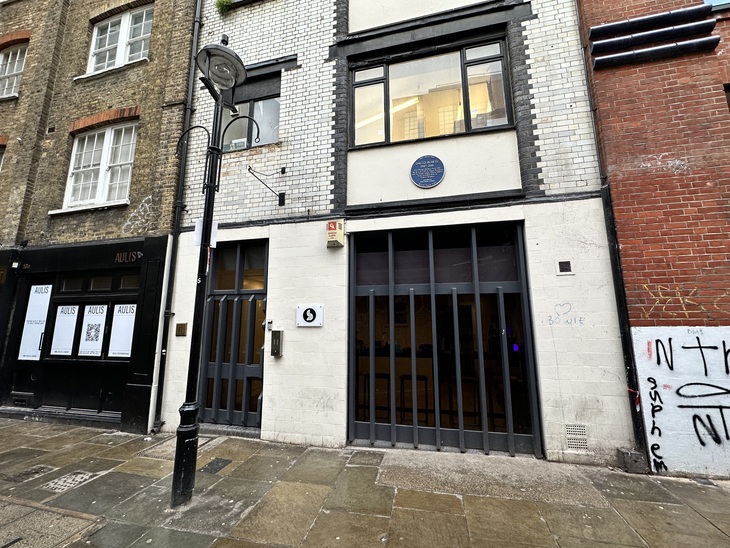
Though Queen used several recording studios throughout their career, including in Switzerland and Wales, their first two studio albums Queen (1973) and Queen II (1974) were recorded at the now-defunct Trident Studios in Soho.
In 2014 BBC Four documentary Queen: From Rags To Rhapsody, it was revealed that Queen, then in their early days, were only allowed to use the studios during "off-peak" hours — times which Roger Taylor later described as "gold dust" for the band's creativity. Queen only signed with Neptune Productions on the basis that Trident Studios would take on responsibility for Queen's management — which it did so reluctantly, hence the limited hours.
Elton John, The Beatles and David Bowie also recorded albums on the premises, though Trident Studios shut down in 1981, and the building has since been used as a base for several music labels. A Blue Plaque relating to David Bowie was unveiled in 2017.
Freddie Mercury on Capital Radio at Euston Tower
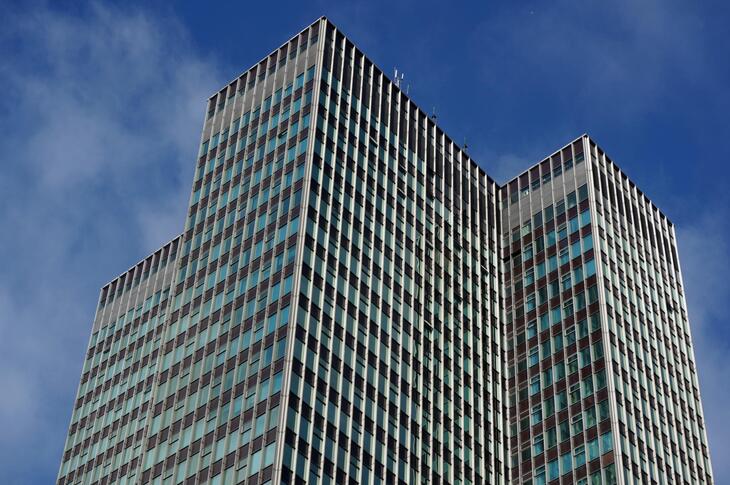
Were it not for a Euston tower block, the world may never have heard Bohemian Rhapsody.
In 1974, as Queen released their second studio album, Freddie Mercury made an appearance on the Capital London breakfast show, hosted by Kenny Everett. At the time, Capital London — which had just launched in 1973 — was located in offices within Euston Tower, at the time London's tallest office tower.
Mercury and Everett got on very well, becoming friends, and in 1975 Mercury gave Everett an advance copy of upcoming single Bohemian Rhapsody. Everett loved it, though Capital Radio hadn't officially accepted it as a radio single, and other stations were refusing to play it, citing its runtime and confusing leap between genres. Everett played it on air anyway, claiming a slip of the finger — and went on to play it multiple times (some report 36 times in one day) resulting in listeners phoning Capital asking when the single would be released.
Freddie Mercury and Queen at Wembley Stadium
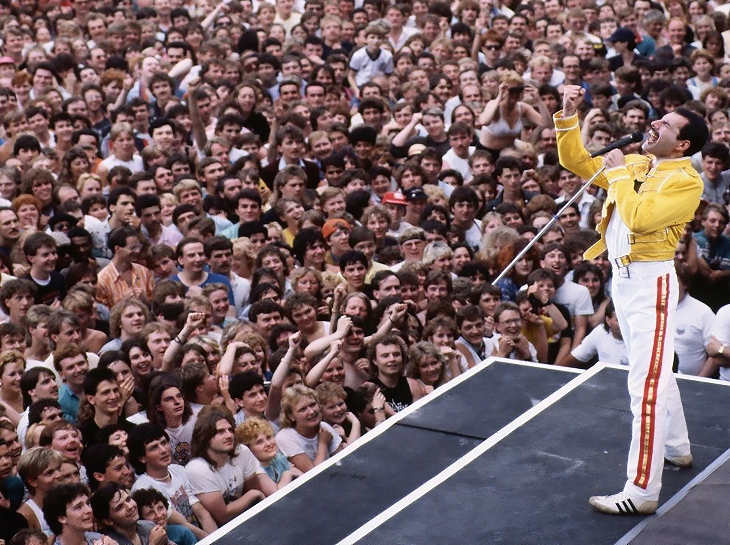
Perhaps the London location most associated with Freddie Mercury is Wembley Stadium. His performance fronting Queen at the 1985 Live Aid concert was the most memorable performance of the day, and in 2005 it was voted as the greatest rock gig of all time.
Queen returned to Wembley Stadium the following year, for two sold-out shows on the Magic Tour. Less than a month after this, Freddie Mercury gave his last ever public performance with Queen, at Knebworth.
Following his death in 1991, the Freddie Mercury Tribute Concert for AIDS Awareness was held at Wembley Stadium the following year. Queen headlined, Cindy Crawford hosted, and Metallica, Def Leppard, Bob Geldof, Guns N' Roses, Slash, Paul Young, David Bowie, Annie Lennox, George Michael and Elton John were among the many performers joining them on stage.
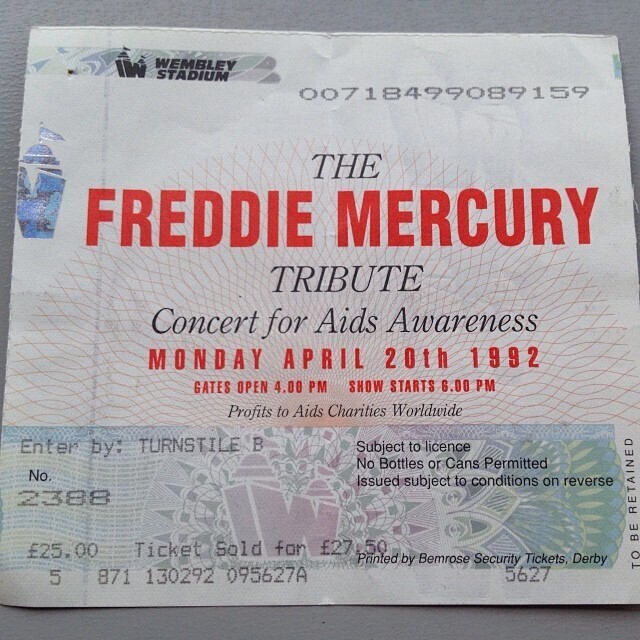
The 4.5 hour show was broadcast live, and seen by an estimated one billion people worldwide, and around £20 million was raised, which was used to launch the Mercury Phoenix Trust charity.
Other London venues which Queen played while Freddie Mercury was with them, from early days to huge stadium shows, include Imperial College, Swiss Cottage Private School, the Marquee Club, Hornsea Town Hall, the Pheasantry in Chelsea, Golders Green Hippodrome, Hammersmith Odeon (including a Christmas Eve 1975 performance), Dagenham Roundhouse, Hyde Park and Wembley Arena (the latter resulting in a rave review from Kerrang journalist Dave Dickson).
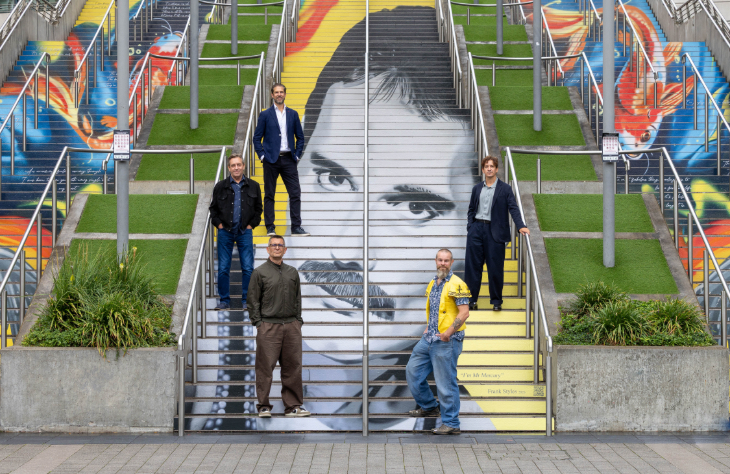
As of September 2026, coinciding with what would have been Freddie Mercury's 80th birthday the I’m Mr. Mercury mural by Frank Styles can be seen on Wembley Park’s Spanish Steps, as pictured above. The steps, which have previously held tributes to artists including Taylor Swift, Coldplay and Harry Styles are situated beneath Wembley Stadium.
Freddie Mercury at the Dominion Theatre
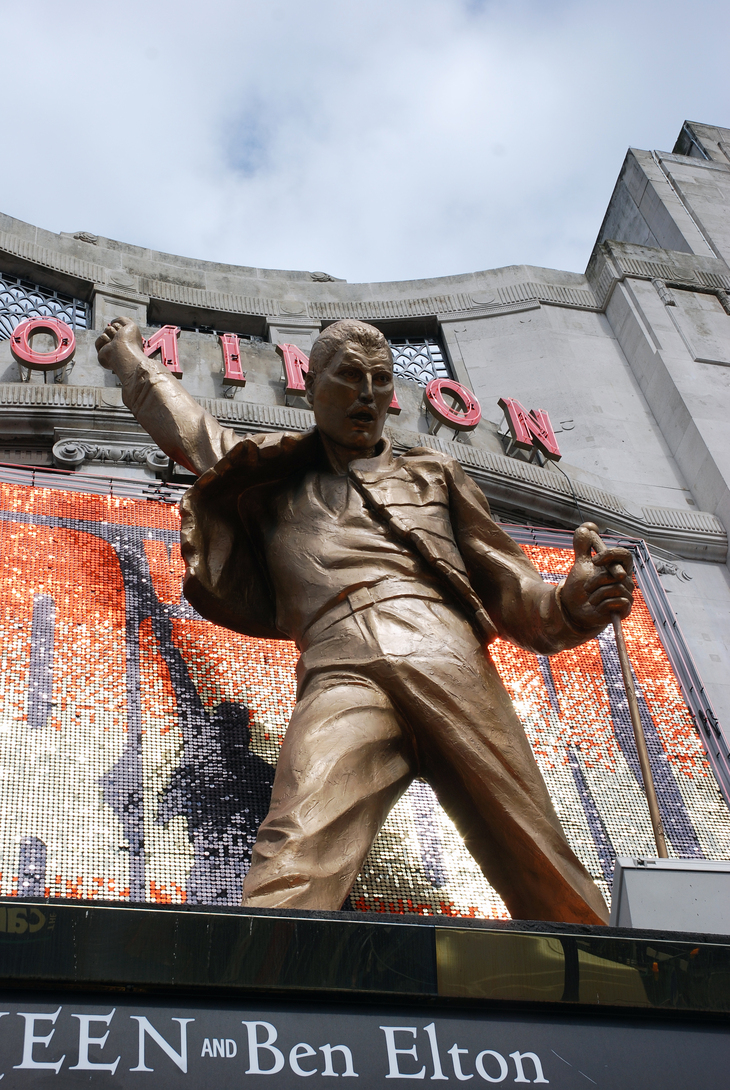
From 2002-2014, Queen musical We Will Rock You ran at the Dominion Theatre at Tottenham Court Road, introducing a new generation to Queen's music. A 20ft-tall golden statue of Freddie Mercury towered over the entrance, and disappeared shortly after the final curtain call.
Though this was the most in-your-face of Mercury's associations with the Dominion, it was by no means the first. In 1986, musical Time received its world premiere at the theatre, and though Mercury didn't appear in the production, he did record two songs for it. Through his involvement in the show, Mercury became friends with Laurence Olivier.
The 1990 Brit Awards were held at the Dominion Theatre on 18 February, and Mercury made his final appearance on stage when he joined the rest of Queen to collect the award for Outstanding Contribution to British Music. He neither spoke nor performed at the event.
The Dominion isn't the only London theatre with links to Freddie Mercury: he's known to have seen The Rocky Horror Show — starring the late Tim Curry — at the Royal Court Theatre in 1973.
Where is Freddie Mercury's grave?
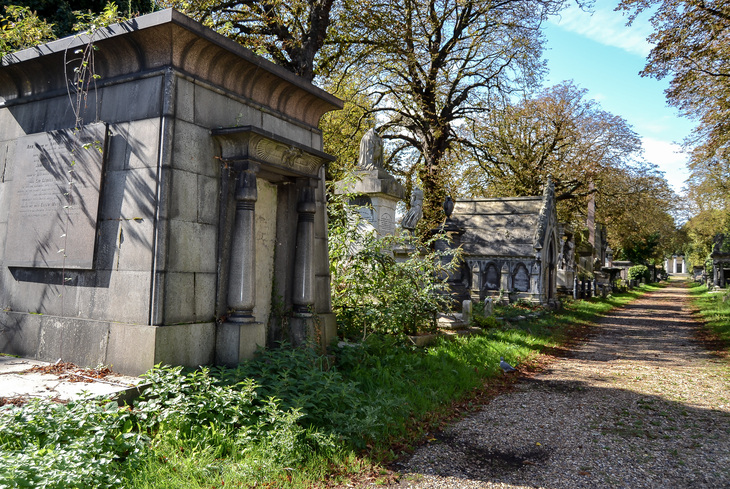
Mercury doesn't have a public grave site. He was cremated in a private service at West London Crematorium in Kensal Green Cemetery, and his cremated remains were taken to an unknown location.
In 2013, a plaque bearing his birth name Farrokh Bulsara was spotted at Kensal Green Cemetery, and it was thought that his ashes may have been laid to rest here. However, just a few weeks later the plaque was removed and it hasn't been located since. According to Rock Tour London, the original plaque was stolen, and though the cemetery offered to put up a replacement, his family declined.
Freddie Mercury murals in Camden Market
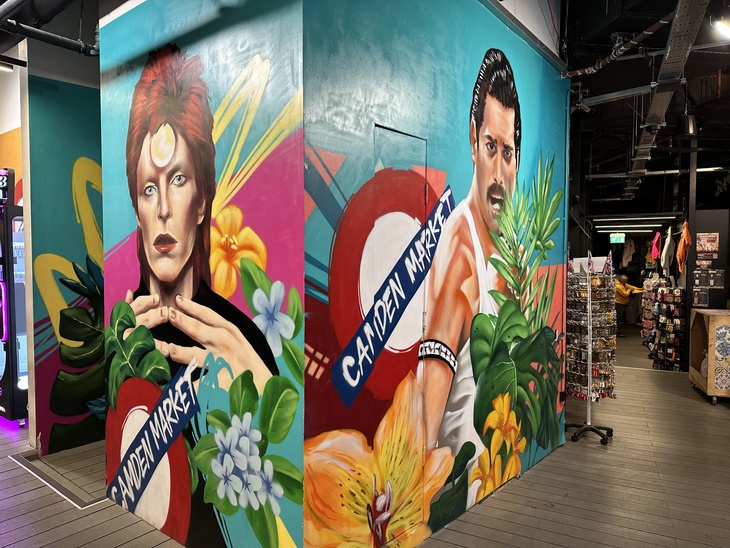
Freddie Mercury is one of several musicians immortalised in street art form in Camden.
The exterior of Nemesis Tattoo on Buck Street features illustrations of Mercury, David Bowie and Camden local Amy Winehouse.
Within Camden Market itself, among the alternative fashion stalls, seek out the above colourful mural, paying tribute to Mercury alongside David Bowie.
Freddie Mercury exhibition and auction at Sotheby's
When Mercury died, be bequeathed his Garden Lodge home (see earlier) and his possessions within it to long-time friend Mary Austin. In 2023, shortly before that home was put up for sale for the first time since his death, many of those personal belongings were displayed and sold off across six auctions at Sotheby's Bond Street.
People queued around the block to view pre-sale exhibition Freddie Mercury: A World of His Own, featuring clothing, art, musical instruments, candid photos, furniture and personal papers belonging to the rock star. In all, 1,406 lots were sold across six auctions, totalling around £40 million — far outnumbering the pre-sale estimate of £7 million.
Freddie Mercury at the V&A South Kensington
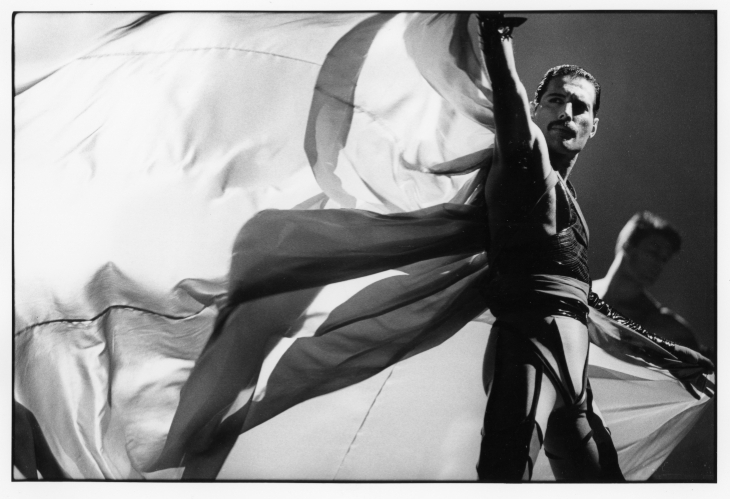
In autumn 2026, the V&A South Kensington launches Freddie Mercury | Splendid Things, a free trail consisting of six stops throughout the museum showcasing some of Mercury's outfits and stage costumes. These too are loaned by their current owner Mary Austin, and include the Mercury Wing catsuit worn by Mercury in the Bohemian Rhapsody video, which is kind of magic.