The 'world’s largest space dedicated to illustration' opens in Clerkenwell.
An old industrial complex at the back end of Clerkenwell has been transformed into the Quentin Blake Centre for Illustration. It reckons to be the largest site dedicated to illustration in the world. Draped across 18th century industrial buildings and a remnant windmill, it's a visual feast before you even set foot inside.
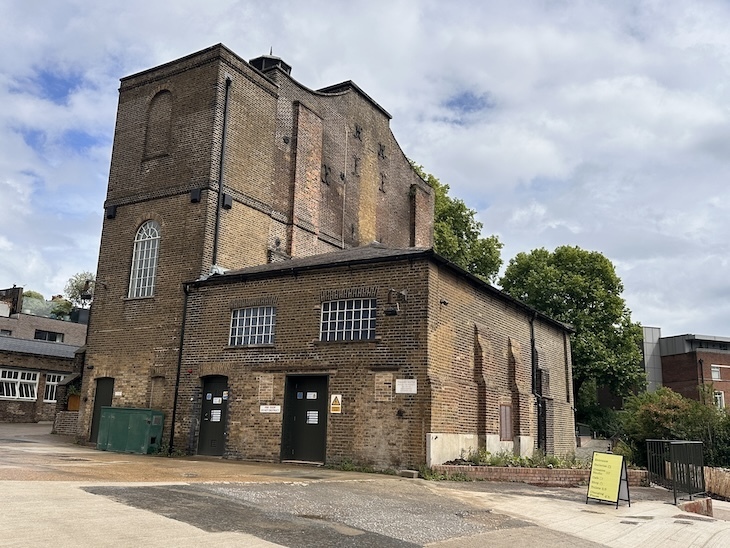
The heart of the museum is a peculiarly shaped brick engine house, whose three floors are repurposed for art. The debut offering gives a glimpse of the breadth and diversity on offer. We first meet the work of Sophy Hollington, which brightens the entrance to the library. Her art uses "mythological references to create striking modern pieces with elaborate patterns and bold colours". Her cut-outs are particularly joyful.
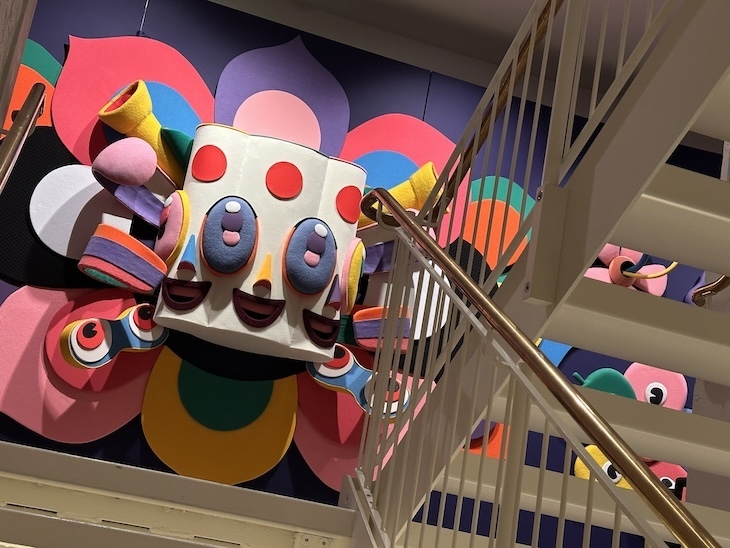
Joyful, in fact, is the key word for this building. The next floor is devoted to the artist MURUGIAH, whose swirling bright imagery cannot help but put a smile on the face, even while exploring themes of mental health and identity.
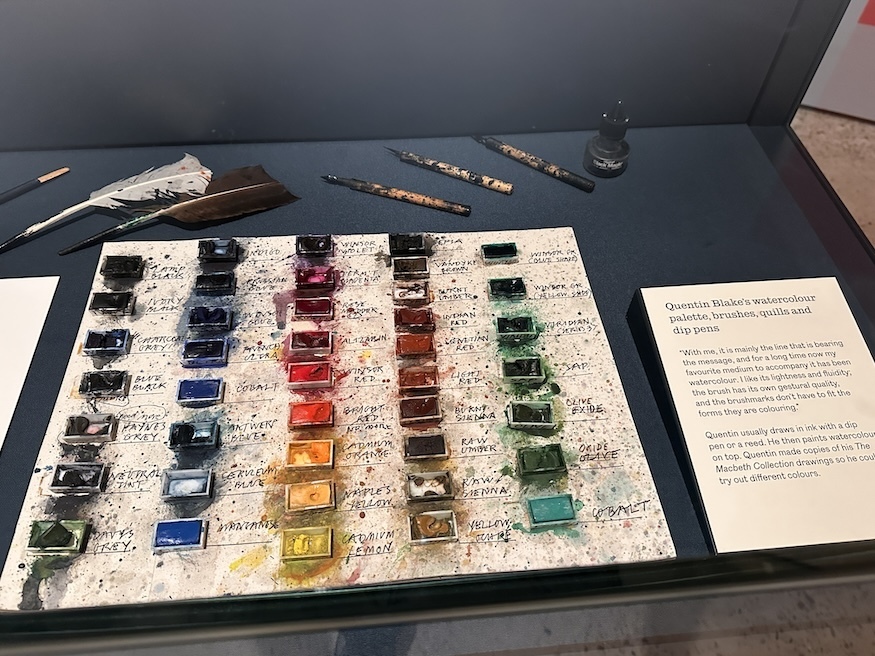
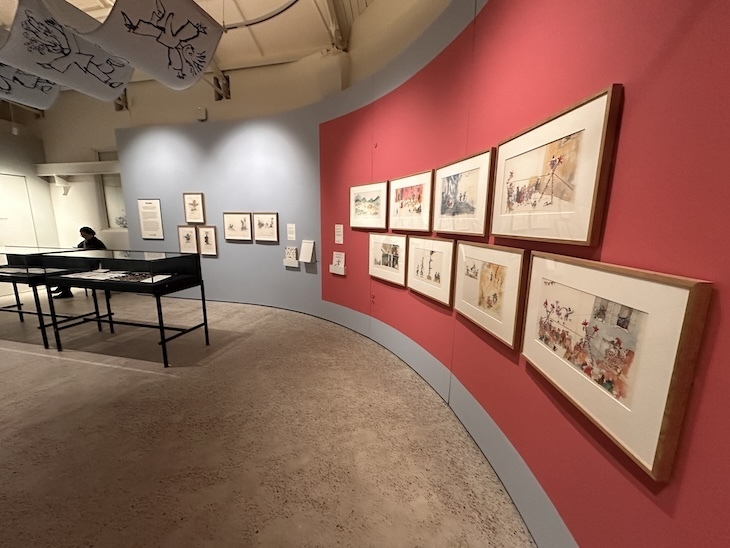
The top floor is reserved for the work of the centre's namesake and patron Sir Quentin Blake (born 1932). The much-loved illustrator is perhaps most famous for his work on Roald Dahl's books, and original drafts of panels from The Enormous Crocodile can be viewed here. But Blake's output is much, much wider. His distinctive illustrations have appeared in over 500 books, including many of his own. The gallery includes some of Blake's earliest professional drawings, from the 1950s. Quite incredible to consider that he's still working.
The largest exhibition space sits to one side of the main stack. Its debut show looks at the history of queer comics, a medium that had to operate in the shadows for many years, when homosexuality and its portrayal were illegal. Finally, and most atmospherically, an old windmill base (London's oldest, apparently) in the gardens serves as a circular gallery.
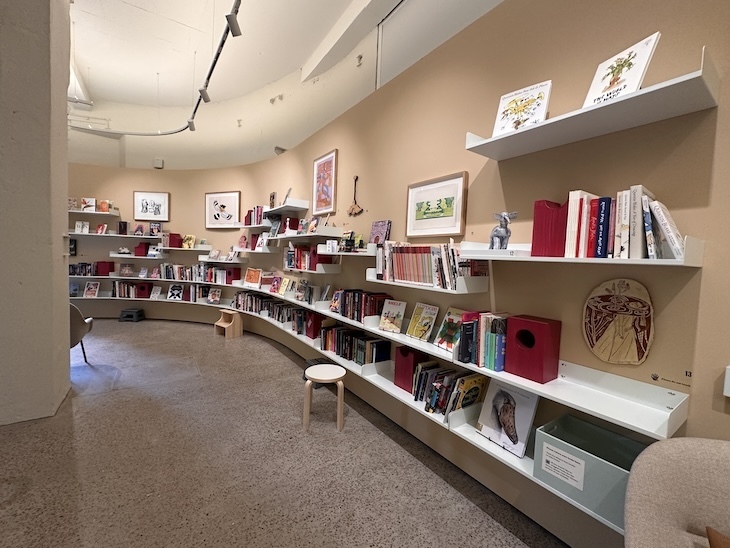
The centre comes with further bonuses. A free-to-use library with over 1,000 books on illustration is something of a centrepiece and will appeal particularly to families. We also get a new walking route. For the first time in history, it's possible to walk from Myddleton Passage to Amwell Street, through the centre's gardens (free to enter). This is of no particular convenience or time-saving, but an extra route is always a good thing.
The centre's location is itself historically interesting. This was formerly a key part of London's water infrastructure. From 1613, an artificial conduit known as the New River would bring fresh water into the capital from Hertfordshire. It terminated here, at the New River Head. The surviving buildings of the centre recall this aqueous past — and Thames Water still maintains a site adjacent to the centre.
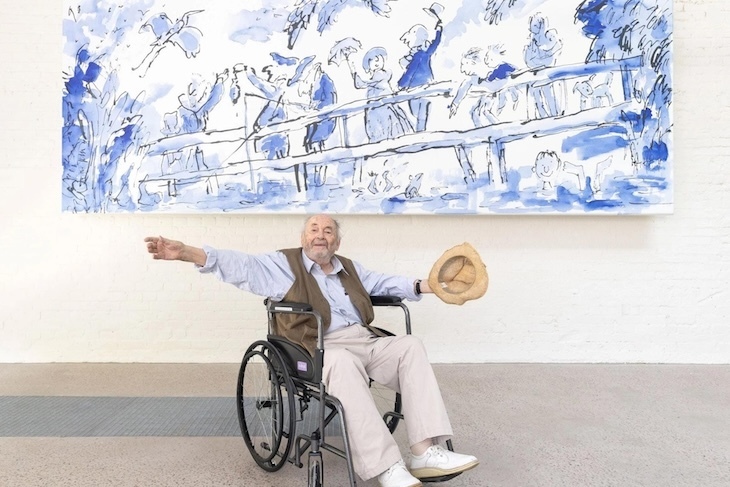
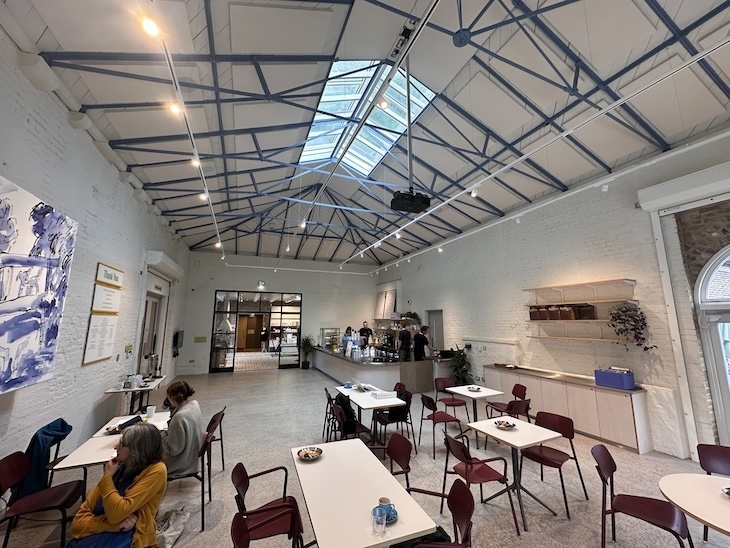
Indeed, Blake himself has added a nod to the New River. He's contributed a new mural to the cafe, called A Bridge to the Past, which shows figures from different eras enjoying the river.
The launch of the centre comes at an interesting time. With AI, anyone can now 'create' an 'illustration' in seconds through a simple prompt. Does AI sound the death knell for traditional illustrators, or might it herald a golden age in which we appreciate their talents all the more, in the face of robotic competition? The centre will no doubt explore such questions in future displays, and hopefully tip the balance towards the latter scenario.
The Quentin Blake Centre for Illustration opens 5 June 2026. Much of the centre is free, but the feature galleries charge at £15 (adults), and £6 (children). Concessions available.