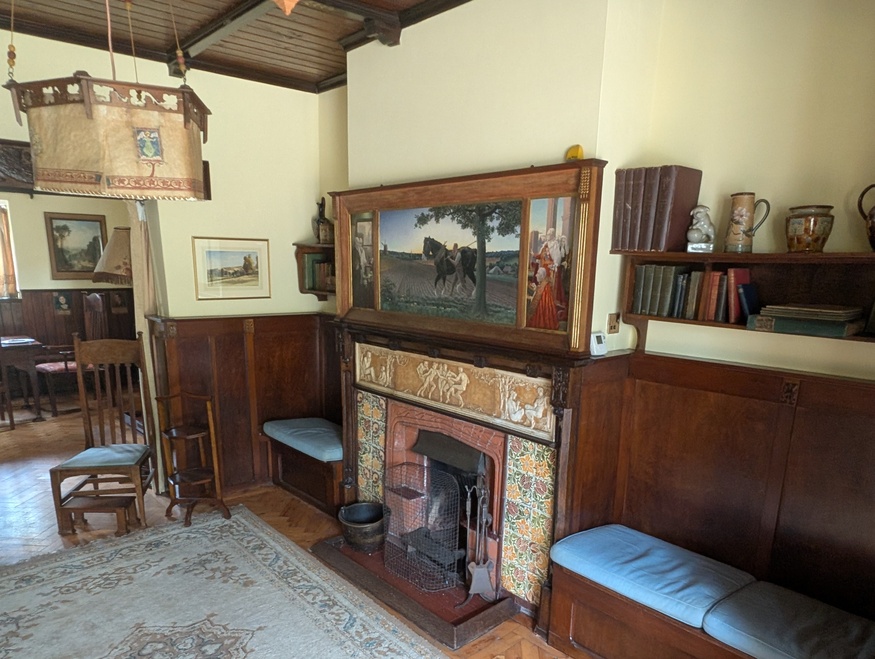
Little Holland House is, to be honest, exactly the kind of place you'd expect to find in Carshalton.
This villagey enclave of south London, with its fragrant lavender fields and CAMRA award-winning pub, is perhaps not all that much changed from the early 1900s, when Frank Reginald Dickinson decided to build a house on Beeches Avenue — back then named, even more idyllically, Beechnut Tree Road.
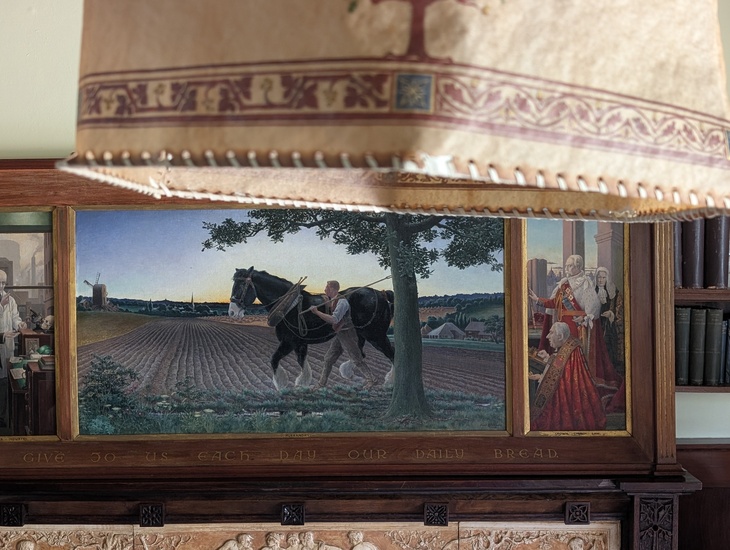
Neither wealthy not an artist of great renown, draftsman Dickinson had a vision, albeit one that his friends suggested was "very ill advised". Vigorously inspired by aesthetes like John Ruskin and William Morris, he vowed to build "a house with beautiful things inside, a house solid looking and not showy". After poring over copies of 'The Builder', securing an interest-free loan — and putting in a good deal of back-breaking work — Frank moved into Little Holland House with his wife Florence on their wedding night, in March 1904 (which smacks of the kind of close-to-the-knuckle scheduling you'd expect from Grand Designs).
Ever sentimental, he penned a poem:
I built my love a dwelling place,
Where we could order well our days,
For life’s great purpose and resolve;
To mould and emphasise ourselves
And who might journey with us.
My love and I with heart intent
Conceived a hundred plans and more,
Discarding builders common ways,
We'll have two rooms unite in one,
So large a room for dance and song.
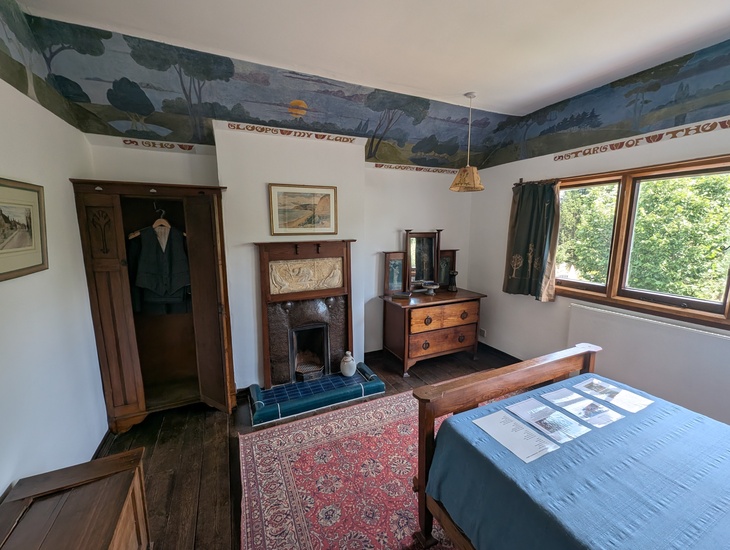
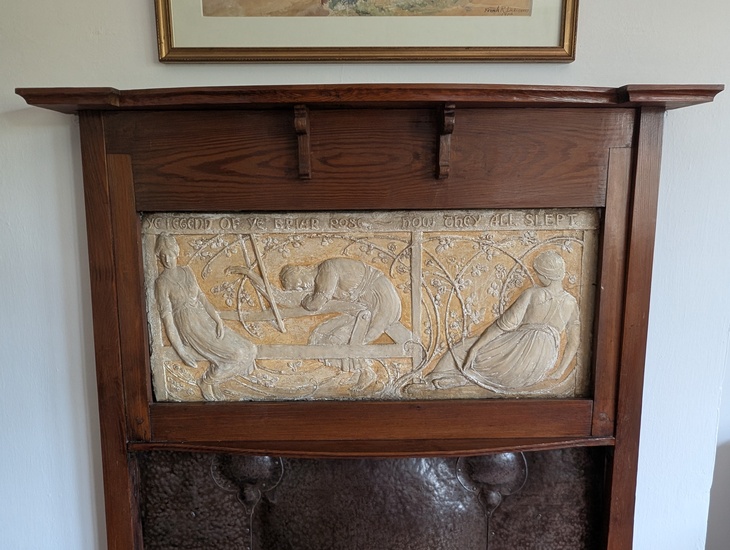
It wasn't just the house that Frank built, but almost every stick of furniture, alongside a multitude of decorative flourishes: oil paint triptychs above the fireplaces; a bedhead carved with an inscription from The Ancient Mariner; pottery from Frank's time at the Doulton factory. Meanwhile, Florence put her own skills to work embroidering the curtains and making lampshades. Nothing is overly elaborate; yet everything is as competently crafted as it wildly romantic.
As for the name 'Little Holland House': Dickinson borrowed that from the Kensington home of the Victorian artist George Frederick Watts. (That particular Little Holland House is long demolished.)
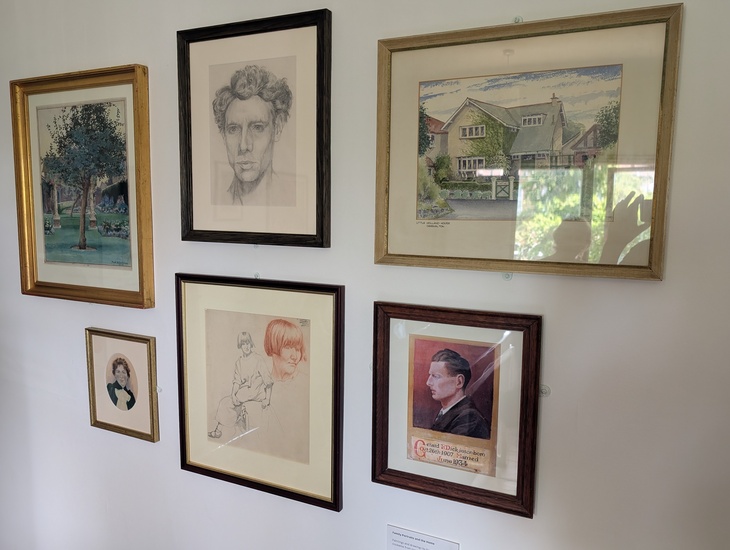
For many years, Little Holland House became, as Dickinson wrote in his unpublished autobiography, "a centre for gatherings and festivities, country dancing, play acting, musical evenings and discussion groups." Gradually, it was filled with the artistic fruits of Frank's labours, including a silver coffee set he made for Florence for their wedding anniversary.
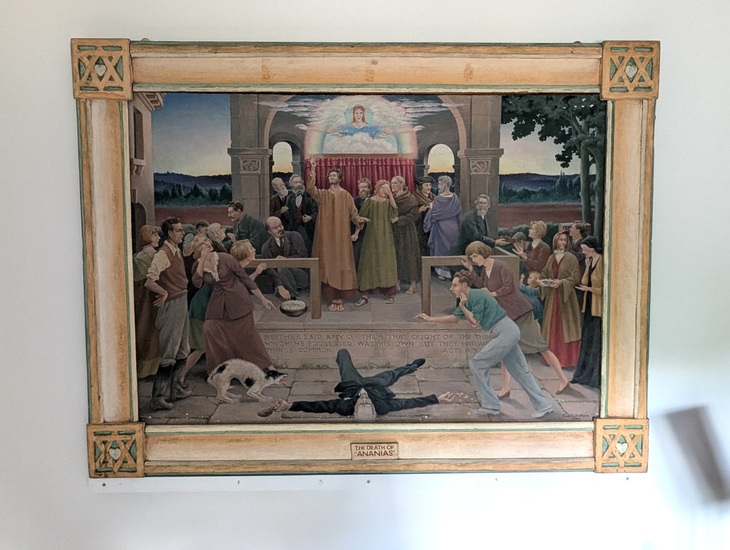
In one of the bedrooms hangs his 1946 painting The Death of Ananias, which bristles with socialist figures like Karl Marx and William Morris, and was entered into — and turned down by — that year's Summer Exhibition.
After Frank died in 1961, Florence continued to live there for a decade, but finally had to move out. In a time when councils bought, rather than sold off properties, Little Holland House was taken under the wing of Sutton Council in 1972, and a couple of years later, two young Americans, Jack and Joan Warshaw, moved in on the proviso they looked after the property, and opened it to the public. In the first two weeks, more than 2,000 curious visitors came to the house.
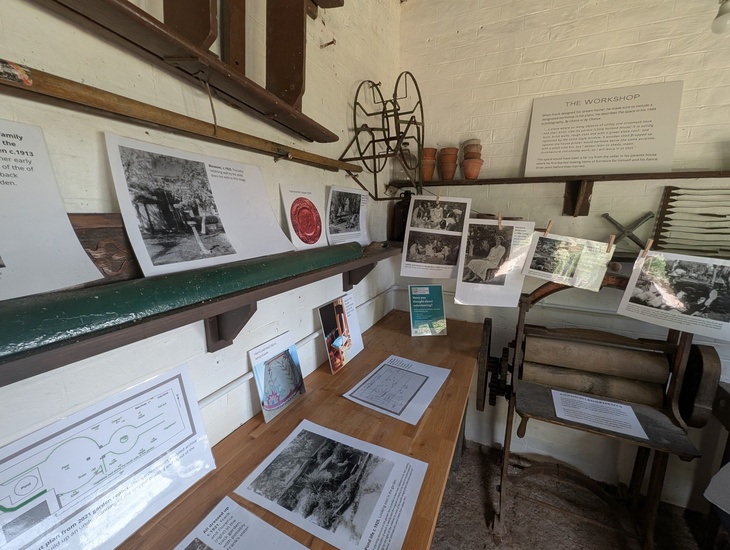
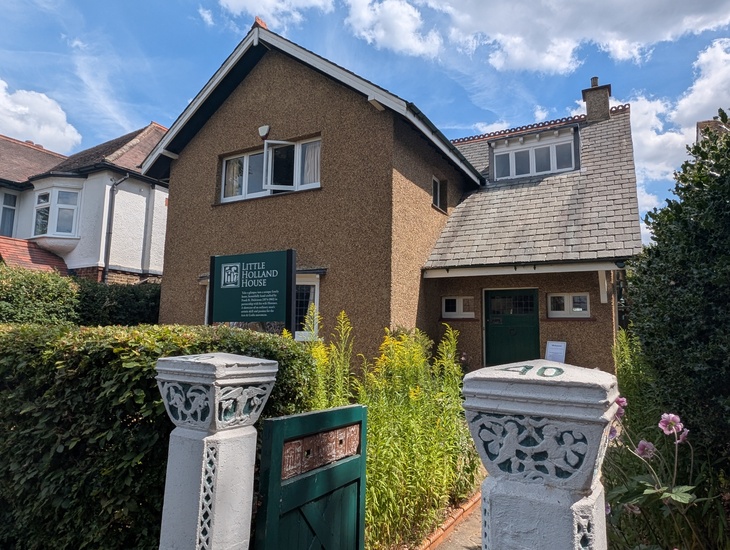
It's been a house museum ever since, now open on most first Sundays of the month, and although no one lives there anymore, it's manned by a group of extremely friendly, and well-versed volunteers. A nice touch is that visitors knock for entry* through the front door — one that Frank purposefully made wide because "a narrow door suggests meanness and does not give the idea of a welcome."
Both William Morris and John Ruskin were dead by the time the house was completed, and so never saw Frank Dickinson's live-in tribute. Meanwhile, Jack Warshaw, the former custodian, said of Frank in 1974: "He was a painter who seldom exhibited, a poet who never published, a woodcarver, furniture maker and metal smith who hardly earned a penny at his craft..."
And yet Frank Dickinson left something behind which continues to give immense delight to anyone who knocks on the door and steps inside. That's the finest compliment any creative could ask for.
Little Holland House usually opens on the first Sunday of the month, and there's bonus open day on 13 September 2026, as part of Open House. Entry is free, though booking is suggested.
*Don't press the loud doorbell!