This feature first appeared in December 2024 on Londonist: Time Machine, our much-praised history newsletter. To be the first to read new history features like this, sign up for free here.
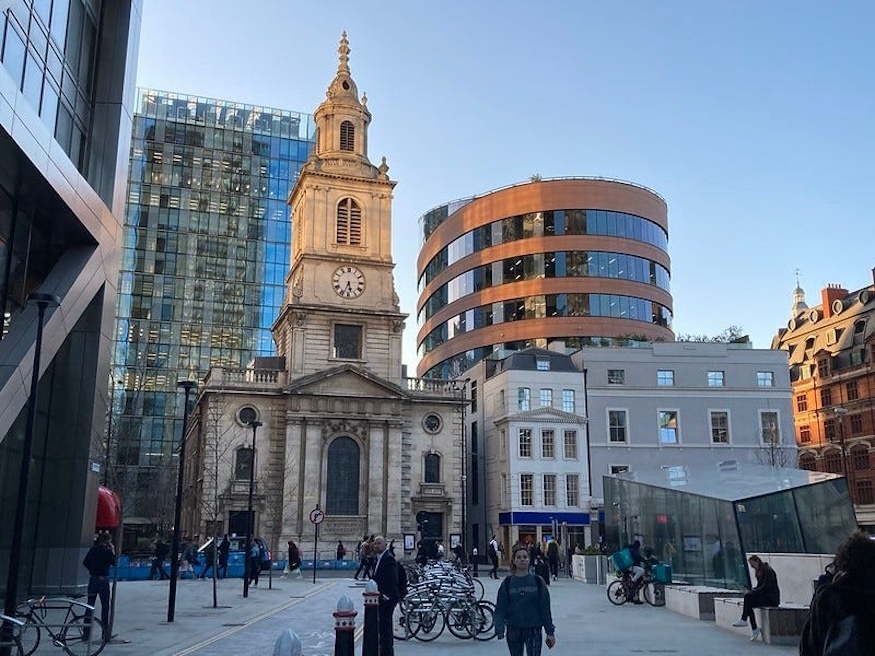
St Andrew-by-the-Wardrobe
St Vedas-alias-Foster
St Benet Fink
St Matthew-le-Tissier
At least 75% of those names are genuine City of London churches. Such intriguing dedications are an aspect of the Square Mile you can’t help but query. So it's time we teased apart the meanings and derivations of the odder ones. In alphabetical order…
St Andrew-by-the-Wardrobe
We can infer from the brush of Rubens that St Andrew must have possessed a robust wardrobe; just look at the volume in that robe. The wardrobe name-checked in this church is not St Andrew’s, however, but the monarch’s. The Royal Wardrobe was a department of the Royal Household charged with looking after the King’s garments and accoutrements. From late medieval times, all through the Tudor period and up to the Great Fire it was based off Carter Lane in the Square Mile. The name is still commemorated by this church, and the nearby Wardrobe Place — where it’s today possible to rent a serviced apartment with its own wardrobes.
St Andrew Undershaft
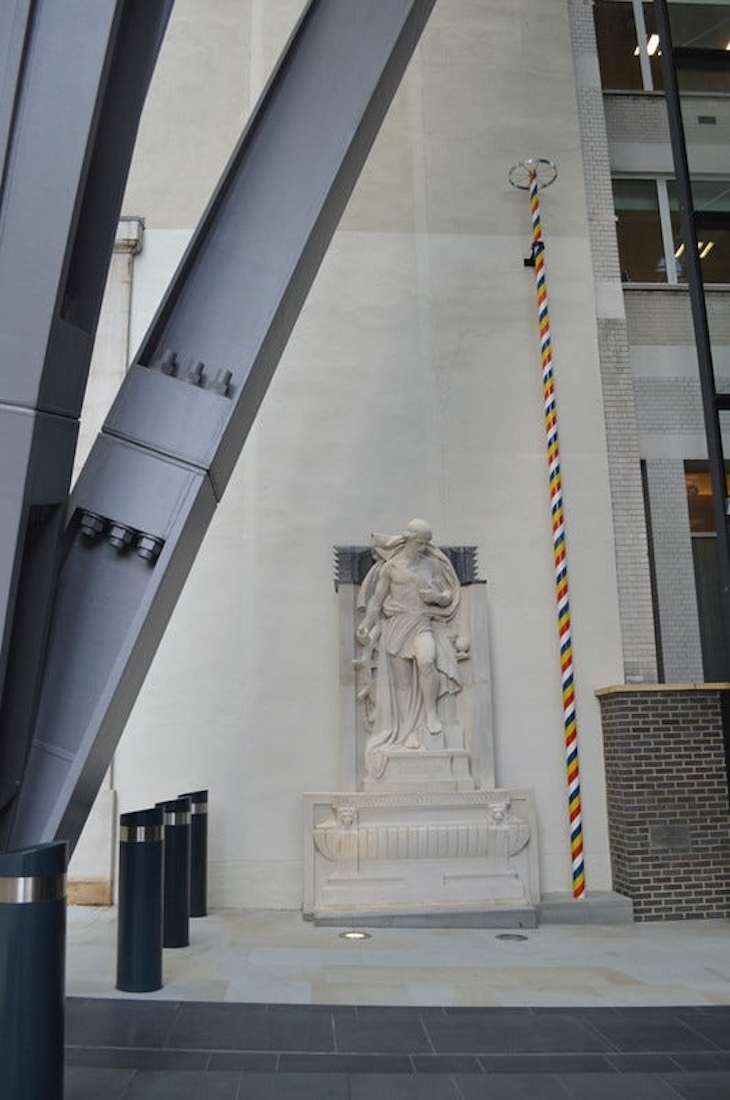
Another church dedicated to the Scottish patron saint. Its curious epithet remembers a large maypole, which was traditionally erected opposite the church in spring, up to the 16th century (when it was burned as a pagan symbol). The church we see today is from that sort of time, and somehow survived the Great Fire. It’s now dwarfed by much loftier structures than maypoles, with the Gherkin, Cheesegrater and Scalpel buildings for neighbours.
St Botolph-without-Bishopsgate
Whenever you see a church described as ‘without’ (and there are quite a few) it means the place was without, or outside, the City walls. We can clearly see this with St B-w-B. A nearby mitre-shaped marker on Bishopsgate shows the location of that old gateway. The church lies just beyond, outside the walls.
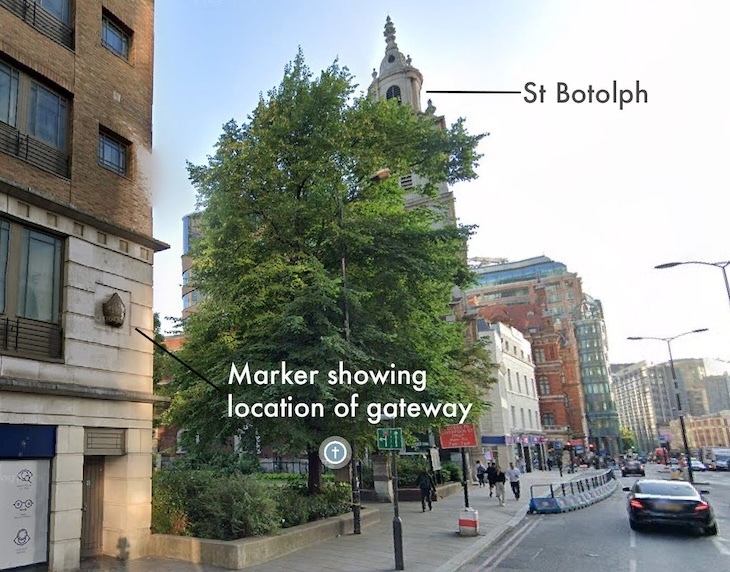
London contains three St Botolphs: this one, St Botolph-without-Aldgate and St Botolph-without-Aldersgate (I’m guessing that the last two often get each other’s mail). They’re all named after a seventh century saint, whose body parts travelled to London 300 years after his death, where they supposedly entered by different gates. Churches were founded in his memory at these three sites, as well as the now-vanished St Botolph Billingsgate near the river. The whole confusing story can be read in more depth here.
St James Garlickhythe
London’s most vampire-resistant church stands on Upper Thames Street near Cannon Street station. The name’s origins are much as you might expect; it is close to the hythe, or landing place, where French garlic was unloaded in medieval times. It’s not the only eyebrow-raising name the church has gone by, mind. In some old sources it’s known as St James super Ripam, which means ‘above the bank’ (i.e. on the Thames).
St Lawrence Jewry
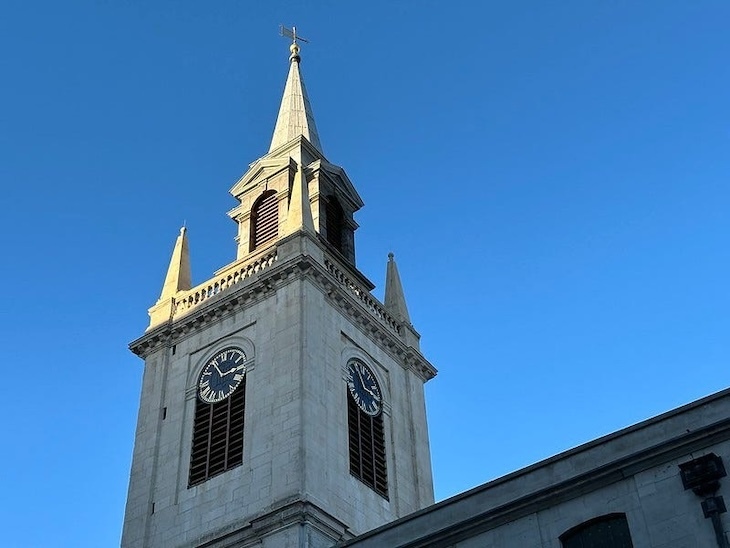
This is the compact church that stands in front of Guildhall, and carries a weather vane resembling the griddle upon which the eponymous saint was roasted. The second part of its name is a reference to the Jewish community, who clustered in the streets hereabouts in medieval times. Nearby Old Jewry and the tower of St Olave Old Jewry also remember this legacy, more than 700 years after the Jews were expelled by Edward I. Such is the long memory of London.
St Margaret Pattens
‘Pattens’ were wooden overshoes. The streets of old London could be filthy, with layers of mud, animal dung and even human waste forming a grim porridge. Pattens lifted the wearer above the sludge, protecting the shoes. This church, beside the Walkie Talkie building, was probably named after the trade, which was represented by the Worshipful Company of Pattenmakers (still in existence).
St Mary Aldermary
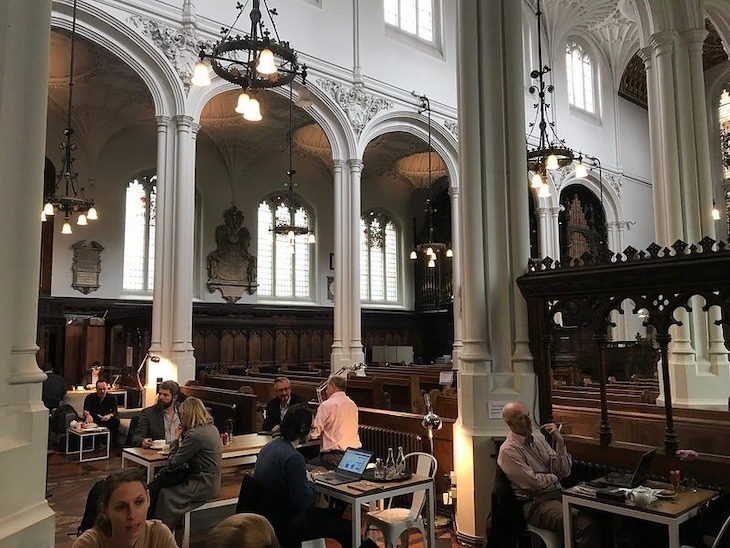
This fine Wren church on Watling Street now houses an excellent cafe. Please stop reading for 30 seconds and make a note to visit. You can thank me later. The double-Mary’d name is a bit of a mystery. The most convincing explanation is that this is the oldest church in the City dedicated to the Virgin Mary, predating St Mary-le-Bow, which I measure to be just 80 metres away (and named after the bow-shaped arches in the crypt). The problem with that theory is that St Mary-le-Bow dates from at least 1080 and probably has Saxon origins, so Aldermary must be very old indeed to beat that.
St Mary Woolnoth
About 350 metres away is another St Mary. This one is the best, because it is (a) designed by Nicholas Hawksmoor and therefore a bit weird, and (b) name-checked in The Waste Land by TS Eliot, the most potent bit of poetry ever to trouble our city. Its unusual name is attributed to Wulnoth de Walebrok, a local bigwig of the 12th century. The church must often have been confused with St Mary Woolchurch Haw, a long-demolished neighbour named after the wool trade (a ‘haw’ was a beam for weighing wool).
St Nicholas Cole Abbey
Another Wren church with a cafe, St Nick’s is named for the same chap who’s now venerated as Santa Claus. I’d love to report that the second part of the name relates to coals and fires and chimneys, but no. "Cole Abbey” is thought to be a corruption of “coldharbour”, a common term for a traveller’s shelter, like a hostel. It was certainly cold in there immediately after the Second World War. The Blitz blew the roof off, as can be seen in the film The Lavender Hill Mob.
St Vedas-alias-Foster
A church name that smacks of espionage and spy-craft. St Vedas was a French holy man of the 6th century. His name was rendered in Flemish and Norman as St Vaast, which then got garbled into English as Foster. The neighbouring road, Foster Lane, is also named after him.
And now some vanished City churches with odd names…
St Mary Axe
This name is well appreciated thanks to the presence of The Gherkin, which is officially known as 30 St Mary Axe. The namesake church got the hatchet long ago, demolished decades before the Great Fire. The history books record that it was decorated with the sign of an axe, positioned on the east end of the church, as a mark of association with the Skinners’ Company. The church also went by the equally intriguing name of St Mary, St Ursula and Her 11,000 Virgins (a reference to a semi-legendary medieval massacre, before you start making crude jokes).
St Faith under St Paul’s
From the name you’d think that someone had built a church underneath the famous cathedral. And you’d be right. A 13th century expansion to Old St Paul’s required the demolition of the original St Faith’s. Unwilling to give up its hallowed ground, the displaced church simply moved into the crypt of the extension and carried on regardless. The subterranean church was finally disbanded after the cathedral was destroyed in the Great Fire. Faith no more.
St Mary Staining
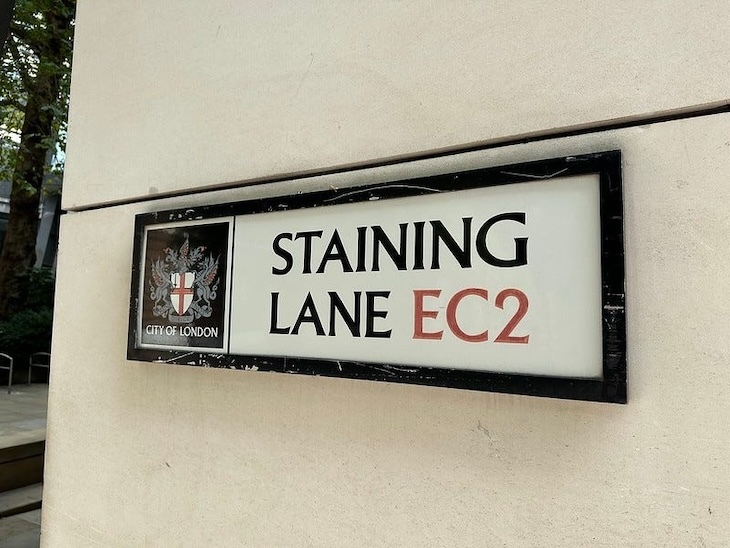
Yet another Mary with an unusual name, this time up near London Wall. The church has no known connection to dyeing or any other form of taint. It is first recorded in the 12th century as ‘Ecclesia de Staningehage’, and probably refers to a benefactor from Staines in Surrey. A local street also carries the stain name.
St Michael-le-Querne
Micky-le-Quicky, as I have no doubt Londoners called it, stood just south of St Paul’s, on Carter Lane, until the Great Fire chanced across it. The name is almost certainly a reference to quern stones used for grinding grains; a corn market stood nearby.
St Benet Fink
St Barton Fink, as I have no doubt Londoners didn’t call it, stood halfway along Threadneedle Street. It also succumbed to the Great Fire, was rebuilt by Wren, only to be torn down by the Victorians. The Benet bit is short for Benedict, while the Fink is thought to refer to Robert Fink, a 13th century benefactor (after whom nearby Finch Lane is also named).
St Womble-by-the-Wazzbaffle
I made this one up. Sorry. It’s been a long day.