
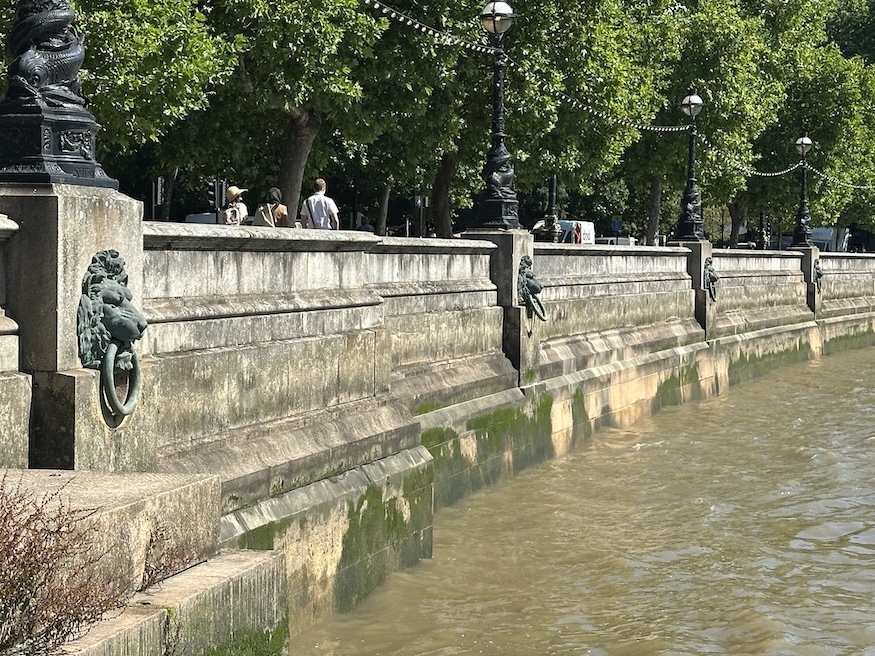
"When the lions drink, then London shall sink."
So runs the old adage. The lions in question are the leonine mooring rings that can be found at various points along the embankments, always positioned beneath lamps. Pictured above, for example, is a row beside Cleopatra's Needle.
These bronze rings are positioned well above normal high tide. They are therefore a predictor of imminent flooding. Should the Thames ever rise to reach the lions' mouths, reckons the saying, then the wall will soon be breached and London will be inundated.
The Victoria Embankment lions were designed by sculptor Timothy Butler, and date from 1868. They may have been used on an ad hoc basis for mooring, but are more decorative than practical pieces of infrastructure.
Butler had a bit of a thing for lions. He'd previously designed the spectacular lion-topped monument to boxer Tom Cribb, in Woolwich, and also another leonine grave to boxer John Jackson in Brompton Cemetery. He also provided a couple of playful street lamps for the Chelsea Embankment.
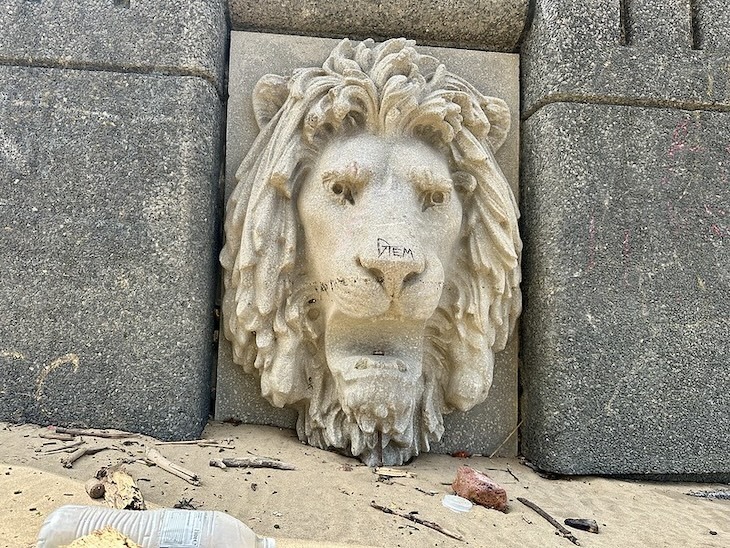
A slightly different set of lion heads carved from stone can also be seen along the embankment at Vauxhall. Head to Effra Quay and you can even pat one on the head. This fellow lacks his mooring ring, and was partly covered in shingle until recent restoration.
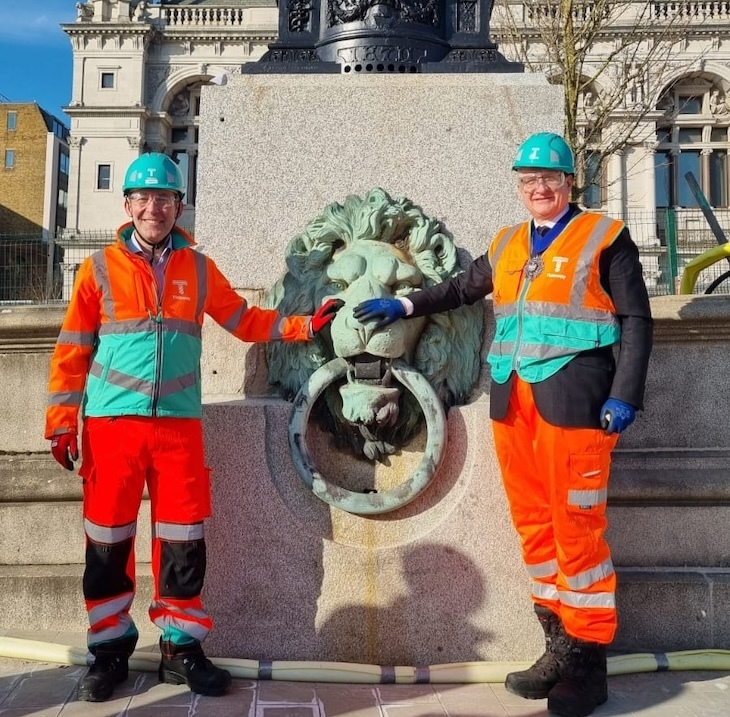
You'll soon have another chance to pat a lion. As part of the Thames super-sewer works, a new stretch of walkway known as the Bazalgette Embankment has been constructed at Blackfriars. It includes one of the original mooring rings, but here with a walkway that allows up-close inspection. This lion has been dubbed 'Roary', apparently. The Bazalgette Embankment should be open later in 2025.
It seems that these lions really were used as an early-warning system for flooding. Various press accounts from the 19th and 20th century speak of the lions being drowned, or overcome with water. What I can't find is any mention of the rhyming couplet "When the lions drink, then London shall sink," nor any obvious variation. I think it might be a relatively recent invention or, at least, a saying that was not written down until some time in the late 20th century.
Two additional couplets about the lions clearly are more recent:
"When it's up to their manes, we'll go down the drains."
"When the waters are sucked, then we're totally, um, screwed."
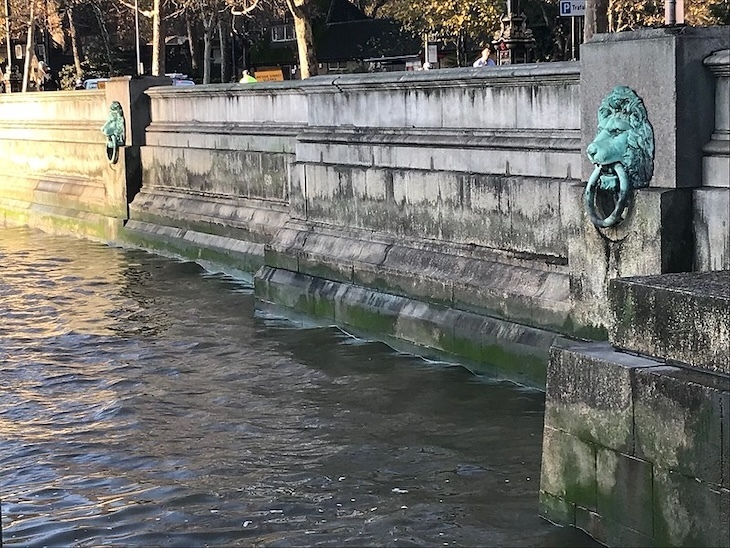
The legend of the lapping lions, whenever it was invented, is currently moot. The embankment walls are now about a metre taller than when first built. In the photo below, you can see that an additional layer of Portland stone has been added to the original level. Without this, the lions' mouths would have been very close to overspill level.
With the completion of the Thames Barrier in 1982, it's now very rare for water to reach the lions, let alone breach the walls. That may change, of course, if sea levels rise in line with scientific forecast.


#/media/File:The_grave_of_boxer_John_Jackson,_Brompton_Cemetery.png)