Soho's eccentric carving of religious refugees.
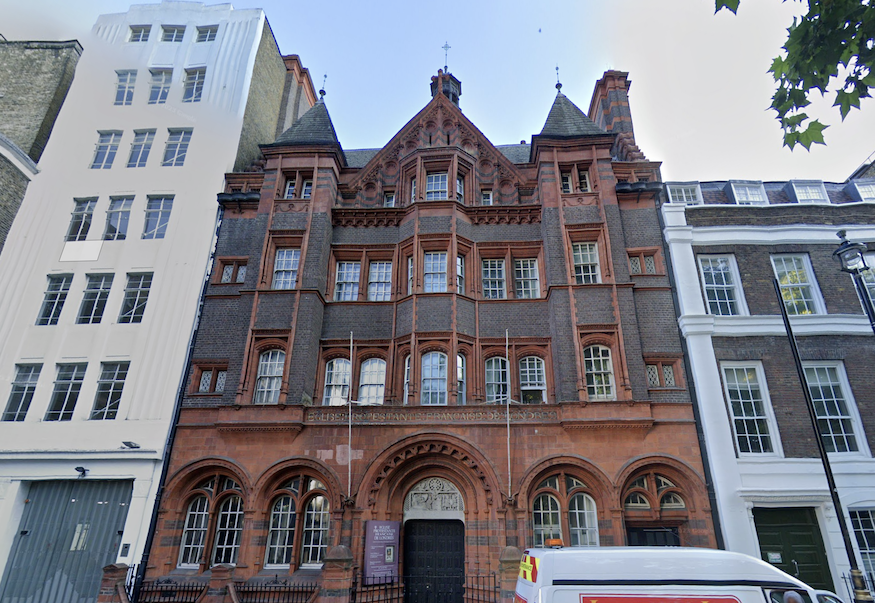
Look to the north-west corner of Soho Square and you'll find a peculiar terra-cotta building, with Gothic stylings. This is the French Protestant Church, created in 1893 by Aston Webb, the starchitect who designed Admiralty Arch and gave Buckingham Palace its current look.
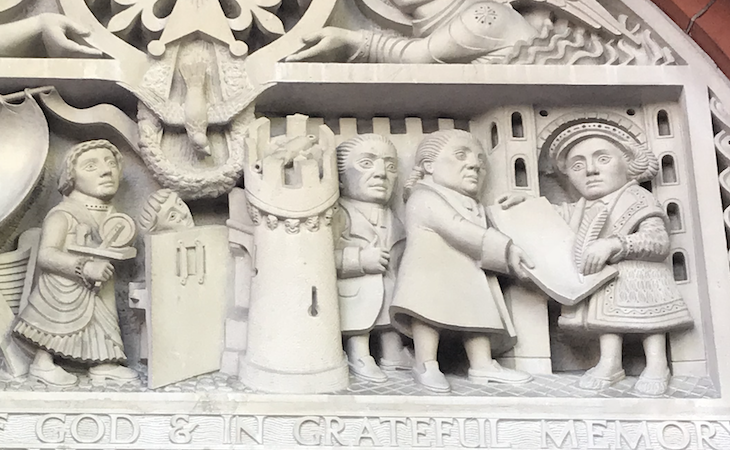
The building itself is pleasing to behold, but a detail above the door is particularly intriguing. Here you'll find the following stone carving:
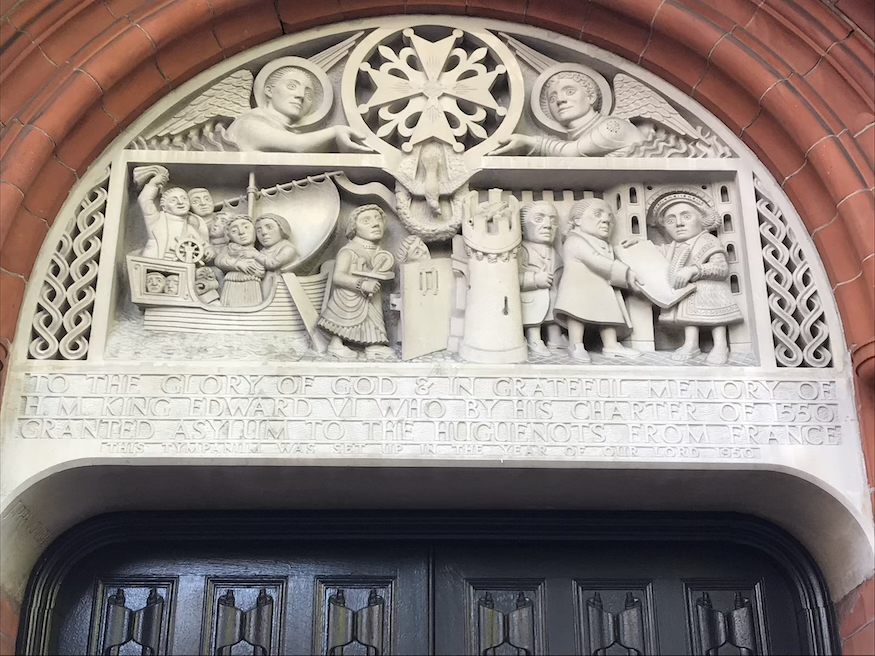
Even before we get to its meaning, this is a curious scene. The main figures have oversized heads, full of expression, as though they're characters in a preschoolers' show. Needless to say, this is not a Victorian carving. It dates from 1950 and is the work of John Prangnell.
The legend underneath reveals more information. "To the glory of God & in grateful memory HM Edward VI who by his charter of 1550 granted asylum to the Huguenots from France. This tympanum was set up in the year of our Lord 1950."
The sculpture (or tympanum to use their fancypants word) was, then, installed on the 400th anniversary of the charter.
Edward VI, the boy king, is the one on the far right, signing a charter that looks like a chopping board. Before him are a line of refugees from France, emerging from a ship and passing into the safety of a castle (possibly Dover Castle).
As those who know their European history will be aware, the Protestants of France went through a number of persecutions from the Catholic establishment. Many fled in the 16th and 17th centuries, seeking sanctuary in Protestant-friendly territories overseas. They were known as Huguenots.
England was one such place of refuge. Following Henry VIII's break with Rome, the nation began a precarious journey towards Protestantism. Henry's son Edward VI was keen on the project and therefore welcoming of Huguenot refugees (his sister and successor Mary I, violently less so).
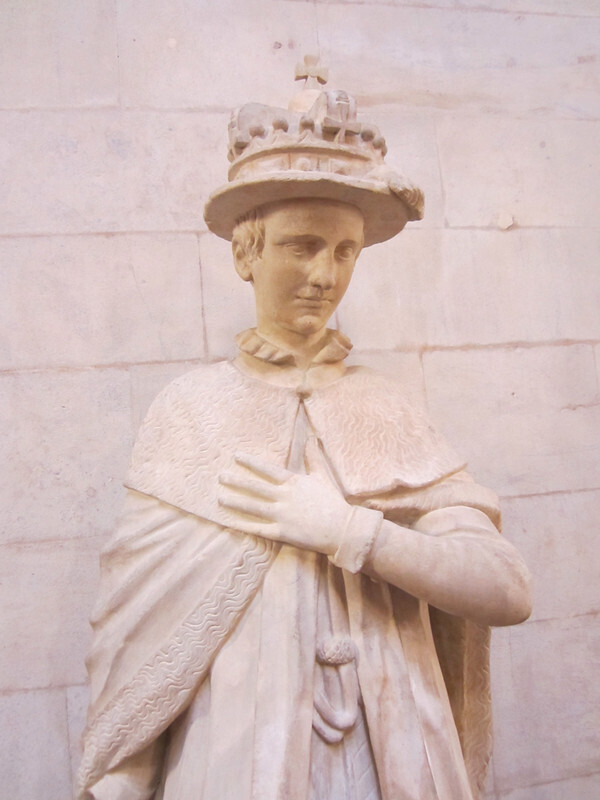
The sculpture shows Edward giving sanctuary to the first wave of Protestant immigrants. This led to the foundation of the first French (and Walloon) Protestant church, in Austin Friars in the City. It's a rare depiction of Edward, who reigned for just six years. The only other one I know is this peculiar statue in Guildhall.
The biggest influx of Huguenots would come more than a century later, however, when Louis XIV of France ended all freedoms for Protestants in 1685. Some 50,000 refugees came to London at the time, perhaps the greatest wave of immigration up to that point.
The Huguenots made a lasting contribution to the city, most famously by setting up a thriving silk-weaving industry in Spitalfields and surrounding areas. There's a reference to this in the sculpture. See the figure who's just got off the boat? He or she is holding what appears to be the wheel of a shopping trolley, but is more likely a spinning wheel.
Soho was another area in which the Huguenots settled in large numbers, usually as jewellers, watchmakers, goldsmiths and other such trades. The continued presence of the French Protestant Church in Soho Square, with its idiosyncratic relief sculpture, is a reminder that London has long been a place of refuge for the persecuted and oppressed.