
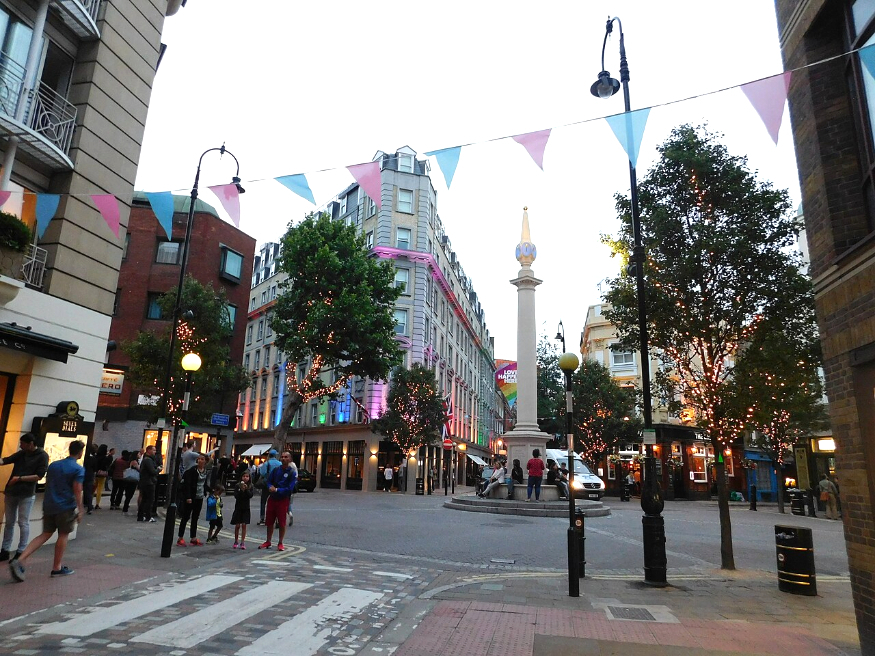
"The slum district in town... I passed through there once in error. I was furious"
So says Helena Bonham Carter about London's Seven Dials, in her role as Lady Caterham in 2026 Netflix mini-series, Agatha Christie's Seven Dials. The show is based on Christie's 1929 book, The Seven Dials Mystery, which is partly set in the Seven Dials neighbourhood of Covent Garden. Though it's a popular shopping and theatre district these days, Seven Dials has a rather more chequered history as part of the nearby St Giles slum area, with the likes of Charles Dickens and John Keats recognising its undesirability in their work. At the time of Christie's writing, the area was still fairly... dodgy, making it the ideal setting for the seedy Seven Dials club and gambling den in her detective novel.
Interestingly, the book itself received very poor reviews when first published (as did Christie's The Mousetrap, which coincidentally has been playing at St Martin's Theatre, just around the corner from Seven Dials, since 1974 — proving that reviewers don't always know what they're talking about).
Want to know more about the area's history? Read on for seven pieces of trivia about Seven Dials.
1. It was nearly Six Dials
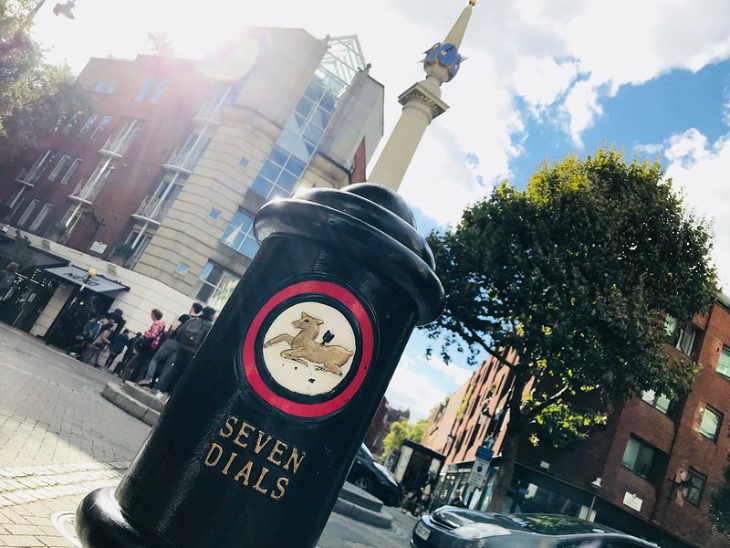
We've all done it. Stood in the centre of Seven Dials and counted to check there are definitely seven (there are, although it can be a time-consuming task if done after visiting one of the nearby bars). There were very nearly only six roads, which is why the pillar in the centre has six sundials, but plans were revised at the last minute. Somebody very quickly came up with the idea of declaring the column itself to be the seventh sundial, and the rest is history.
2. Cashing in
The number is not really of any significance — it's the layout of the area that's important. The road layout was designed by Thomas Neale, a politician who was hoping to cash in on the success of other up-and-coming areas, including the nearby Covent Garden Market in the 1690s. The area is laid out in a series of triangles to maximise the number of properties that could be fitted into the area — rent was charged according to the size of the frontage of the house, rather than the size of the interior. All about keeping up appearances. 61 Monmouth Street and 64 Neal Street are the only two original houses which remain today.
There was previously a pub called The Thomas Neale, in Shadwell — another area he developed — but it's now closed.
3. Where Neal's Yard gets its name
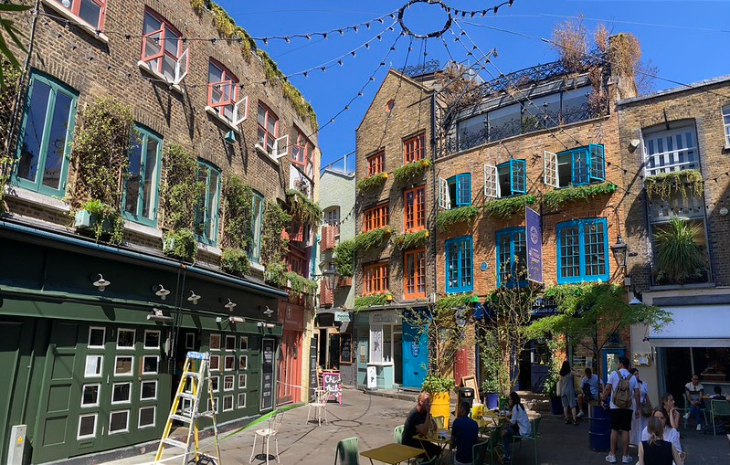
If you were paying attention to the above, you'll know where we're going with this. The ever-colourful Neal's Yard and nearby Neal Street were named after local developer Thomas Neale... despite the slight difference in spelling.
4. A need for nightwatchmen
Despite Neale's hopes that Seven Dials would become a salubrious area, it was not to be. The leases meant that the houses could easily be subdivided, and the area quickly became a slum. By the mid 18th century, a team of 39 night-watchmen were employed to keep the peace.
The area declined further, and by the 19th century, Seven Dials was almost as notorious as the nearby slum of St Giles for its impoverished conditions — hard to believe when you look at all the high-end fashion stores here today.
5. The real Gin Lane
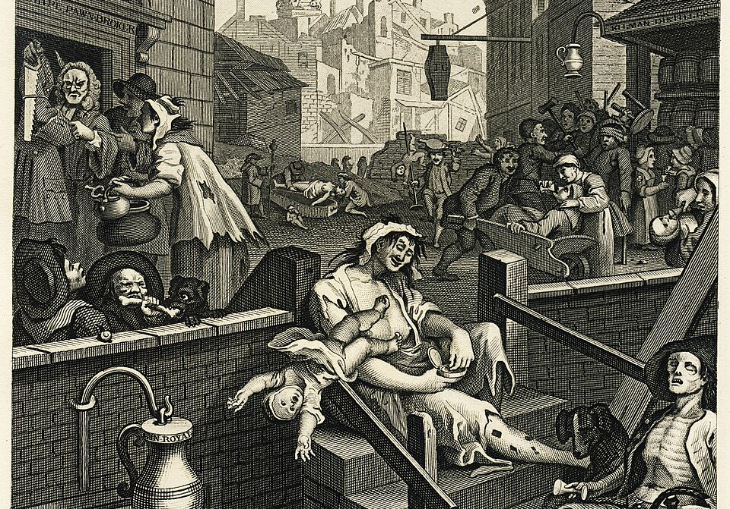
William Hogarth's print Gin Lane was created as propaganda, along with another print, Beer Alley, about the evils of drinking the spirit gin, versus the merits of drinking beer. It's been widely suggested that it is based on the area which was known as The Ruin of St Giles — now Seven Dials.
6. The original Seven Dials sundial is now in Weybridge
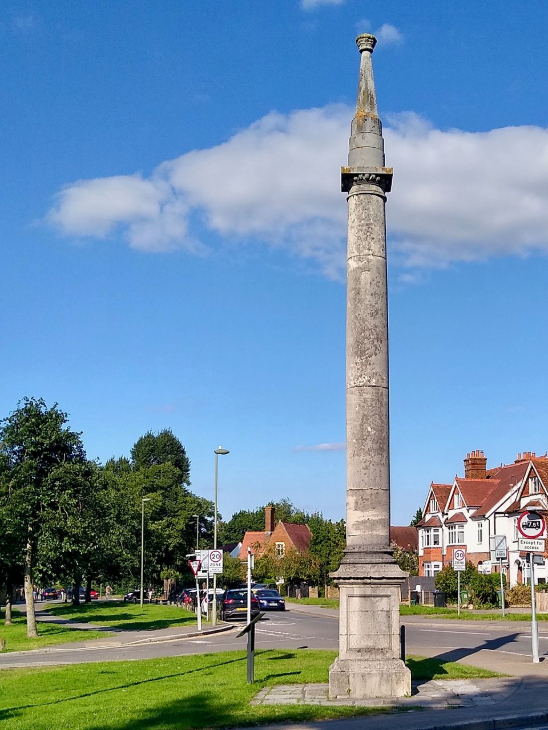
The original sundial pillar, installed at the time the area was laid out in the 1690s, is no longer in the centre of Seven Dials. It was removed in 1773 as it had become a meeting point for undesirables, and it's thought that it spent some time in a garden belonging to architect James Paine in Addlestone.
The pillar reappeared in public in 1822 when it was erected as a memorial to Frederica Duchess of York on Monument Green the town of Weybridge in Surrey. The original dial stone was deemed too heavy, so was removed from the top and put to use as a mounting block for horse riders. Complete with a plaque, it can still be seen near Weybridge Library. An inscription was added to the base at the bottom of the original column when it was converted into a memorial.
The replacement sundial column was only installed in 1988–89, and is identical to the original design, details of which are held in the British Museum.
7. The St Paul's link
Edward Pierce, a well-known stone mason, was chosen to create the original sundial pillar in the 1690s. Pierce had worked with Sir Christopher Wren on masonry for many city churches, including St Paul's Cathedral.



.jpg)
