
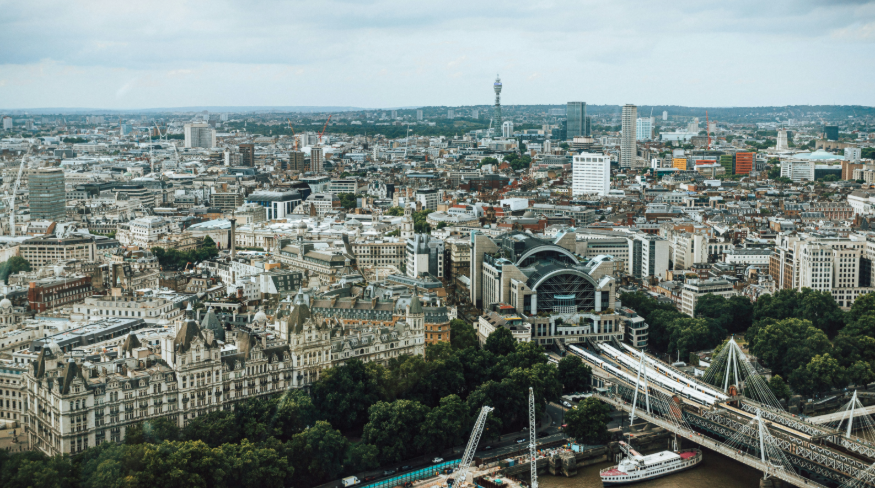
Charing Cross station is London's most central railway terminus, just a few minutes' walk from Trafalgar Square. But did you know these seven facts about it?
1. Why is it called Charing Cross?
Charing Cross is the name of the road junction to the south of Trafalgar Square, and that's where the station gets its name from. The junction is where all distances to London are measured from.
The word Charing comes from old English 'cierring', which means 'turning', a reference to the bend in the River Thames by the station.
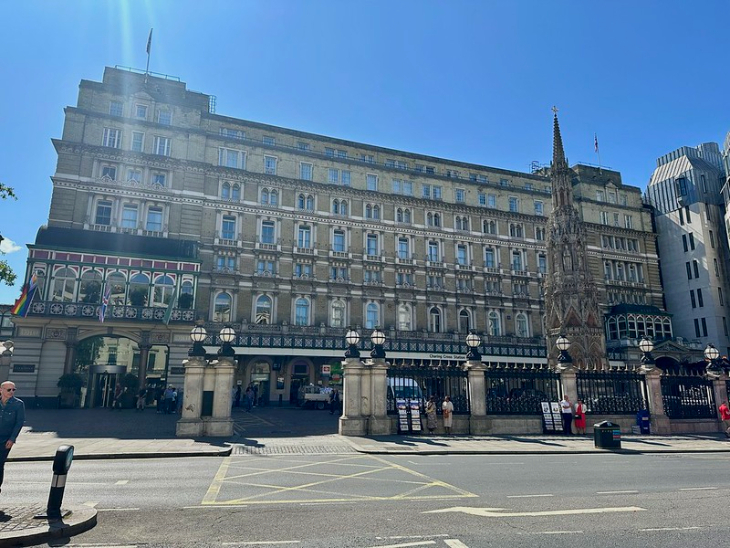
As for the Cross, that relates to the final Eleanor Cross, a series of monuments marking the nightly resting places of Queen Eleanor of Castile's body, following her death near Lincoln in 1290. The original London memorials have long vanished, but a Victorian pastiche can still be seen in the taxi rank of the station. IanVisits had a bit of fun with that on April Fool's Day 2014.
An alternative suggestion is that Charing originates from the French 'chère reine', meaning 'dear Queen' and referring to Eleanor. But the area was probably called Charing long before then.
2. The storm tree
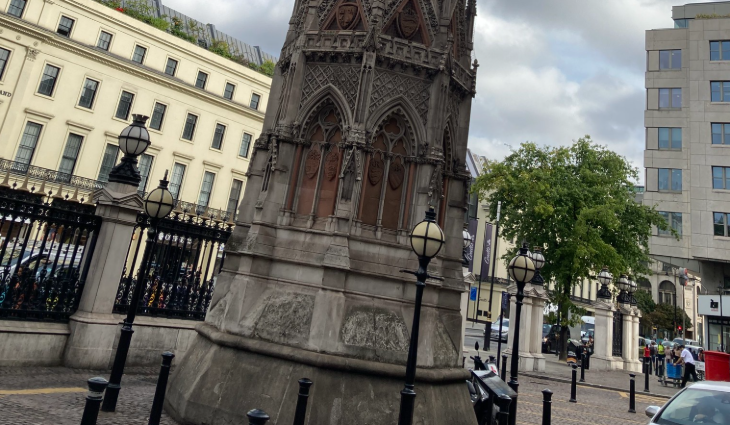
You might never have noticed this tree outside the front of the station, on Strand. Thinking about it, it's an odd place to have such a large tree, slap bang in the middle of the pavement in the centre of London.
In fact it's a memorial tree, planted as a result of the great storm of October 1987, which destroyed a quarter of a million trees in London. Following the storm, the Evening Standard launched an appeal to plant fresh trees across the London boroughs, this being one. A plaque on a nearby pillar commemorates it.
3. Keeping it in the family
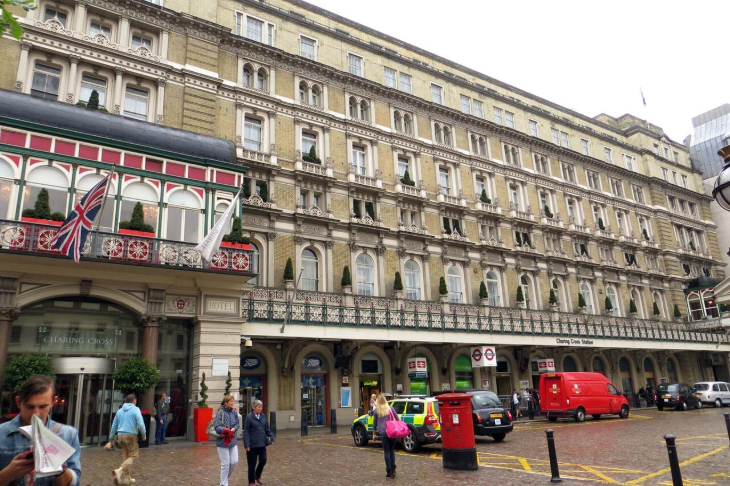
Charing Cross Hotel, which opened at the same time as the station, was designed by EM Barry, son of Sir Charles (who was responsible for rebuilding the House of Commons). The hotel is a Grade II listed building. Architectural flair ran in the family — another of Charles Barry's sons, Charles Barry Jr, was responsible for designing the station hotel at Liverpool Street station.
4. A royal first
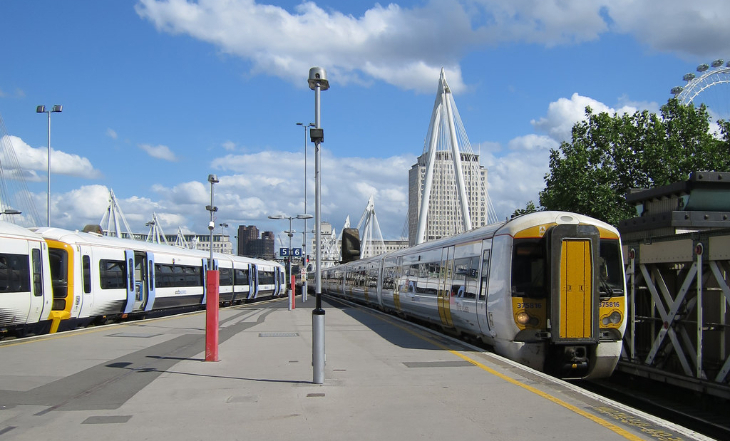
The Royal Family's was the first passenger train to use the new railway tracks built between London Bridge station and the new Charing Cross station, en-route from Windsor to Dover. This was in December 1863, before the first public passenger train left the station on 11 January 1864. The station itself wasn't quite complete, one newspaper reporting: "As yet the terminal station is a temporary one, the splendid station building requiring at least two months more for its completion, when the hoardings will be removed and disclose a square with a facsimile of old Charing cross [sic] in the centre."
5. A presidential visit
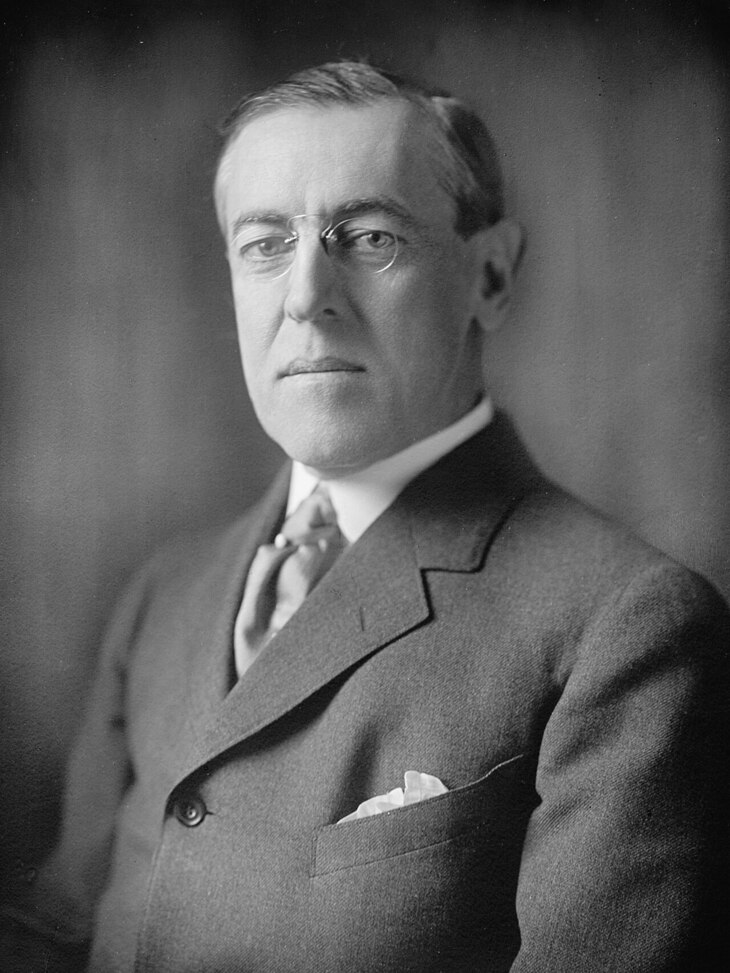
A plaque below the wall-mounted clock commemorates the time the station was visited by a serving US president.
Woodrow Wilson arrived at Charing Cross on Boxing Day 1918, to be met by King George V and whisked off to Buckingham Palace. A journalist remarked that the train was 'punctual to the minute', although he hardly recognised the station: "It was not the crimson carpet and the red hangings, the banners and streamers. I am used to such things. It was the effectual way the platforms and the whole dingy place had been swept and washed clean, and all the familiar grimy things moved from sight."
6. The roof collapse tragedy

In December 1905, six people were killed when the glass and metal station roof collapsed during maintenance works. The station was closed for three months for repairs, reopening in March 1906. As a result of the accident, designs for a similar roof at Cannon Street station were scrapped. Read our article on the roof collapse.
7. Changing names
When Charing Cross Railway station was first built and opened in 1864, The Tube station we now know as Embankment was named Charing Cross. The present Charing Cross Tube station was known as Trafalgar Square station. We'll let Geoff explain the rest:





.jpg)