Edward Shawcross, author of The People's Emperor: The Unlikely Rise and Spectacular Fall of Napoleon III, writes how London fell head over heels for a deluded Frenchman who turned out not to be so deluded after all.
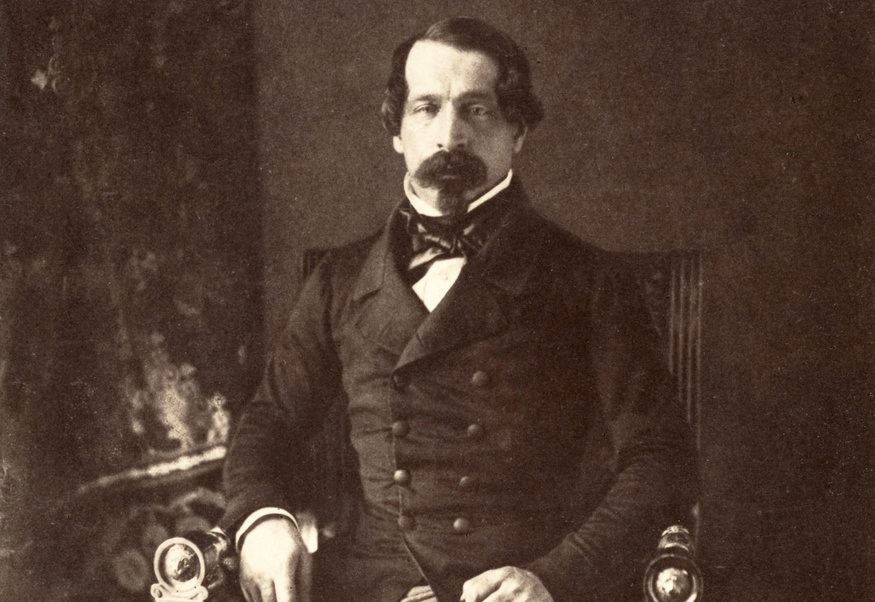
"Really", recorded an overwhelmed Queen Victoria, "to think of a Gd Daughter of George IIIrd, dancing with the nephew of our great enemy, the Empr Napoleon now my most firm Ally, in the Waterloo Gallery, — is incredible!"
In her bewilderment, Victoria was speaking for Britain. The ball she described was the culmination of a state visit — arranged to celebrate the Anglo-French alliance formed to fight Russia in the Crimean War in April 1855 — by the emperor of the French, Napoleon III, and his wife, the empress Eugénie. On 16 April, the imperial couple arrived at the Bricklayers Arms station in Southwark where they were met with the inscription "England and France for ever! Long live the Emperor and Empress!". One correspondent was so thrilled by the visit that he wrote to The Morning Post to suggest that Marble Arch be renamed the Arch of Napoléon.
That idea was not taken up, but tens of thousands lined the route as the imperial couple were driven in triumphant procession from Southwark through central London. Union Jacks vied with Tricolour flags in the streets; suspended from the roof of a house in the churchyard of St Paul's cathedral a banner fluttered with the imperial eagle embroidered on it; tickets for stands or on balconies in private houses sold out. As the cortège passed King Street off St James's Street, the emperor pointed out a nondescript townhouse to the empress. The crowd cheered ecstatically, for they knew this was where Napoléon III, then merely Louis-Napoléon, had once lived.
Twice a Londoner
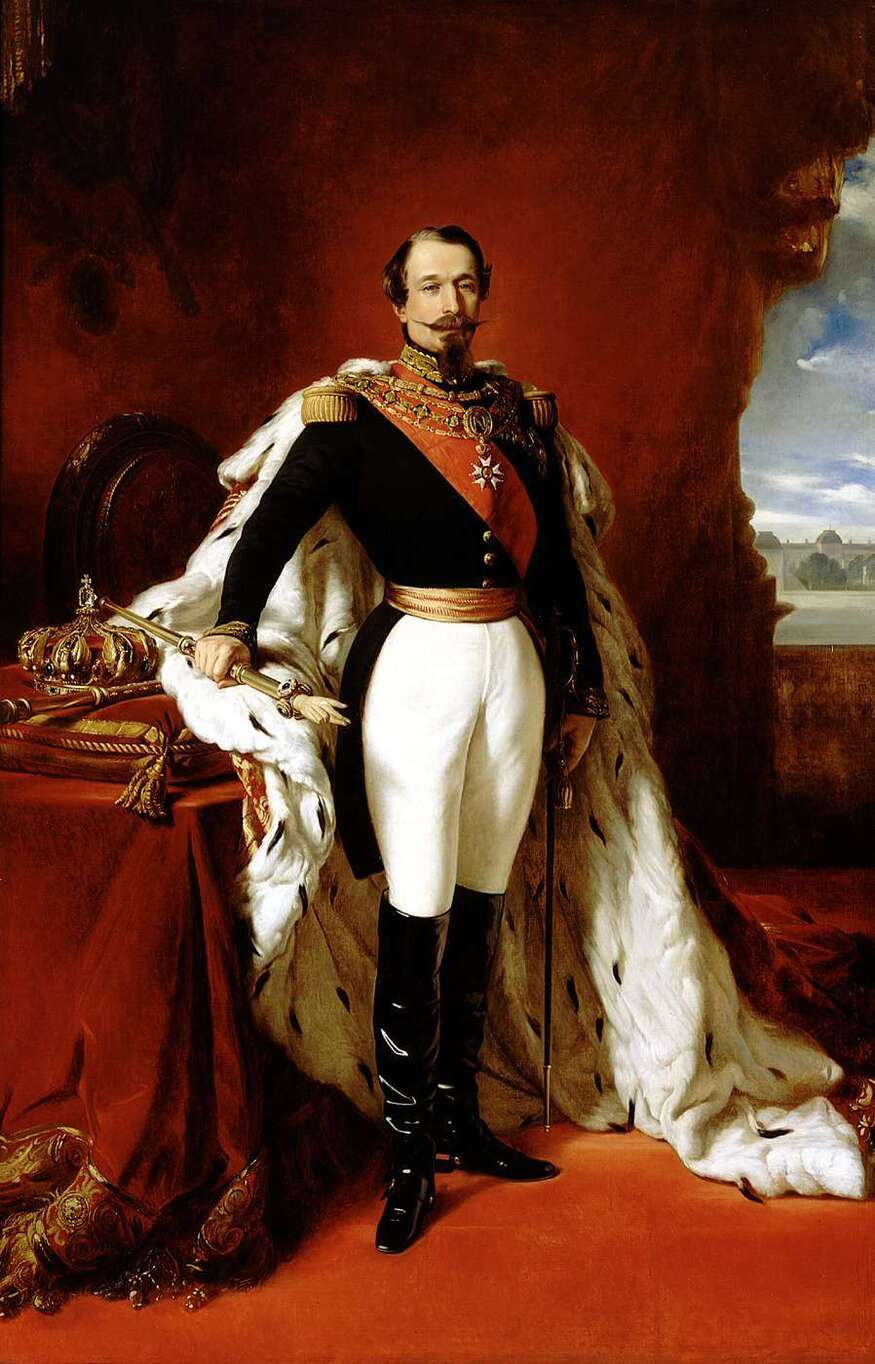
For a French emperor, Napoleon III was a remarkable anglophile. Twice he had lived in London. First from 1838 to 1840 and then from 1846 to 1848 before he returned to Paris to become France's first ever directly elected president. This was an unlikely rise. In London, this nephew of Napoleon Bonaparte had been known as a dilletante — he spent much time at the British Museum writing books few people read — and a dandy. Gorgeously arrayed in the finest clothes money could buy, Louis-Napoléon hung out with disreputable literary types like Charles Dickens and Benjamin Disraeli at a salon in then-unfashionable Kensington in between seducing as many actresses and ballerinas as he could.
But what drove Louis-Napoléon in London was unwavering belief that it was his destiny to rule France and reestablish his uncle's empire. An incorrigible conspirator, he did not hide his ambitions — frequently dropping into conversation plans for what he would do when emperor, much to the amusement of those who listened with the kindly patience afforded to the deluded. After he suddenly left London in August 1840, it came as no surprise to acquaintances in England to discover that he had been arrested and condemned to life imprisonment for failing in farcical fashion to overthrow the French government. In 1846, he escaped prison, walking out the front gate disguised as a workman. Soon, he resumed his old life in London.
"'Vive le Hempereur!"
Extraordinarily, his belief in his star was undimmed. As one London-based satirical newspaper commented, "it was a pity that" Louis-Napoléon indulges "so ridiculous a delusion; for strange to say, however eager this would-be Emperor may be to govern the French, they have never shown the least anxiety to become his subjects."
That changed. Revolution broke out, again, in France in February 1848 and by December of the same year Louis-Napoléon, after winning a presidential election by a landslide, had swapped King Street for the Elysée Palace. Three years later, he launched a coup d'état against the government he had sworn to protect, proclaiming himself emperor soon after. His first foray into foreign policy saw him ally with Britain and declare war on Russia.
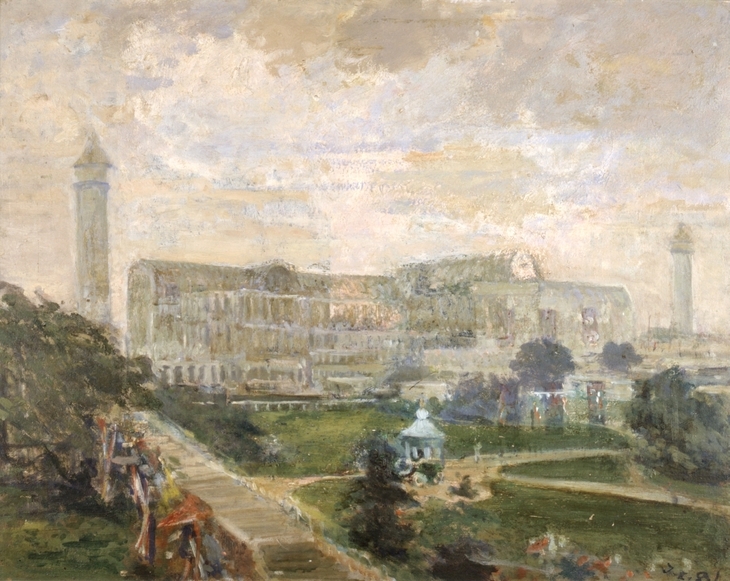
The nation's traditional nemesis had become, as Victoria said, its firmest ally. Much to the delight of the British people, Napoléon III came back to London as emperor for the state visit in 1855. Wherever he went, crowds, bunting and flags were in abundance; ovations deafening. On one excursion, the emperor and empress with Queen Victoria and Prince Albert went to see the monumental iron and glass hall, the Crystal Palace. As they made their way cries of "Vive l'Empereur" and "Vive l'Impératrice" rang out, and, much to Victoria’s delight, she noted, "sometimes even 'Vive le Hempereur', in cockney English!".
The 1855 visit proved to be the high-water mark of Anglo-French relations; however, there was to be an elegiac final flourish. After being taken prisoner at the battle of Sedan in 1870 during the Franco-Prussian war, the emperor lost his throne. The last years of his life were spent in exile in the decidedly unimperial village of Chislehurst, then in Kent. He died here on 9 January 1873.
"The English can reach phenomenal heights of political immorality"
Blamed for catastrophic defeat in the Franco-Prussian War, French newspapers celebrated his passing. "It is in vain that this great criminal, to escape punishment, tries to take refuge in a coffin. The future will know all his crimes", ran one obituary. In Britain, however, he was mourned. He "schemed much that was grander, nobler, more daring than any English statesmen", was The Evening Standard’s judgement.
Much to the annoyance of French journalists who came to cover the funeral, British Bonapartemania went into overdrive once more before the funeral. In London, Dickensian street urchins hawked cheap images of the late emperor. "The fervour, the adulation, the baseness of cockneys and the English bourgeoisie have not slowed for five days", complained one French correspondent. All this sympathy, he wrote, was proof that "the English can reach phenomenal heights of political immorality".
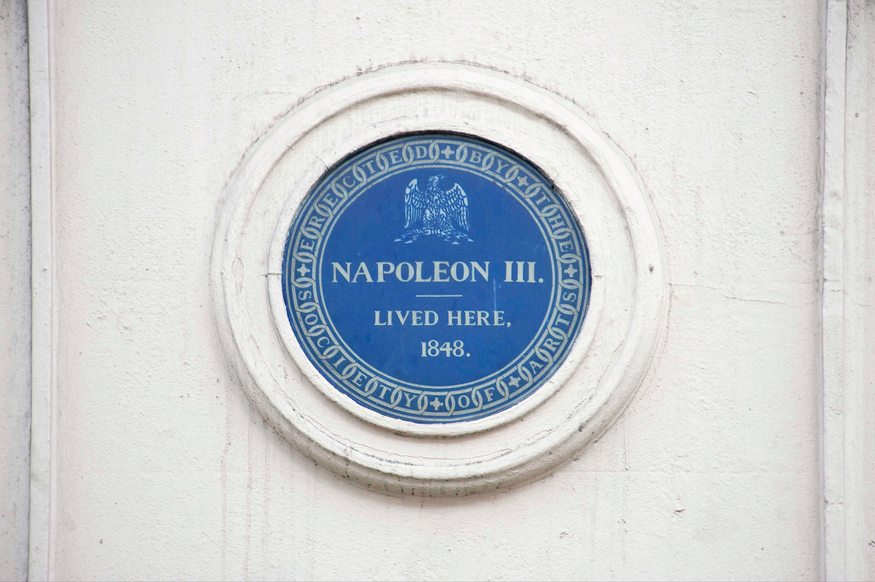
Worse was to come for the journalist, for some 20,000 turned out for the funeral on 15 January. At most, only 1,000 were French. Perhaps this was a fitting tribute. After all, speaking to a visitor about politics at Chislehurst months before he died, the former emperor of the French sighed, "How I wish the French would follow this country's example!" And, while there are few public memorials to Napoleon III in France today, the oldest surviving blue plaque in London, put up in 1867 in King Street, reads, 'Napoleon III. Lived here. 1848'.
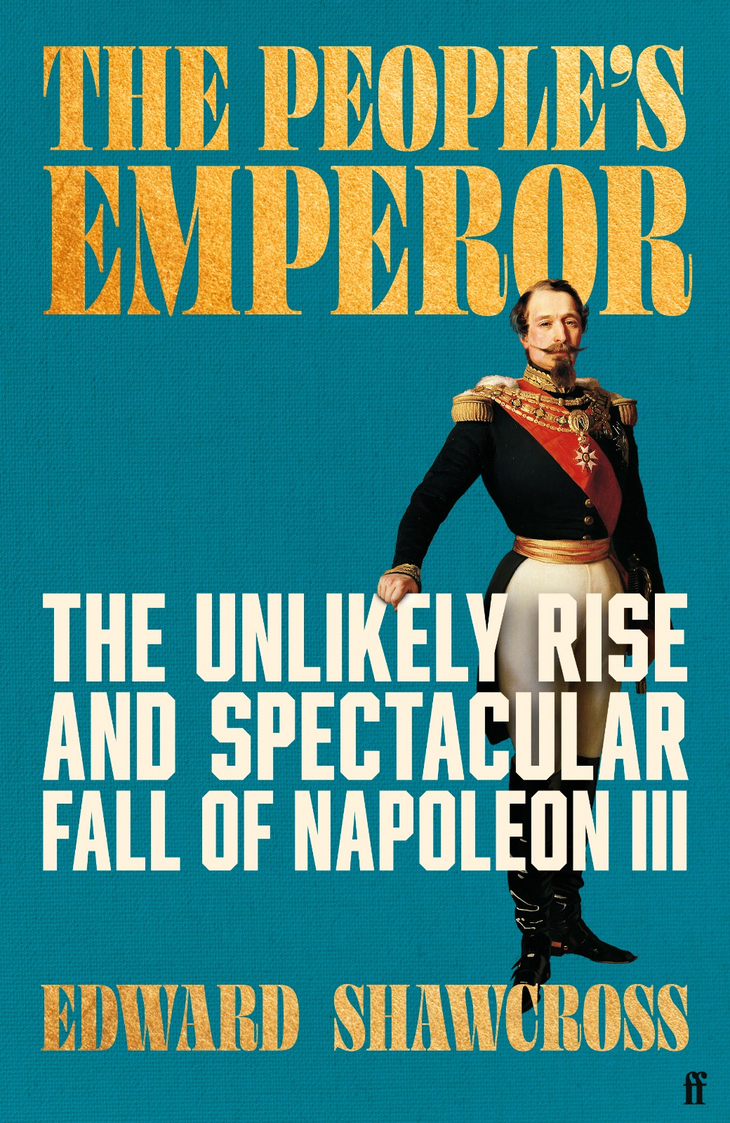
The People's Emperor: The Unlikely Rise and Spectacular Fall of Napoleon III by Edward Shawcross, published by Faber & Faber
We featured this book because we know it's the kind of thing our readers will enjoy. By buying it via links in this article, Londonist may earn a commission from Bookshop.org — which also helps support independent bookshops.