This feature first appeared in March 2025 on Londonist: Time Machine, our much-praised history newsletter. To be the first to read new history features like this, sign up for free here.
Have you ever leaped out of a car at 4am to prostrate yourself over a manhole cover?
I have.
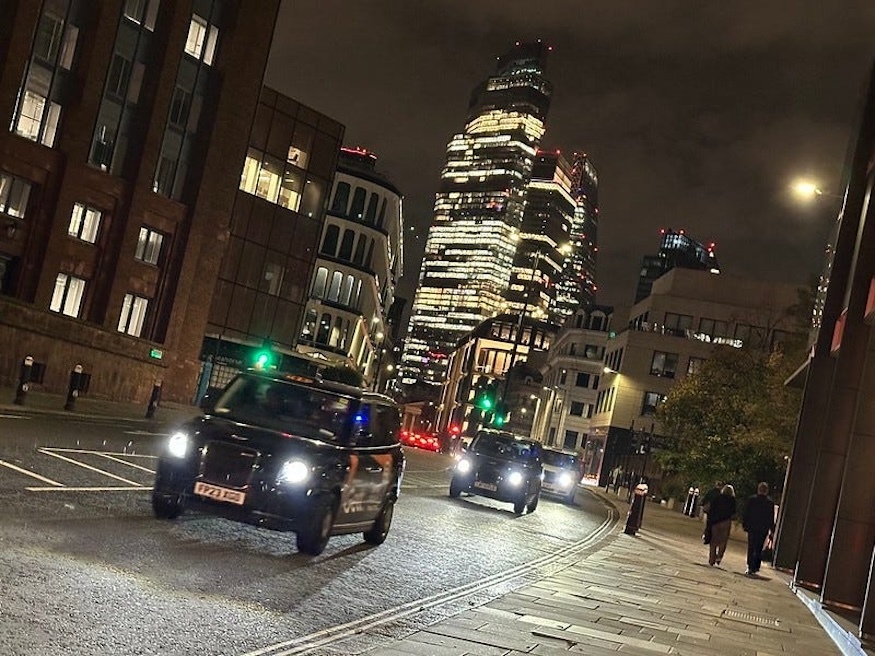
Back in 2013, I participated in a five-hour nocturnal motor race around the Square Mile. My team was competing against dozens of other treasure hunters, many of whom were in vintage cars. The clues had us peering into bushes, examining street furniture and photographing statues, before driving off towards the next clue. Imagine Wacky Races, by moonlight, among the churches and skyscrapers of the City of London.
This wasn’t a one-off event. Motorised treasures hunts have enlivened London’s nights for over 100 years. They’ve even had royal patronage. And yet very few Londoners are aware of this curious, long-running tradition.
Let’s crank the time machine back to 1924 to see how it all began…
Bright Young Things
Neil Maclean, the Labour MP for Glasgow Govan, rose to his feet with resolution, and peered across the House of Commons. He had three questions for the Home Secretary:
1. Had his attention been drawn to the actions of certain people who have been organising freak treasure hunts in London?
2. Whether any of those people had been arrested for violation of police regulations during any of those hunts?
3. Whether the Home Secretary intended to ask the recently appointed Commissioner of Lunacy to enquire into this midnight exhibition of smart-set imbecility?
Maclean was venting about the latest London craze. Every weekend, the streets of the capital would screech to the sound of men and women scorching through the West End in motor cars.
The activity is described in detail in the syndicated press:
“'Treasure hunting' describes the game exactly. A large sum of money, sometimes a thousand pounds, is raised by the players and hidden away, somewhere in London. At two o'clock in the morning all the players meet near Hyde Park in their fastest motor cars. They are directed to a certain spot, where they will find their first clue to the treasure. If they follow directions they will find another clue, and another, until the fiftieth clue leads to the treasure cache — probably an old tin can, under some back porch. It takes plenty of ingenuity to follow directions, as they are cryptically worded, and often misleading. But the principal factor in the game is speed.”
The answer to Maclean’s second question — had anyone been arrested — was “Yes”. No lesser personage than Miss Lois Sturt, sister of Lord Alington, had been collared by police following one of the first treasure hunts (this one during daylight hours). The wealthy socialite was spotted speeding around the Outer Circle of Regent’s Park at an estimated 51mph.
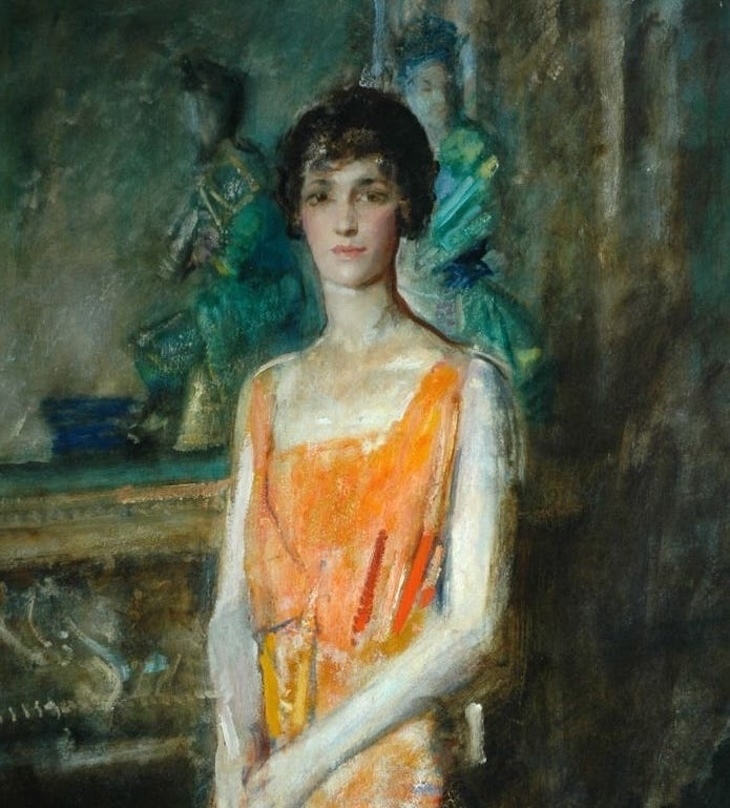
Sturt was followed by the police and arrested at the finish line (having come-in third). A fine of £6 and £3 3s ensued, and her licence was suspended for three months.
Women seem to have played a leading role in these motorised treasure hunts. Sturt was one of the initiators, and it was her arrest that first brought the races to wider attention in May of 1924. Another race a few weeks later was planned by actress Viola Tree (daughter of Herbert Beerbohm Tree).
A typical clue is provided in one of the news accounts. It read simply “October 21st, 1805”. To any educated English man or woman at the time, this would suggest the Battle of Trafalgar. That, in turn, would yield an obvious location for the next clue — Nelson’s Column. “And presently the historic monument is surrounded by scrambling, screaming men and women in full evening dress”.
That last bit is key. Only the rich could afford the vehicles, and only the young had the idle time and energy necessary to enjoy an all-night treasure hunt. Consequently, these were glamorous affairs. The participants included film stars, socialites and nobility. They called themselves the Society of Bright Young People, more famously known as the “Bright Young Things”.
Wealthy, posh gads-about-town, the Bright Young Things included the Mitfords, the Plunket-Greenes and Evelyn Waugh (who would later satirise the scene in his novel Vile Bodies). They were known for their bohemian lifestyles, fancy-dress parties and a taste for high-jinx escapades.
The BYT’s could be an obnoxious bunch. One of their games was called “Beaver”. The rules were simple: you had to walk along the street, and compete with a friend to shout “Beaver” whenever a man with a beard came into view. The childish pastime led to the near-extinction of beards in London. No gentleman could risk the shame of being “beavered” while going about his business.
The fad for nocturnal treasure hunts was similarly irksome to the wider population. As the weeks went on, the game evolved to become ever more daring. One clue was somehow chalked onto the back of a policeman’s overcoat, without his knowledge. “The perplexity and indignation of the worthy constable were infinitely amusing as car after car drove up and the titled occupants peered cautiously at his back and drove madly away.” Another clue was hidden inside an undertakers. The proprietor was obliged to answer the door with every ring of the night bell, only to find some hooray-Henry seeking his next riddle. Another sinister instalment had contestants racing to the site of a plague pit, to retrieve a clue from a model of a dead baby.
The most bizarre report I’ve found involved a clue that was concealed on a second-storey bedroom window. An elderly gentleman, asleep behind that window, was woken by a scratching noise on the glass. He threw back the curtains and was shocked to see the face of Lady Eleanor Smith, daughter of Lord Birkenhead. She’d reached the second floor by mounting the shoulders of a young gentleman who, in turn, was standing on the roof of a limousine. It must have looked like an over-entitled version of the Musicians of Bremen.
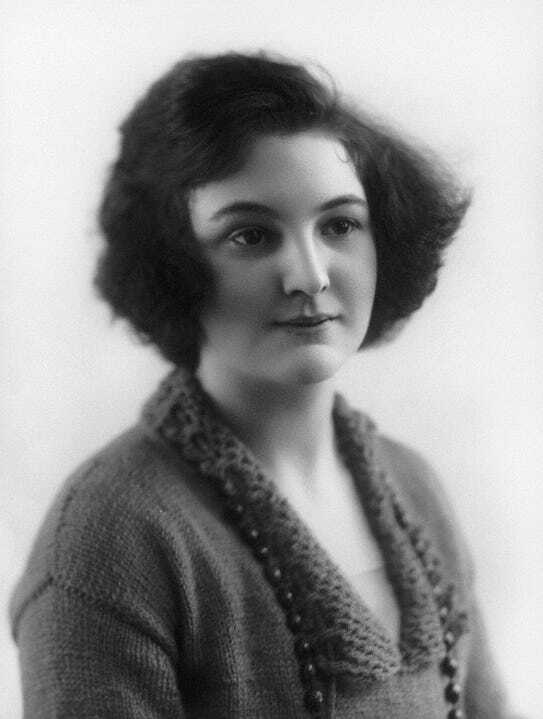
If the scene actually happened, of course. These press accounts contain a suspicious amount of detail, but don’t say how it was obtained. Apparently, Lady Eleanor was able to persuade the confused householder to hand her the clue. After reading its content she supposedly told him: "Put the paper back, like a good boy, and go right back to sleep."
“With an Englishman's instinctive respect for nobility the old gentleman did as he was told, and stood there in a bewildered trance as more and more limousines backed up and the high life of London, people whose pictures he had seen in the papers every day, swarmed up his wall. It was not surprising that when he tried to tell his good wife what had happened to him during the night, she hid his clothes and kept him on a milk diet for two weeks, convinced that he had been delirious.”
Some of these antics are surely exaggerated, or even made up, but they nevertheless stirred the Dull Old Things of the Establishment into action. The Press, too, grew increasingly critical of the treasure hunts. The Manchester Guardian opined “that those who have to use the London streets at night should be imperilled by the furious driving of a fleet of treasure hunters is preposterous”. The Times called it a “vulgar nuisance”. The Evening Standard: “bad form and silly”.
Not all of the Establishment were against the jollity, however. In September 1924, the craze reached its apogee when the Prince of Wales himself took part. The future Edward VIII was invited to select the starting point, and he chose Claridge’s Hotel in Mayfair. His august presence brought out many a celebrity racer, including the noted actresses Tallulah Bankhead and Gladys Cooper. By all accounts (which, again, may be embellished), the Prince got into the spirit of things. One description had him leading a party through Seven Dials on hands and knees, in search of a chalked clue.
The fad ran out of steam as the summer wore on, and the Bright Young Things retired to the coast, or to overseas resorts (a few of which then had treasure hunts of their own). The speeding conviction of Lois Sturt also put a dampener on things. By the time the season rolled around again in 1925, the in-crowd had moved on to pastures new. Nocturnal treasure hunts were passé, and left to less-glamourous copycats.
An earlier craze
The 1924 treasure hunts represented a unique phenomenon, which saw Britain’s toffs speeding around London in cars by the light of the moon. But the capital had been troubled before by a different class of errant puzzler.
"The treasure-hunter is becoming a serious nuisance," scowled The Times in 1904. London was witnessing a wave of petty vandalism. Roads were dug up, trees were damaged and walls demolished in a frenzied hunt for concealed lucre.
The craze was started by the Weekly Dispatch, which secretly buried dozens of treasure medallions around the country. By solving clues printed in the paper, the public could hunt down the tokens and claim a prize. 20 such deposits were buried in London alone, each worth £50 to the discoverer (perhaps £5,000 today).
The promise of instant wealth caused chaos. Westbourne Terrace was inundated with shovelers, while Blomfield Road in Maida Vale attracted hundreds of gold diggers. Tree roots were damaged on Wimbledon Hill. The very first clue had indicated a treasure "near a place where people go against their will", prompting frantic scrabbling around the borders of Pentonville Prison.
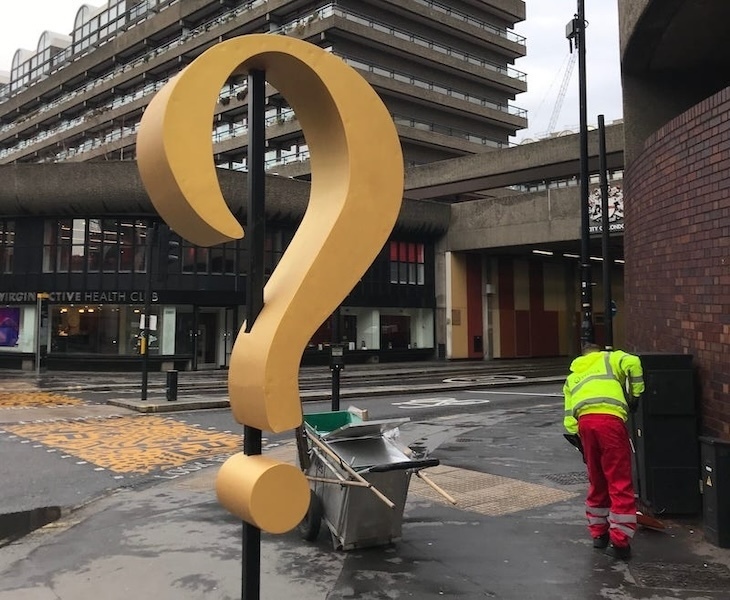
Unlike the 1924 craze, this earlier treasure hunt attracted many working class people, keen to turn their fortunes around with the flick of a trowel. But many professionals took part, too. Architect Arthur Stuart was arrested for causing a nuisance in Claremont Street, Clerkenwell. The judge summed up: "You are an educated man. Does it not seem to you to be a very foolish thing that a man in his senses should be scraping around the roadway with a corkscrew? It seems to me to be the act of a lunatic. Go away. You are discharged."
The notion of the mass treasure hunt has never been entirely discharged. The 1904 and 1924 crazes would be followed by many smaller-scale hunts. The next ‘biggy’ was Kit Williams’s ‘Masquerade’ puzzle which, in 1979, set tens of thousands of people hunting for a golden hare. In more recent times, the geocaching concept has created a democratic, permanent treasure hunt across the whole world.
But there’s one more treasure hunt — and it is another motorised, nocturnal treasure hunt — that began a generation after the Bright Young Things, and which would continue every year until very recently. Hardly anybody knew about its existence.
The Miglia Quadrato
11pm on a balmy spring evening in 2013. The pubs are kicking out around Liverpool Street Station. The largest gathering, however, is in Finsbury Square. Here, a ragtag bunch of motorists, many huddled around vintage cars, await the start of the 53rd annual Miglia Quadrato (Italian for Square mile).
The event was first held as far back as 1957, in response to the Suez Crisis. Oil prices were soaring, and the Miglia Quadrato was conceived as a stimulating rally, but one that would use comparatively little fuel. The clue-solving element also proved popular. It would continue annually for another 60 years, under the auspices of the United Hospitals and University of London Motoring Club.
The secretive event sees 100 teams compete in a five-hour treasure hunt around the Square Mile. The race is done with the full cooperation of the City of London Police, but very few members of the public know of its existence. It’s not exactly a secret (it has a Wikipedia page), but it’s not exactly advertised either. You will search the newspaper archives in vain for the Miglia Quadrato. Flickr only has nine photographs tagged with those words; a third of them are mine.
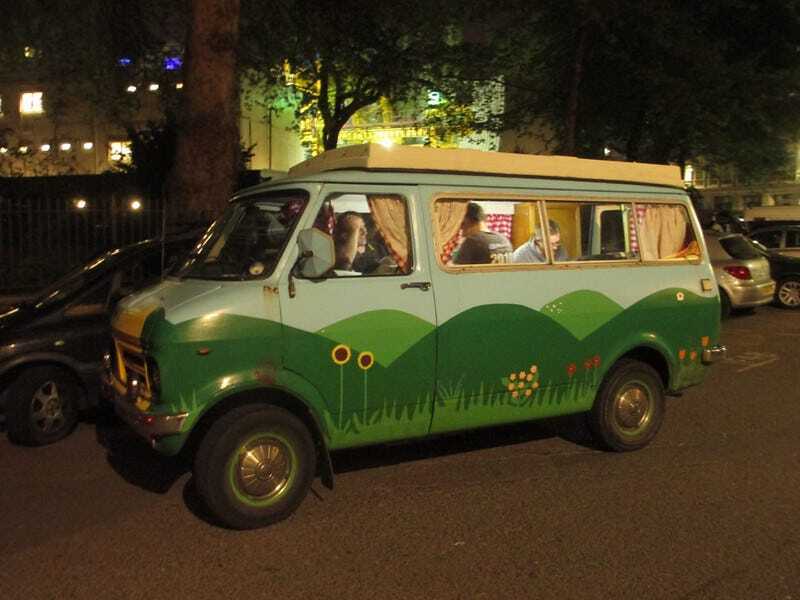
The teams prepare for a midnight start. Their vehicles are diverse. Race rules allow for “Anything (roadworthy) on four wheels”. Most competitors (including my team) turn up in a regular car, but plenty of novelty vehicles are also in attendance. A 1926 Morris T-type truck called Clementine is a mainstay of the event. Ditto a First World War fire engine called Jezebel.
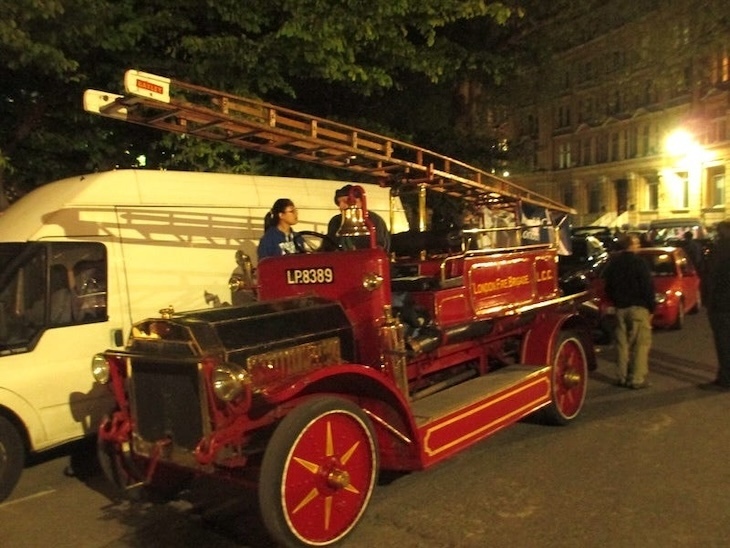
On the stroke of midnight, every team is handed a set of 60 geo-referenced clues. We spend a frantic 20 minutes attempting to plot these onto a map, to give us the best route for our five-hour mission. Keen to get moving, we set off with only half the points plotted. It’s enough to make a good start.
Alongside the driver, I attempt to navigate, while two comrades in the back work on further clues. Happily, there isn’t much traffic around. The only people we encounter are other competitors and confused security guards. Our un-orchestrated manoeuvres in the dark are accompanied by the chug, chug, chug of the vintage fire engine, always a street or two away from our own position.
My geeky knowledge of London is of little help. The 60 clues are of the form “Find a lamp post near these coordinates, and note down the serial number”. I’m also challenged by the transport. I know the Square Mile like the back of my hand, but only from a pedestrian’s point of view. It is an entirely different matter to navigate one-way systems and find legal places to park.
We return to Finsbury Circus at 5am, with perhaps two-thirds of our clues filled in. Needless to say, we do not win. Dawn breakfast at the top of the Heron Tower awaits which, after five hours or rushing about the City, feels like treasure enough. I slump over my full-English, a Dim Tired Thing, but infinitely grateful to have taken part in this little-known escapade.
Sadly, it was to be among the last. The final Miglia Quadrato was held in 2019. Covid scuppered the following years and, by the time it became possible again, the organisers called time on proceedings. The logistics of organising a mass rally in the Square Mile had become prohibitively tough.
Another one of London’s unusual and obscure traditions has come to an end, more than 60 years after it began. But the urge to explore the city by streetlight seems to be a persistent one. Even as the Miglia Quadrato was winding up, a new annual challenge called Midnight Madness arose (similar deal, but on foot rather than in vehicles). Others will come and go. To paraphrase the prototype Bright Young Thing: we are all in the gutter, but some of us are searching it for clues.