London's Fleet Street is world famous. It remains a metonym for the newspaper trade, long after the papers have fled. Samuel Johnson lived here; Samuel Pepys was born here; Sweeney Todd made ghastly pie fillings here (in fiction). It's on the Monopoly board.
But London has another Fleet Street. You won't find this one in so many history books. Indeed, you probably won't find it at all, because it's hidden away in the railway edge-lands to the east of Brick Lane. Some maps show it as Fleet Street, others as Fleet Street Hill, and it's also referred to as the 'Pedley Street Arch'.
Before we take a look at the street today, let's get our bearings. The East End's Fleet Street is about a five-minute walk east of Brick Lane. Its north end spans the railway tracks out of Liverpool Street, while the southern section was once part of a built-up residential area:
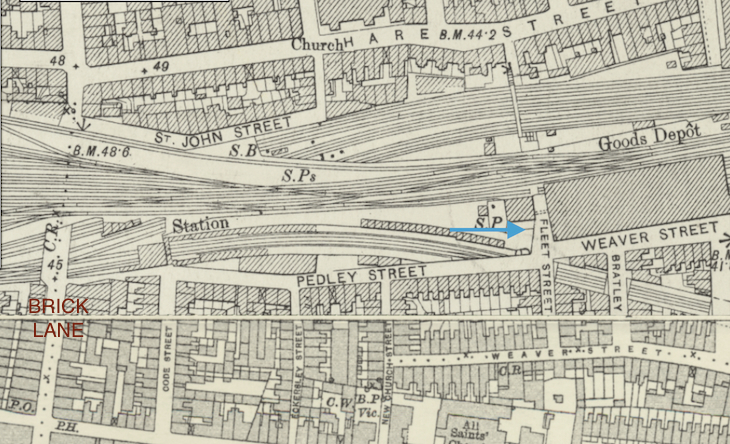
(Curiously, older maps show Fleet Street running east-west, along what is now called Pedley Street. The change in road names seems to have taken place in 1885.)
Most of the homes shown in the map above were smashed to smithereens in the Second World War. The rubble was cleared to form the open space of Allen Gardens.
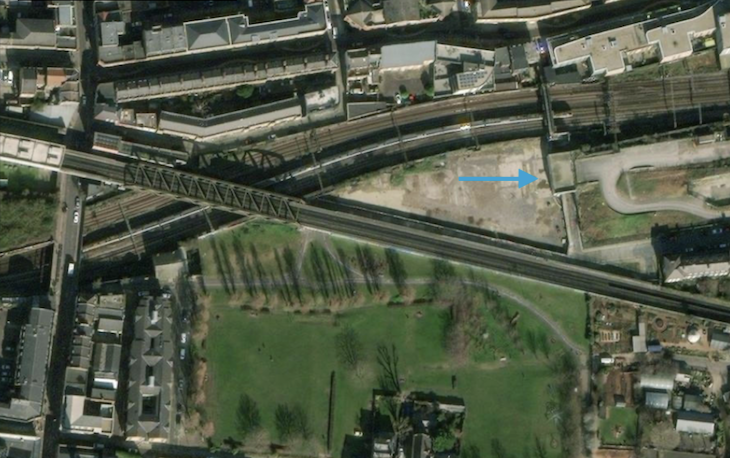
I think if you look carefully at the satellite view of Allen Gardens, the routes of some of those long lost streets can just about be made out in the shades of the grass.
Fleet Street was also obliterated to the south, but its northern section still survives. Let's go take a look...
Fleet Street begins to the north on Cheshire Street. It does not present the most inviting face to the world...
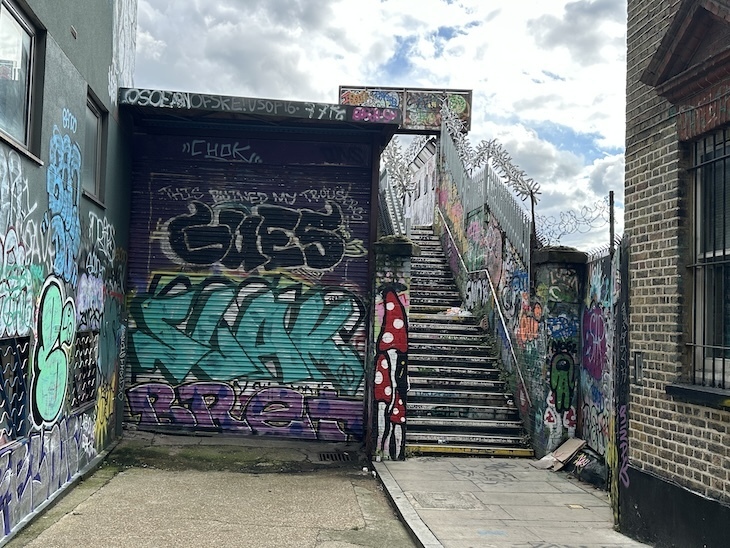
Litter, graffiti, spikes, and the lichened paving suggesting that this corner doubles as an al fresco toilet. It's not screaming out to be explored. The street/alley has always had something of a pong about it. This advert from as far back as 1869 suggests a hold-your-nose experience at the entrance.

The famous Fleet Street got its name from the River Fleet. I'm not sure how this one was named, but perhaps it was because those who enter may wish to be fleet of foot...
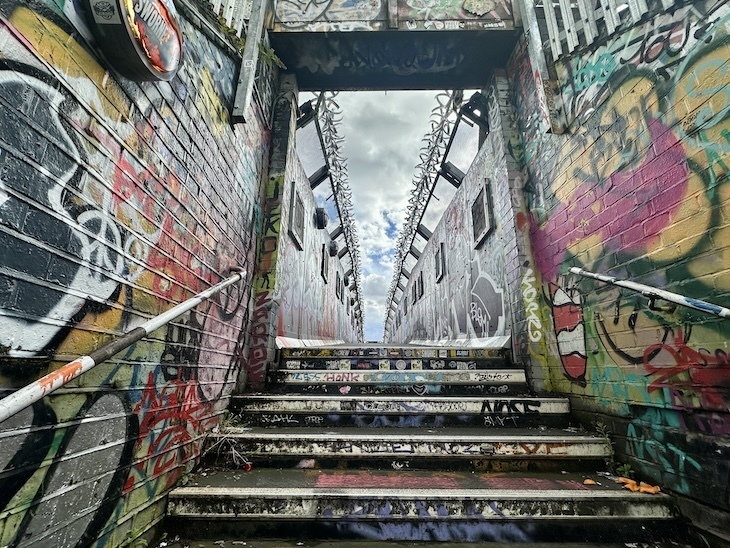
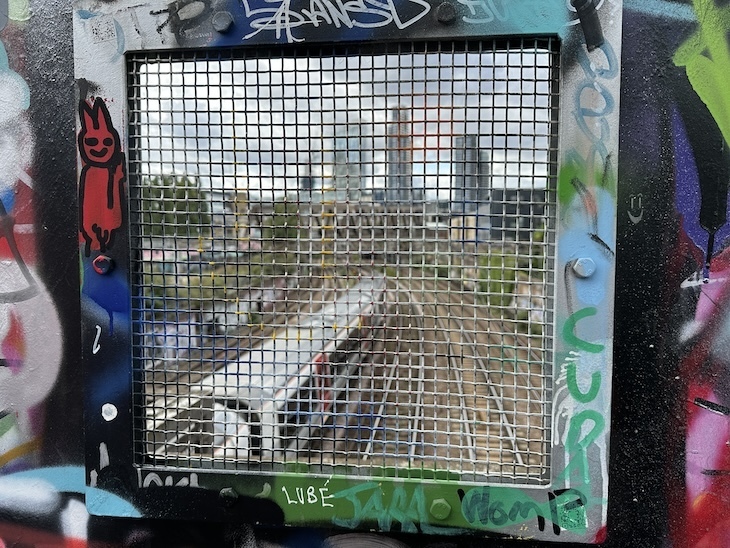
Those who do brave the smells are carried over the railway tracks out of Liverpool Street station. It's not a bad location for train-spotting, actually, if you don't mind standing on an exposed, uric-tainted gantry, and peering through mesh.
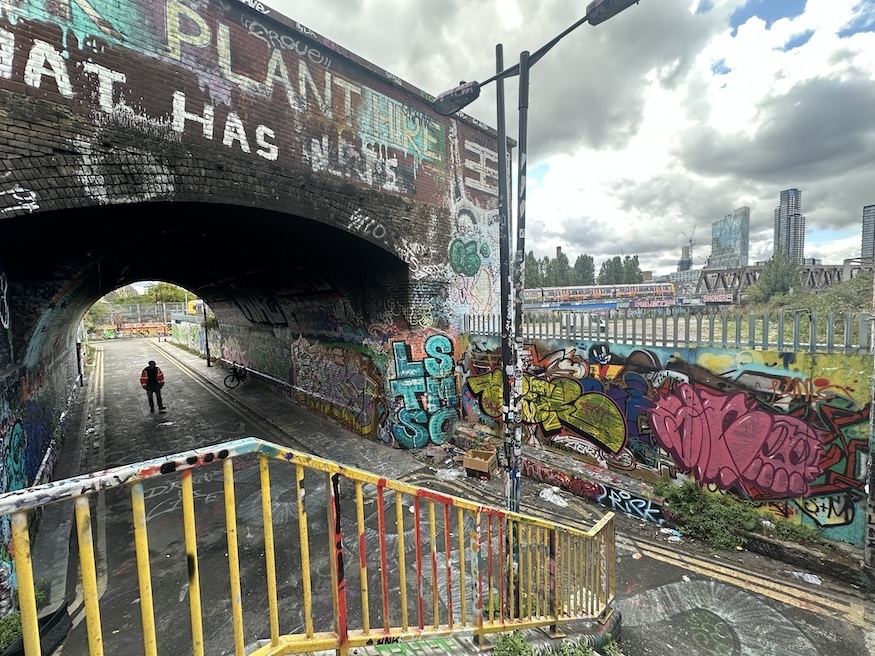
Having crossed the mainline, the steps then dip down to take you underneath a railway bridge. This section is so heavily graffitied that even the railings and security spikes have been tagged. Chief among them is MR PLANT HIRE, a legitimate company who hire out cherry pickers and the like.
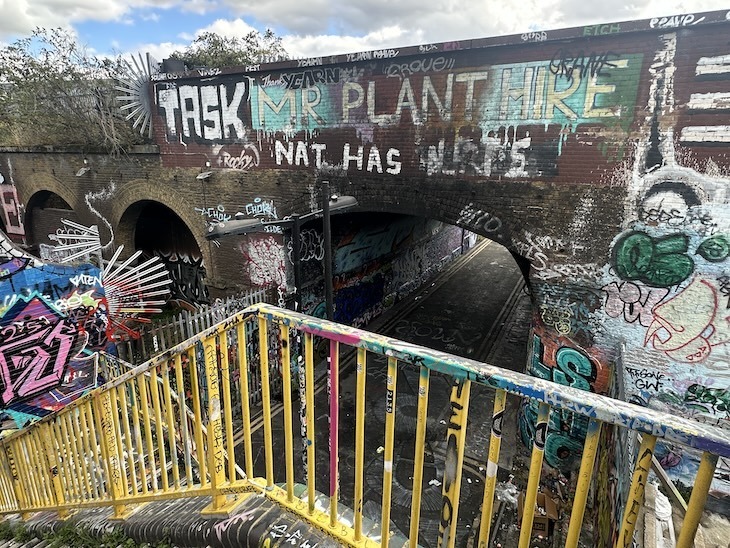
The graffiti continues through the tunnel. Fleet Street E1, we're learning, is rather different to Fleet Street EC4.
Looking back the way we came, it's strange to think that these tatterdemalion steps are actually a recent replacement for an older brick staircase, intended to improve the streetscape.
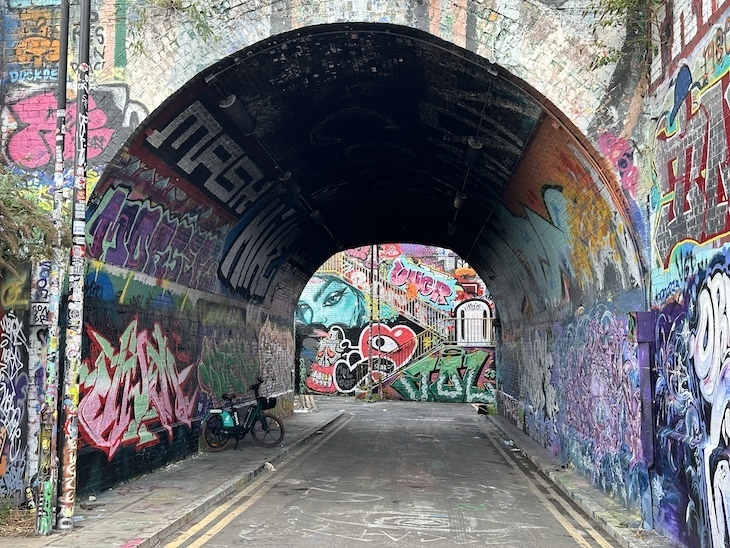
The viaduct we just passed under is nothing of the sort. In fact, it's a solitary arch standing uselessly in the scrappy nowherelands. It once had neighbours, which collectively carried the tracks out of Bishopsgate Goods Yard a little to the west. That facility burned down in 1964 and was never rebuilt. The viaduct fell into disrepair and was partly demolished — though chunky fragments remain, notably the site behind Boxpark and Shoreditch station.
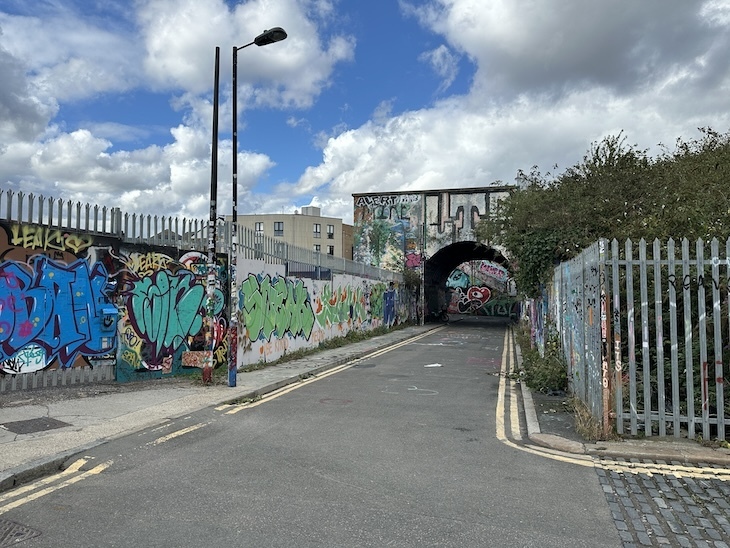
Fleet Street comes to an abrupt end at this point. It hits another railway, the one that today carries the Windrush line, and we can proceed no further. We're forced east or west along the remains of Pedley Street.
The whole area remains charmingly/scarily run-down, but it may yet fall/rise to regeneration. The land immediately to the left of the above photo was, for a time, inhabited by the Nomadic Community Gardens, but they got kicked out when the plot was sold on in 2019. The site has remained unused and largely unheeded ever since.
Given that this is the only place to get across the railway between Brick Lane and Brady Street (almost a kilometre apart), Fleet Street deserves a bit more prominence. It will never be as famous as its newspapering namesake, but perhaps one day it will emerge from its cocoon of neglect and we'll read all about it.