This feature first appeared in November 2024 on Londonist: Time Machine, our much-praised history newsletter. To be the first to read new history features like this, sign up for free here.
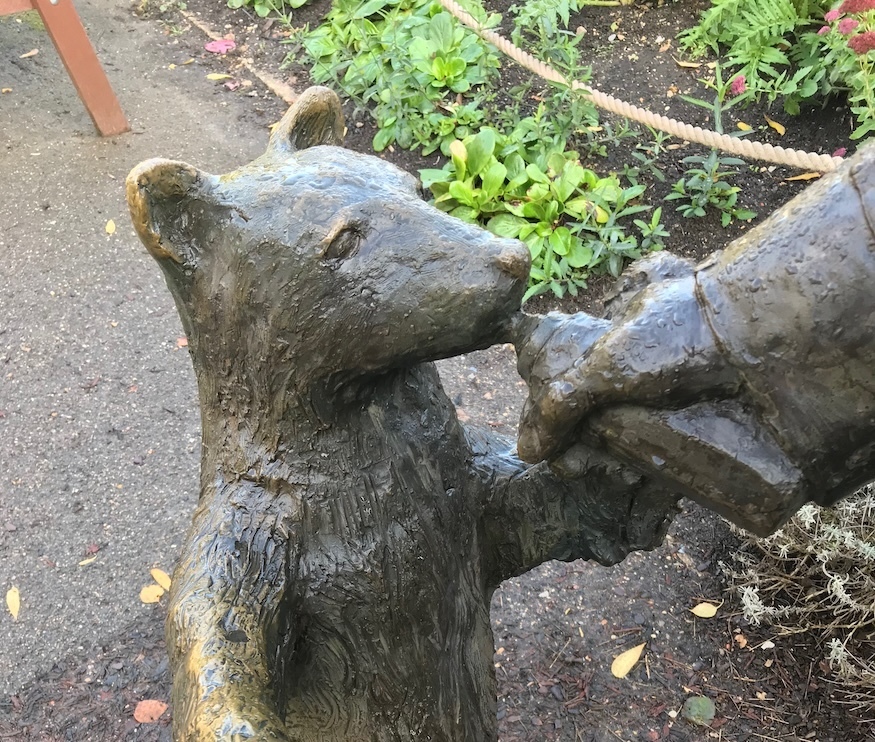
Paddington gets most of the limelight, but the world’s second most-famous bear was also a Londoner.
London has a bear population of zero. And so it has been for 40 years. Our last ursine residents vacated in 1985, when London Zoo shut down its bear enclosure. This brought to an end a long and grizzly history, from the medieval polar bear at the Tower of London, to bear baiting in Southwark, to the astonishing/appalling 1909 spectacle of 70 polar bears on stage at the Hippodrome. I think we can all agree that these magnificent creatures have no place in the modern city.
That’s in real life. On screen, London is paw-in-glove with the bear kingdom. The recent Paddington movies are works of pure joy, and the capital plays a starring role in the first two. The second film is so adored that, by one giddy metric, it beats Citizen Kane as the top-rated movie of all time.
The third film, Paddington in Peru, is less London-centric, though it does contain one marvellous, geeky London gag... Paddington's wider tribe are all named after London stations, including Waterloo Bear, Clapham North Bear and even a Cutty Sark for Maritime Greenwich Bear.
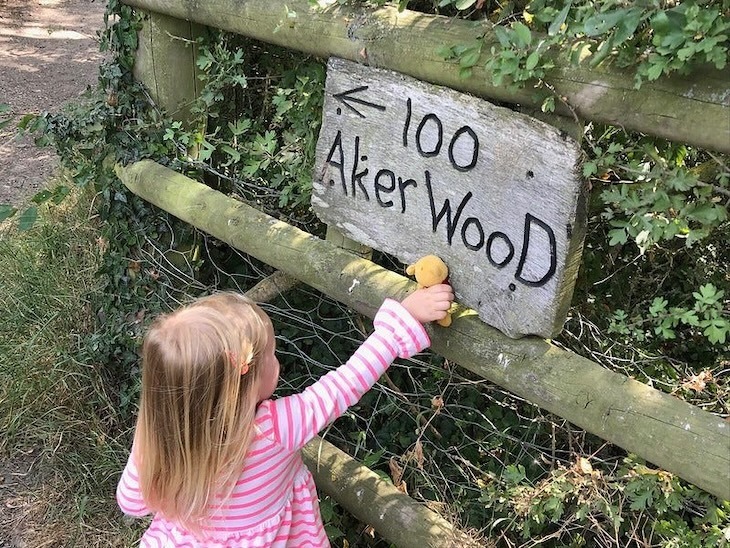
Paddington, though, is not the only internationally famous fictional bear with London links. Our city can also claim the tubby little cubby called Winnie the Pooh. He might live in the Hundred Acre/Aker Wood, but this bear has multiple metropolitan roots.
Inspired by London
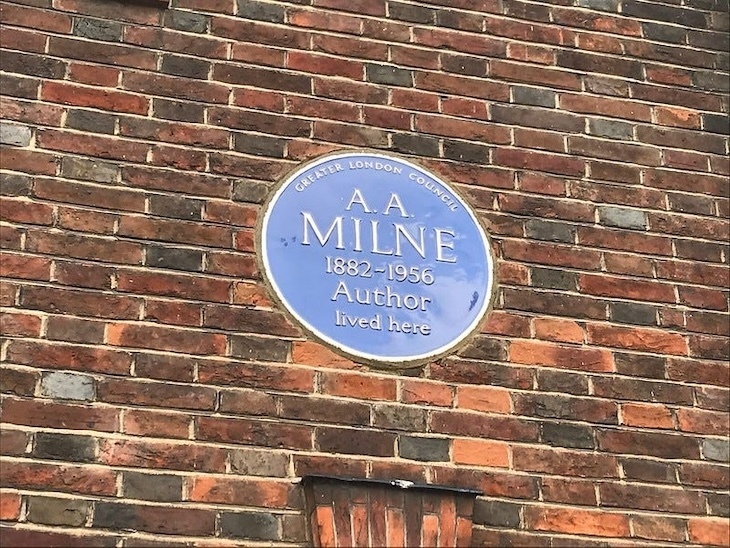
Winnie the Pooh was, of course, the creation of author AA Milne, who was himself a Londoner born and bred. He drew his first breath in Kilburn, as marked by a green plaque on Mortimer Place. He attended Westminster School, and he lived for many years in Mallord Street, Chelsea, in a house now blessed with a blue plaque.
Milne’s inspiration for Winnie the Pooh came from two renowned London sources. The first is Harrods. The author bought a stuffed toy bear from the department store as a gift for his son Christopher Robin. Boy and bear became inseparable, and that relationship sparked off the whole, gentle Winnie the Pooh saga.
Christopher Robin initially called his treasured bear Edward (as in Teddy Bear). But he soon had a rethink after visiting another local attraction, London Zoo. Here, Milne and son were charmed by a small brown bear named Winnie. Forever after, Christopher Robin called his toy bear Winnie, which is why you’ve never watched a Disney movie called Edward the Pooh. (The “Pooh” bit, by the way, supposedly came from the name of a pet swan, whom the Milnes encountered at a friend’s house.)
After devising bear-themed bedtime stories for his son, Milne decided to put them into print. A proto-Pooh first appeared in Punch magazine in February 1924. The character was first given his famous name in the Christmas Eve 1925 edition of London newspaper the Evening News. It proved popular, and Milne quickly worked up his tales into a short-story collection, which came out the following year. Pooh, Piglet, Tigger and co. have never been out of print since.
Winnie the who?
Where did the original Winnie come from, and whence the name? Well, like Paddington, she too was an immigrant from the Americas. The playful ursine had crossed the Pond in 1914 during the First World War, in the company of Henry Colebourn, a Canadian veterinary officer briefly stationed in London. He’d bought the cub off a hunter, and named her for his hometown of Winnipeg, Manitoba. Winnie quickly became an unofficial mascot of Colebourn’s unit The Fort Gary Horse.
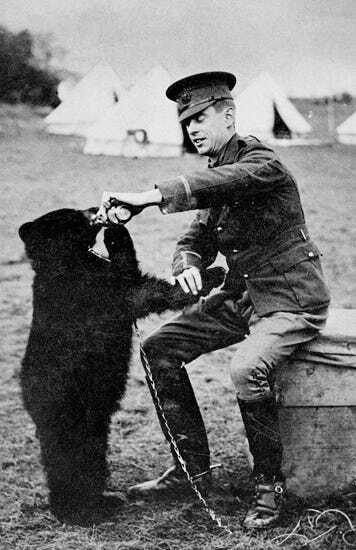
There are practical limits to how far a bear can travel with an operational military unit. When Colebourn’s troop were sent off to France, Winnie was left in the care of London Zoo. This was not unusual. An Evening Mail article from 1916 notes the presence of other military mascots, including four bucks from the Warwickshire regiment, five other bears from Canadian units, and a world-weary monkey who had witnessed the Battles of Heligoland and Dogger Bank. If Disney is looking to reboot its Winnie the Pooh franchise, then might I suggest that this would be an excellent starting point.
By the time Colebourn returned from the continent, Winnie had ingratiated herself on the London public to become a star exhibit. Colebourn decided to leave her be. The bear lived on until her death in 1934 as one of the most popular animals in the zoo’s history.
Winnie was, by all accounts, a gentle soul. The public were allowed to pet her and, according to one account, “many is the tin of condensed milk she has emptied direct from tiny fingers”. The bear also had a taste for buns, biscuits and Christmas pudding. She eventually lost all her teeth. Years of ill health followed. Winnie suffered strokes, partial paralysis and lingering influenza before finally keeling over in 1934. Most newspapers covered her death. By this time, she was not only a star of London Zoo, but also acknowledged as the inspiration behind Milne’s tales.
She might have died more than 90 years ago, but Winnie is immortal. Her name lives on in countless stories and cartoons thanks to AA Milne’s poetic tales and the wider popularisation by Disney. Copyright has now expired on the original stories and illustrations (by EH Shepard), and so Winnie is inspiring a whole new generation of, um, creative storytelling talent:
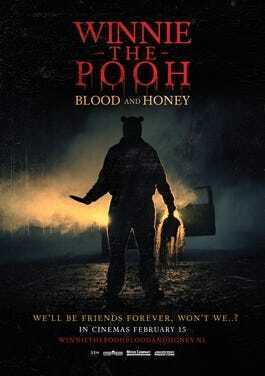
(Despite receiving a Rotten Tomatoes rating of just 3%, Winnie the Pooh: Blood and Honey gained a recent sequel in the works. Synopsis: “Not wanting to live in the shadows any longer, Winnie-the-Pooh, Piglet, Owl, and Tigger take their fight to the town of Ashdown, leaving a bloody trail of death and mayhem in their wake.”)
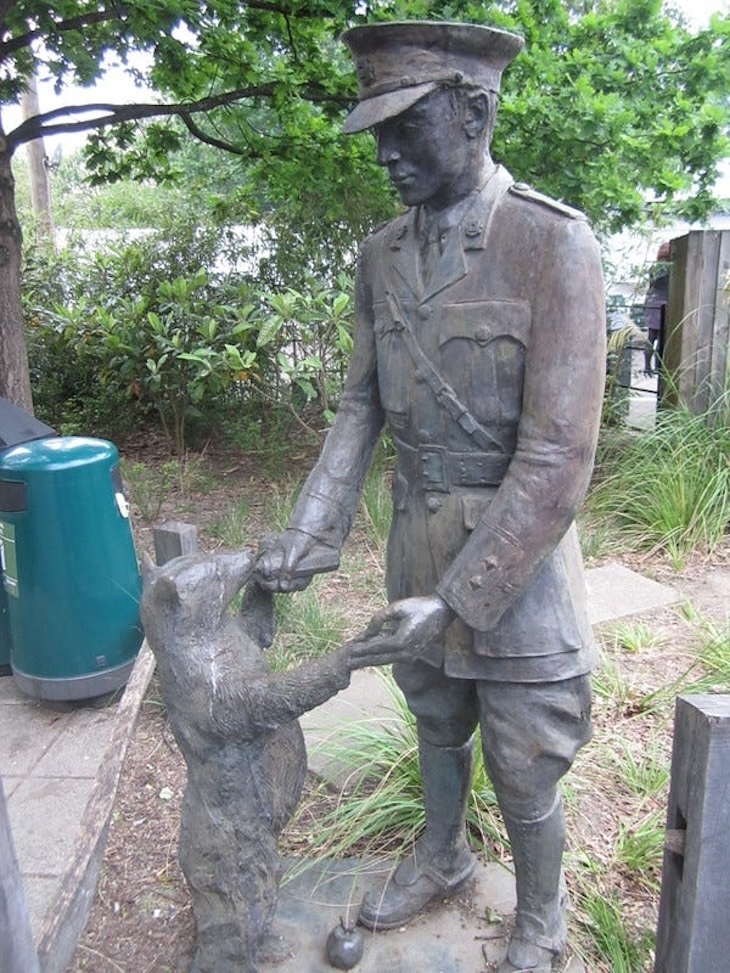
But back to sanity… London Zoo itself contains two memorials to this most influential of bears. The first, a depiction of Winnie with Colebourn, by Lorne McKean, was unveiled in 1981 by Christopher Robin Milne himself. Another, more naturalistic interpretation was added a few years ago. I’ve photographed both:
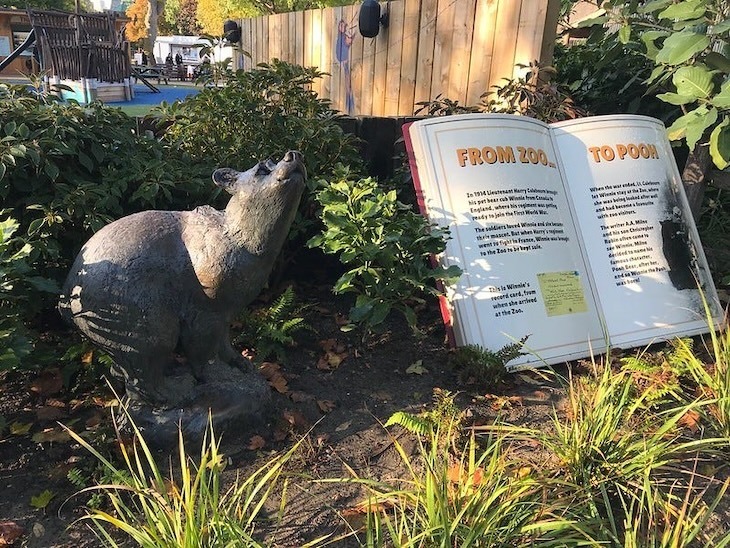
Of course, in the stories, Pooh does not live on the northern edge or Regent’s Park. The Hundred Acre Wood setting was inspired by the Five Hundred Acre Wood in Ashdown Forest, East Sussex, close to Milne’s country home. The visitor will find many Pooh-themed diversions in those woods, including the Pooh Sticks Bridge and a tea room. A second Pooh-niverse exists, for reasons I’ve never fathomed, at Aldenham Country Park near Elstree, just north of London.
Wherever the fictional bear lives, he was created in London, by a Londoner, inspired by a London bear at London Zoo and a stuffed toy from London’s most famous shop. I’d say that makes Winnie the Pooh a bona fide Londoner, every bit the equal of Paddington.
I also find it remarkable that a city with no indigenous bears should become the home of the world’s two most famous bears — a bit like if Brussels produced a couple of leading kangaroos, or Mexico yielded a pair of mischievous but loveable cartoon elephants. But there it is. As Paddington would say, “In London, everyone is different, and that means anyone can fit in.”