Adapted from a feature that first appeared in September 2025 on Londonist: Time Machine, our much-praised history newsletter. To be the first to read new history features like this, sign up for free here.
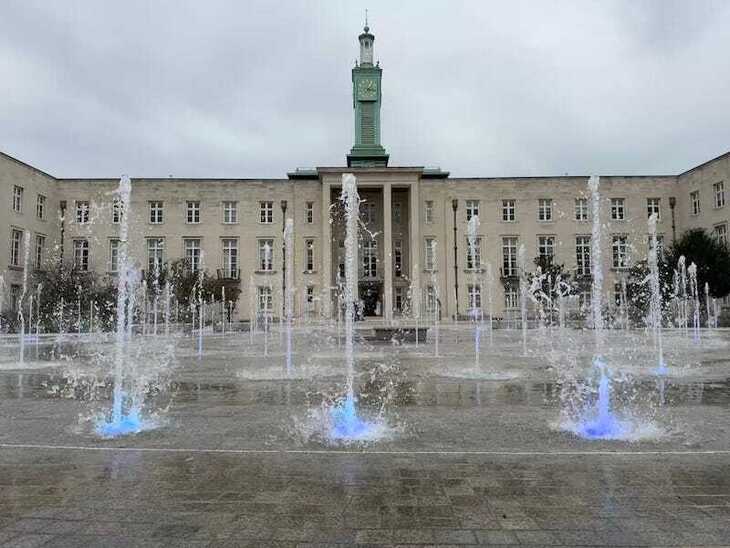
London’s grand, historic buildings are not all in the centre. Walthamstow, to the far north-east of the capital, is home to this beauty, which wouldn’t look out of place in Stockholm or Copenhagen.
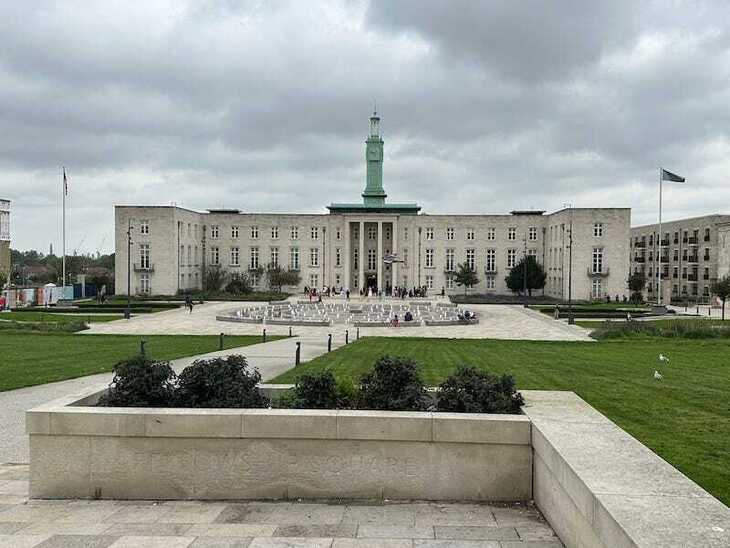
This was Walthamstow Town Hall, the Grade-II-listed home of the local council. It was built on farmland in the late 1930s, just as war was getting underway. As we’ll see later, it took a few unusual measures against the Luftwaffe.
Back in the 1930s, Walthamstow was a whole borough unto itself, and situated in Essex rather than London. To befit its status, the council commissioned this ‘stripped classical’ Portland stone building from architect Philip Dalton Hepworth.
What Hepworth came up with was quietly spectacular:
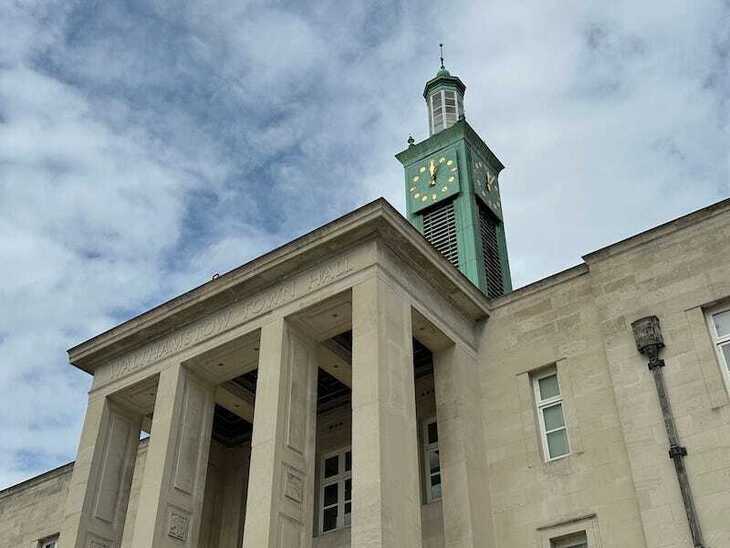
Walthamstow Town Hall is one of a kind, yet still looks the part. Its sharp, clean lines look efficient and business-like, while its protruding wings offer a lithic embrace to the community.
Today, the building is officially called Waltham Forest Town Hall. Walthamstow ceased to be a borough in 1965. It engaged in a group-hug with Leyton, Leytonstone and Chingford to form the new London Borough of Waltham Forest, the local authority that persists today. This mighty building was chosen as the Town Hall.
I’m aware that municipal politics can get a bit dull, so let’s dispense with further administrative noodling and step inside the building. As we enter, we pass over a granite foundation stone, laid by the Mayor in 1938. Beneath is concealed a time capsule containing various artefacts from that era, including a scroll signed by a child from every school in the borough. It will only be opened if the building is ever demolished.
The first room any visitor sees is the reception foyer. It is a gem. It has the feel of an ocean liner, with sweeping curves and deco lighting.
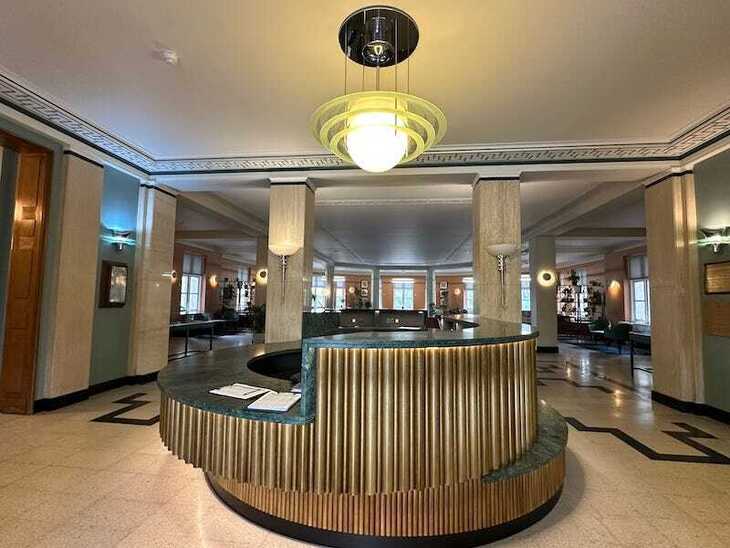
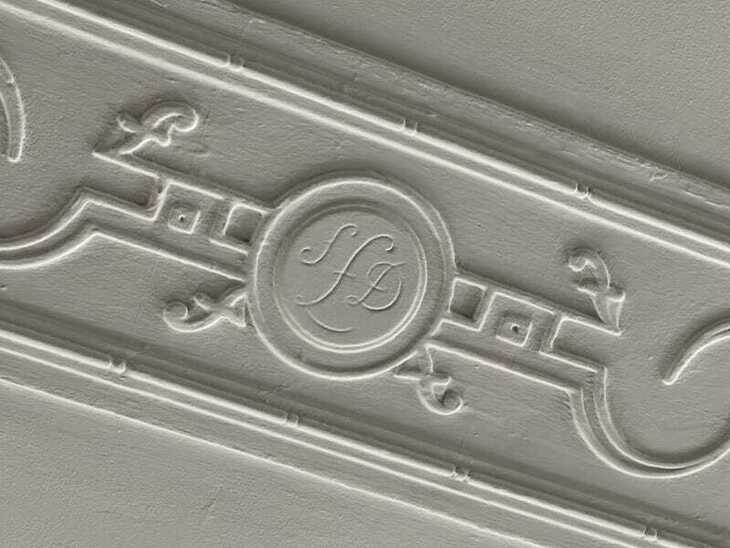
It’s hard to believe this space was built during the Second World War, despite the shortage of cash, men and materials. That said, it is less grand than planned. That floor should have been marble. Pricey oak wood was forsaken in favour of plywood. The exterior was almost relegated to brick, but cost-saving elsewhere allowed for the more stately Portland stone finish. As if to reinforce the message that every penny counts, the symbols for pounds, shillings and pence are etched into the ceiling, above a part of the hall that was once a cash desk.
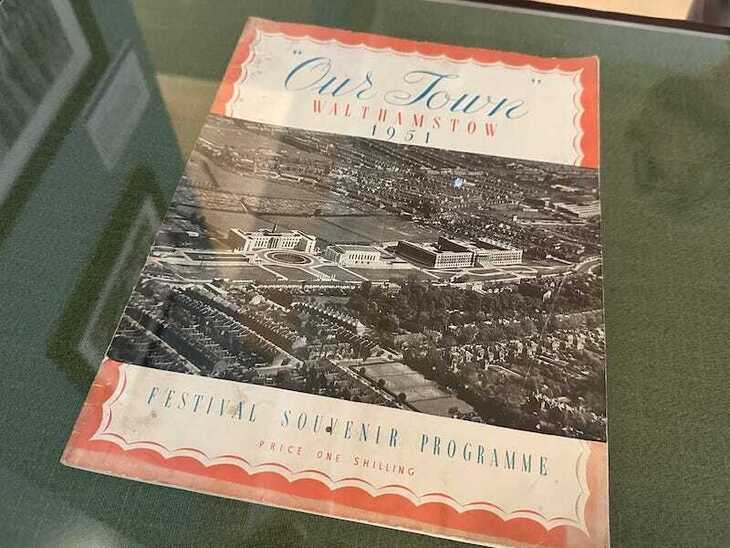
The reception area contains a number of cabinets displaying items from the building and borough’s history. These include the ceremonial trowel from the foundation laying, a metal ‘freedom of the borough’ casket, and a souvenir brochure from the 1951 Festival of Britain, highlighting the merits of the area. We can get a sense of the grandeur of the Town Hall and its neighbours from its cover:
One of the more peculiar items in the foyer is this war memorial, commemorating the lives and properties lost between 1939 and 1945.
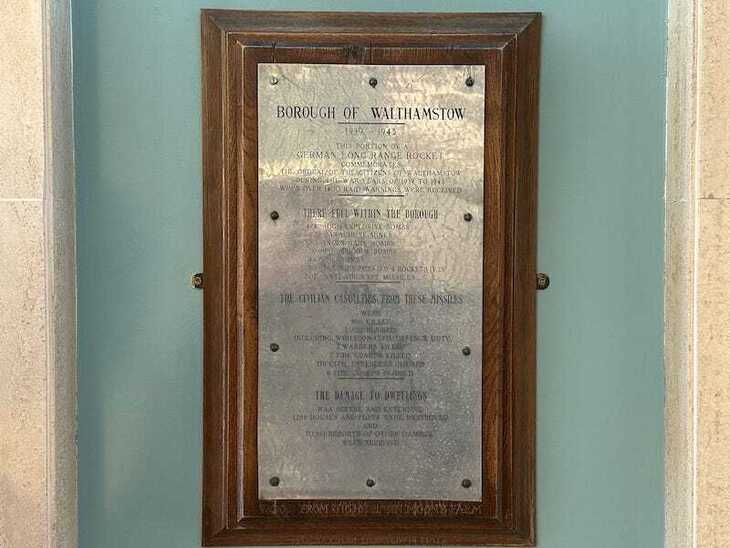
At first glance, it looks much like any other memorial plaque, but this one holds a secret. Look to the bottom and you’ll see that additional words have been scratched into the wood. These confirm that the frame was crafted from timbers taken from the old town hall on Orford Road, as well as a barn on ‘Moone’s Farm’ — an ancient farm demolished in 1927. Further, the metal plate itself is said to come from a German rocket, perhaps the V-2 which landed just west of the Hall on 14 September 1944, killing six people.
We see more evidence of the war when we move down into the basement. This curious space resembles a yellow submarine, with bright fire doors at every turn:
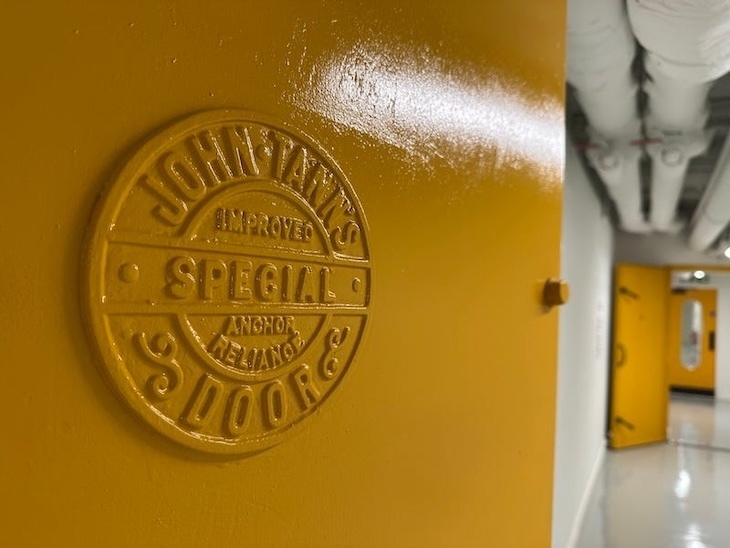
The Town Hall was built with aerial bombardment in mind (this was the late 1930s), and includes a number of protective features. First and foremost, the ground floor is built with steel frame and reinforced concrete (faced in Portland stone), offering strong resistance to any external blasts. Were a bomb to penetrate the basement, then the steel doors would limit damage and prevent the spread of fire. And then we have these curiosities, which look a bit like torpedo tubes:
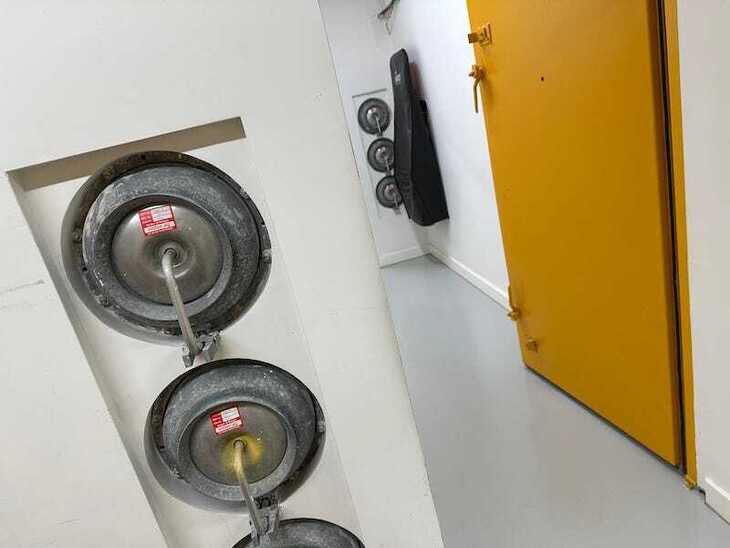
These are explosion vents. Had a bomb exploded in the basement, then the pressure wave would push these hinged metal plates into the wall, absorbing some of the impact and reducing the stress on the masonry itself. There are dozens down here, exceptionally well preserved from the war more than 80 years ago.
Thanks to these preventative measures, the still-incomplete Town Hall was chosen as the base for the local Civil Defence Headquarters during the war, and was also a base for ARP (Air Raid Precautions) wardens. The wider public, however, were never invited to shelter down here.
Up to the Council Chamber
The upper floors of the building are more in line with how we might picture a council hub. A series of meeting rooms, mostly named after the patterns of ubiquitous local hero William Morris or daughter May Morris, are tastefully panelled in light wood. The council chamber itself is an octagonal delight: formal, but not overly grand. It was recently revamped and restored, as can be seen in my before and after images:
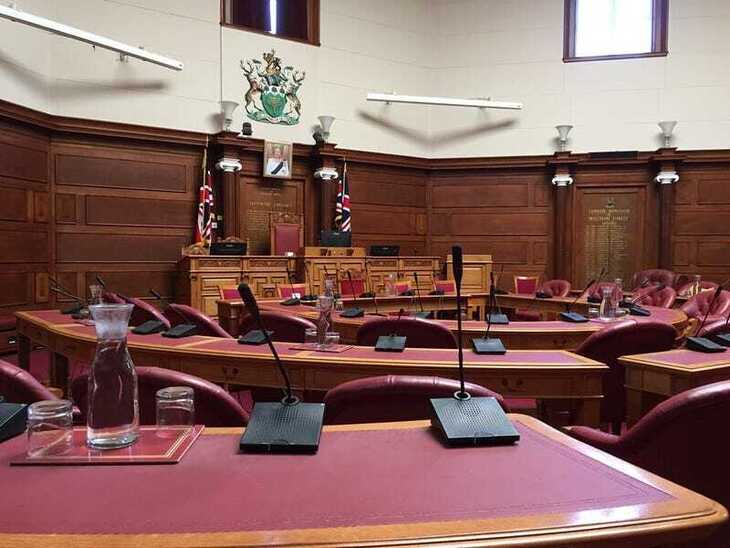
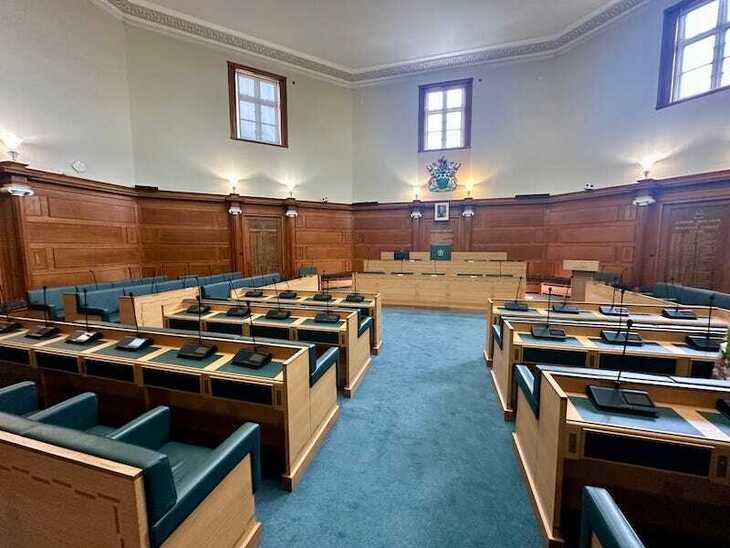
The walls are adorned with the usual lists of mayors and alderman you might find in any building such as this. However, Walthamstow can claim a celebrity-adjacent Mayor. Take a look at the list:
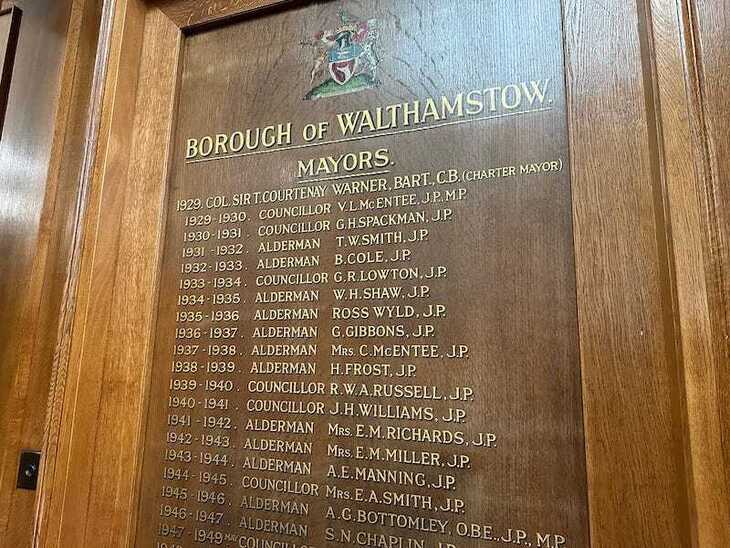
The notable name here, doing wartime service from 1941-42, is Mrs E.M. Richards (the ‘J.P.’ means Justice of the Peace). This is Eliza Richards, a socialist politician who did much good for the borough. She also accidentally contributed to the cultural history of the 20th century by refusing to allocate a council house to her son and daughter-in-law. They moved out to Dartford instead where, in 1943, their only child was born — a certain Keith Richards. Had Eliza shown favouritism and granted her son a council house, then Keith would have never met Mick, and the Rolling Stones would not have formed. Ironically, then, Gimme Shelter exists because someone did not give shelter. You Can’t Always get What You Want sounds newly apt.
Let’s head back outside for some fresh air…
The Town Hall is an impressive building in its own right, but it was also designed as the centrepiece of a wider civic centre. A monumental Assembly Hall was built at the same time, on the right flank of the Town Hall. This 1,500-seat venue has served countless functions over the years. Everyone from Plácido Domingo to the Sex Pistols has played here. And, yes, that includes the Rolling Stones. You can’t quite make it out in my photo below, but the top of the building features a quote from William Morris: “Fellowship is Life, Lack of Fellowship is Death”, which also serves as the borough motto. This sentiment is echoed in the name of the central plaza: Fellowship Square.
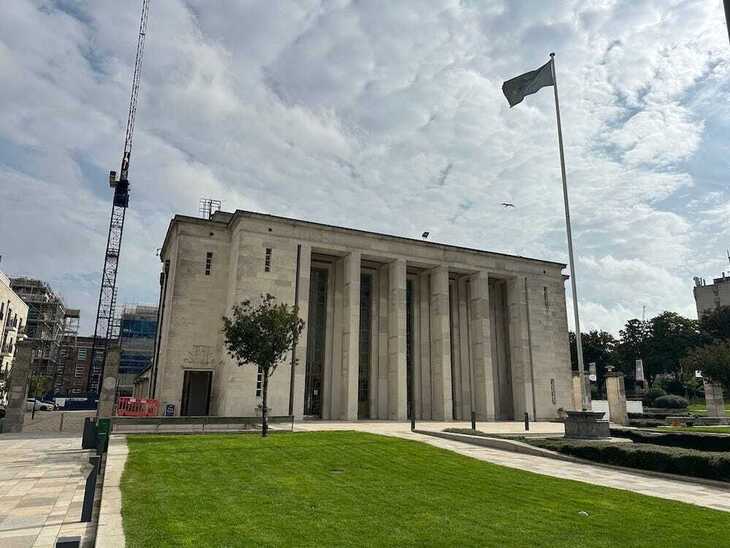
The western side of Fellowship Square, where a V-2 rocket had landed in the war, remained an empty plot until the 1970s. It was used as a car park — a fellowship of motors. Eventually, a courthouse was constructed. Given the decade, it was inevitably built in a brutalist style. This was recently demolished, but I got a snap before the wrecking balls moved in. Work is now well underway on a new civic building, containing council offices and a ground floor cafe and restaurant.
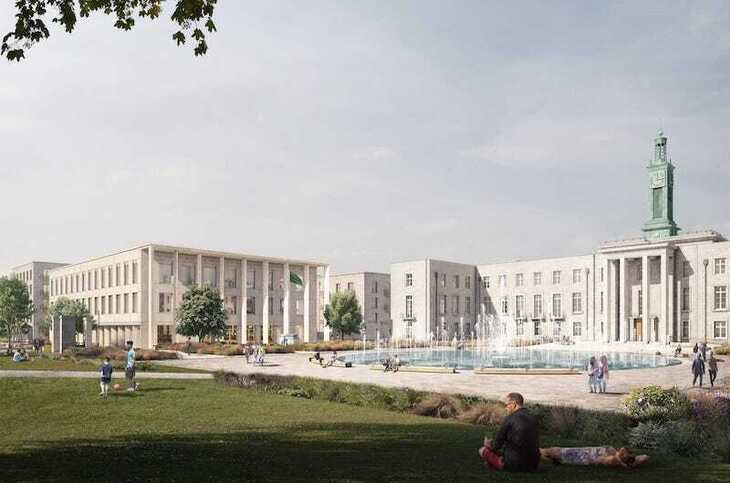
Completing the square is a huge circular water feature. You’ll never guess its name.
Go on, try…
“The Fellowship Fountain?”. How did you know? The aquatic highlight has always stood here in one form or another. During the war, it was used as an emergency fire-fighting reservoir. This was replaced with a basin design in 1953, to commemorate the Coronation of Elizabeth II. Today, it’s been remodelled into a platoon of illuminated water jets, to the delight of any passing children or instagrammers.
The Town Hall itself is remarkably stripped back for a classically inspired structure. It is untroubled by fluting, capitals, swags or garlands. Look closely, however, and you’ll find it does enjoy some decoration. The monumental columns over the entrance porch, for example, are decorated with a series of bas-relief panels by John Francis Kavanagh (probably), each depicting an aspect of the building trade.
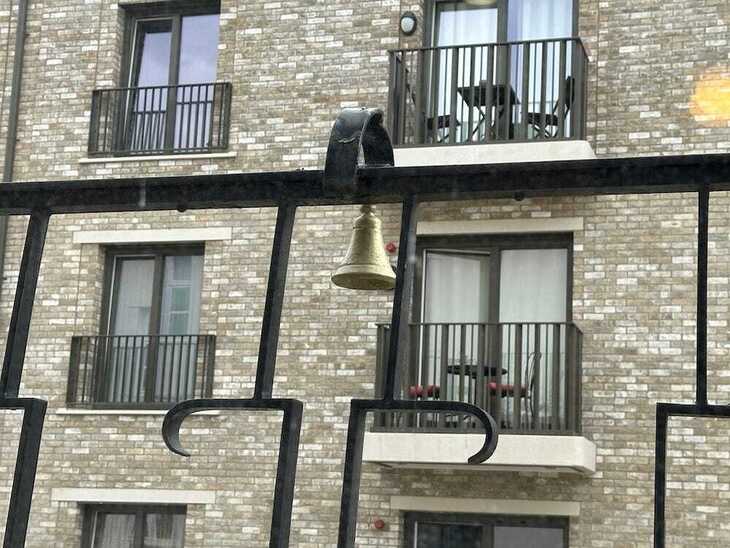
More subtly, the Town Hall is peppered with tiny bells, present on every balcony and throughout the building. These, apparently, are representative of precisely nothing. Just a whimsical Scandi touch.
The greatest decorations, however, are hidden around the back, for reasons nobody can fathom. Five masterful sculptures by John Francis Kavanagh (again) depict Work, Recreation, Fellowship, Motherhood and Education.
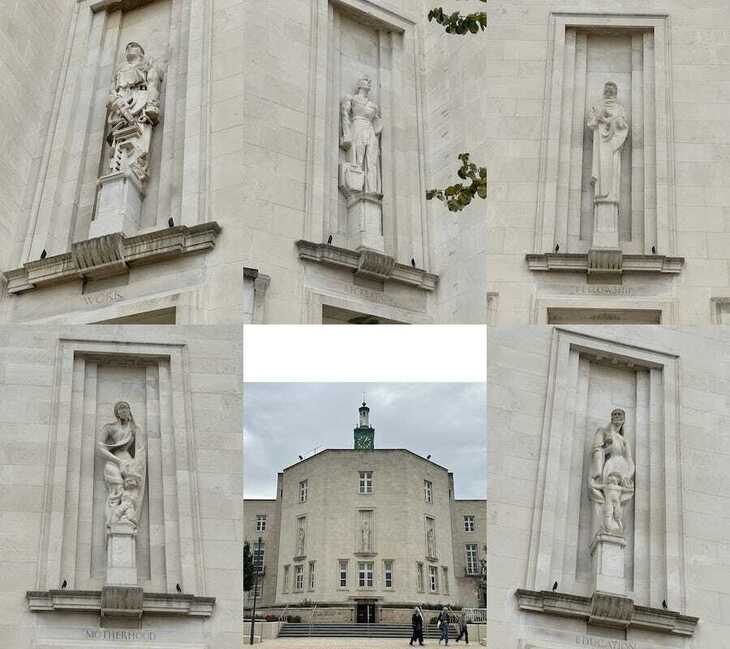
The Council, on its website, is quick to distance itself from any implied sexism:
“Whilst these gender-role stereotypes might have reflected society at the time, they are not representative of modern Waltham Forest.”
That being the case, it’s a diverting exercise to consider how the statues might appear if carved today. ‘Motherhood’ would perhaps be changed to ‘Parenthood’, or left off altogether, so as not to exclude those without children. William Morris would be up there still, because this is Walthamstow, and he must be commemorated at every turn. The embodiment of ‘Work’ would be depicted at a laptop. ‘Recreation’ would be depicted on a mobile phone. ‘Fellowship’ would be depicted at a laptop on a community forum. ‘Education’ would be depicted at a laptop… Oh man, this is a depressing thought-experiment.
Visiting Waltham Forest Town Hall
This showstopper of a building can be enjoyed from the outside whenever you like — just hop up to Walthamstow on the Victoria, Weaver or Suffragette line and help yourself to the views.
For a look around the building, including the basement and council chamber, I can recommend a tour with local guide Joanna Moncrieff. My thanks to Joanna for taking me round, and pointing out many of the details in this article.