Until now, the hottest daily temperature record for spring in London — 32.8°C — was on 22 May 1922, during a spell of sweltering heat. So in a world without air con and corner shops stocked with ice pops, how exactly did Londoners cope?
The heatwave came as a shock, not least because March had seen the coldest day recorded in some 40 years. "The heat trick has been sprung on us with such unfair celerity that our tempers are exacerbated almost into doing something to cope with the futility of our anti-heat precautions," sweated an Express reporter, who'd winced at a 'limp' waiter's suggestion of steak and kidney pie. "lce-cream? Not enough to be had. lce? What is it? Cool, luscious salads? All green stuff very scarce. Coats off on the golf course? Not to he heard of: simply not done, sir!"
As Londoners clamoured for lighter clothing, a Lewisham draper moaned "The public wait until the weather comes before they ask for the goods, and you cannot cope with it". Meanwhile, a group of guards marching through the city did away with their trousers altogether, opting instead for khaki shorts.

Working from home with a bag of frozen peas on your head wasn't an option in 1922, although even smart office dress fell momentarily lax, as the Perthshire Advertiser's London correspondent (who was apparently on heat) reported:
In city offices on Monday afternoon [22 May] the male staffs worked in their shirt sleeves, and even then they cast envious eyes on their female colleagues looking so cool and comfortable in the diaphanous blouses and peek-a-bo [sic] stockings.
Many office workers would have filed into town on the Tube, back then with no air conditioning, of course, although the network was cooler than it is in 2026, and when the heatwave struck, enormous electrical fans were installed, pumping 1,000,000 cubic feet of air through the Underground system every minute. Indeed, the Hampstead News claimed that Tube stations were the coolest place to be during a London heatwave. Homeward bound, some of those office workers surely came armed with a Lyons Ice Brick, the frozen treat that'd launched in 1921, and claimed to remain unmelted for two hours. Provided, of course, it hadn't already sold out.
As Londoners stumbled around in various states of heat exhaustion — heat blisters breaking out on their foreheads — the pubs were surely packed, although parts of the West End ground to a halt: "The hot weather playing havoc with the theatres," said the Bystander, which reported that some shows in the stuffier Victorian theatres had been cancelled. They weren't the only thing off-limits; Trafalgar Square's fountains had been cut off since the war and weren't to be restored until the following year (when children happily took to the pools as giant paddling pools). The Thames was a tempting alternative for many, although tragedy struck when one 16-year-old boy got cramp and drowned in the river in front of the Tate.
Up on Bolton Road in Kilburn, three lads quenched their thirst with one too many beers, and after being warned by an officer to keep the noise down, one retorted "Come on you ——; you can have it if you want it." Finding themselves in court, one of said lads bashfully admitted 'it was all his fault. Owing to the heat he had some drink and got excited.'
Some things never change, and the complaint that rang through town was one we're familiar with now: Yes, we wanted it to be warm, but not this warm! "But what is the matter?" asked the salad-searching Express writer. "Would we have bartered yesterday for a fog? Or for a sleet-storm? Let us be honest. Let us confess at once that there are many worse temperatures in the year than — eighty-seven in the shade!"
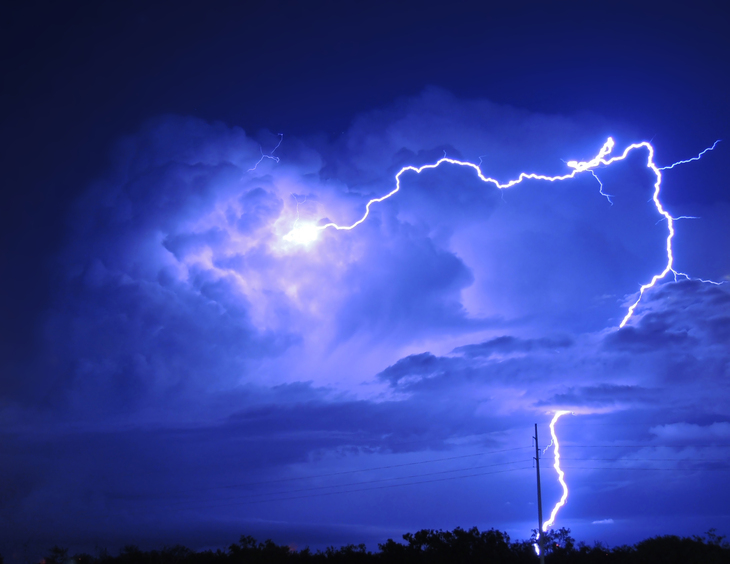
A thunderstorm on 25 May brought some relief, although not to Kentish Town Parish Church, whose belfry tower took a hit from a thunderbolt 'resembling a great ball of crimson fire', and was badly damaged. The warm spell would last until the end of the month, when, as the London Daily Chronicle put it, "Heavy men breathe again, and there is a slump in ice-cream bricks." For the Londoners of over a century ago, 1922's heatwave was a strange blip — one that wouldn't be mirrored again for another 22 years. And even then, the record was only equalled, not broken.
For us Londoners of 104 years on, however, the next record temperature could already be warming up in the wings.