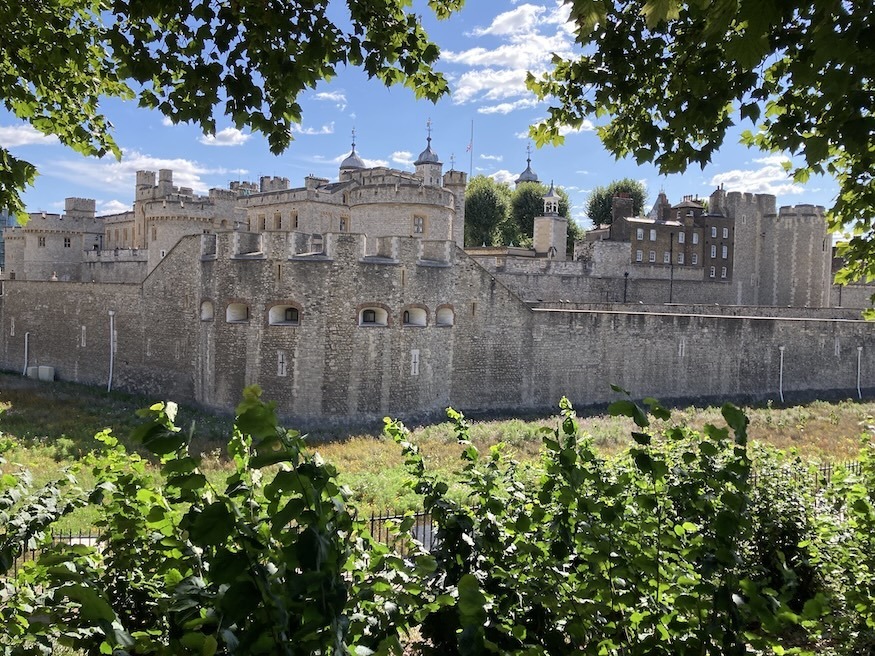
No landmark on Earth claims as many ghosts as the Tower of London.
With almost 1,000 years of bloody history, the Tower of London has accrued enough ghostly tales to fill a book. The place is such a spook-magnet that it is even haunted by historical figures who never set foot inside, as well as various inanimate objects.
We thought it was time that somebody took stock of this phantom menagerie and — most importantly — put them in some kind of daft, opinionated listicle.
So, what follows is a ranking of every ghost at the Tower of London, in order of ridiculousness... from most conventional, down to most unlikely.
21. An apparition of Anne Boleyn
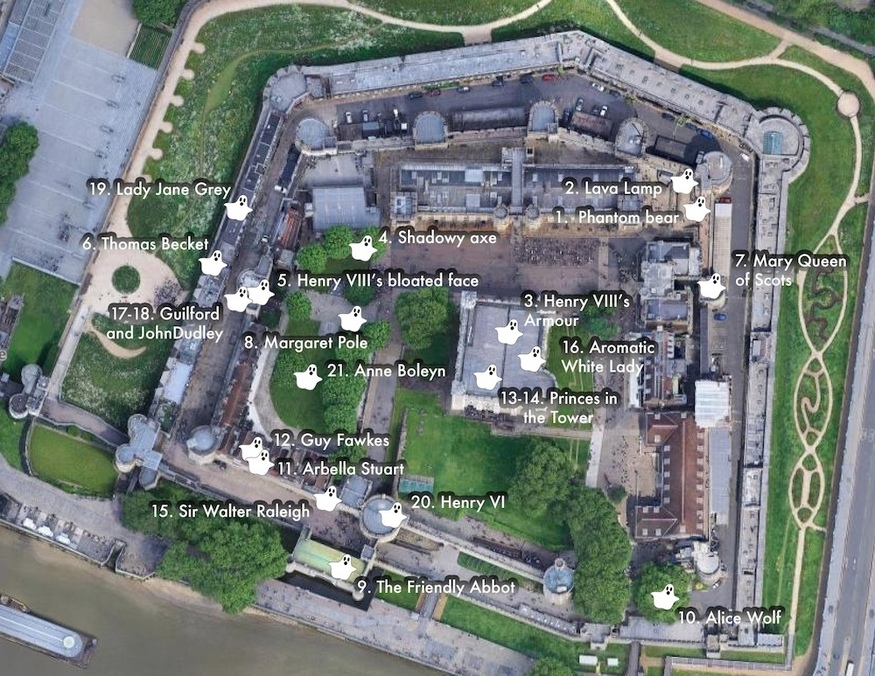
In last place, because you would totally expect to find her here (if only ghosts actually existed) is Anne Boleyn. Of all the Tower ghosts, Henry VIII's second queen gets out the most. She's been sighted countless times, most often around the site of her execution on Tower Green. She can't see us, however, on account of her missing head. The unfortunate queen is also sometimes glimpsed within the chapel of the White Tower and the upper floor of the Martin Tower.
20. Henry VI
By tradition, the luckless king was assassinated in the Wakefield Tower while kneeling in prayer. His spectre is said to reappear on the 21 May each year, the anniversary of his death. Predictable. Boring. Into second-last place for you.
19. The shade of Grey
The 'Nine Days Queen' was executed at the Tower of London in 1554 for being massively and unforgivably guilty of being related to some ruthless asshats. She was only 16 or 17. Her white form is one of the more commonly sighted ghosts, located variously on the battlements near Tower Green, or else in the Bloody Tower.
17-18. A duo of Dudleys
Jane's husband Guilford Dudley, also a teenager, was another victim of the succession crisis, and was executed at Tower Hill shortly before Jane perished within the fortress. His spectre is said to haunt the Beauchamp Tower, close to his wife's battlement walk. The Dudleys make haunting the Tower a family affair. In 1930, a young Guardsman refused to do sentry duty at an unspecified location within the Tower, after encountering the ghost of John Dudley (Guilford's dad) on the previous night. Dudley senior had been executed on Tower Hill a year before his son.
16. The aromatic White Lady
The White Lady is a regularly seen spook of vague identity. White ladies are ghost cliché, and frankly too commonplace for somewhere like the Tower. This one rescues a modicum of distinction by smelling pungently of perfume. She's usually spotted in the White Tower.
15. Sir Walter Raleigh
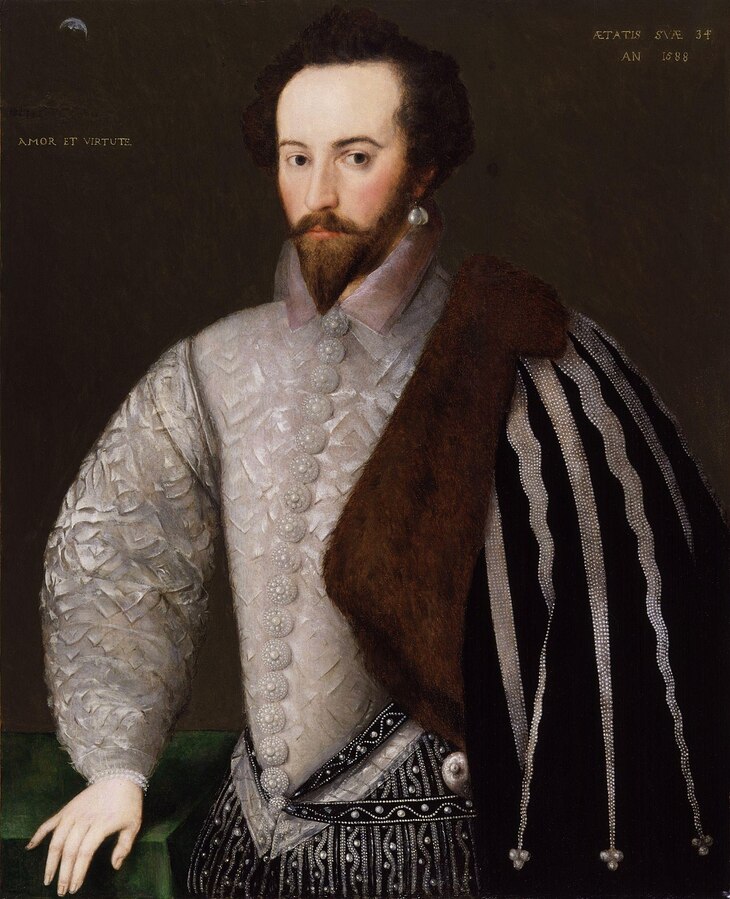
Famous for bringing tobacco to England, Sir Walter Raleigh's life was eventually snuffed out in 1618 — not at the Tower, where he'd been imprisoned, but in College Yard, Westminster. Even so, his spirit is said to haunt the old fortress, near the Bloody Tower. His shade may be seen walking along the battlements, on a section of wall where he once took his limited exercise. It is now known as Raleigh's Walk in his honour. Another fairly workaday haunting.
13-14. The Princes in the Tower
The Tower's youngest ghosts are the so-called 'Princes in the Tower', that is, the boy-king Edward V and his wee brother Richard Duke of York. According to Google's historically disreputable AI, the august duo are a "common sight" in the White Tower itself, where they wander between rooms, holding hands, and can often be heard talking to each other. (No SnapChat in those days.) The pair were supposedly murdered by their uncle (future Richard III) while held captive in the Tower, but their true fate (if not that) has excited speculation for centuries. Recent theories posit that the brothers escaped captivity and lived long lives under pseudonym. If proved true, this would be a big coup for historians — but, then, who the f*ck are these two young ghosts?
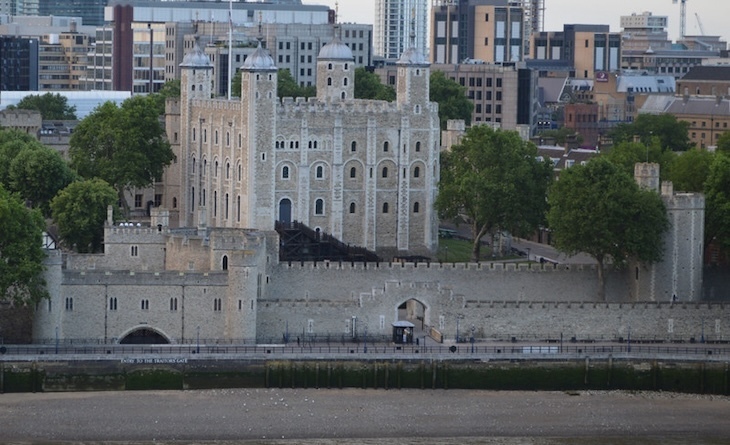
12. A groaning Guy Fawkes
Around 1870, a sentry on duty outside the Queen’s House heard “terrible groans” coming from within. The cries were immediately attributed to the ghost of Guy Fawkes and not, say, to a constipated Beefeater on the khazi, which would have been my assumption. Fawkes had been tortured in the building and, though executed elsewhere, it was the Queen's House that supposedly captured his revenant.
The source of the terrible groans may indeed have a prosaic explanation. Speaking many years later, Major of the Tower, General Millman recalled how he'd noticed a strange smell within the Queen's House when he first arrived in 1870. He traced the odour to a recently deceased cat, trapped within a chimney.
11. Arbella Stuart
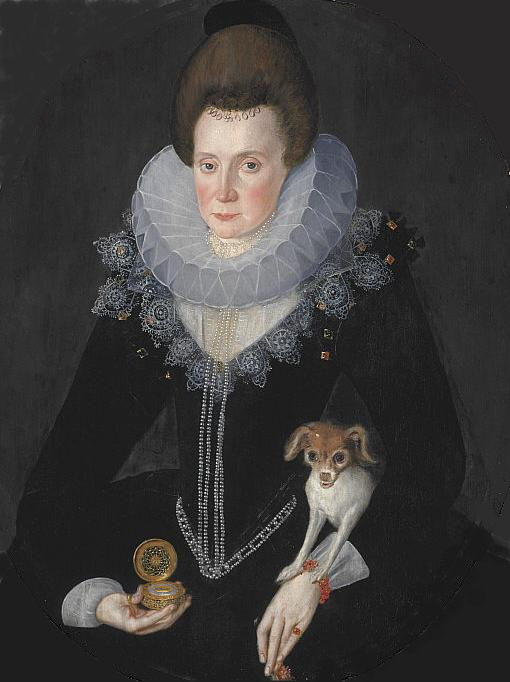
Arbella was a direct descendant of Henry VII, and had some moderate claim to the throne. When she married William Seymour, himself in the line of succession, King James I and VI got a bit sweaty-palmed about a potential coup. After much political ado — beyond the scope of a daft feature about ghosts — Arbella found herself imprisoned in the Tower. She would die there in 1615, not from a beheading this time, but through illness caused by refusing food. Her emaciated ghost supposedly haunt's the Queen's House, where she died. Wonder if she gets on with her contemporary, Guy Fawkes, who also lingers in that building.
10. The piratical Alice Wolf
Not to be confused with the rock band Wolf Alice, Alice Wolf was a Tudor-era malefactor, variously described as a thief, murderer and pirate. Alice was twice imprisoned in the Tower and, in 1534, became the first and only woman to escape the fortress. She was soon recaptured, and was eventually executed nearby in Wapping, hanging by chains until the Thames drowned her. The bad Wolf supposedly lingers, half a millennium on, around the Cradle Tower and Salt Tower, where she was imprisoned.
9. The friendly abbot
Deputy Governor of the Tower, Brigadier Kenneth Mears, wrote several books about the Tower. His home within the fortress, "the oldest duplex apartment in the United Kingdom", came with its own resident ghost. Several witnesses had seen a phantom figure in a brown cassock carrying a bucket, reminiscent of an abbot. An interview with Mears in 1988 placed his haunted duplex in St Thomas's Tower above Traitors' Gate.
8. Margaret Pole
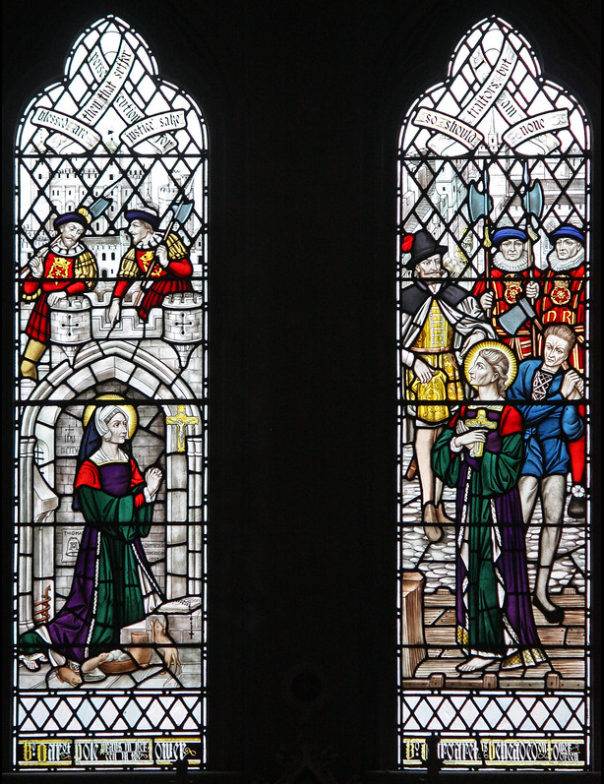
One of the less famous figures to be executed within the Tower, Margaret's only crime was to be the mother of a cardinal who had spoken out against Henry VIII's religious upheavals. By one tradition, she fled the scaffold, only to be gradually hacked down by the executioner while running around the courtyard. Phantom repeats of this gruesome episode have reportedly been witnessed. The exhilarating nature of this haunting pushes it up the rankings somewhat.
7. Mary Queen of Scots
Elizabeth I's cousin and nemesis unexpectedly made the news on Christmas Eve 1900, when her "ghastly apparition" appeared on top of the Constable Tower to emit a "long-drawn wail". The Queen's appearance was said in some quarters to presage another royal death and, lo, the following month Queen Victoria passed away. All of this is very puzzling to those who think ghosts should inhabit their place of death. Mary Queen of Scots never visited the Tower. Indeed, she never came farther south than Northamptonshire. But who are we to question the mechanics of the afterlife?
6. Thomas Becket lays siege to the Tower
The most ancient ghost associated with the Tower was turbulent priest and Archbishop of Canterbury Thomas Becket. According to legend, the saint and martyr reappeared around 1240, some 70 years after his murder in Canterbury. Becket was a bit of a character in life. In death, he was not content to float around the place going "woooooo". Rather, he materialised on the western side of the Tower and reportedly knocked down a section of curtain wall that had just been erected. The story is probably an embellished folk memory of a real calamity: the western gatehouse to the citadel is documented as collapsing in 1240 "as if struck by an earthquake".
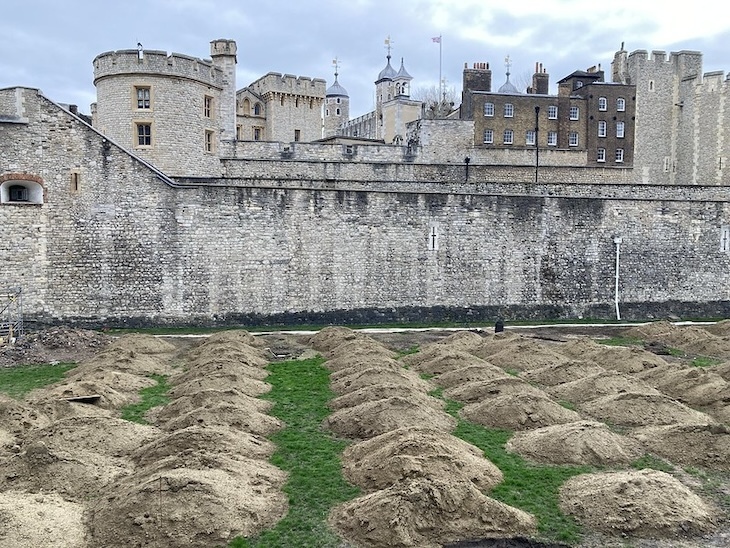
5. The bloated, floating face of Henry VIII
Ghosts are popularly supposed to haunt the place in which they died. Henry VIII drew his last in Whitehall, but the stubborn, wilful monarch manages to haunt the Tower instead. In 1890, a sentry on duty in the Beauchamp Tower heard somebody call his name. The man turned around to see a "bloated red face with a loose dribbling mouth". The otherworldly visage chased the guard along the corridor before vanishing. "I had often seen it in history books," explained the guard. "It was Henry VIII, with all the devil showing in him."
4. The shadowy axe
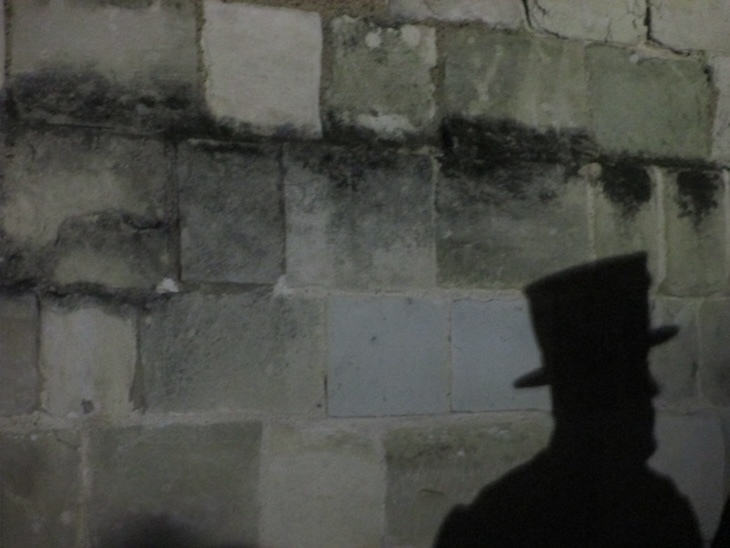
Not only have the victims of the Tower's executioner made reappearances, but so has his weapon. Reports of an axe silhouette falling onto one of the walls were apparently common in the 19th century. One press report mentions that the eerie shadow appeared frequently up until 1849, when it seems to have got the chop... only to reappear 20 years later.
The tale was revived in the 1920s, when the haunted implement was rumoured to trouble the area around Tower Green. It was now said to presage a Royal death. "Many living witnesses can be found about the Tower to-day who will swear that they have seen this shadow of an axe," ran one anonymous newspaper report, strangely neglecting to include any quotes from said living witnesses.
3. Henry VIII's armour
Such was the forcefulness of the corpulent king that he even managed to possess a suit of armour in the White Tower. According to lore, numerous guards and yeoman warders have felt a crushing sensation, and difficulty breathing when in the presence of the august breastplates. Not to be Johnny Q. Cynic here, but has anyone checked the carbon monoxide levels?
2. The phantom lava lamp
In October 1817, keeper of the Crown Jewels Edmund Lenthal Swifte sat down for his evening meal with his family. This was in the Jewel House, then housed in the Martin Tower. All of a sudden, a cylindrical figure "like a glass tube", and as thick as a man's arm, materialised above the table. "Its contents appeared to be a dense fluid, white and pale azure, like to the gathering of a summer cloud, and incessantly rolling and mingling with the cylinder". It hovered there for a couple of minutes before progressing around the room. The wife suddenly shrieked "Oh, Christ! It has seized me!". Happily, it then vanished with no further ill effect. Was this some peculiar species of ghost? A phantom, time-travelling lava lamp? An alien visitation? Or utter bunkum? Probably the latter, although this visitation ranks highly for its unique description, which reads almost like science fiction.
1. A grizzly ghost?
A few days after the uncanny lava-lamp incident, a sentry posted outside the Jewel House noticed "a figure like a huge bear issuing from underneath the door". Alarmed, as any of us would be, the man stabbed his bayonet into the ursine intruder. It passed right through, and stuck in the door behind. The spooked guard fainted on the spot and was carried off to the guard room. He would later die after remaining in an agitated state for several days. This story, often presented as a coda to the lava-lamp incident, is told in various garbled forms. Sometimes the bear crosses a courtyard and drops down some stairs, and sometimes the ghastly action switches from the 1810s to 1864. It even has earlier precedents, with bear-like visitations reported as early as 1782.
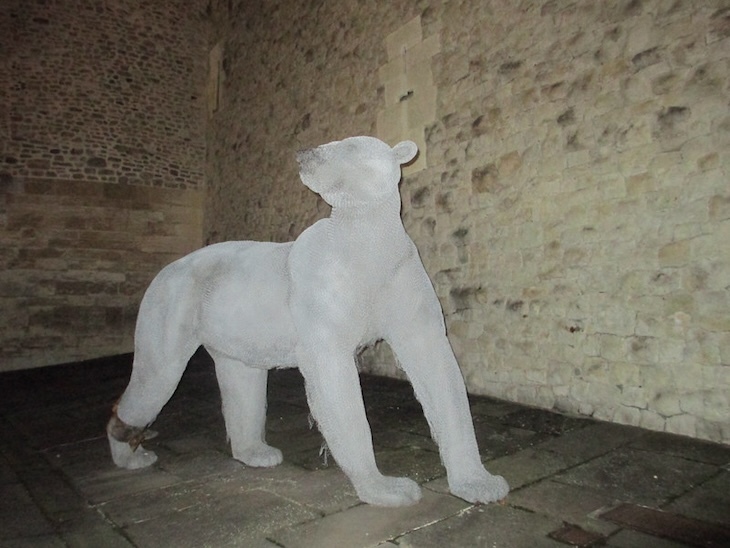
For its ferocity, tenacity, fatality and non-human nature, I'm placing the grizzly ghost at number 1 in my list of the Tower's most ridiculous spooks. And if Historic Royal Palaces wants to invite me — a ghost sceptic — to spend the night alone in the Martin Tower, then I'm up for the challenge!