Love history? Make sure you're signed up to our Londonist: Time Machine newsletter.
The Clerks' Well is no great secret.
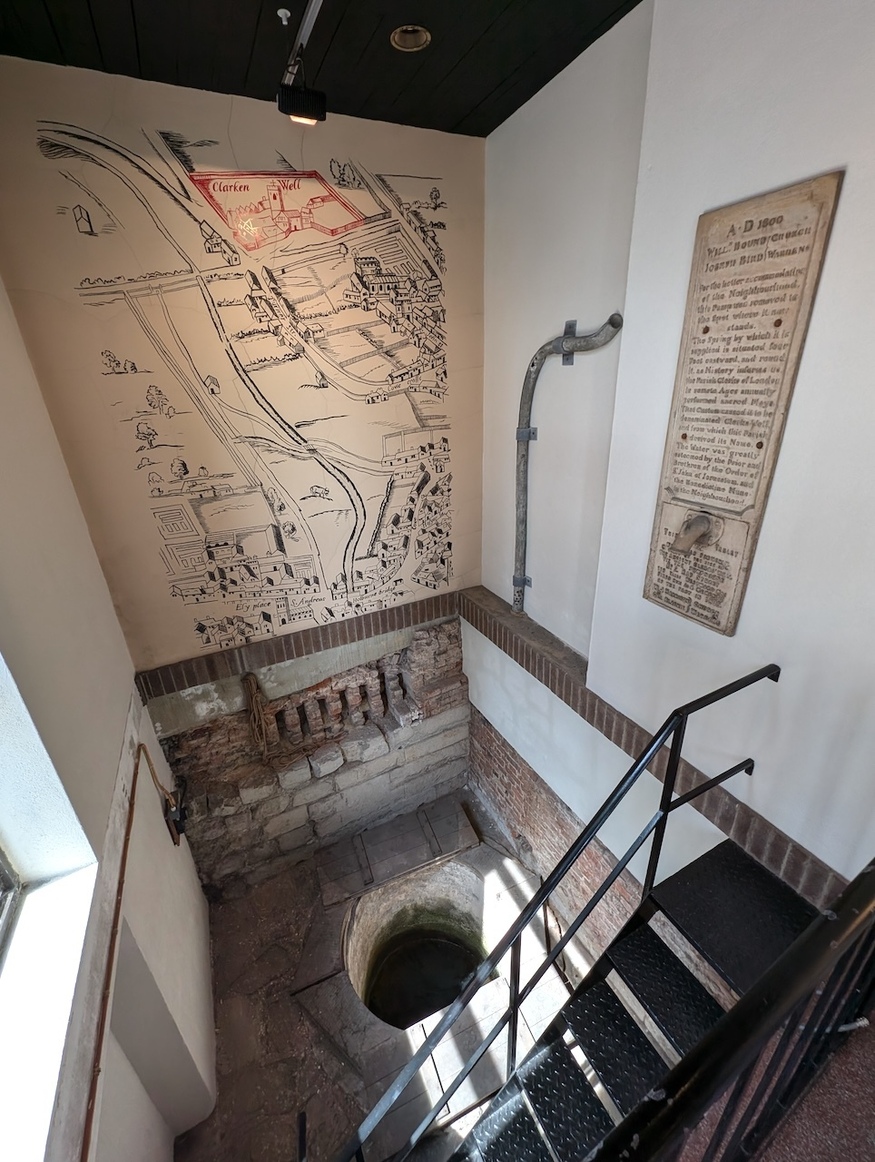
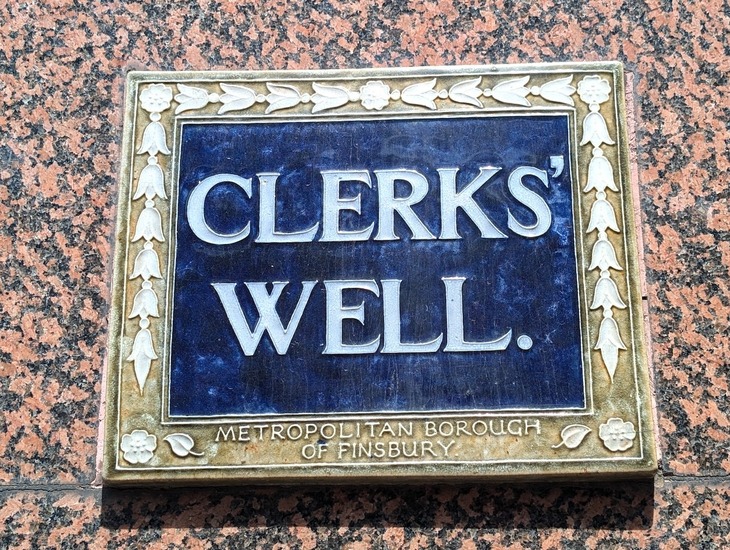
A glazed plaque at 16 Farringdon Lane denotes 'Clerks' Well', in a building clearly labelled 'Well Court'. Large windows let you peer into the area in which the well is situated, which also features historical displays on the walls.
However, it's rarely open. The best you can usually do is to get on your tiptoes and squint, in the hope you can glimpse the well/read the information about it.
Which seems a bit unfair, given just how important this well has proved to Clerkenwell and its brethren.
"There are also about London, on the north side," wrote William Fitzstephen in 1174, "excellent suburban springs, with sweet wholesome and clear water that flows rippling over the bright stones..." One such spring was harnessed by the Priory of St Mary, built in the 1140s-50s, and then channeled through a retaining wall of the nunnery, for drinking, washing and the like.
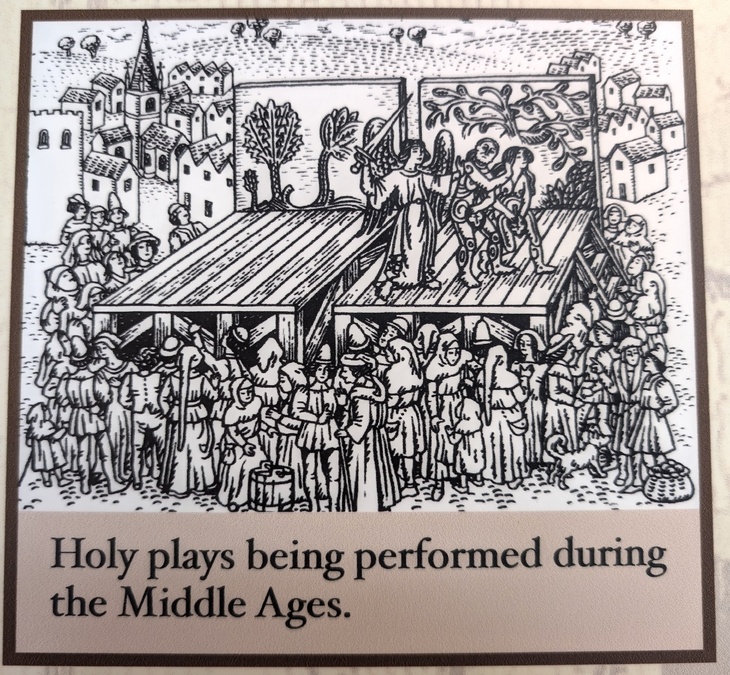
The Clerks' Well (or fons clericorum if you want to be Latin about it) also became a focal point for local clerks to perform annual holy 'miracle plays' in medieval times, lending the well — and the surrounding area — their name. If only all etymology were that straightforward.
Following the Dissolution of the Monasteries, the Priory's church became the parish church for Clerkenwell (renamed St James, and since demolished to make way for the present St James). The well was always kept for public use, however. The history books allow us occasional glimpses into the state of the well, and what it was being used for. From 1673-1685 the brewer John Crosse made beer from the water, and in 1720 the historian John Strype supped from the well, declaring it "excellently clear, sweet and well tasted".
In 1800, the pump itself was brought forward to pavement level on Farringdon Lane, with a commemorative plaque — the same plaque/pump are now embedded just above the well itself. Today's iteration of the well only dates back to 1828, although parts of the much older nunnery walls can still be seen next to it.
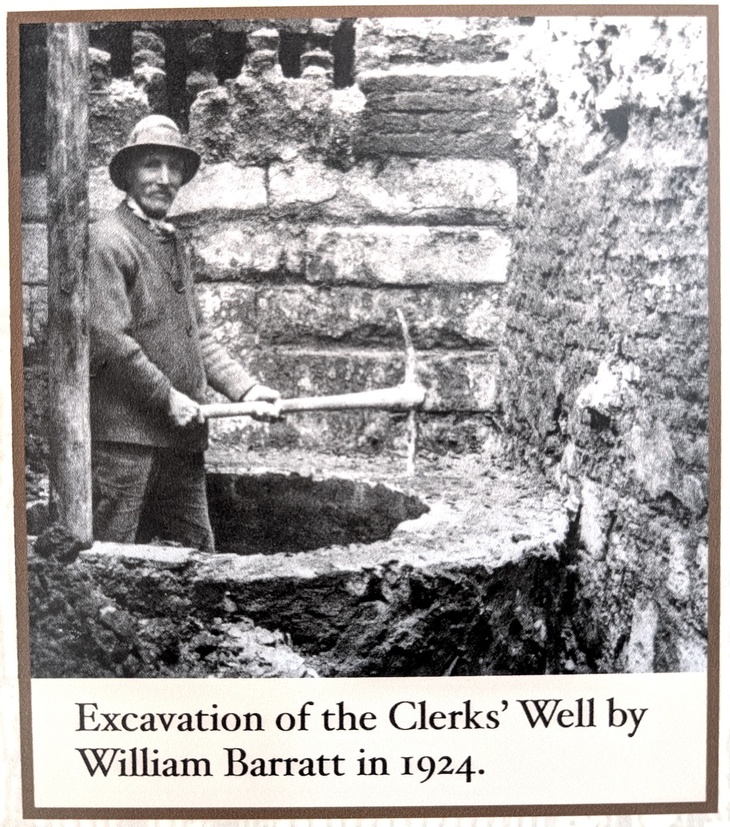
In the mid 19th century, the water became polluted, and — for fear of a cholera epidemic — the well was filled in and built over. It wasn't until 1924, when workmen were demolishing a shop to make way for a factory, that the well was once again uncovered, four feet below the shop floor. All's well that ends well, as they say.
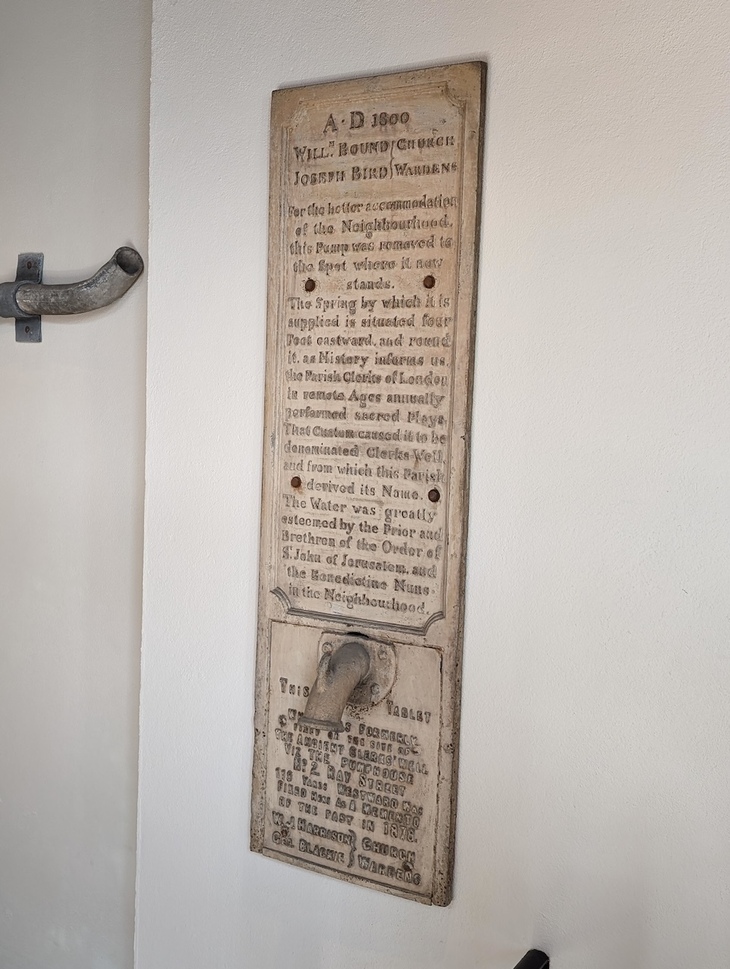
These days, the well (which has long had Grade I Listed status) can be found in the building that is now Well Court (sounds like a cricketing pun, doesn't it?), embellished by a cartographical backdrop of the Clerkenwell of old.
If you counted this place as a museum, it'd be one of London's smallest, but then how often do you get to witness a chunk of London etymology in the flesh?
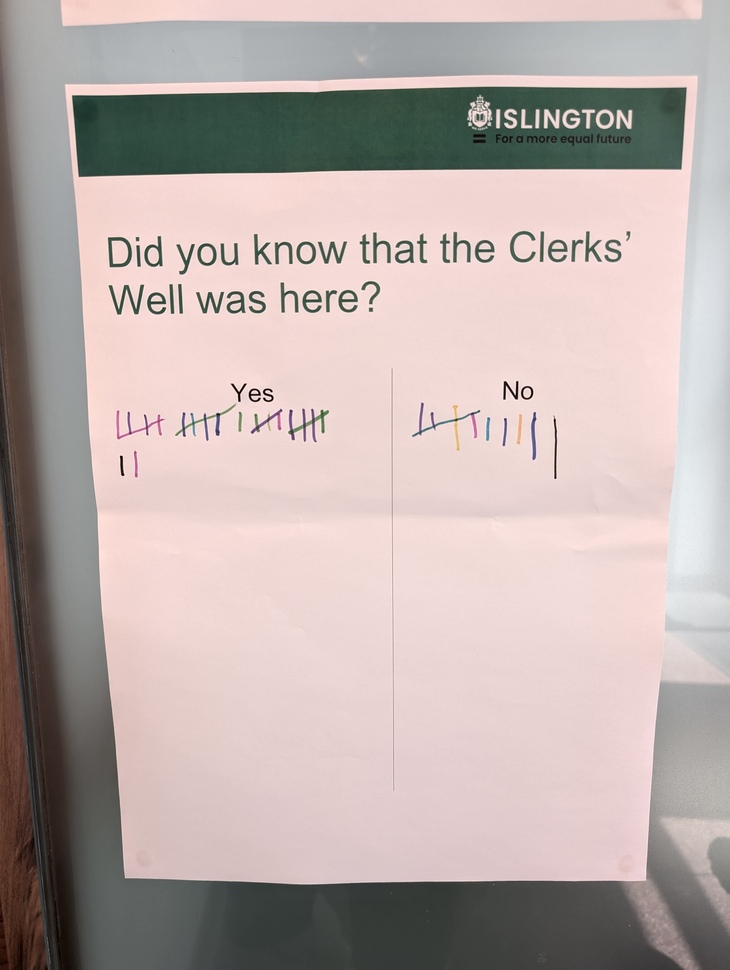
Though the well isn't regularly open to visitors, you can email Islington Local History Centre, who open it to groups by appointment. They also hope to host more Clerk's Well open days in the near future.
All images: Londonist