Love history? Sign up to our Londonist: Time Machine newsletter for free.
"I want to lift the roof of that wonderful national building. The interior will be revealed to you like a meat pie with the crust removed".
So runs this quote (a French version of it, anyway) alongside Joseph Michael Gandy's 1830 painting of the John Soane-designed Bank of England seemingly gone to romantic rack and ruin. It's one of the stand-out pieces on display at Sir John's Soane's Museum.
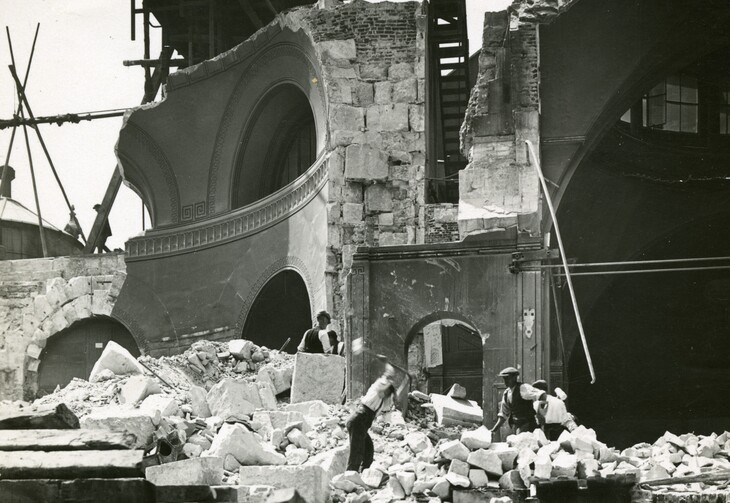
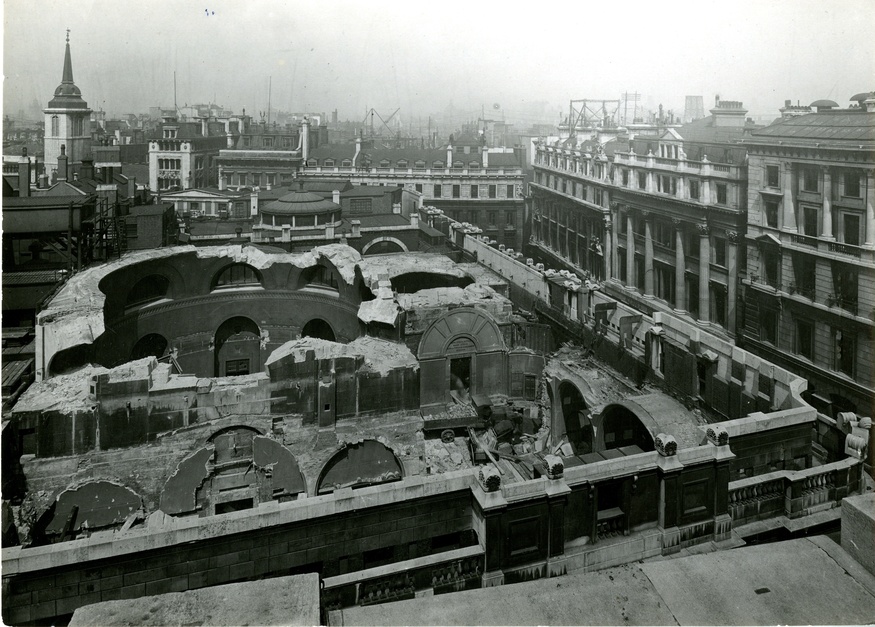
Fast forward a century, and 'A Bird's-eye view of the Bank of England' had come to pass — albeit minus the celestial shafts of light. Between 1925 and 1939, Soane's Bank building ("the pride and boast of my life") — which had been 45 years in the making — was almost completely destroyed, making way for grander plans drawn up by Herbert Baker.
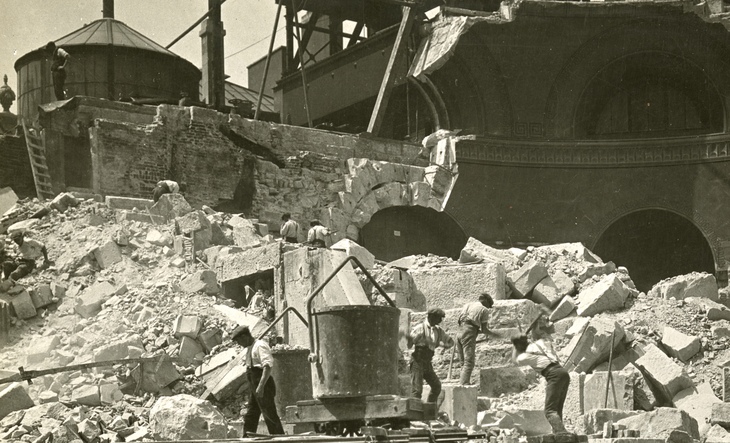
The swingeing decision — motivated by a need for more space, and described by Nikolaus Pevsner as "the greatest architectural crime, in the City of London, of the 20th century" — was documented on camera, some of the shots bearing more than a passing resemblance to Gandy's landscape. Once the wrecking ball had had its way, the outer facade of the Bank was all that was left of Soane's vision.
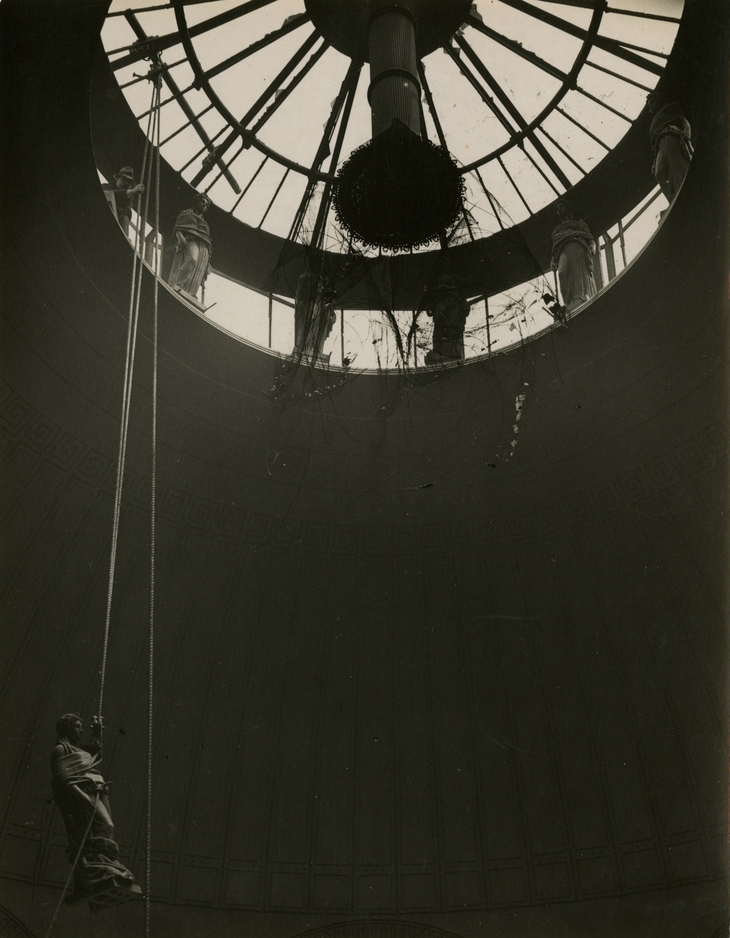
And yet Soane's masterpiece wasn't usurped — as it probably would be today — by some ponderous, po-faced substitute. From the rubble, Herbert Baker's design emerged as a neoclassical wonder, confected with Greek-inspired pediments supported by Corinthian columns, and towering palatial hallways. Other ornamentations came in the form of Russian artist Boris Anrep's ground floor mosaics; and Charles Wheeler's Lothbury Ladies and golden Ariel, which Wheeler insisted on making a woman, while the Bank's long-serving governor stubbornly referred to the statue as "he".
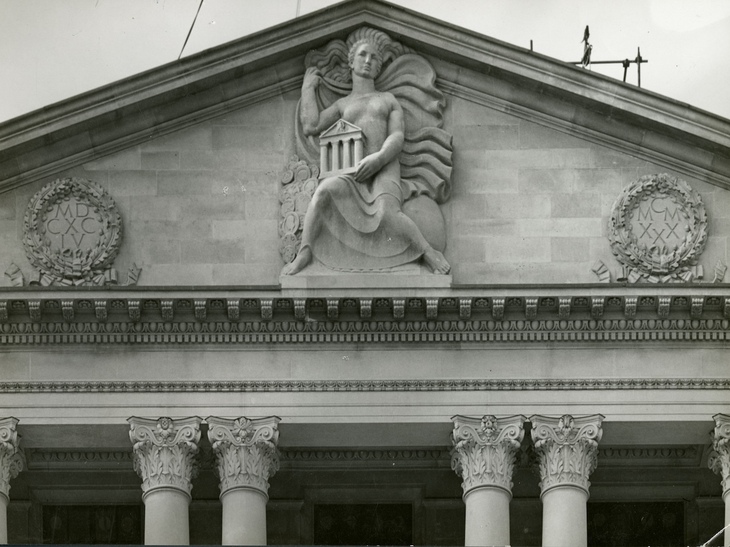
Both the tumbling of the old Bank of England, and the raising of its 1920s/30 successor, is documented in Building the Bank - 100 years on, an exhibition running from 16 September 2025-spring 2027 at the Bank of England Museum.
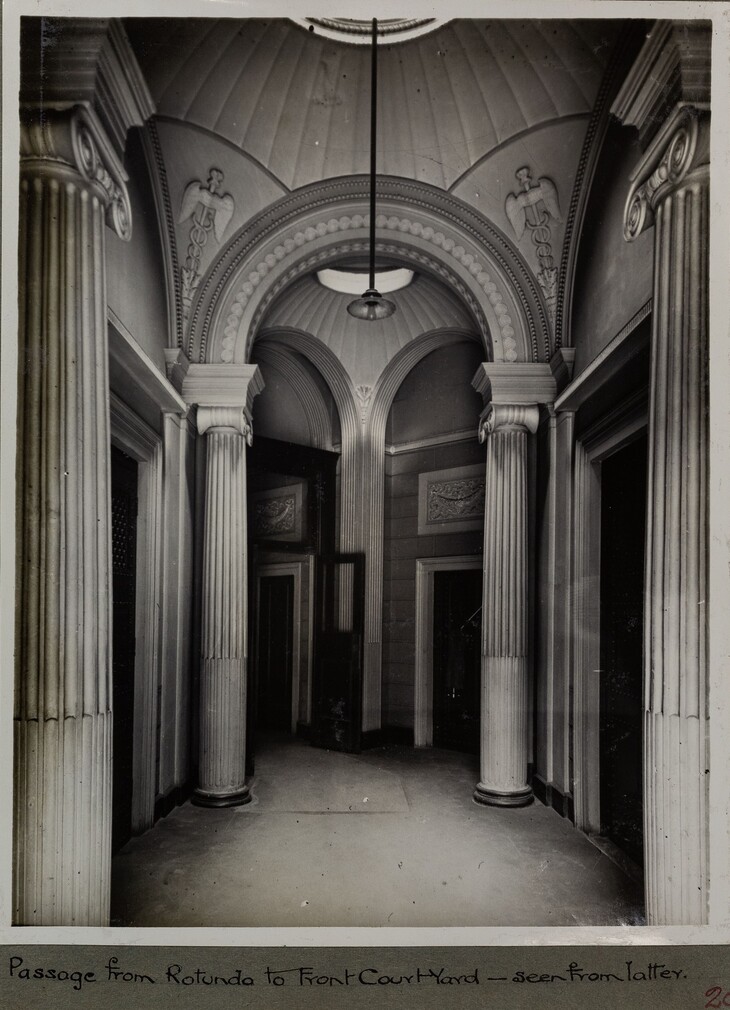
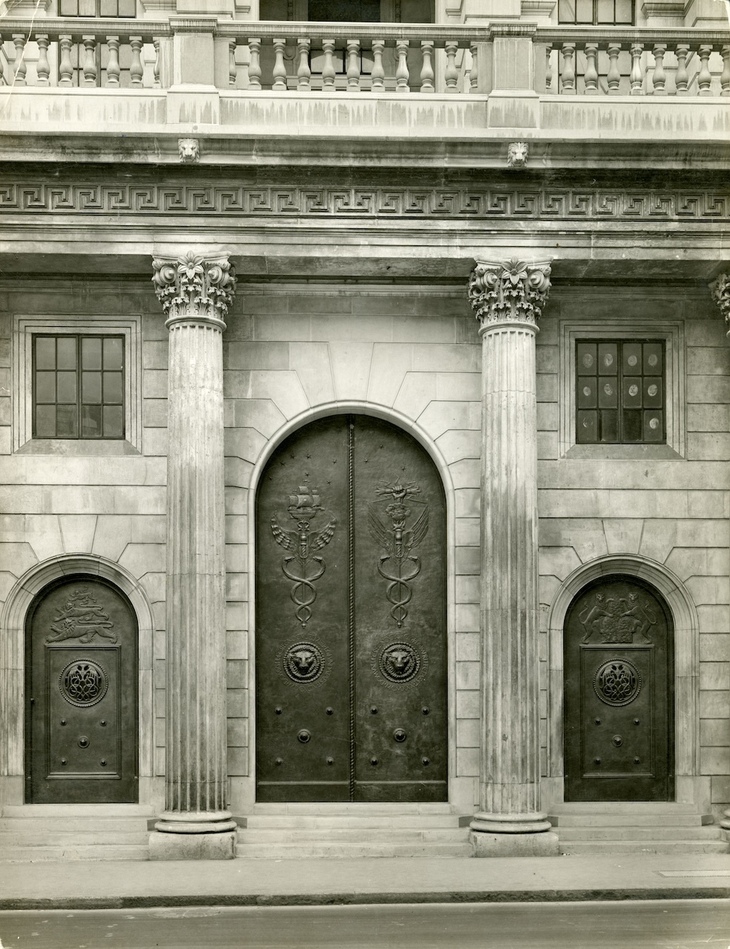
The exhibition — which is free to visit, along with the rest of the museum — arrives 100 years after works on Herbert Baker's Bank of England began. It features displays of architectural plans, models and artworks (including the photos in this article); curator-led exhibition talks exploring the ideas and themes of Baker's work; and architectural walking tours covering 300 years of the Bank's history. (The 1920s was not the first time the Bank of England was demolished.)
You can also see ancient Roman objects — such as oil lamps, combs and vases — discovered during the 1920s/30s building work — especially fitting given the Romanesque inspiration for Gandy's painting.
The museum itself also features an exact reproduction of Soane's Stock Office from 1792; while the lobby of the Museum Rotunda, which houses part of the exhibition, is a direct copy of a space designed by Soane — so you can still glory in some of the old skool Bank's magic.
Thankfully, as far as we know, there are no centenary plans to raze Baker's Bank to the ground, and replace it with something by Heatherwick Studio.
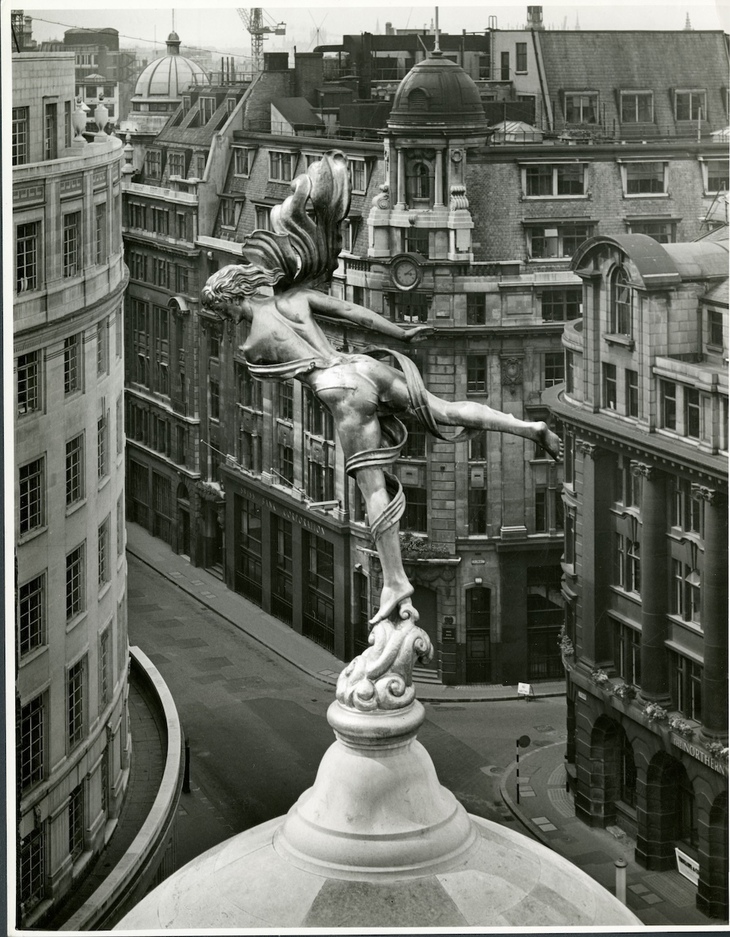
Building the Bank - 100 years on, Bank of England Museum, Tuesday 16 September 2025-spring 2027, free
Here are some wonderful photos of John Soane's Bank of England in its later years.