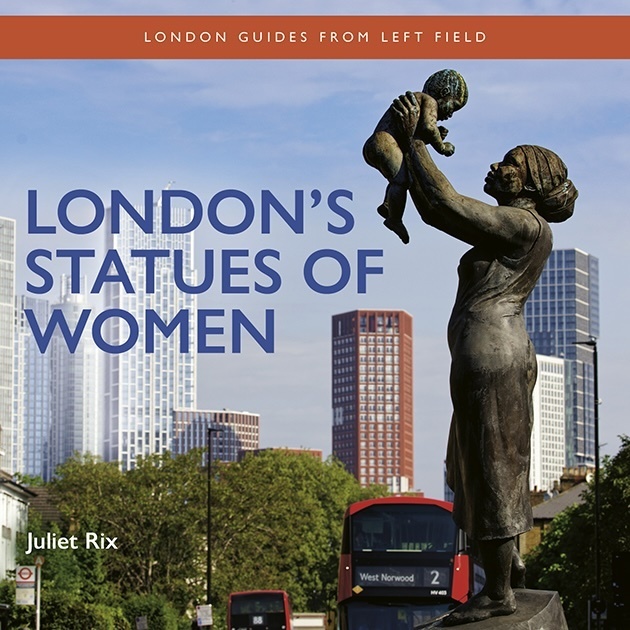
Well, there’s Millicent Fawcett in Parliament Square, isn’t there — oh, and the Mary Wollstonecraft one on Newington Green, and . . . In fact, as Juliet Rix shows in her new book, the capital now has a remarkable and reassuring array of statues of women. Here are 10 hiding in plain sight.
1. Twiggy (2012, by Neal French), Bourdon Place, Mayfair
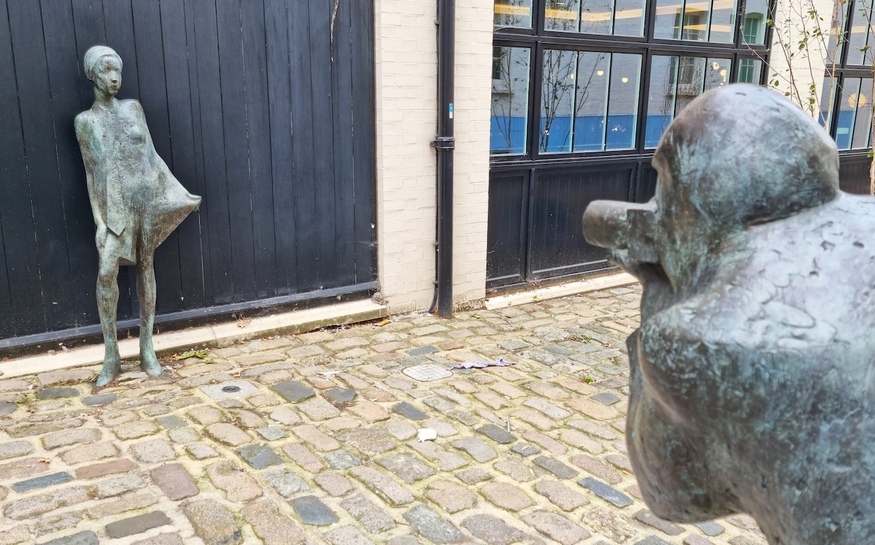
Tucked away in a Mayfair mews, a life-size bronze Twiggy poses for fashion photographer Terence Donovan. It's a scene from London's Swinging Sixties, when 16-year-old Twiggy rose rapidly from hairdresser's assistant in Neasden to international style icon (even featuring on lunch boxes in America). Twig-thin and boyish, she thought the world "stark raving mad" for finding her sexy. She quit being "a clothes hanger" (her words) aged 21, and made a lifelong career across the entertainment industry. She is now Dame Lesley Lawson, and she unveiled this statue herself.
2. Elizabeth I (1586 or 1670-99, sculptor unknown), 186a Fleet Street
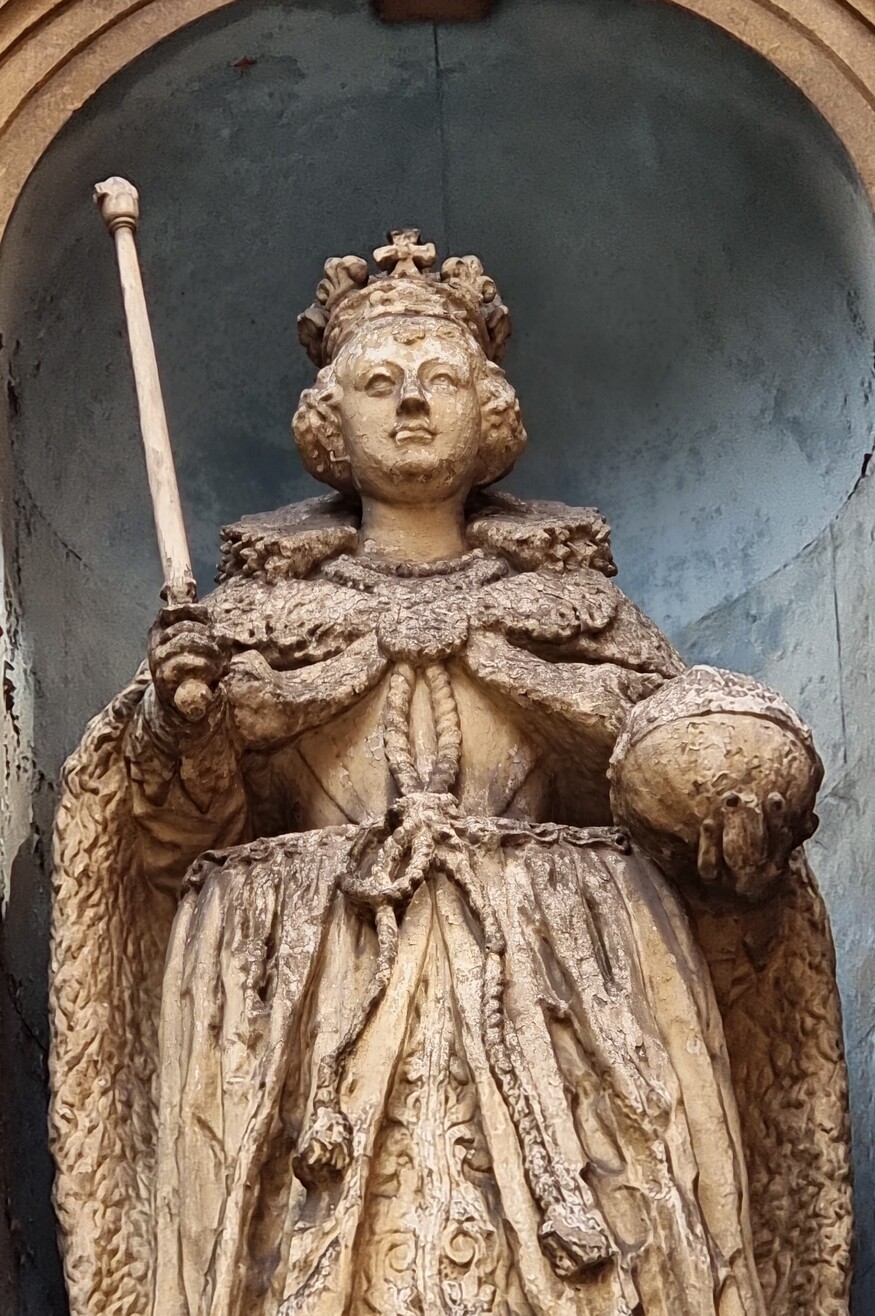
The oldest statue of a real woman in London has suffered and endured like the queen herself. Elizabeth I's father beheaded her mother, and her half-sister imprisoned her before she ruled alone for 45 years in a man's world. This effigy was created centuries ago for Ludgate, one of the original entrances to the City of London. It was twice displaced by demolitions, and then lost for 10 years before turning up in the basement of a pub. Restored with the help of Suffragist Millicent Fawcett (the first real woman to have a statue on Parliament Square), Elizabeth now stands above a door at the Fleet Street Church of St Dunstan-in-the-West.
3. Sarah Siddons (1897, by Léon-Joseph Chavalliaudt), Paddington Green
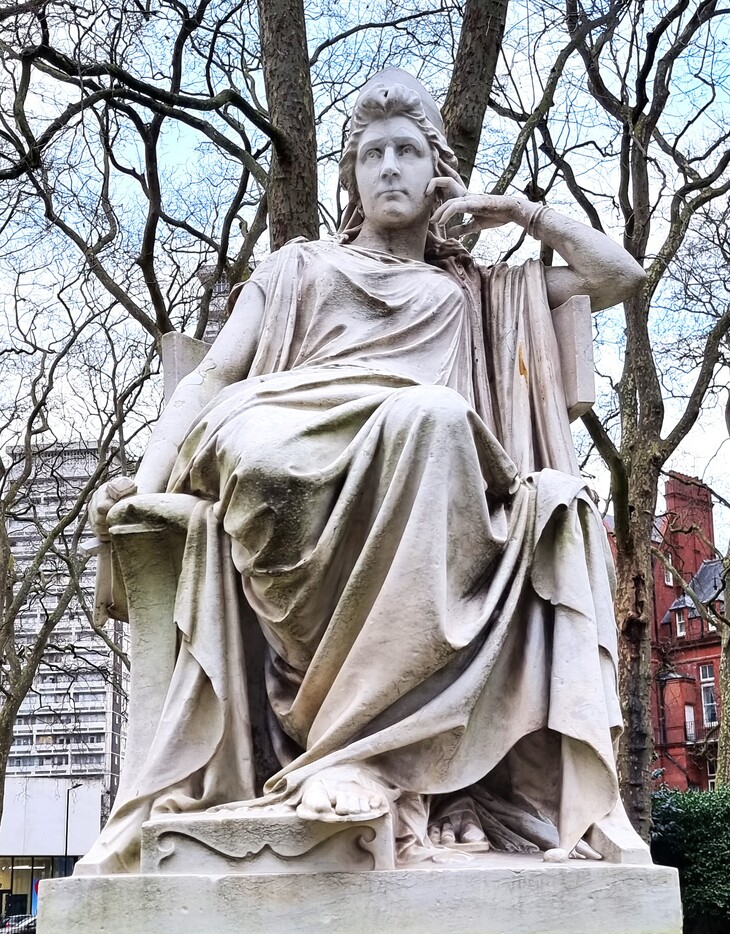
London’s first standalone statue of a named non-royal woman was not of some wartime worthy but one of the earliest A-list celebrities. Actress Sarah Siddons (1755-1831) took great care with the image she projected, and had fans fainting from 'Siddons fever'. She was painted by the leading artists of the day, but her statue wasn't erected until decades after her death, just squeaking in before the 20th century. Time hasn't been kind to her surroundings, and she now sits with her toes almost touching the A40.
4. Angels of the Supreme Court (1913, by Henry Fehr)
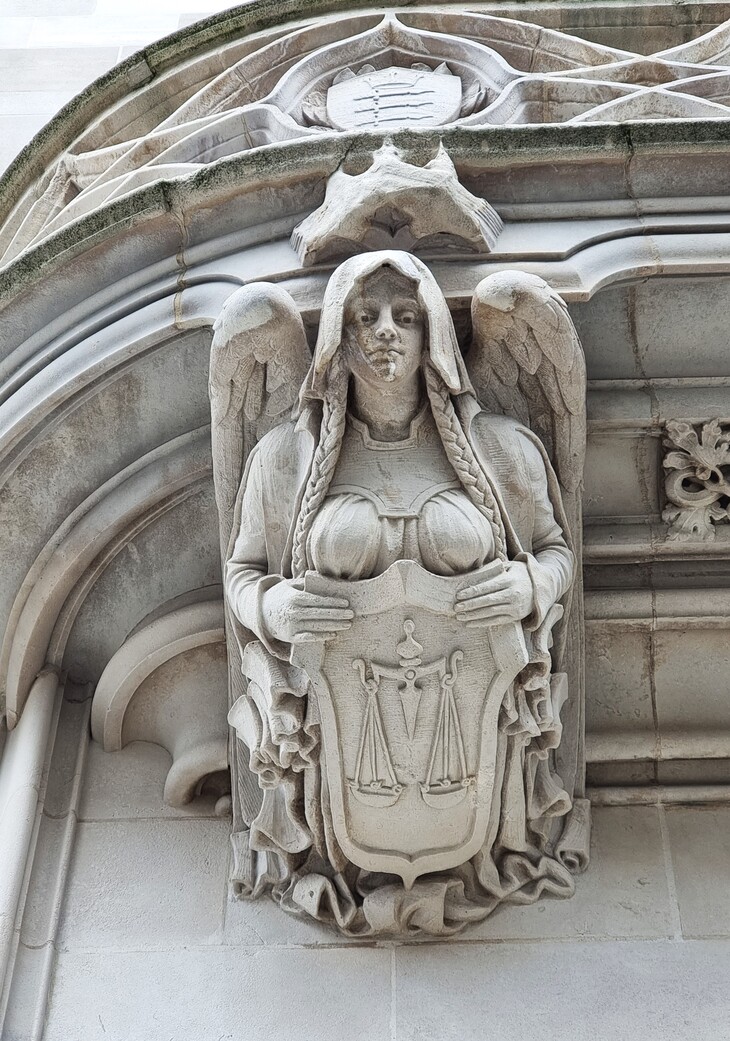
This important public building is well known (it occupies the west side of Parliament Square), but not many people look up at the side facing Westminster Abbey. Here is a host of buxom angels. One holds a shield depicting the scales of justice — a serious subject on a courthouse, you might think. But the over-riding impression is of beach ball breasts that look about to bounce down on our heads. The architect was unrepentant, saying in 1913 that amid "austere" Gothic surroundings he wanted "a dainty piece of ornament".
5. Grand Duchess Elizabeth (1998, Designed by Tim Crawley), Westminster Abbey
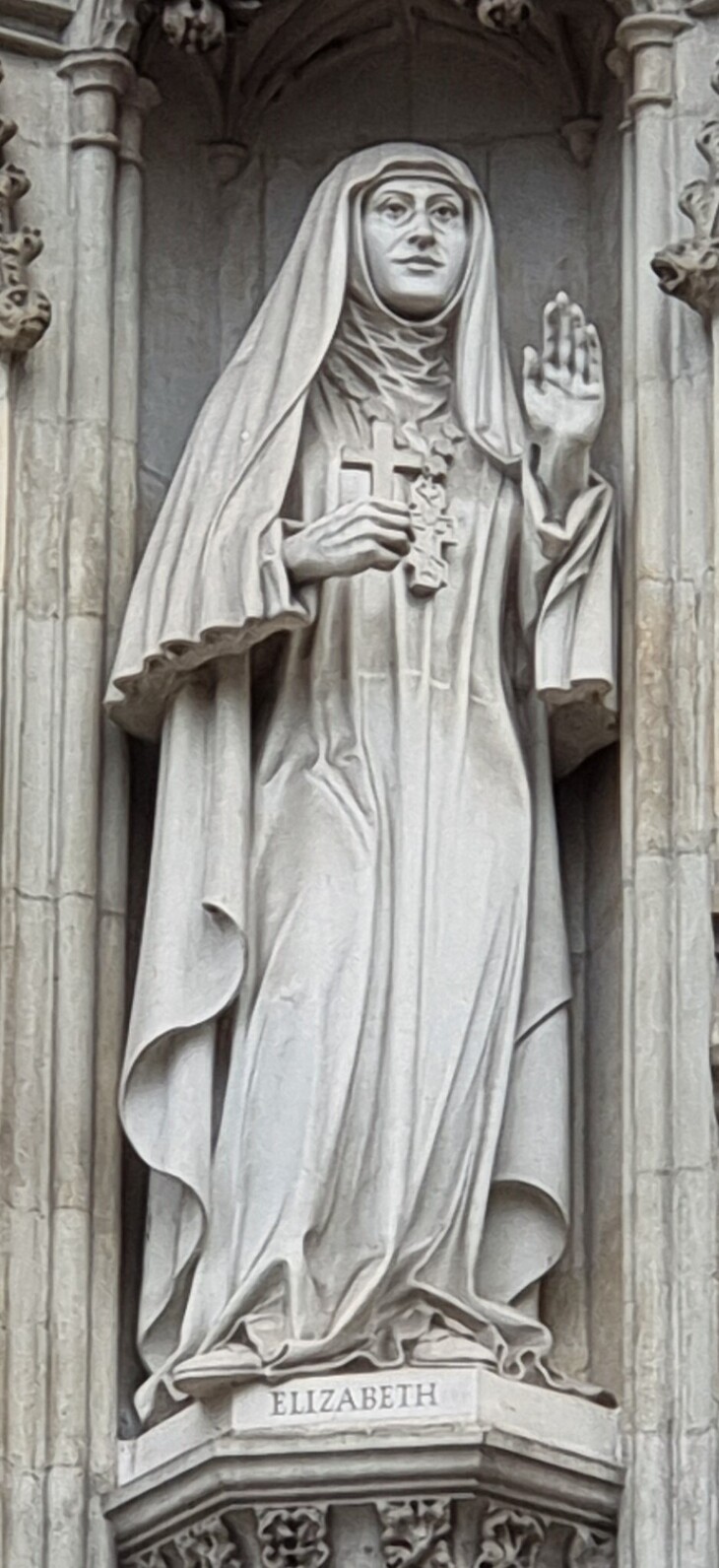
On the Gothic façade of Westminster Abbey, above the Great West Door, 15th-century niches are occupied by 10 Modern Martyrs. Among them stands Grand Duchess Elizabeth. Granddaughter of Queen Victoria, and a society beauty, Elizabeth married a younger son of Tsar Alexander II. When her husband was assassinated by a socialist revolutionary in 1905, Elizabeth sold everything and founded a convent, dedicating her life to the sick and poor. During the Russian Revolution, she was murdered by the Bolsheviks, Lenin saying, "Virtue with the crown on it is a greater enemy to world revolution than a hundred tyrant tsars". Her statue was unveiled in 1998 by Queen Elizabeth II and Prince Philip — respectively her cousin and grand-nephew.
6. Ada Lovelace (2022, by Mary & Etienne Millner), Horseferry Road, Millbank Quarter
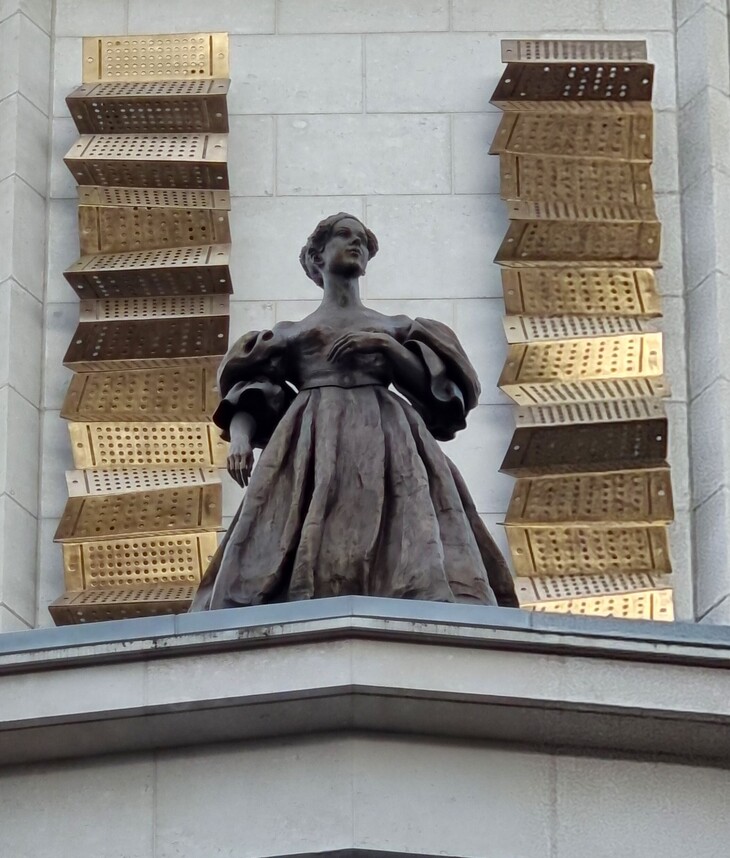
A mathematician who helped launch early computing, Ada Lovelace was also the only legitimate child of poet Lord Byron — the one who was 'mad, bad and dangerous to know'. She never knew him; he left for Italy soon after her birth and died there when she was eight. But Ada idolised her famous father, and was not always as unlike him as her mother hoped. A rare STEM woman among London's statues, Ada is not as visible as she should be, standing high above Westminster's Horseferry Road and seen only when walking towards the Thames.
7. Ariel, Bank of England
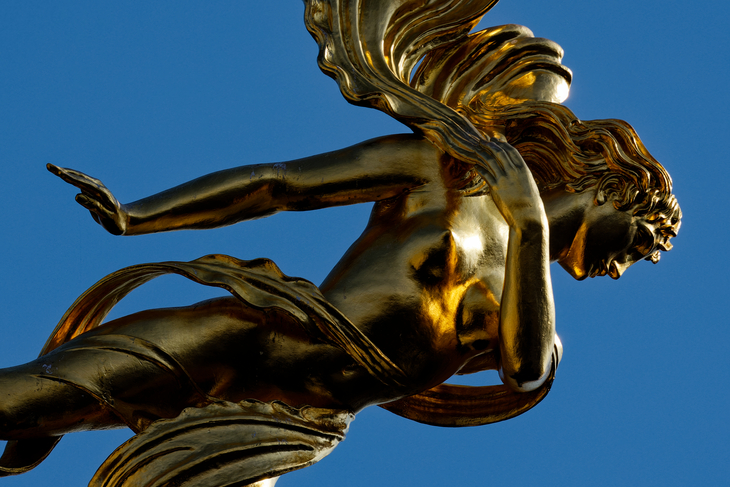
You may have noticed the golden Ariel atop the dome of the Bank of England. Shakespeare's spirit from The Tempest, who could "put a girdle round the earth in 40 minutes", was seen in the 1930s as the perfect symbol of this global imperial bank. But there's something you may not have noticed. While Shakespeare's Ariel is male, this one has breasts. Why? Apparently the (male) sculptor just couldn't resist. The bank's long-serving governor never got his head round it, and forever called this semi-naked female "he".
8. Joy Battick (1986 and 2023, by Kevin Atherton), Brixton Railway Station
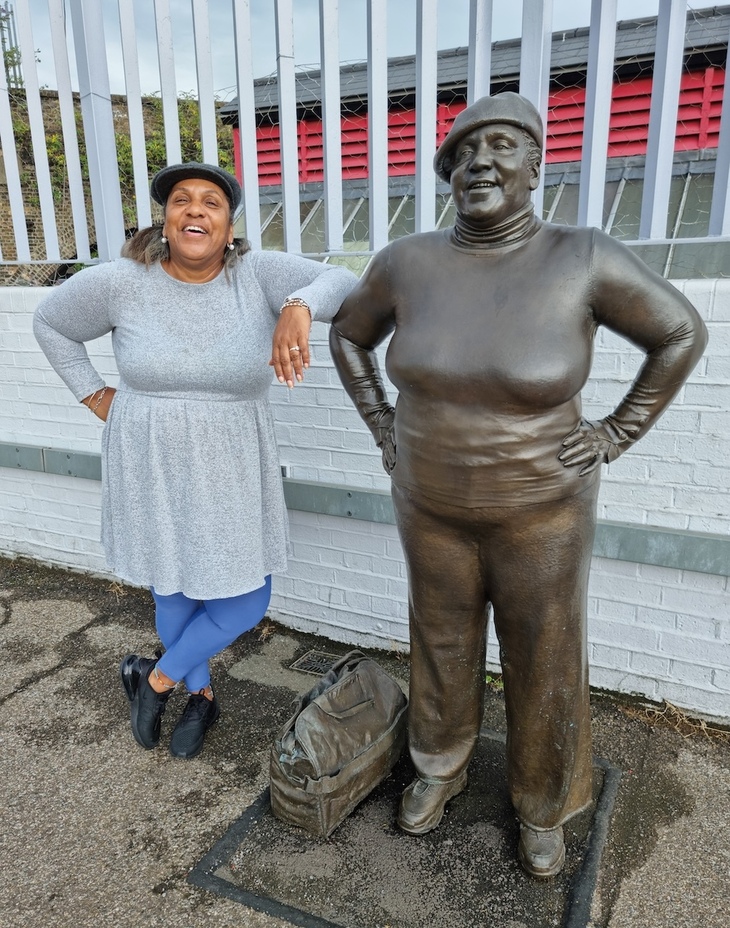
Unless you frequent Brixton mainline station you won't have seen the first London statue of a real woman of colour — or the recent second bronze recently unveiled. In 1986 Joy was working at the local leisure centre, just after the Brixton riots, and her twenty-something self looks a bit grim-faced. Joy agreed to model to get out of an early shift and thought little about it. Neither she nor the sculptor knew they were making history until the statue was listed in 2016. The second Joy smiles across the railway lines — and four decades of change — at her younger self.
9. Sister Nivedita (2023, by Nirjan De), junction of Lake Road and Leopold Road, Wimbledon
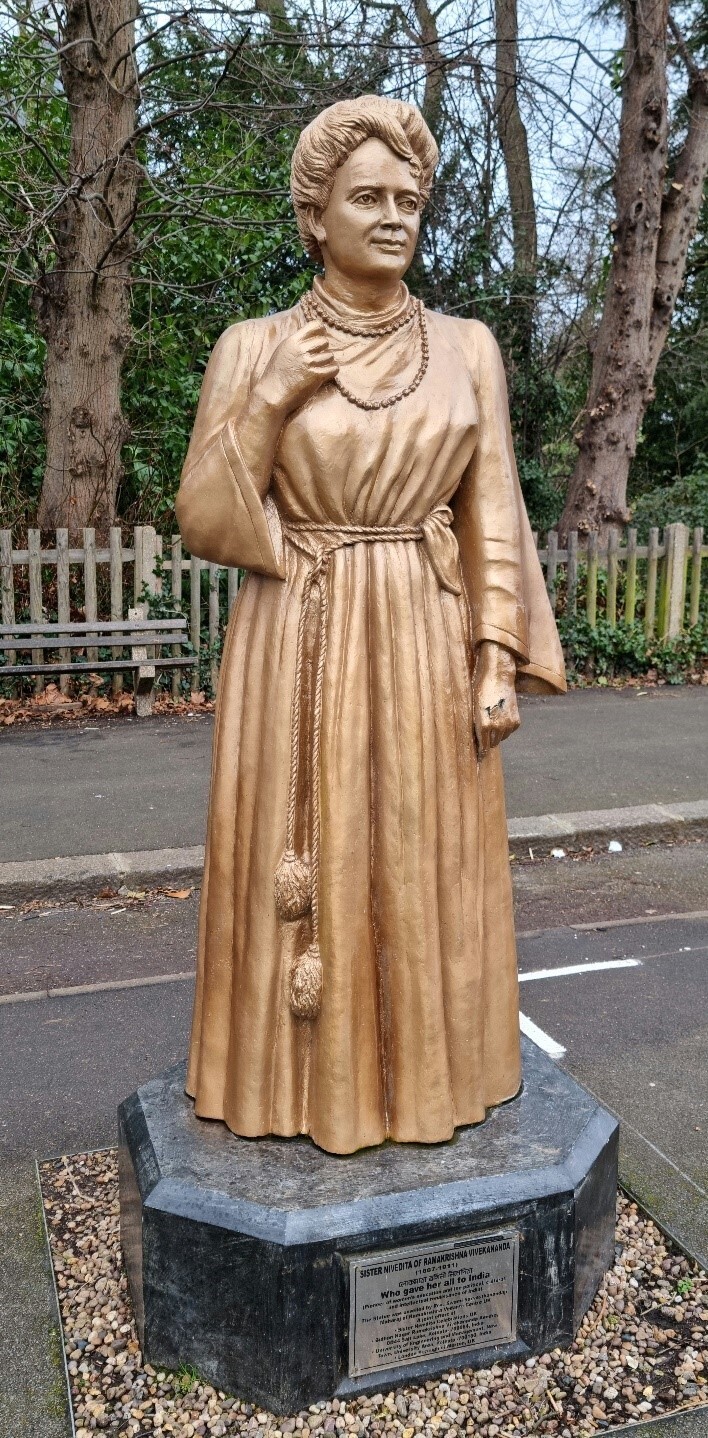
An incongruous golden statue recently appeared on a suburban street corner (Lake Road/Leopold Road, Wimbledon). It's Irish-born Margaret Noble (1867-1911), a progressive educator who lived and worked here — until she became a follower of Indian guru Swami Vivekananda. He was seeking "a real lioness to work for the Indians, especially women", and called her Nivedita, "the dedicated". In Kolkata (then colonial Calcutta) she founded a girls' school, nursed plague victims and campaigned for Indian independence, making her a heroine in India. Her admirers commissioned a standard bronze statue from Kolkata. The bronze cracked in casting and, without telling London, the foundry covered the cracks with gold paint.
10. Angela Burdett-Coutts (1865, designed by Henry Astley Darbishire), Holly Lodge, Swain's Lane, Highgate
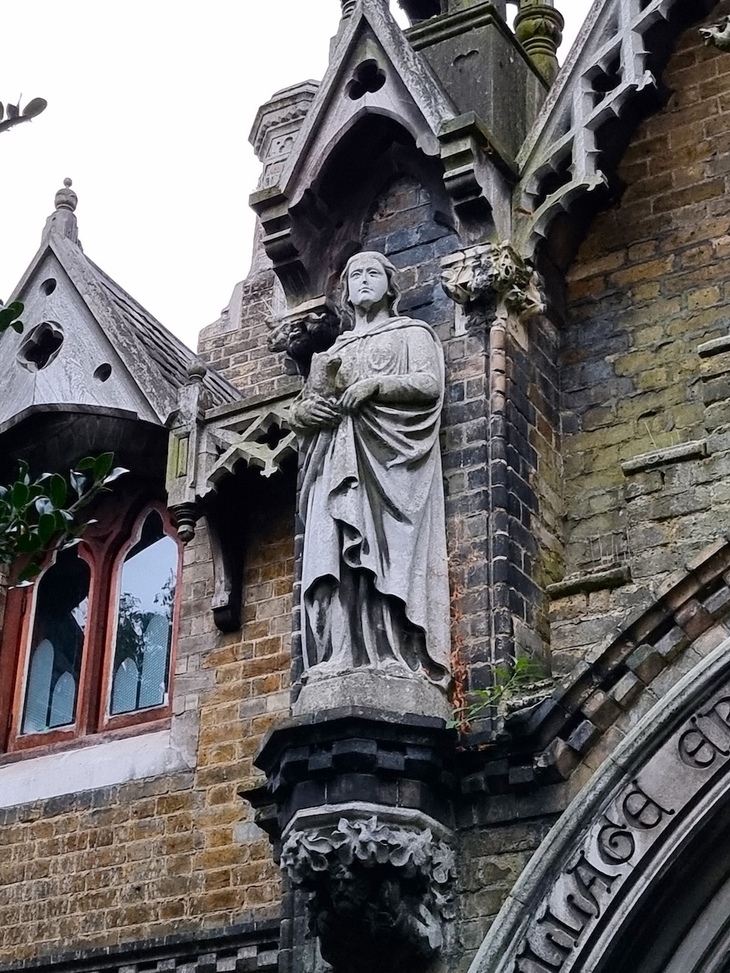
Thomas Coutts, banker to the rich, horrified his family by marrying a young actress when he was 80 and leaving her his staggering wealth. She bequeathed it to his granddaughter, Angela Burdett, on condition she take his name and never marry a foreigner. Burdett-Coutts became a great Victorian philanthropist. Advised by Charles Dickens, she was "Queen of the Poor" and championed the protection of children and animals (note her little dog). She refused many proposals of marriage, living instead with her ex-governess, Hannah Brown, who is paired with her on the neo-Gothic gate of Holly Village, which Burdett-Coutts built. After Brown died, 67-year-old Burdett-Coutts shocked society and lost part of her legacy by marrying her 29-year-old American assistant.
More capital women can be found, along with more about the 10 you've just read about, in London's Statues of Women by Juliet Rix, published by Safe Haven Books.