This feature first appeared in July 2024 on Londonist: Time Machine, our much-praised history newsletter. To be the first to read new history features like this, sign up for free here.
Costermongers — purveyors of fruit and veg — are better known for their runner beans than their record-beating runs. But James Parrot was different. Fit as a fiddle, the sprightly barrow boy reckoned he could run a mile in under four and a half minutes. As was common and customary in the 18th century, a substantial wager hovered over proceedings. Parrot stood to win 15 guineas should he make the time, about a third of a typical costermonger’s annual income.
The race against time took place on 9 May 1770. According to the limited accounts we have, Parrot not only achieved his goal, but smashed it, covering the distance “in four minutes”. It was, perhaps, history’s first Four Minute Mile, almost 200 years before Roger Bannister clinched the record without dispute. But did it really happen? Let’s take a look at the evidence…
A dash along Old Street
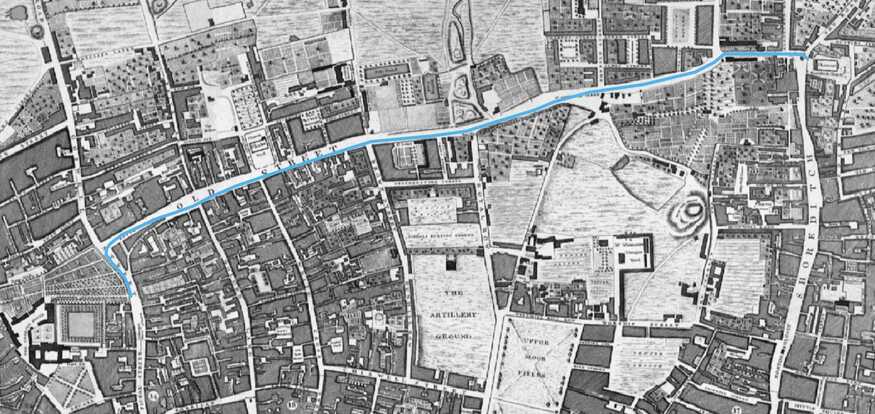
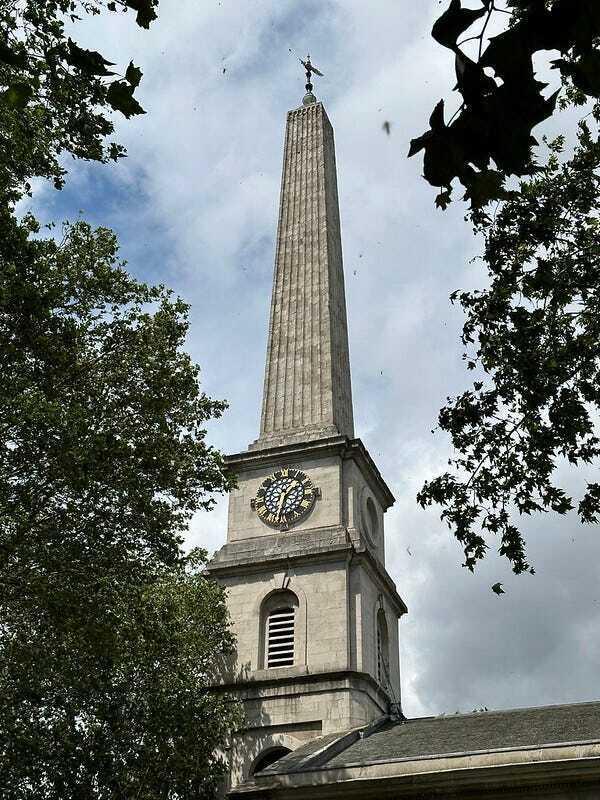
Parrot chose a route along the northern City fringes, through the same area that would launch England’s first balloon flight 14 years later. The starting line was on Goswell Road (then Goswell Street) beside the wall of the Charterhouse. The finish was to be the gates of St Leonard’s church in Shoreditch. Hence, much of the course would take him along Old Street.
Here, I’ve sketched it out onto a map:
I also mocked up the route in Google MyMaps, which allows me to measure distances. It comes out as exactly 1.61km (a mile), if we assume the starting line was at the southern-most extent of Charterhouse Wall on Goswell Road, and that the finish was the gates to St Leonard’s.
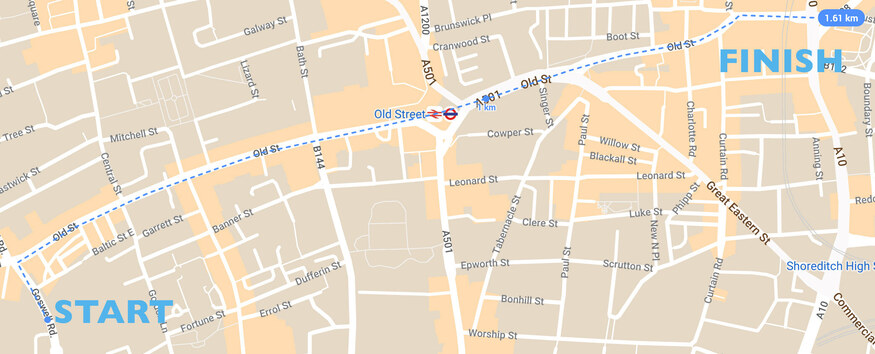
Given the passage of over a quarter of a millennium, its arresting to see just how little the route has changed. Few buildings survive from that time, but Old Street still follows the same curves — especially that dog-leg into the finish. The only spoilsport is that wretched junction above Old Street tube. After years of roadworks, it is no longer a roundabout, but it would still present a significant obstacle to a Laura Muir or Josh Kerr hoping to repeat Parrot’s achievement.
So how come loads of people have heard of Roger Bannister, but James Parrot aspires to be an obscure footnote?
The answer is not surprising. Parrot’s run came long before the age of sports codification and accurate record keeping. His achievement is not verifiable, in the same way that you won’t find the supposedly 152-year-old Tom Parr in the Guinness Book of Records.
Yet it might have been possible. Late 18th century watches were reliable enough to keep the time. As others have noted, a significant sum was up for grabs, so it would have been in everyone’s interests to time things accurately. Likewise, distances could be determined with precision through the use of chains. Sources from the time describe the route as a “measured mile”, suggesting, perhaps, that the course was already established for sporting attempts such as this.
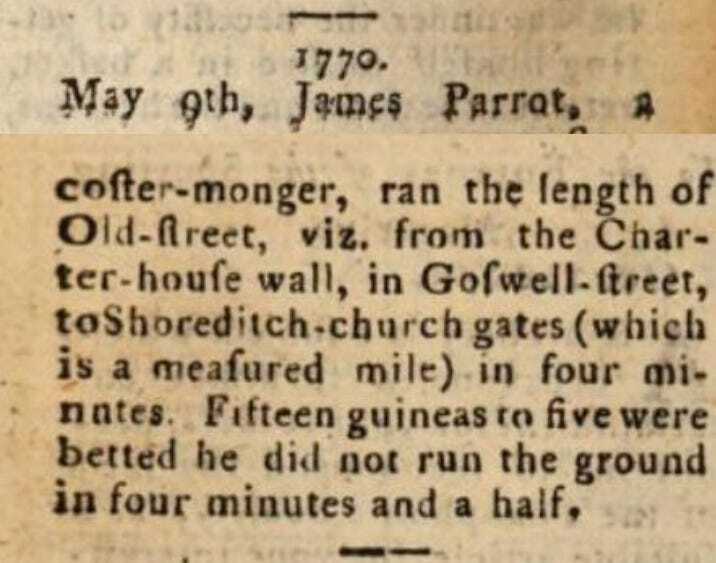
But here’s the crunch. We have no primary source for the feat. The first record comes from Sporting Magazine in 1794 — a generation after the race. Under a section headed “Extraordinary EQUESTRIAN, PEDESTRIAN and other PERFORMANCES”, it economically notes the date, Parrot’s name and occupation, the route, the wager and the time of four minutes. Nothing else. Were crowds there to watch? Was he the toast of the town afterwards? Why was this route chosen? Who indeed was this James Parrot, beyond a fleet-footed grocer? More pertinently for historians, what source was Sporting Magazine using, 24 years after the event? Was this merely folk memory or hearsay, or did they have documentation that his since been lost?
The key question remains: did James Parrot really run a mile in under four minutes? Almost certainly not. Only the most elite athletes can do it today, and that’s with extensive training, ideal nutrition, a smooth running surface and fancy shoes. Even so, we can’t entirely dismiss the idea that Parrot was a once-in-a-generation freak of raw talent.
Now, did I tell you the one about the medieval bobsleigh team from Putney Heath?