Find more information on wisteria season in London here.
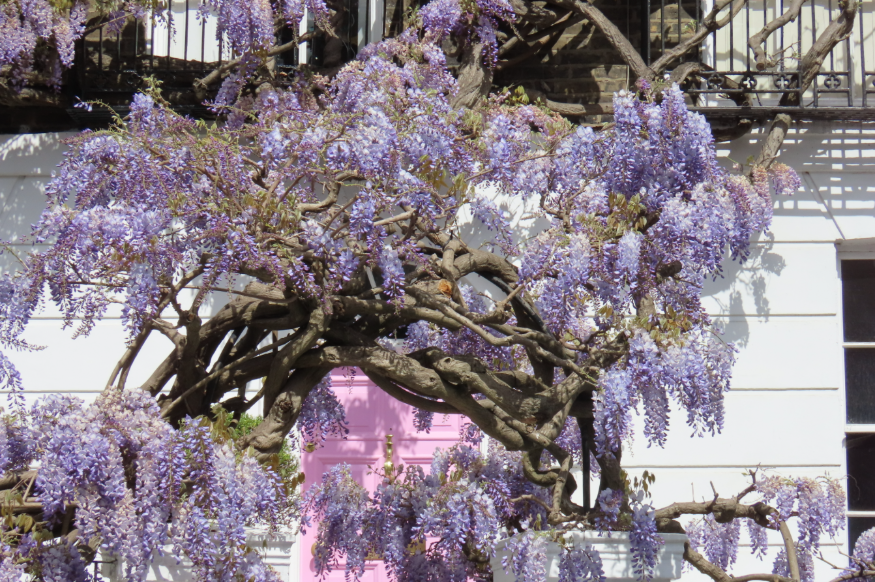
Want to see wisteria in London, but don't know where to start?
We've put together this self-guided walking route around some of the capital's most wonderful wisteria spots, taking in the picturesquely purple streets of Notting Hill, Kensington and Chelsea. This is a selection of the most impressive wisteria; you'll see plenty more as you wander around.
By the way, you don't have to do the whole route in one (or at all) as it's fairly long. Dip in and out as you please.
We walked the following route and took these photos on 21 April 2026. Wisteria hysteria is a fleeting season, so we can't guarantee it'll still be looking as bountiful when you visit (and if you're reading this in a future year, bear in mind that wisteria season can vary depending on the weather, so check it's in bloom before you set out).
Note: Many of the spots listed are private houses, so be considerate to residents, and if you choose to take photos, please do so respectfully. We've not included exact addresses, but the pins on the map are fairly accurate, so you should be able to find them easily enough. Just look for the cloud of lilac when you turn into the street.
Route to see London's best wisteria
Begin at Notting Hill Gate. Take Exit 3 out of the station, and walk five minutes via Pembridge Road and Ladbroke Road to:
1. Wisteria at Horbury Mews
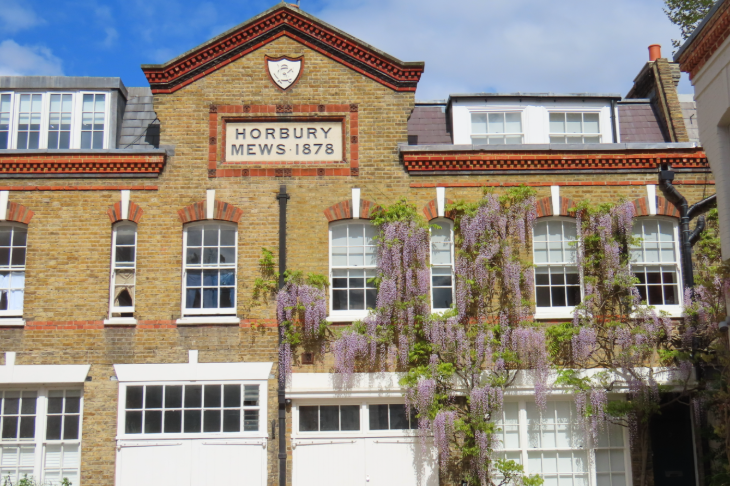
The building at the end of this short, cobbled mews street is lightly dappled with wisteria; you'll see it as soon as you enter the street. (Note in April 2026: building work is taking place at a couple of houses within the small mews, so take care around vans and scaffolding).
From Horbury Mews, double back to Notting Hill Gate to cross the main road and head towards Campden Hill Road. For the most aesthetically-pleasing route, cross straight in front of you and head down Farmer Street, turning right onto Hillgate Place, then follow it right around to Farm Place — which is replete with cherry blossom trees, adding to the floral extravaganza.
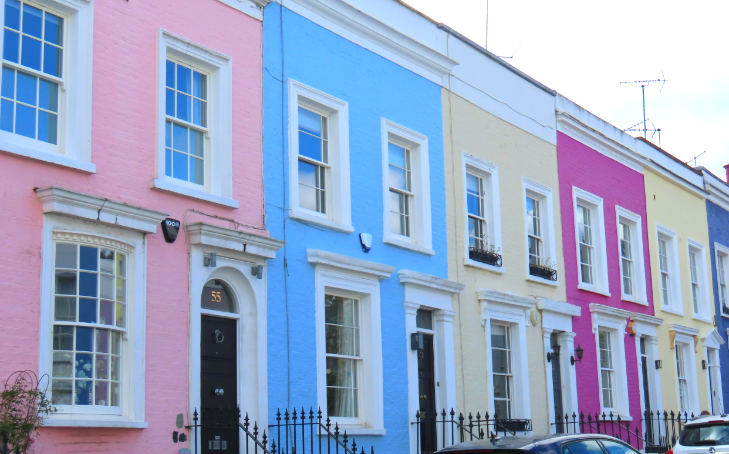
This little gathering of streets is packed with the charming pastel-hued houses for which Notting Hill is well known. If you've a minute to spare, take a minor diversion down Hillgate Street to view the beautiful mosaics on the wall outside Fox Primary School. The house on the corner has a wisteria too, though as of April 2026, scaffolding surrounds it.
2. Wisteria on Campden Hill Road
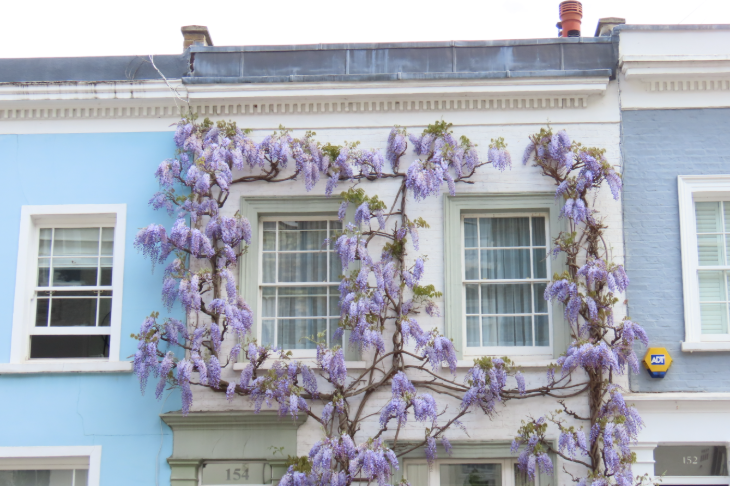
Once you reach Campden Hill Road, turn left to head south. A few buildings along from Majestic Wine sits another row of pastel houses, and among them, a white-grey house whose windows are framed with a wisteria bush, like a pair of eyes peeping out from behind a purple mask.
Stay on the same side of the road and walk on for about four minutes until you reach...
3. Wisteria on Bedford Gardens
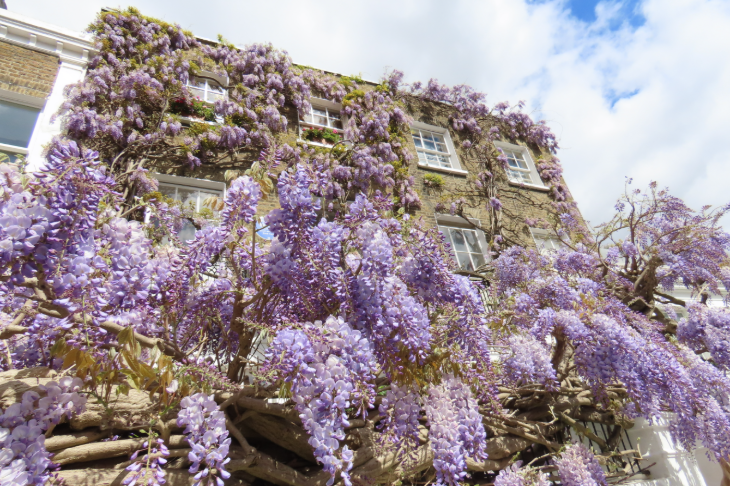
When you turn into Bedford Gardens, at the western end of the road, you'll see a couple of houses with a decent smattering of wisteria. Wonderful though they are, keep walking to the eastern end of this residential road, close to the junction with Kensington Church Street, to be completely wowed. Here, a terraced house, complete with Blue Plaque dedicated to musician Frank Bridge, is smothered in wisteria. Its pastel pink front door makes it all the more Instagrammable. Naturally, this one draws large crowds throughout wisteria season.
Head back to the far end of the street, rejoin Campden Hill Gardens and keep heading south. Swivel your eyes left for a peep along Sheffield Terrace where you'll see a few purple fronds hanging over whitewashed walls, and again down Tor Gardens, replete with cherry blossom trees. Opposite the junction with Campden Hill, another wisteria hangs over a wall and onto the pavement.
From here, follow Observatory Gardens and Campden Grove to...
4. Wisteria on Gordon Place
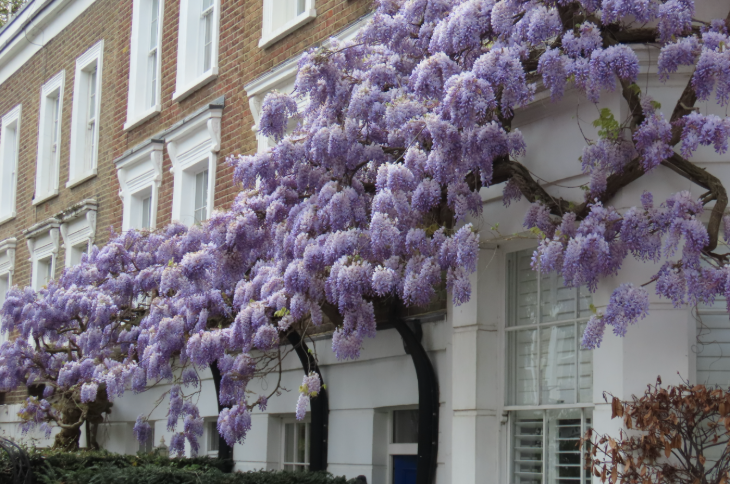
While a couple of houses at the northern end of Gordon Place have wisteria, you'll want to head to the very bottom of the street, south of Holland Street, for the most impressive display. Here, one purple bush extends across the frontage of four or five houses in a row — and is tucked well enough away that many people miss it.
From here, wander a further five minutes to...
5. Wisteria on Stafford Terrace
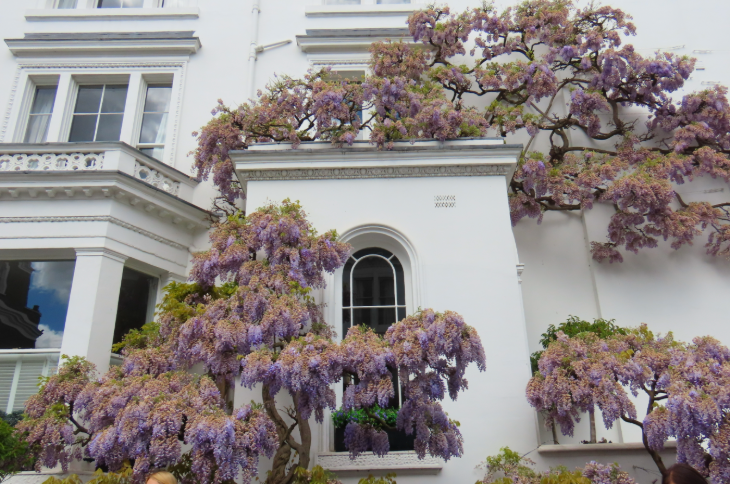
If you approach Stafford Terrace from the eastern end, heading north up Argyll Road, you'll spot the wisteria before you reach the street. It's plastered up the side of the whitewashed corner house, extending along the metal railings and draping its tendrils over the pavement. As of 21 April 2026, this wisteria was already starting to brown (as in the above photo).
At this point, you're just a couple of minutes walk from Kensington High Street, with plenty of restaurants and cafes, and High Street Kensington station if you've had your fill of purple plants and want to cut your walk short and head home. Otherwise, continue and enter Holland Park, either via Phillimore Walk, or head up to the top of Phillimore Gardens and turn left onto Duchess of Bedford's Walk.
6. Wisteria in Holland Park
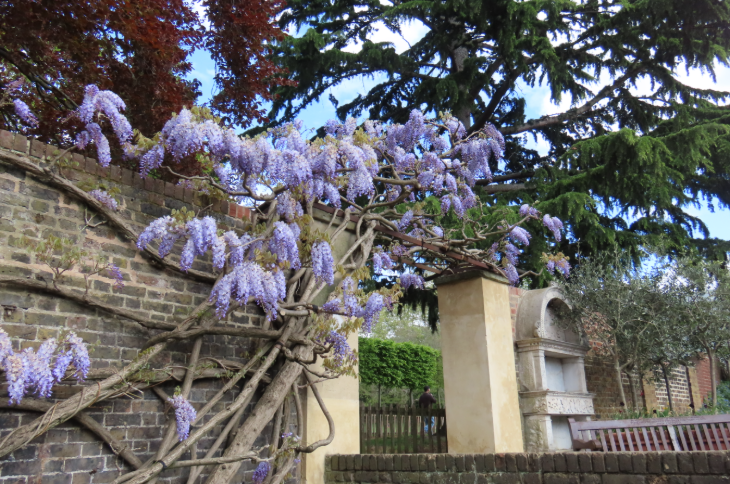
There are two wisteria hotspots in Holland Park. The first is at the north-east corner of the Dutch Garden — famous for its tulips — where wisteria drapes over a brick archway, beneath a large fir tree. A smaller wisteria can be seen further west along the same brick wall which encloses the garden.
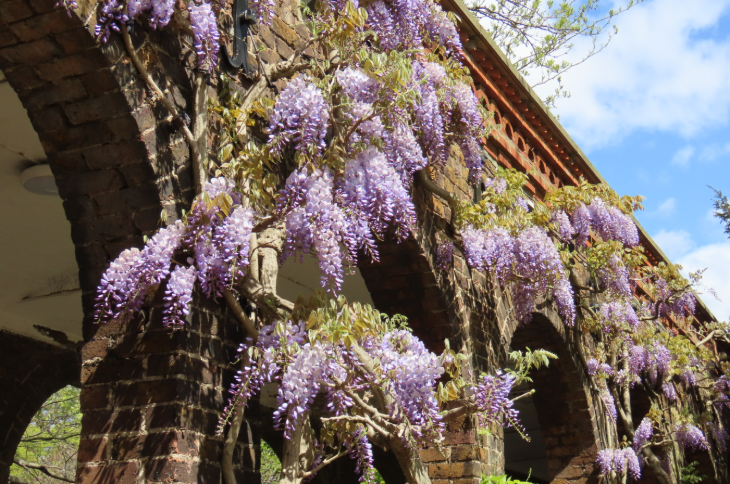
There are plenty of benches dotted around the Dutch Garden if you're getting weary at this point in the walk — and Holland Park is also home to a cafe and free public toilets. When you're ready to move on, head south from the Dutch Garden, past the circular pond, and turn right past the covered mural. The brick arches here — part of the Orangery — have a wisteria climbing up the south face.
From the Orangery, head south out of the park to...
7. Wisteria on Ilchester Place
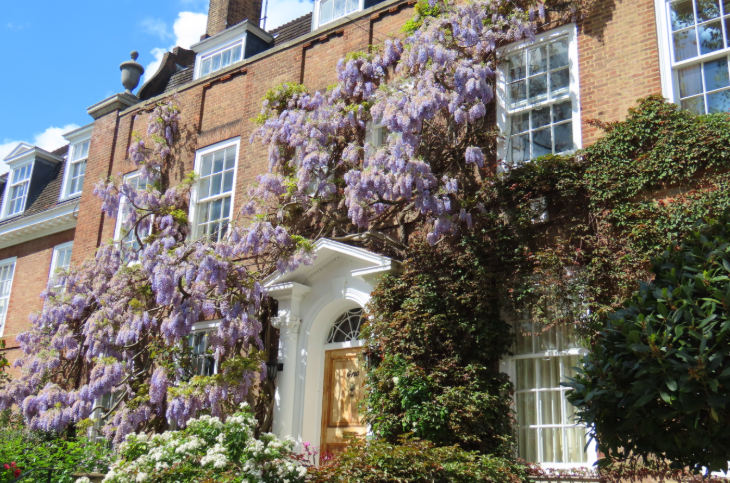
Make for the western end of this quiet residential street for a Bridgerton-esque house covered in wisteria. Time your visit right to see a bush of pink-red camellias in bloom in the garden at the same time.
From here, head south and cross Kensington High Street (another opportunity for refreshments/ducking out and heading back to the station) towards...
8. Wisteria on Edwardes Square
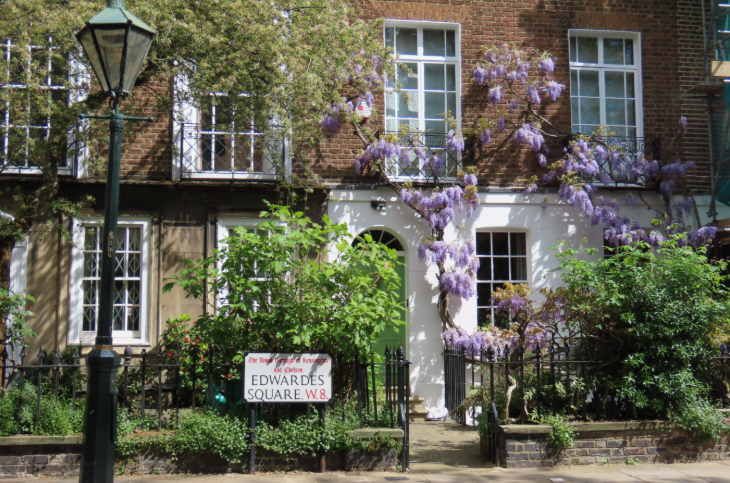
The gorgeous terraced houses on the eastern side of this private garden square are bucolic — completely at odds with their location close to the roaring main road — at any time of year. During wisteria season, things ramp up a notch, as several houses along the row have a wisteria crawling up their walls, one tantalisingly close to reaching out and touching the excellent Scarsdale Tavern next door (well worth stopping for a quick drink if you've got the time).
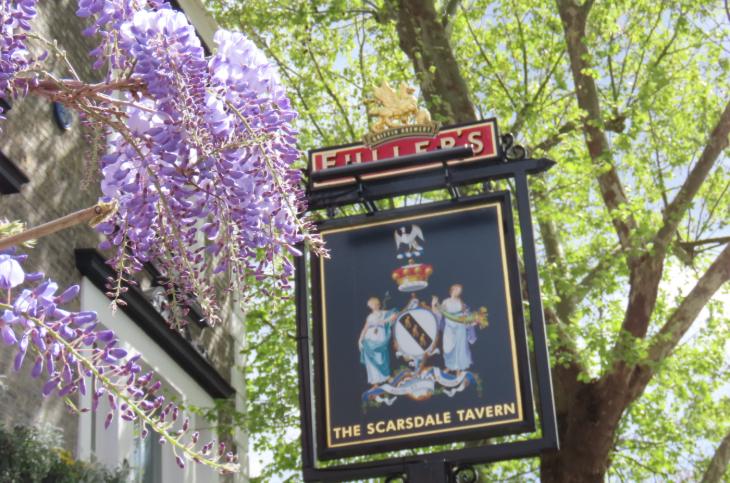
Take the side passage alongside the pub towards...
9. Wisteria on Earls Court Road
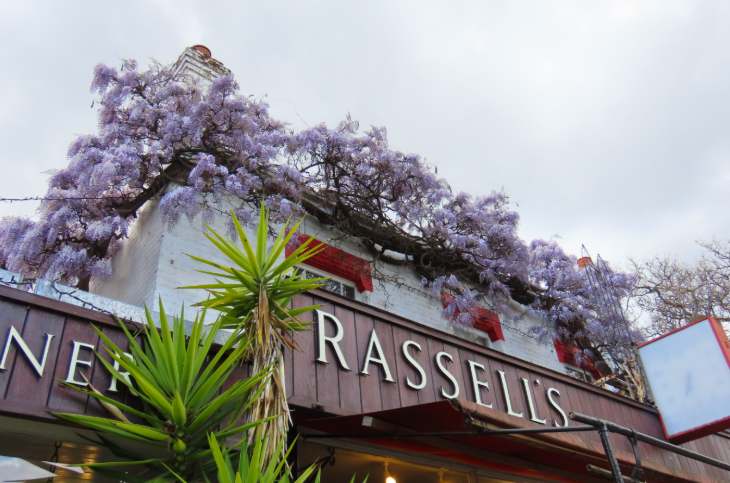
Another roaring thoroughfare where you wouldn't expect to find anything as charming as wisteria, but head a few steps south to the junction with Pembroke Square, and wisteria is visible on three of the four corners, from one single spot. Most notable is the roof of Rassell's of Kensington, a pocket-sized nursery/garden centre, which is dripping with the lilac hues.
Cross over Earl's Court Road, and head south, turning left onto
10. Wisteria on Abingdon Road
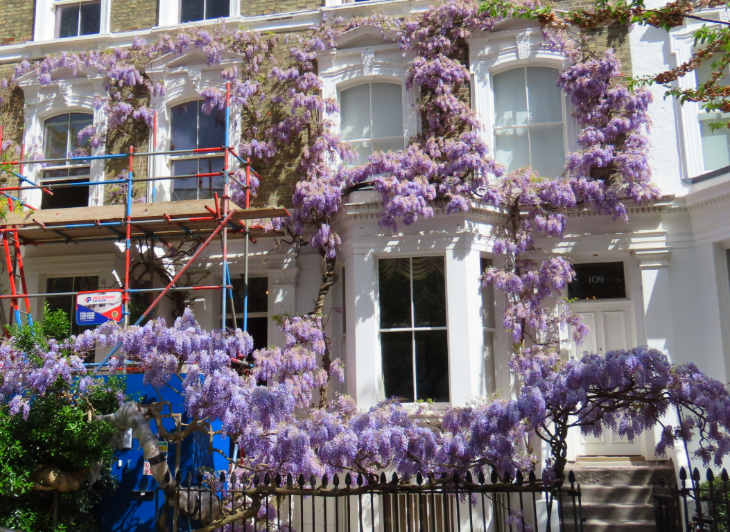
Though not worth a visit alone, it's on the way to our next stop. As you head along Stratford Road, veer left and take a few steps into Abingdon Road. A pair of houses on the right are jointly covered in wisteria (though as of April 2026, once has scaffolding) and another house direct opposite also boasts a few purple wisps.
Head back to Stratford Road and wander 15 minutes to...
11. Wisteria on Kynance Mews
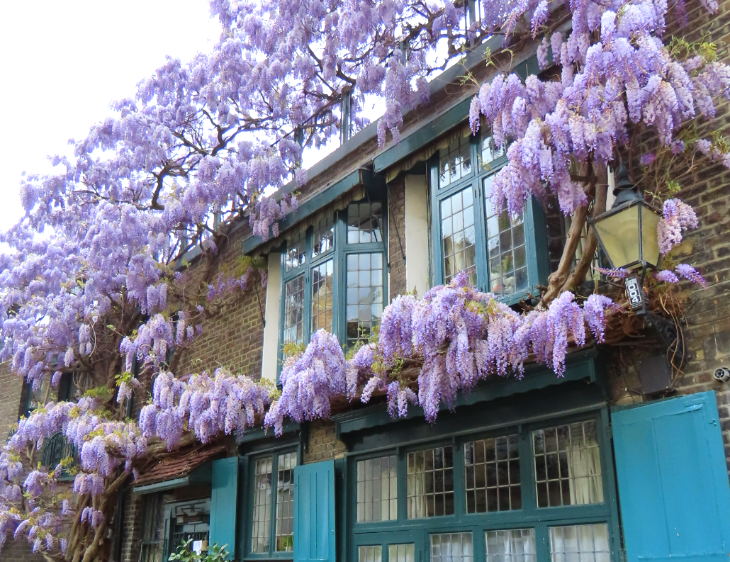
It's got to be one of London's most photographed streets. Kynance Mews has been an Instagram hotspot for years, thanks to the above wisteria-covered house, as well as the red leaves framing the entrance arch in autumn. It's a quiet mews street, and the owners of this house have put up polite signs asking visitors not to block front doors, nor to lean or sit on the brick wall out the front, so do respect this.
12. Wisteria on Launceston Place
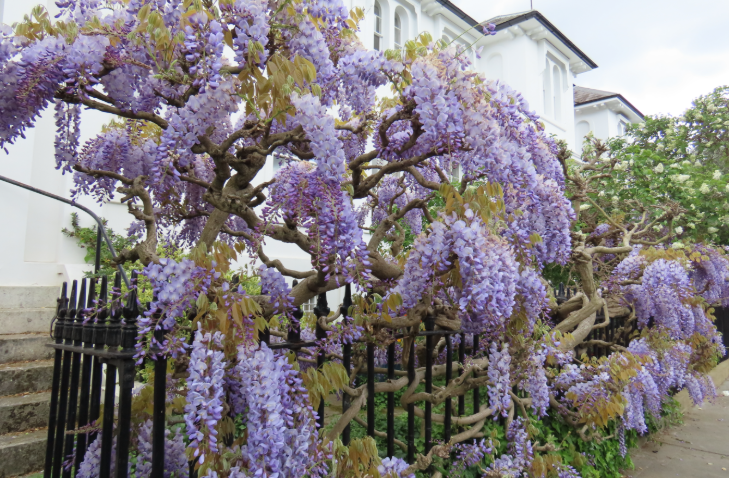
Leaving Kynance Mews, head north on Launceston Place. This street would probably get more attention from wisteria hunters if it wasn't so close to the superior display at Kynance Mews. A few houses along the street have tendrils trickling over their railings and fences and overhanging the pavement beyond.
From here, it's a solid 20+ minute walk to the next stop on our route, so you've got a few options. You're roughly equidistant from Gloucester Road and High Street Kensington stations (approx 10-minute walk to each, in opposite directions), so you could wander to one of those and either call it a day, or take the Tube one or two stops to South Kensington. Or, if you're still feeling energised and raring to go, you can walk the whole route. Either way, head for...
13. Wisteria on Sumner Place
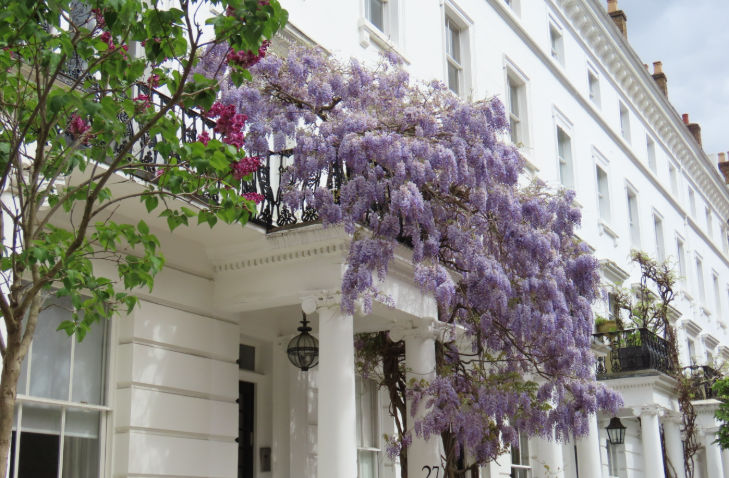
Depending which choice you've taken above, you'll most likely approach Sumner Place from the north. If you're coming from South Kensington station, we highly recommend swinging by the Hummingbird Bakery for a dose of sugar to keep you going over the next leg. Then, head all the way down to the south end of Sumner Place (approx seven-minute walk from South Ken station, not including refreshment stops) and ogle the wisteria draping its branches over several houses.
At the bottom of Sumner Place, turn right and head six minutes along Fulham Road before turning right into...
14. Wisteria on Elm Place and Selwood Place
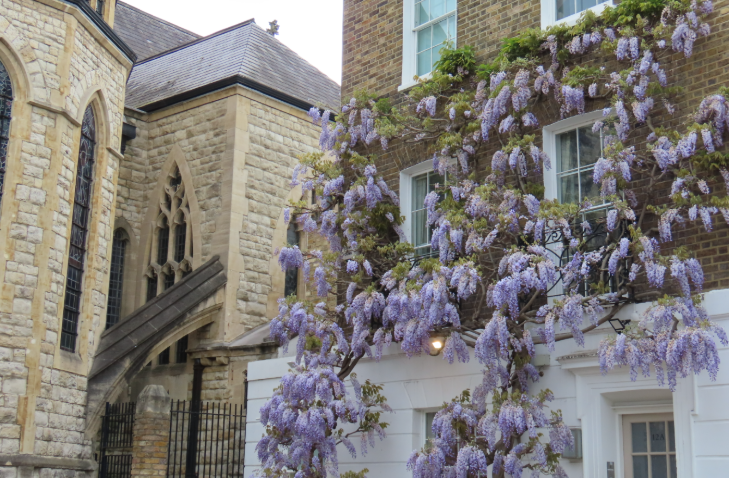
The short stretch that is Elm Place has a couple of houses on each side decked out with wisteria. Particularly of note is the house on the corner of Elm Place and Selwood Place, where the wisteria intermingles with early-blooming white roses.
At the top of Elm Place, look left along Selwood Place, to the final house before the church, an end-of-terrace house decked out in a thick wisteria coat.
Double back to Fulham Road, cross over, and continue before turning left onto...
15. Wisteria on Park Walk
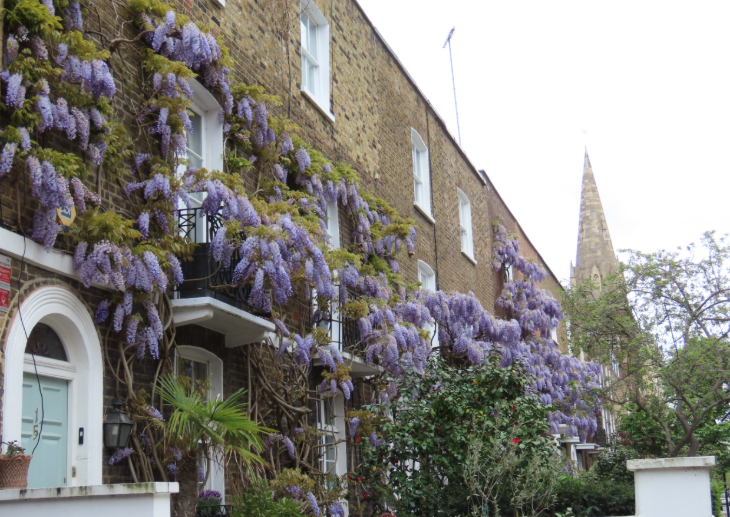
As the initial row of shops and restaurants on Park Walk gives way to residential properties, a whole row of houses appears to be held together by a single arm of wisteria.
Take a left along Elm Park Road and turn right at the junction with Old Church Street for a 15-minute stroll to...
16. Wisteria on Cheyne Walk
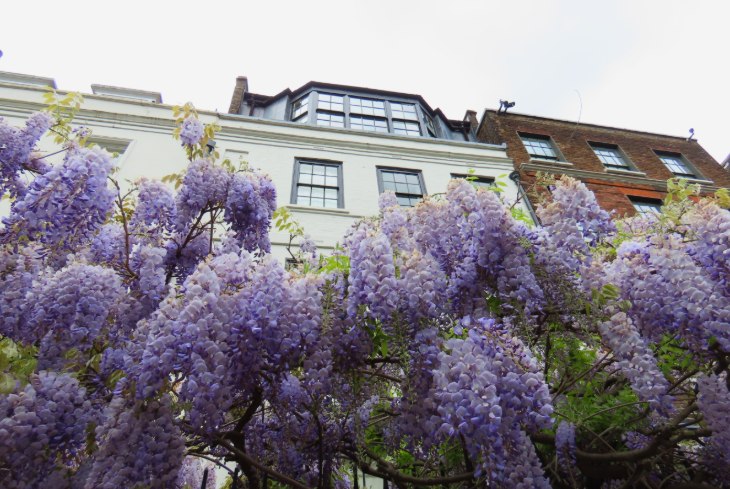
One of London's most famous wisteria spots is Cheyne Walk, a well-to-do street overlooking the Thames where several houses grow wisteria. Turn left at the bottom of Old Church Street and head east along Cheyne Walk, to find the first house of note just past the restaurant 50 Cheyne.
Continue along Cheyne Walk, crossing the junction with the Albert Bridge. You'll spot more wisteria dripping from the ornate metal railing of a first floor balcony, and a few steps further, another house is coated almost top-to-toe in the plant.
Continue east along the river, passing the boundary wall of Chelsea Physic Garden, before turning left onto...
17. Wisteria on Swan Walk
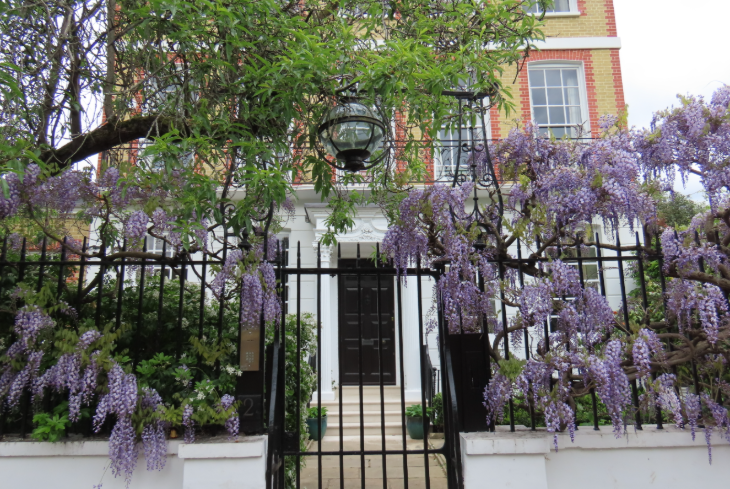
Before you reach the main event on Swan Walk, swing right onto Dilke Street and peep left onto Clover Mews, where a gorgeous pastel pink frontage is framed with lilac wisteria (though note that Clover Mews is a private road, so refrain from venturing up it).
Back up on Swan Walk, another standalone house, which wouldn't look out of place in Bridgerton, showcases an abundant wisteria along its black metal railings.
From the north end of Swan Walk, take a five-minute walk to:
18. Wisteria on Redburn Street/Radnor Walk
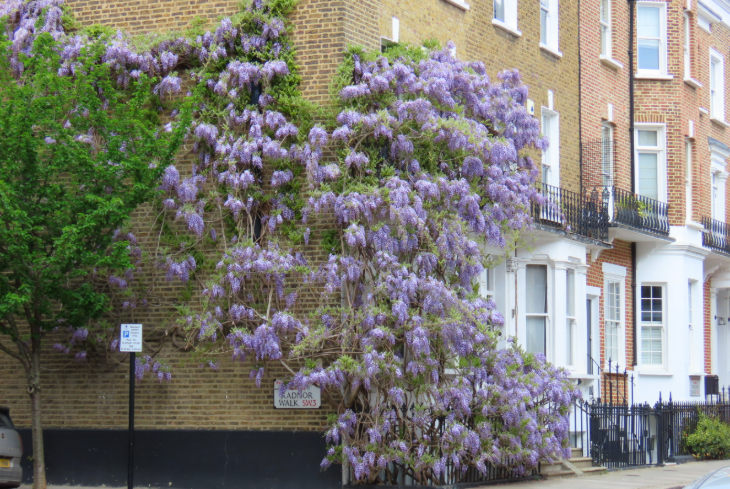
At the junction of these two quiet residential roads (best approached from the western end of Redburn for the full effect) a wisteria bush engulfs the brick wall of an end-of-terrace house: from certain angles, it appears to be swallowing the house entirely, and the wall-mounted road name sign only makes it more photogenic, somehow.
From here, it's a mere three-minute walk to the final stop on our route:
19. Wisteria on St Leonard's Terrace
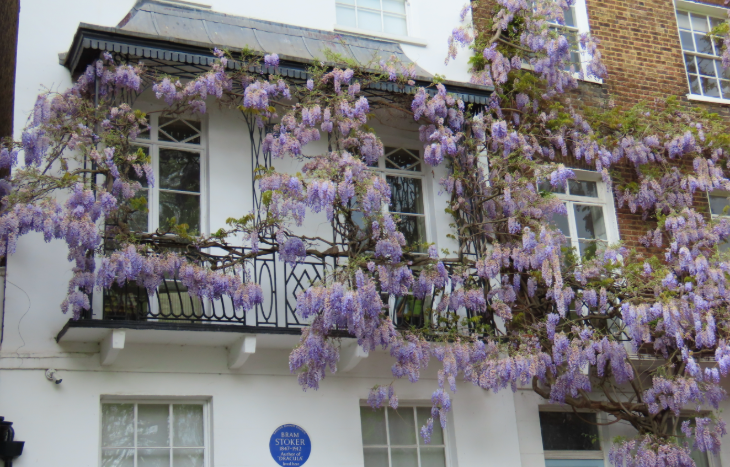
For those who like their horticultural whimsy with a side of horror, the house which bears a Blue Plaque dedicated to Dracula author Bram Stoker also has a well-established wisteria creeping up its frontage and along the ornate metal balcony.
That's the end of our wisteria walking tour. From St Leonard's Terrace, it's a two-minute walk back to King's Road with its ample cafes, restaurants and bus route, and a five-minute walk to Sloane Square station.
Of course, this is a mere smattering of London's wonderful wisteria offerings — you can find more here. Particularl highlights include Fuller's Brewery in Chiswick, the grounds of Fulham Palace, and Eastcote Manor in Hillingdon. But trying to fit those into a single walk would be quite the feat.
All photos in this article by Londonist.