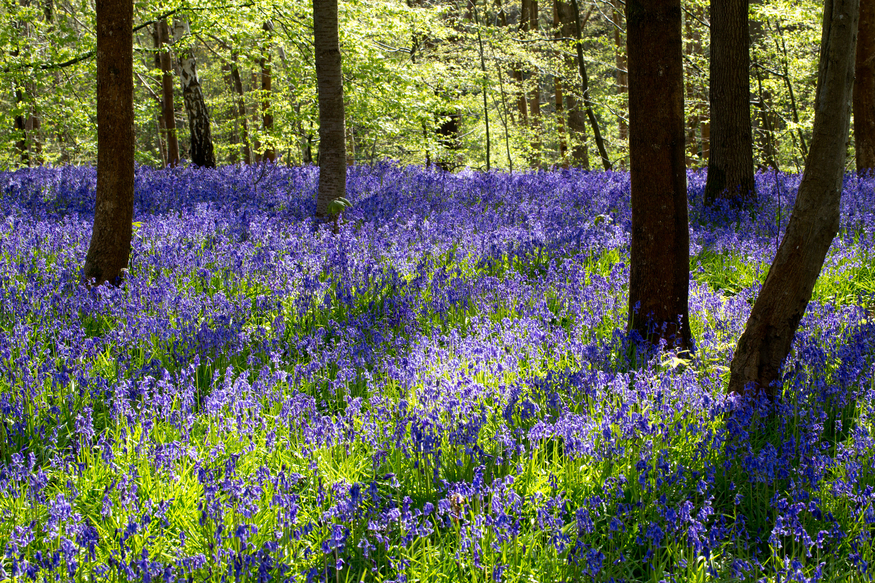
Being a native wildflower, bluebells can pop up almost anywhere. But if it's lilac-hued carpets of blooms you're seeking this spring, read on for some of our favourite places to see masses of bluebells in London and nearby.
When is bluebell season in London?
April into May is peak bluebell season (9 April is the average flowering date, according to the Woodland Trust), though exact dates depend on factors such as the weather — a milder winter means earlier bluebells. Once they're out, you've got a fortnight or so to see them at their finest.
Can I pick bluebells?
No, please don't. Native English bluebells are a protected species, meaning it's prohibited to dig up or remove a plant or bulb from the countryside.
Be careful not to trample on them either; sticking to footpaths is best. Once trampled, a bluebell plant can take four-six years to recover and flower again. The National Trust offers advice on how to admire the flowers without damaging them.
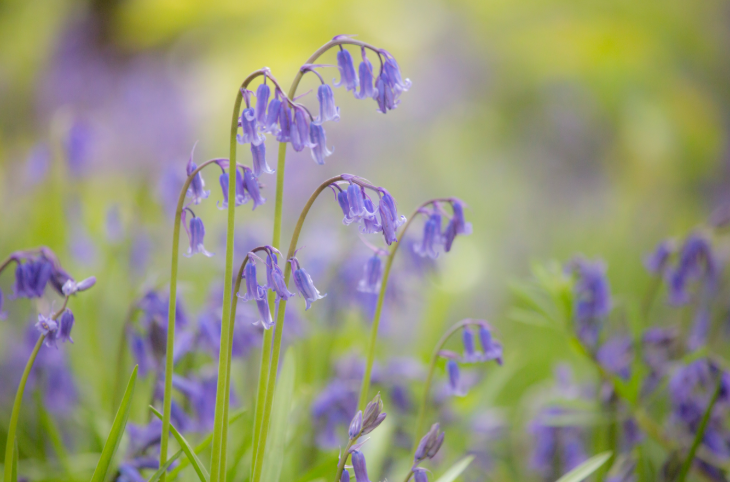
Bluebells in Richmond Park
Although better known for its azaleas (which also flower around this time), Richmond Park's Isabella Plantation has a decent bluebell population too — one of the footpaths is named Bluebell Walk. Head for the wilder fringes of the managed garden and into the woodland to get the best glimpses.
Bluebells in Highgate Wood
In north London, the ancient woodland of Highgate Wood is one of the best options for bluebell bothering; the City of London Corporation, which manages the space, has marked the bluebell areas on its official map of the wood. Head for the north corner of the park, and enter via the Cranley Gate or Bridge Gate to be closest to the action (nearest stations are Highgate and East Finchley).
Bluebells in Oxleas Wood, Eltham
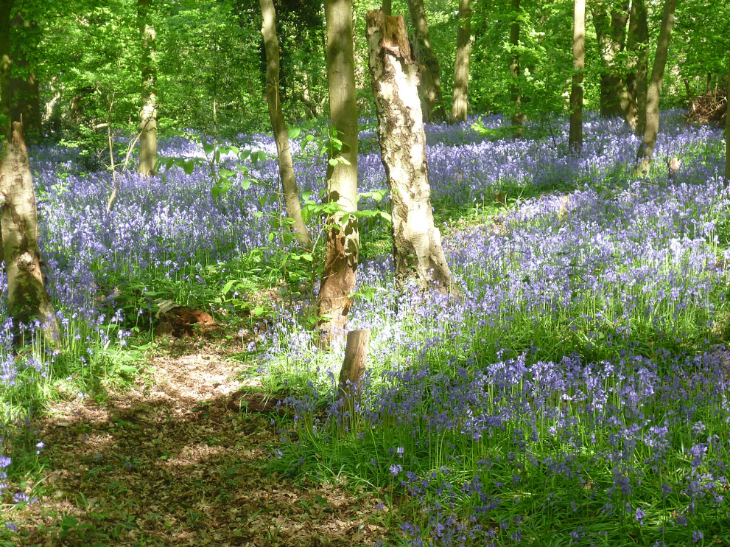
The ancient woodland of Oxleas Wood is home to many surprises, not least a whopping great castle and a very good cafe. But in late spring, bluebells take centre stage, as the forest is carpeted in them. The area is on the Green Chain Walk, so can be incorporated into a wider spring exploration of the area, or enjoyed alone (or as part of a visit to the aforementioned castle). London Wildlife Trust sometimes runs bluebell walks at Oxleas Wood during flowering season too.
Bluebells in Wanstead Park
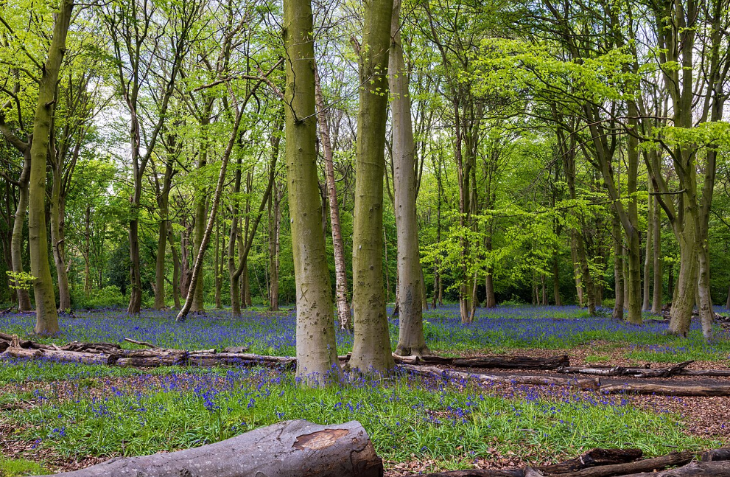
The Chalet Wood area of Wanstead Park is home to sufficient bluebells to have inspired this beautiful poster, designed by local artist Helen Rowe.
Bark footpaths are laid among the trees, making it easy to wander past the bluebells and photograph them without the risk of trampling. Wanstead Wildlife has more information on the measures being taken to care for and cultivate the bluebells.
Bluebells at Hole Park Gardens, Kent

A bit further afield, the 15-acre Hole Park Gardens in Kent is known for having one of the best bluebell displays in the southeast. Keep an eye on their bluebell barometer — which appears on the site every year in early April — to check on the progress of this year's carpet of bluebells. Dogs on leads are welcome.
Bluebells at Emmetts Garden, Kent
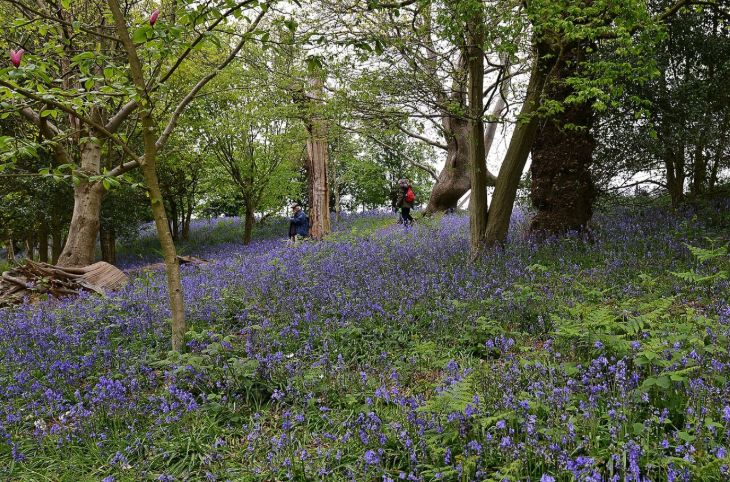
National Trust property Emmetts Garden — a spit from the London-Kent border — has thousands of bluebells blanketing a hillside, to the extent that it's been designated a Site of Special Scientific Interest.
Rhododendrons, tulips and daffodils are also prevalent at Emmetts, making it a vibrant spot for a spring day out, though the car park and cafe tend to get busy at weekends. Dogs are welcome here too. Nearby Chartwell, former home of Winston Churchill, also performs well on the bluebell front, and again, dogs are welcome.
Bluebells at Riverhill Himalayan Garden, Sevenoaks, Kent
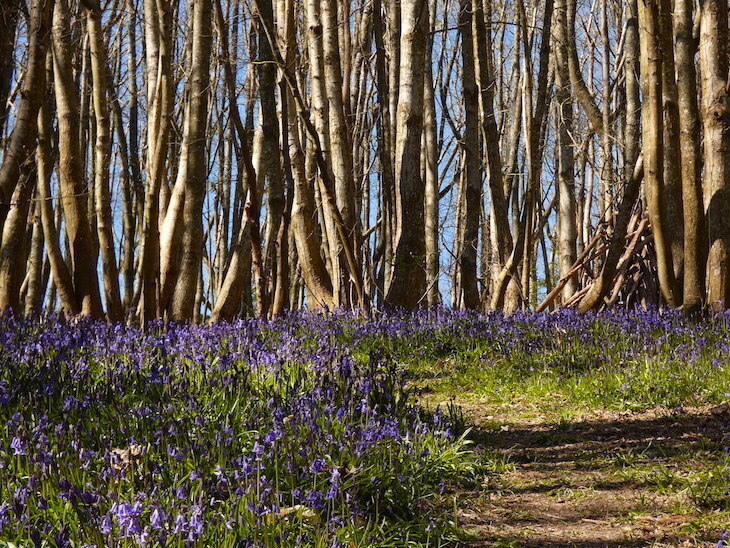
The main reason for visiting this hillside garden is the views from the top (and the intense calf workout on the way up). But for a couple of weeks each year, the bluebells are what people are here to see.
The sloped woodland is home to thousands — dappled with sunlight as it streams through the tree canopy overhead. Footpaths wend their way through the woodland, meaning you can get up close to the bluebells without stepping off the paths. One more thing; this particular woodland is home to a part-time yeti* — you've been warned.
A bluebell-inspired craft fair usually runs alongside the bluebell festival, with artworks, homewares and gifts on a bluebell theme; check the website for this year's dates. Dogs on leads welcome.
(*Weekends and school holidays only)
Bluebells at Sheffield Park and Garden, East Sussex
View this post on Instagram
Sheffield Park and Garden is another National Trust property replete with bluebells in the spring. The sizeable estate has several bluebell clusters, in the manicured gardens, growing wild in the woods, and out in the East Park, where dog walkers are welcome.
London's cemeteries and cemetery parks are also bluebell hotspots. Though they don't appear in the same numbers as they do at other places on this list, they do spring up prettily among the gravestones and tombs. Tower Hamlets Cemetery Park is a particular favourite with bluebell hunters. National Trust properties are also replete with bluebells.