Ellie Livingstone writes about what it's like being an aquarist at Sea Life London Aquarium.
I can't remember a time I didn't love animals. Some of my earliest memories involve watching insects visit flowers, and playing with stuffed animals.
My interest in marine life began through family holidays. Each year we would visit Wales, specifically Cardigan Bay. Watching out for porpoises off the coast and looking for shore and edible crabs in the rock pools inspired me.
"Sea creatures can only be out of the water for a short amount of time, so moves have to be quick"
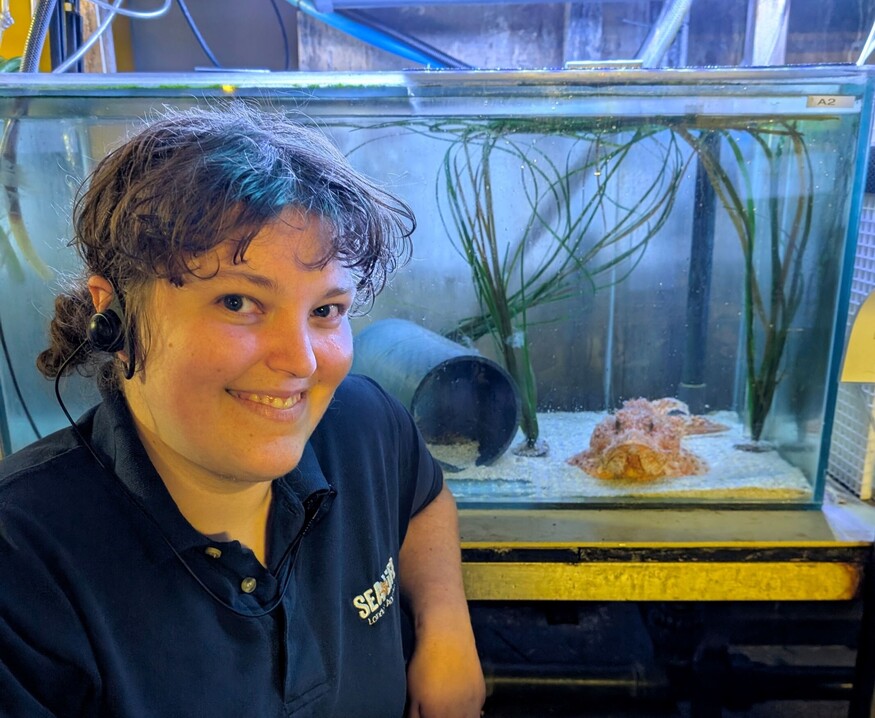
Working as an aquarist, no two days are alike. There is always something new going on! However, an example day begins at 8am, with checking all the animals and the life support systems that keep their habitats functioning. Then it will be the first feed for smaller animals that need many feeds throughout the day, and onto the first cleans. Then it will be moving onto maintenance, for example cleaning pumps or probes, and any healthcare updates or treatments needed for animals, before a second feed for smaller animals... then lunch for the aquarists! After lunch it's often the main feeds for bigger animals for that day, making sure everyone has access to what they need and recording who has eaten what. Then it's further cleans, before final checks of the animals and life supports, and a final feed for the small animals.
Sometimes we need to move a larger animal — like a southern stingray or a zebra shark — and that's always a challenging process. But with good teamwork and planning it goes smoothly. Sea creatures can only be out of the water for a short amount of time, so moves have to be quick. We regularly practice 'dry runs' so we know what to expect for actual moves. Communication is key, as it will take four to six people to actually lift and move an animal, with others moving ahead to open doors and keep the path clear.
"The largest individual in an all-female group will turn into a male"
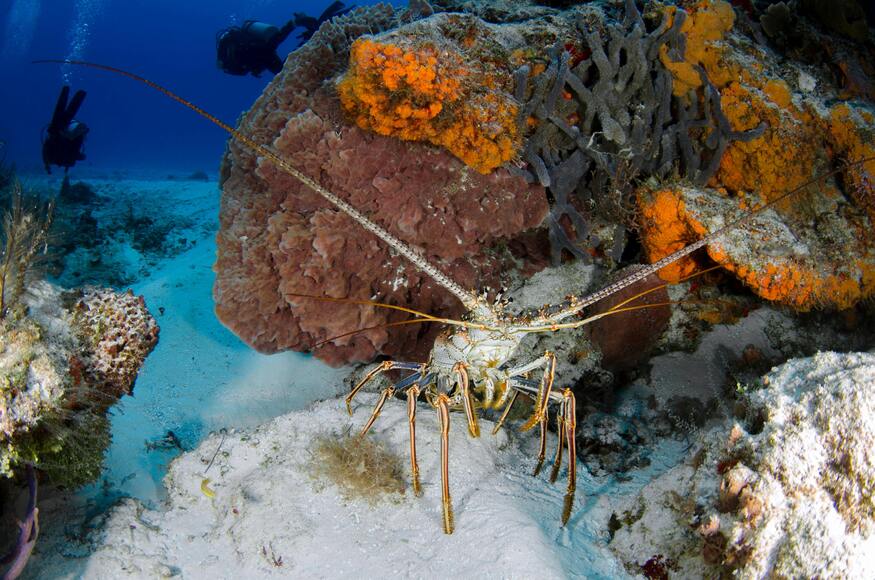
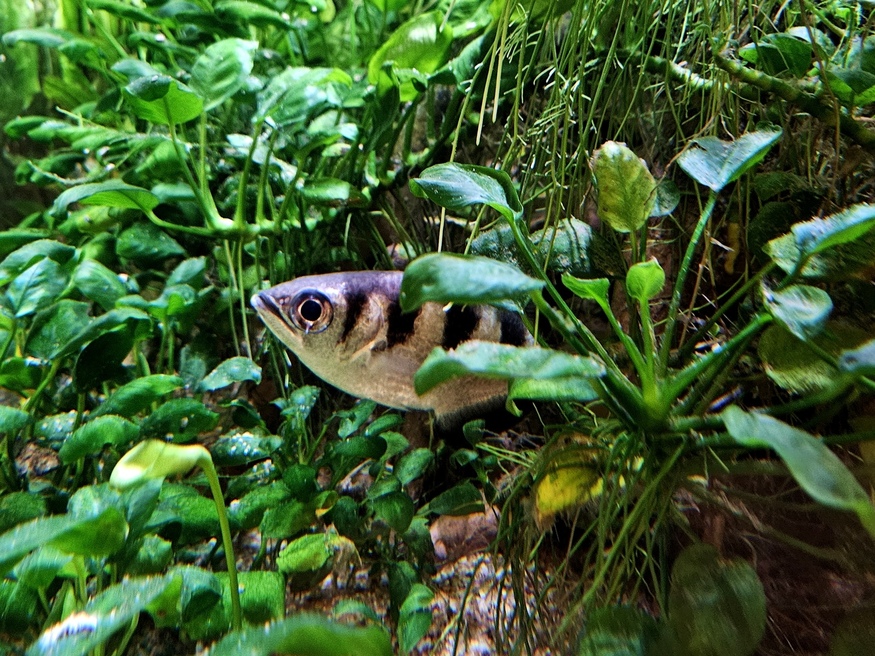
There are so many big characters and fascinating species. My favourite changes very regularly. At the moment I have a soft spot for Kioti, our oldest Spiny lobster (Palinurus elephas). She's very bold, often patrolling her habitat and keeping the three younger lobsters in check, and always comes over to investigate when the tank is being cleaned. Spiny lobsters are a really cool species, native to the UK, although sadly they're vulnerable due to fishing pressures. Working with archerfish (Toxotes jaculatrix) would often lead to funny moments. They are able to shoot a jet of water with incredible accuracy. In the wild they use this to hit their prey, insects, but in the aquarium they would use it to hit me as a way of demanding food. So I had to be very careful when walking past their habitat or else I'd end up wet!
One of the most surprising native species we have in the UK has got to be the cuckoo wrasse (Labrus mixtus). They're so brightly coloured — females being a peachy orange with black and white markings, and males being deep blue and orange. They're also protogynous hermaphrodites; all individuals start life as female but the largest individual in an all-female group will turn into a male! The physical process takes over half a year to complete, but behaviourally they fully transition much sooner, acting as a male.
"I often get asked how I tell animals apart"
We love being asked questions by our visitors. We've recently introduced the Yoto Sea Life Discovery Tour, an audio adventure designed to educate, entertain and answer some of the common questions our visitors have about the creatures they are seeing. One of the questions I most often get asked which isn't answered through the tour, is how I tell animals apart. For most individuals it will be thanks to little changes in their markings (you quickly learn where to look to spot differences), but for others it will be behaviour as individuals can have distinct swimming patterns.
Sea Life London Aquarium is open daily.