It is one of the single most startling visions in fiction: the door knocker of Ebenezer Scrooge shapeshifting into the visage of his accursed — and 'dead as a door-nail' partner, Jacob Marley — thus setting into motion the greatest ghost story ever told.
But fictional though it undoubtedly is, could it be that the ghoulish piece of door furniture exists in some form? Is it, in fact, possible to track it down in today's distinctly non-Dickensian capital?
When he penned 'Carol in a fitful burst of creativity in 1843 — a performance matched only by Londonist's listings team in the run-up to the festive period — Dickens lived at 1 Devonshire Place in Marylebone. Perhaps this journey to find Scrooge's door knocker ends where it began? Well, actually no. It'd be nice to think that an anthropomorphic knocker might still be found dangling from the front door which the restless author would've constantly zipped in and out of, for his creative-juice-brewing wanders. But there' no knocker, door — or indeed house: that was demolished in the 1950s. Photographs of the old place don't appear to picture a knocker anyway.
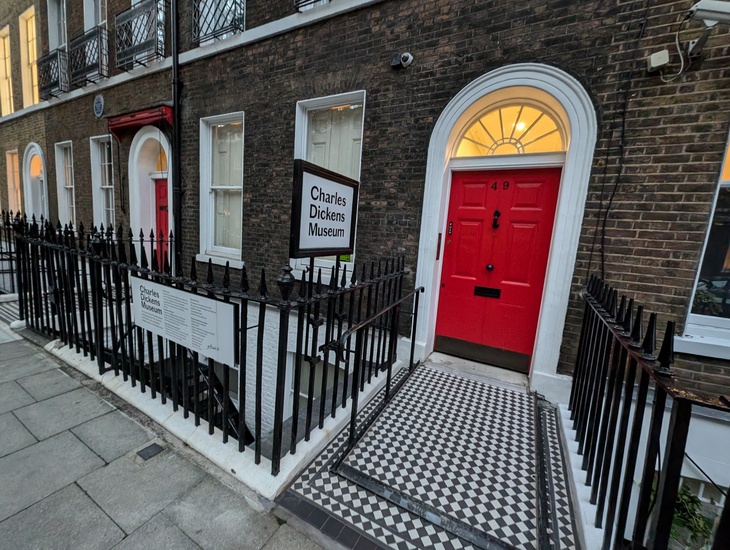
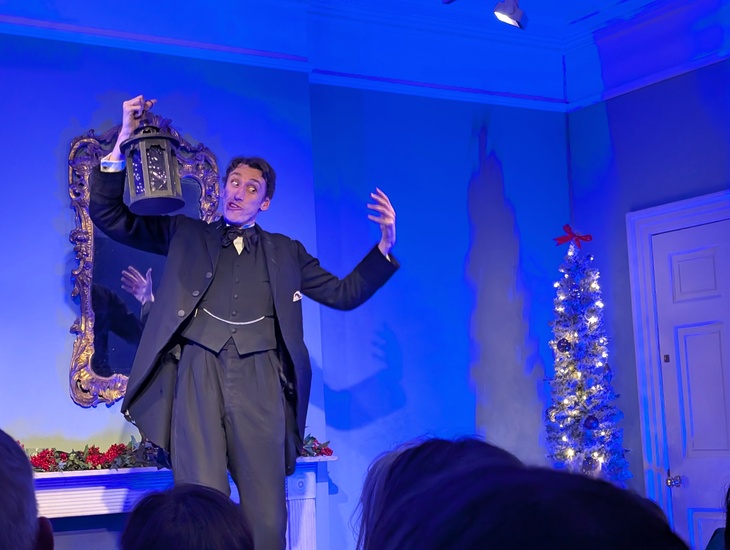
Might, then Dickens' existing home at 48 Doughty Street — now a charming house museum flogging replica first editions of A Christmas Carol, and where I recently saw James Swanton perform his magnetic one-person adaptation of the book — reveal any clues? A promising start: there is indeed a door knocker. But it's distinctly lacking any kind of face. The museum does have a genuine window frame taken from Dickens' childhood home on Camden's Bayham Street — the one that inspired Bob Cratchit's house — but it's the wrong bit of building, and the wrong character too.
Back to the drawing board. If Dickens' former digs don't throw us a bone, then what about Scrooge's? Dickens was habitually coy when it came to pinpointing exact addresses in his novels, but it's widely believed Scrooge lived his miserly existence on (or around) Lime Street, a stone's throw from Leadenhall Market — where that prize turkey twice the size of Tiny Tim might also have been sourced.
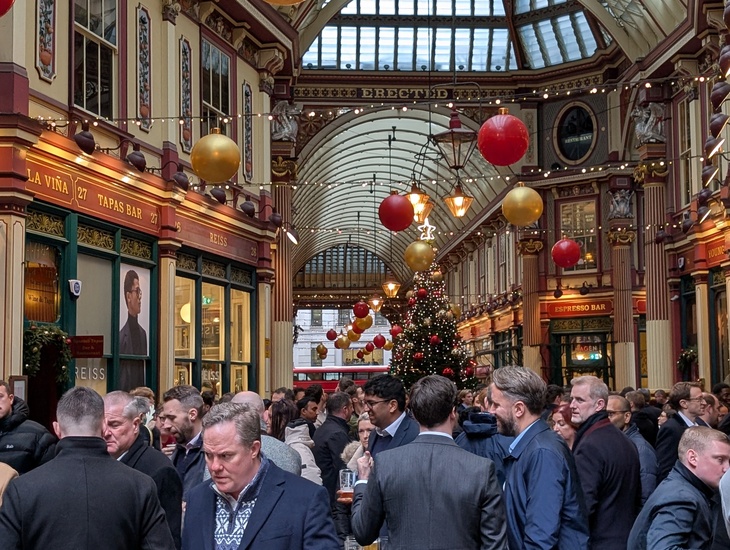
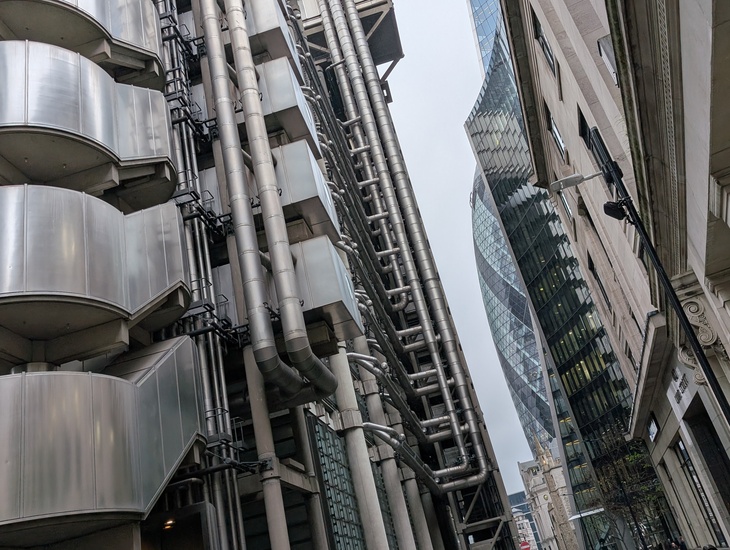
Leadenhall Market itself resounds with Christmas spirit on a late December afternoon — even if the City slickers are chugging pints of cold Neck Oil rather than steaming bowls of Smoking Bishop. What's more, Brabant Court, just off Lime Street, contains a Victorian townhouse not unlike one Scrooge might dwell in (no door knocker though). As for Lime Street itself? The wrecking ball has beaten me to it again: this place is anything but the 'lowering pile of building up a yard, where it had so little business to be, that one could scarcely help fancying it must have run there when it was a young house, playing at hide-and-seek with other houses, and forgotten the way out again.' If you asked ChatGPT to come up with the least Dickensian building possible, it might produce something similar to the gleaming metal spines that make up Lloyd's of London. Bah Humbug!
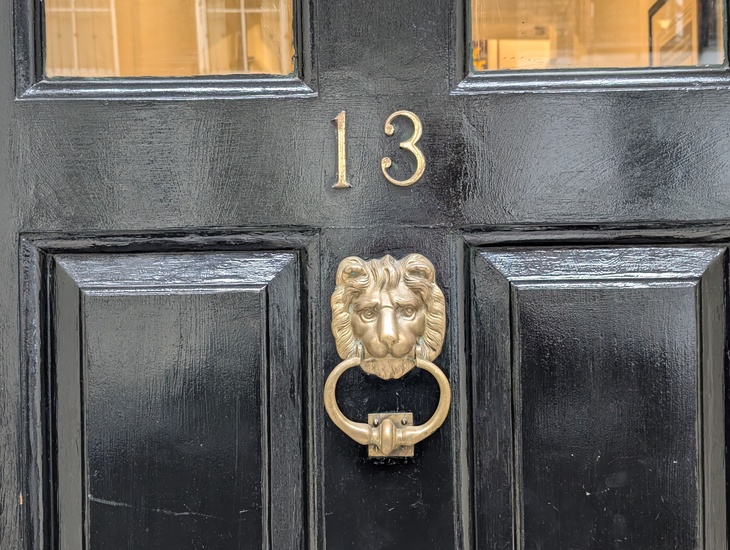
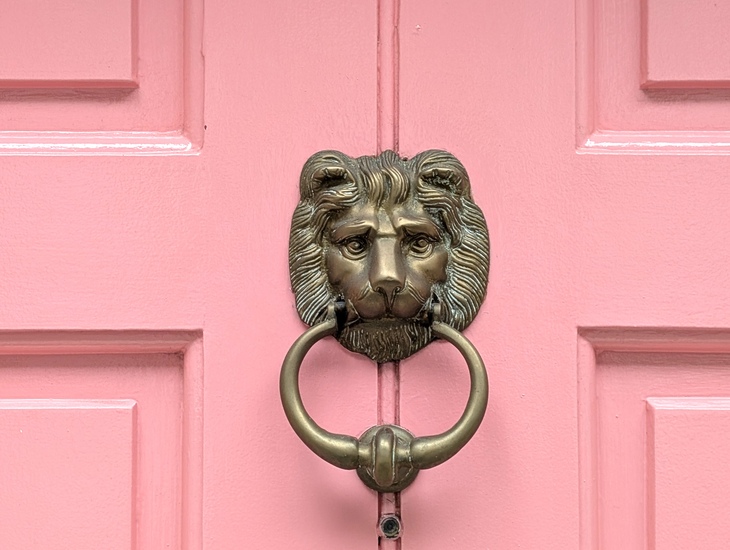
Time to defer to your friend and mine, the World Wide Web, where a video from the redoubtable Joolz Guides suggests that Dickens actually took inspiration for the Marley-shaped door knocker from an unusual one he spotted around the corner from Charing Cross station, which resembled the face of a man. I've been such a fool! Further research reveals that in October 1924, one T. W. Tyrell wrote in the Dickensian — a Dickens-based periodical — The 'Marley' Knocker, an essay claiming the knocker "...hung on the front door of No. 8 Craven Street when it was occupied by one Dr. David Rees in the 1840s."
To Craven Street, then — where yes! fanciful knockers festoon the door fronts in their dozens. Some have faces too — lions mostly. Except! When I reach Number 8 — the address where Dickens' knocker hung — the house has been long-demolished. Turns out it hardly matters anyway; legend goes that the knocker was removed sometime in the 20th century (vague much?), after the owners got sick of people coming to see it. Quite possibly an old wives' tale, but certainly no such knocker can be found here now.
Time, perhaps, to retire with a saucepan of gruel, and the 1951 version of 'Scrooge', starring Alastair Sim. For many, this is the quintessential adaptation. And then, 11 minutes in, something happens: Sim walks off what is clearly a film set, and into a real East End street — up to the door of a handsome building where the infamous knocker scene plays out. A quick check: 8 Scandrett Street in Wapping did indeed star in the exterior shot of Scrooge's lodgings. The game's afoot! (wrong book but this is getting exciting).
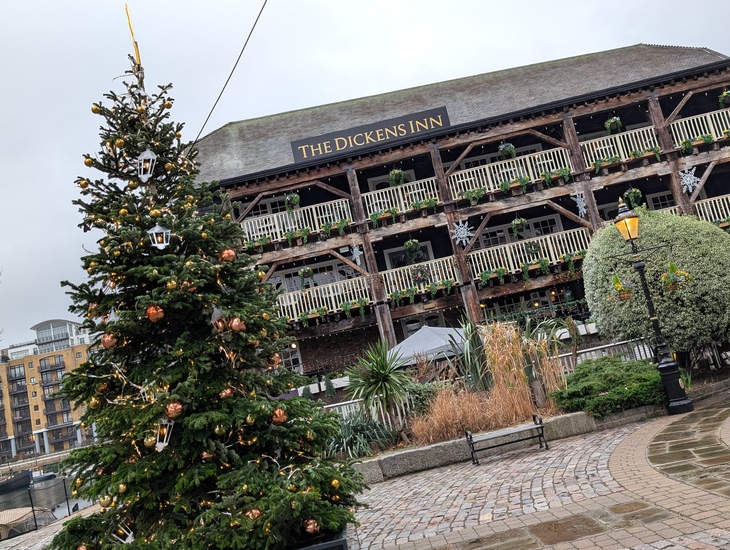
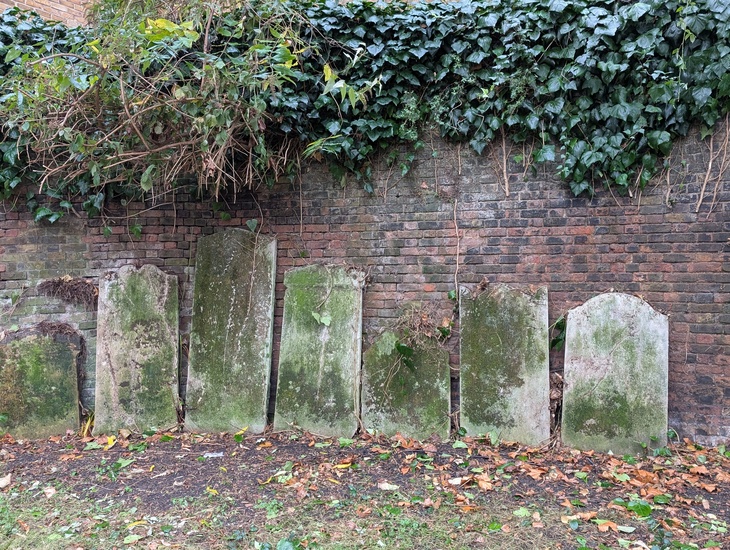
En route to Wapping, I pass the Dickens Inn — not an authentic Victorian pub, but looking mighty festive all the same — and things are suddenly feeling very right. Approaching Scandrett Street, I notice a small cemetery running along one side: a muddy plot with railings running around it, and snaggletoothed gravestones against the walls: most of the names have been worn away by the elements. It's exactly the kind of spot where Scrooge might've had his awful epiphany moments before waking up back in his own bed.
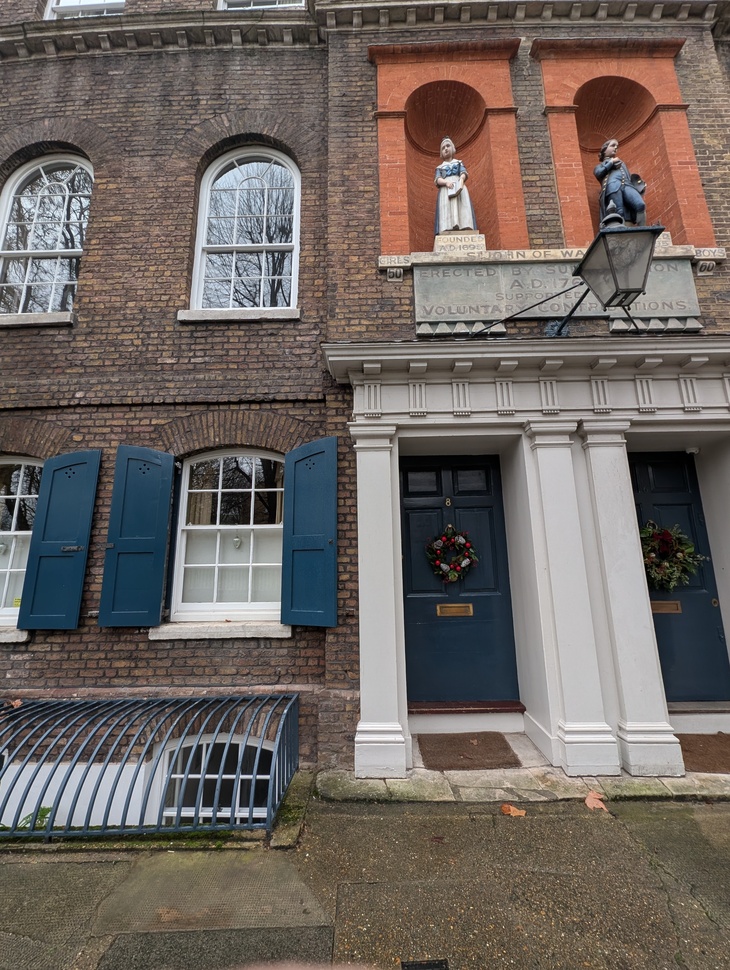
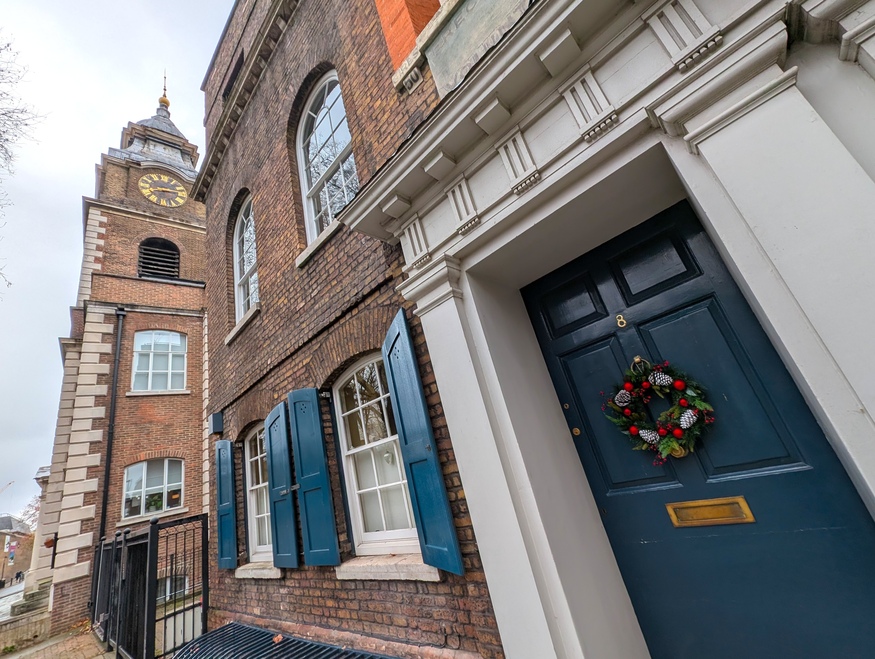
The cemetery faces those lodgings from the 1951 film: same handsome shutters on the windows, same lintel above the door, same St John's Church tower glowering down. In fact, aside from a few minor details (and the lack of snow on the ground), it looks identical to how it did in Scrooge almost 75 years ago.
Not only that, but there's something not shown in the film — the figures of a girl and boy perched above the doorway (they're here because this is the old St John of Wapping School, but I'm going to pretend these are the redeemed versions of Want and Ignorance, who terrify Scrooge mid-way through the story).
And now for the knocker. Except for I can't see it. And for a rather lovely reason: it's enveloped in a shimmering festive wreath. I'm certain it's not the knocker used in the film anyway; it's a different shape, and thinking about it, the bit with Marley's face was surely shot in a studio. But you know what, it doesn't matter. For all intents and purposes THIS IS Scrooge's house, his door — and the closest we'll ever get to his haunted knocker. What's more, this place is brimming with all the festive joy of the reformed miser who suddenly feels light as a feather and happy as an angel, God bless us, every one!
All images: Londonist