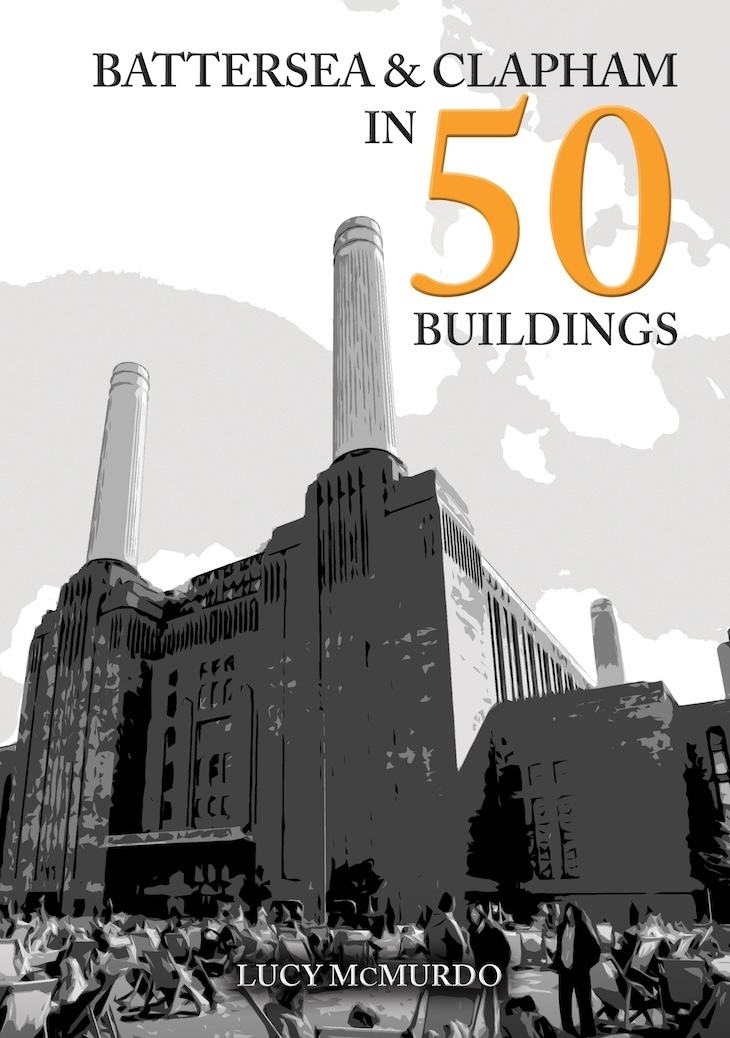
Author Lucy McMurdo picks 10 highlights from her new book Battersea and Clapham in 50 Buildings.
Battersea and Clapham have been in existence for hundreds of years. In line with much of the capital, however, they grew dramatically in the 19th century. They therefore boast wonderful Georgian and Victorian housing, much of which is terraced. They are also renowned for their impressive civic and religious buildings as well as fine centres of entertainment and public houses.
It is very difficult to come up with a list of 10 favourite buildings as so many have features that are unusual and/or attractive, but the following appeal to me and are particularly iconic buildings of these areas.
Holy Trinity Church
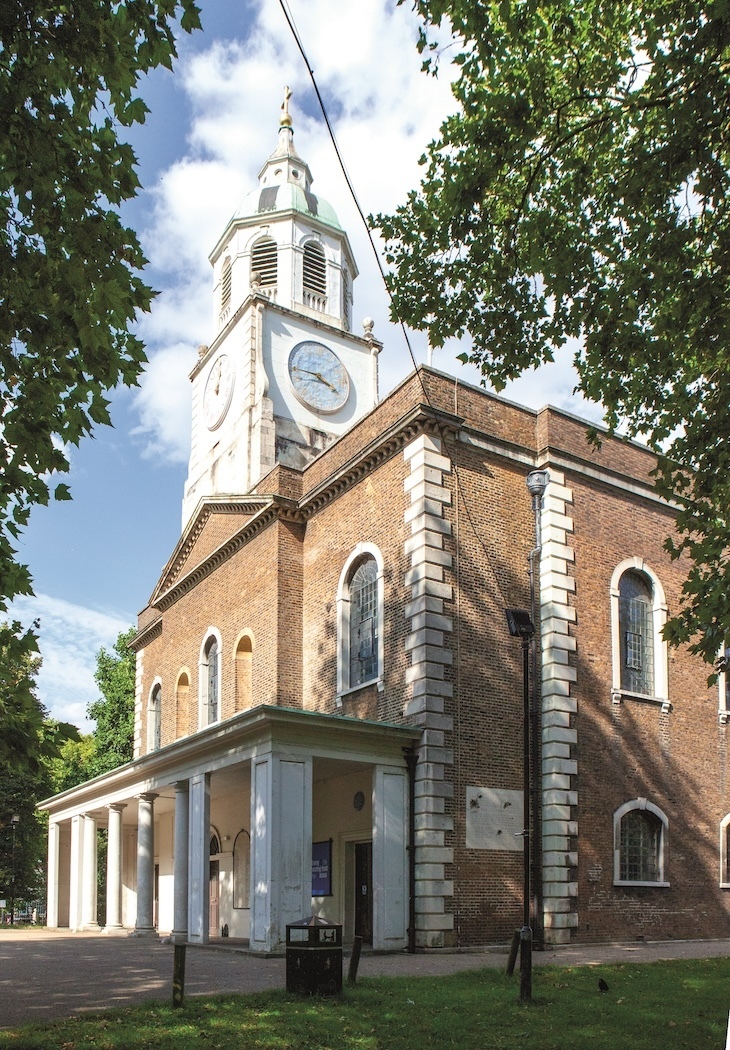
Dominating the north side of Clapham Common, Holy Trinity Church is certainly a major landmark of the area. The large church opened in 1776, replacing Clapham's older parish church in order to meet the needs of Clapham's ever-increasing population. Although its interior has been altered in the intervening years it still retains original galleries and is a good example of a simple classical church of the period. The church has very strong connections with the Clapham Sect, an evangelical group comprising wealthy industrialists, MPs, bankers, clergymen, writers and government officials who campaigned to abolish slavery and the slave trade. Perhaps their best-known member was the MP William Wilberforce who put forward their case in Parliament. Today, one can find plaques commemorating the Sect's members on the wall outside the church.
Former Clapham General and Provident Dispensary
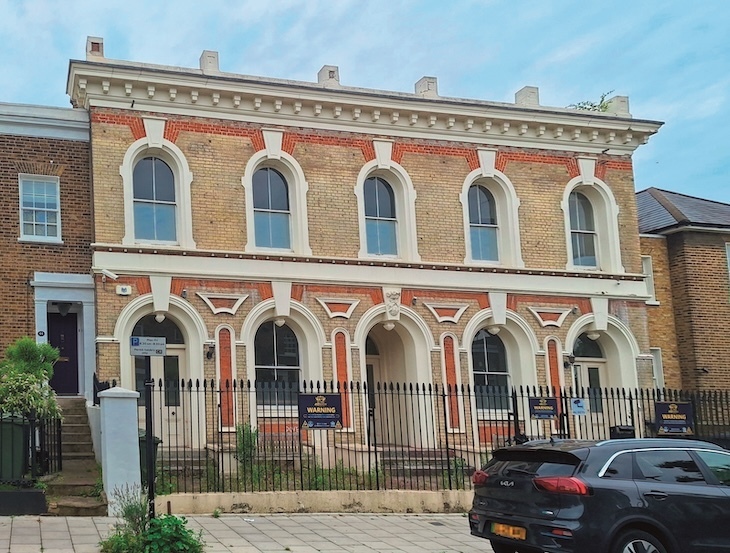
It is certainly unusual to find such a splendid and highly decorated Italianate palazzo in the middle of a residential street and, moreover, to discover that the building was originally built in the 1850s as a dispensary providing healthcare for the poor. Paid for by public subscription and designed for free by the famous architect James Thomas Knowles Snr, the dispensary is one of the capital's earliest surviving dispensaries and carries Grade II listed status. As a 'Provident' dispensary, paupers and seasonal workers received free healthcare through charitable donations and parish subscriptions, whilst those in work and mainly able to pay for their families had to pay a weekly subscription to access care at the dispensary. The building carried on in this way for almost a century, after which it became the home of the London Russian Ballet School. Recently, John Rigby & Co, the internationally renowned gunmakers, purchased the building for its showroom, as a production workshop and a training academy for apprentices.
Cedars Terrace, Clapham Common North Side
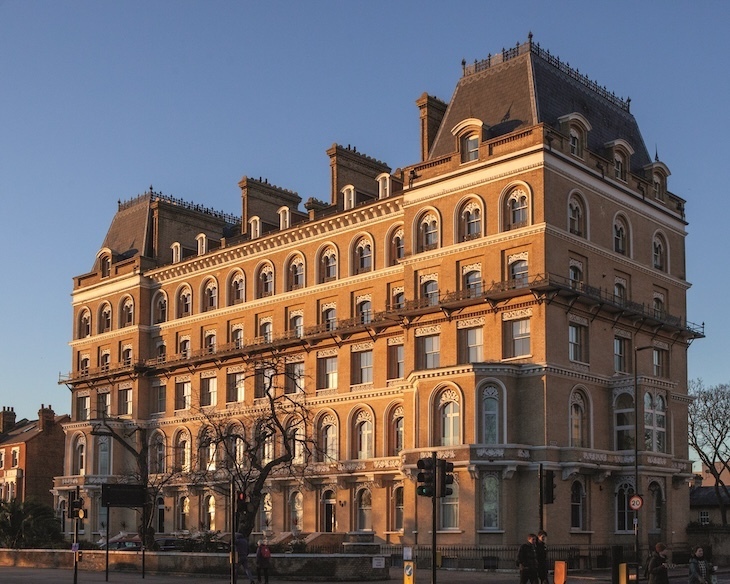
Designed in the French Renaissance Revival style and built in 1860 these two magnificent apartment blocks are positioned rather like a gateway at the junction of Clapham Common North Side and Cedars Road. Five to six storeys high and embellished with cast-iron balustrades, steep-pitched roofs, ivy leaf decorations and elegant windows, they dominate the skyline. When the sun goes down in the evening their façades change colour, and they are extraordinarily beautiful. The architect of the terraced apartments, James Knowles Jnr, had intended to build an upmarket estate between Clapham Common and the Thames but his plans were thwarted by the railway builders and so only these apartments and some fine houses in Cedars Road were ever developed.
The Shaftesbury Park Estate, Battersea
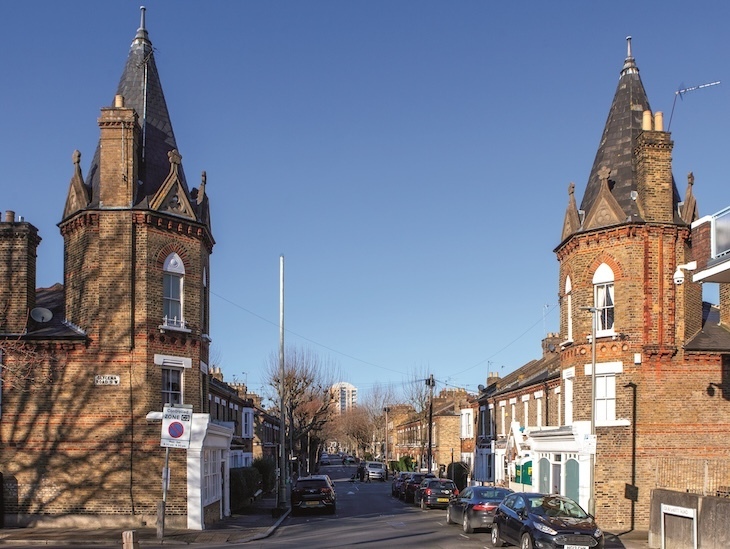
Built to provide affordable, healthy and quality homes for the respectable working poor, the Shaftesbury Park estate was developed by the Artizans', Labourers' and General Dwellings Company and constructed from the 1870s. Due to rapid industrialisation throughout the 1800s and with Battersea's ever-growing population there was a distinct lack of decent and sanitary housing in the neighbourhood and many people were living in vastly overcrowded accommodation. The Shaftesbury Estate not only provided good housing, but it was also attractively designed, composed as a grid with tree-lined streets, filled with low-rise terraces of brick cottages each slightly different in design. Today, as when they were first constructed, the houses are highly sought after – renowned for their interesting and distinctive features such as canopied paired front doors and pointed Gothic arches of red and black brick. What makes them and the estate so visually charming is the overall uniformity of these modest but well-designed cottages.
The Falcon, St John’s Hill, Battersea
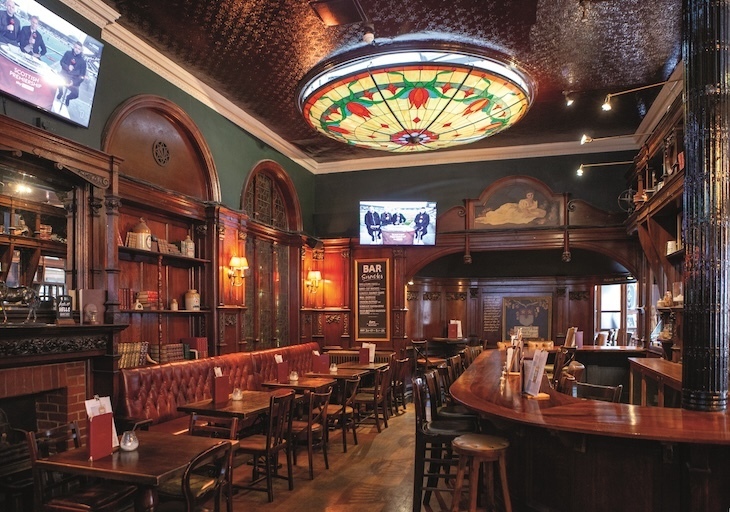
It is impossible to miss this fine example of a Victorian pub that sits beside Clapham Junction railway station. With its gorgeous, curved front the building straddles Falcon Road and St John's Hill and has the most attractive red brick and white stone façade. Its architecture undoubtedly reflects that of the Victorian age – boasting grand stone and granite pilasters, pediments and beautiful hanging lamps. With superb features internally too — original glasswork, partitions and fluted cast-iron columns — the pub certainly merits its Grade II listing and is described by CAMRA's Heritage Pub Group as being 'mightily impressive'. The Falcon comes under the umbrella of Nicholson's pubs and like many pubs in their portfolio is has its own delightful ambiance and distinctive style.
Former Arding and Hobbs Department Store
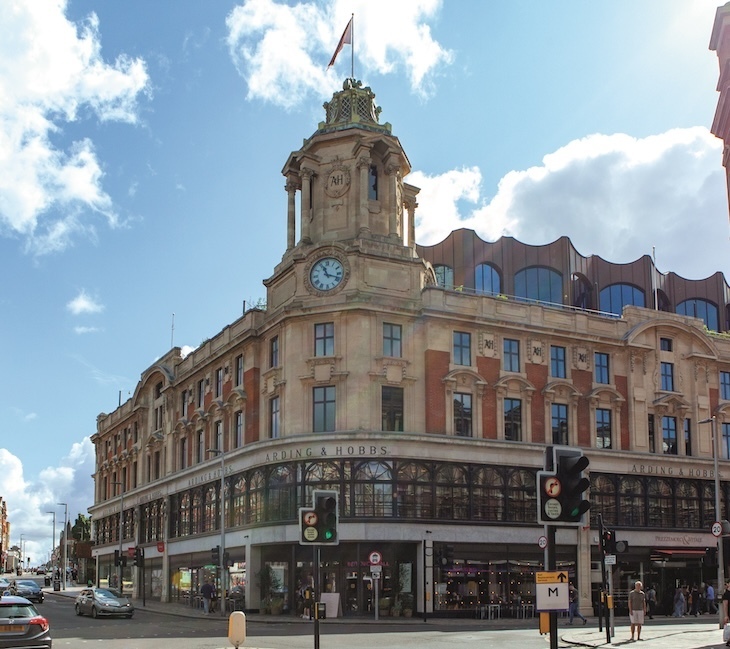
Arding and Hobbs, dubbed the 'Harrods of the South' began its life in Clapham Junction specialising in drapery and furnishings in 1885. It became an exceptionally successful retail centre in the late 19th century but was tragically burnt to the ground in 1909 in a dramatic fire. Yet within a year the store was up and running again; the new building was designed in the flamboyant Edwardian Baroque style and was both much larger and grander than its predecessor. Set on four floors in red brick and Bath stone with beautiful display windows it was built to rival the recently opened Selfridges store on Oxford Street. Thus much attention was given to its internal design and its range of departments and services to entice customers through its doors. The store remained in the hands of the Arding family until the late 1930s after which time it had several owners. In 2005 it was bought by Debenhams plc but after the company's collapse in 2020 the future of the store was put in jeopardy. Fortunately its new owner renovated the building, bringing it back to life and today it is thriving — containing shops, a health club, offices and eateries.
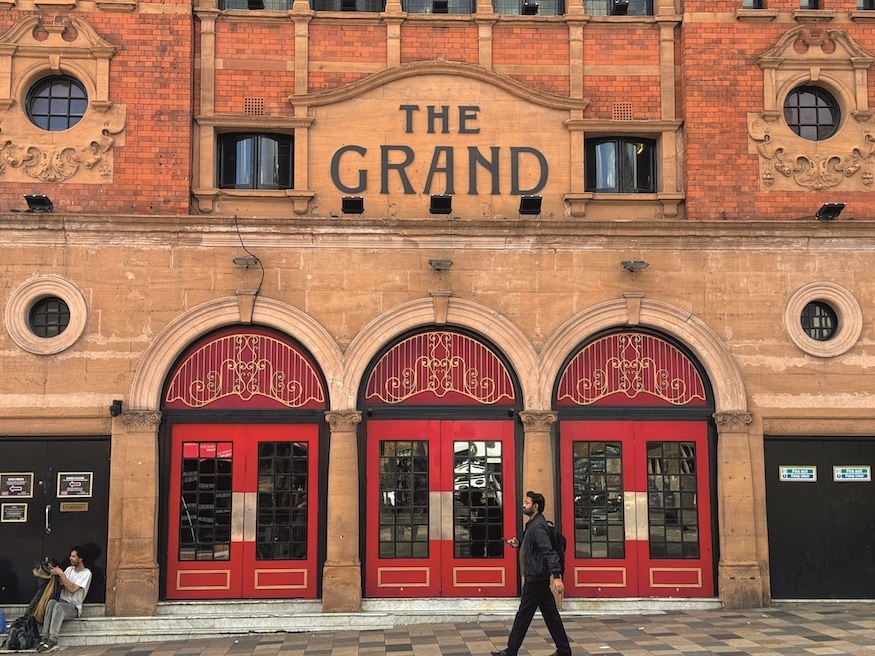
The Clapham Grand, Battersea
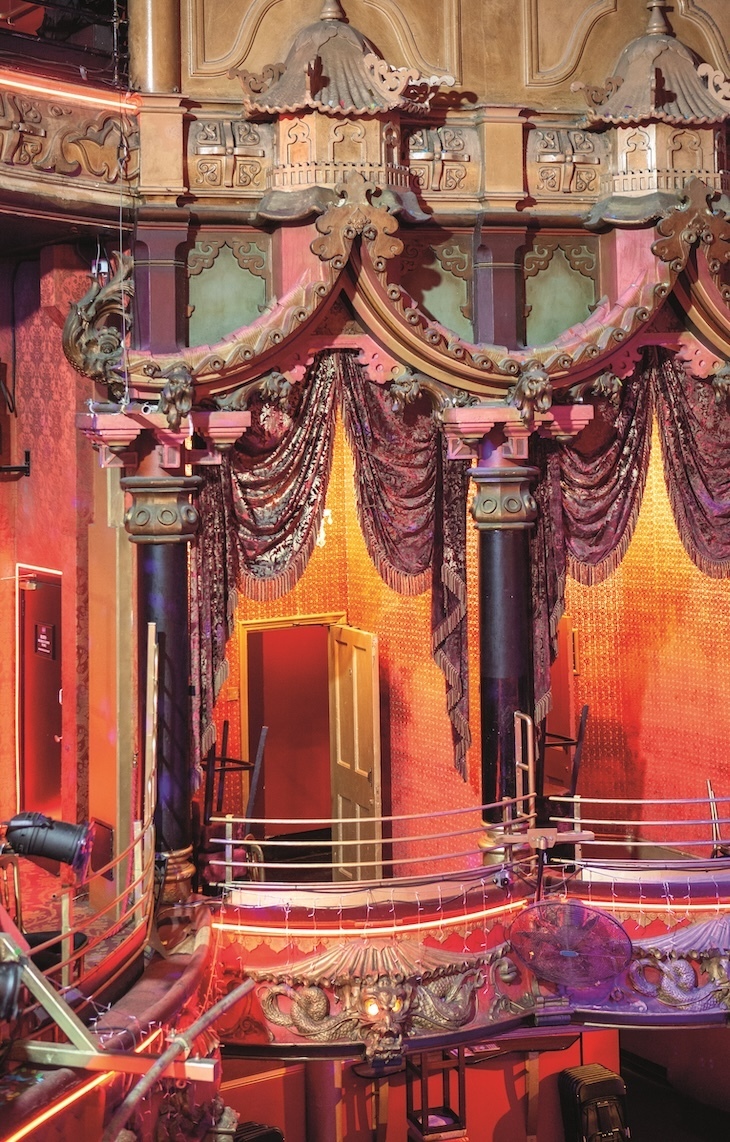
Known today largely for its live entertainment, the building began life in 1900 as the New Grand Palace of Varieties, set up by Dan Leno, one of the best-known music hall artistes of the day. Here, crowds saw their favourite stars, like Marie Lloyd, Charlie Chaplin and the comedian and acrobat Little Tich. Over time its role changed; it became a cinema in the 1930s and later a bingo hall. New owners restored and renamed the building the Clapham Grand in 1991 when it was transformed into a live music venue with acts like the Kinks and the Verve.
Following a period as a clubbing destination it returned to its roots in 2016 offering music hall and variety acts. Nowadays, it styles itself as a Palace of Modern Variety and crowds flock here at all times of the day and into the early hours of the morning. The venue offers live acts at their club nights, plus many other sorts of entertainment including brunch parties, theatre, drag shows, Bongo's bingo and comedy. The auditorium is not only vast but also highly decorated with dragon's heads and pagoda canopies above the theatre boxes and has a mix of spaces that lends itself to all types of entertainment.
The exterior too is outstanding, designed in the Colonial Indian style in red-brick and pink stone with two prominent domed, arcaded towers. It is a remarkable building in every respect.
Former Temperance Billiard Halls – Clapham and Battersea
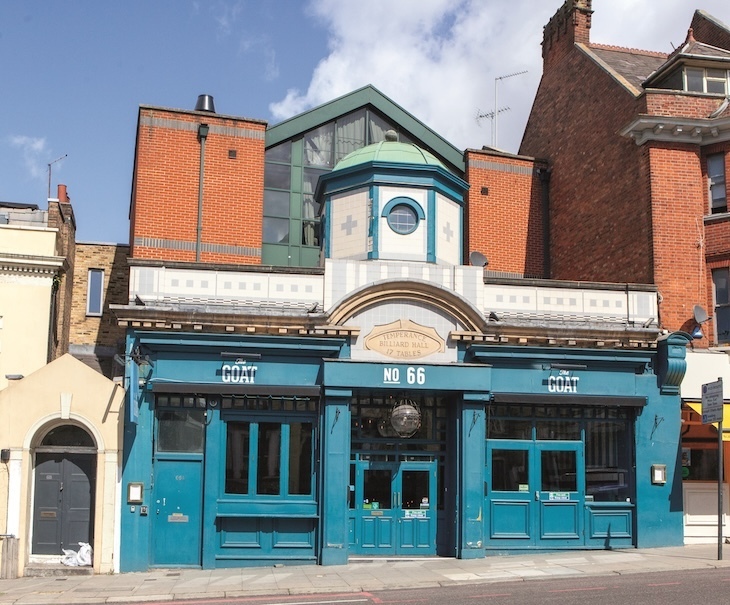
From the closing years of the 1800s and into the early 20th century there was a huge growth in the number of large public houses in both Clapham and Battersea, which unsurprisingly resulted in a marked growth in heavy drinking. To counter this rise the Temperance Movement erected Temperance Billiard Halls hoping to curtail the rise of alcoholism, particularly amongst the working classes. To attract customers to these 'dry' halls, many of the pub features (such as stained-glass windows and exquisite etched glass, tiles façades, marble, cast-iron and wooden furnishings) were replicated in the hope that the customers would feel at home and that the halls would provide a similar atmosphere to the drinking palaces they were used to frequenting.
Clapham's temperance billiard hall on Clapham High Street is unmissable with its curved roof, green tiling and art nouveau detailing, and today has been converted into residential housing. In contrast the hall in Battersea has become a restaurant and pub and is now called The Goat — somewhat ironic considering that its original purpose was to provide an alternative to the consumption of alcohol!
Battersea Power Station, Circus West Village, Prospect Place and Battersea Roof Gardens
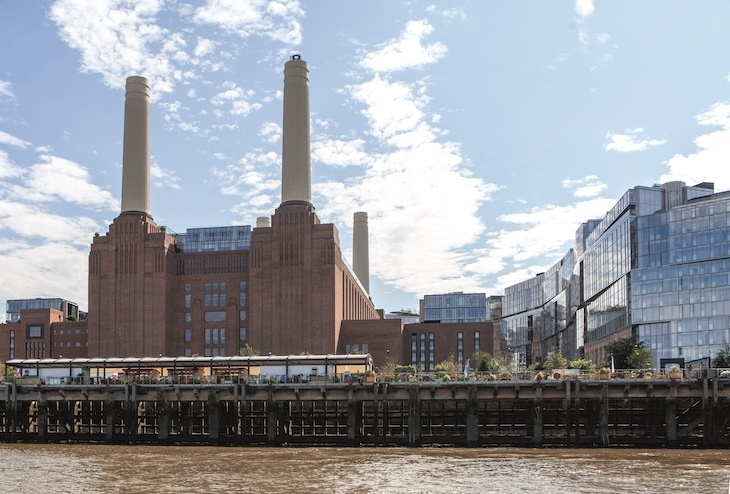
Battersea Power Station is one of London's most loved and cherished industrial buildings of the 20th century. Fans of Pink Floyd may well remember the cover of their 1977 album Animals, which featured an inflatable pig floating between two of the power station's chimneys.
These same chimneys have dominated the capital's skyline since the 1930s, and smoke belching out from the stacks is said to have guided RAF planes back home during the Second World War. After a working life of about 50 years, the building closed in 1983 and fell into neglect leading to a great deterioration of its chimneys, brickwork and roof. Although many proposals were submitted for the building's revival no progress was made until 2012 when the site was bought by a consortium of Malaysian investors resulting in a massive regeneration and conservation programme.
Battersea Power Station re-opened to the public in 2022, and the original vast turbine halls have been transformed into a high-class shopping mall with its own cinema, restaurants, cafes and bars and a visitor attraction, Lift 109. Apartments have been added on the roof and sides of the power station and further residential accommodation has been built here too — the work of internationally acclaimed architects such as Rafael Viñoly, Frank Gehry and Norman Foster. The former power station now stands amidst a wonderful new village of eye-catching apartment blocks.
Albion Riverside
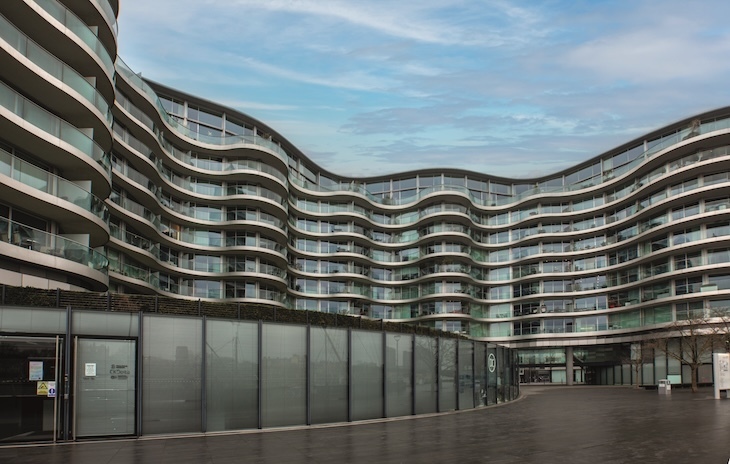
This deluxe mixed-use development sits on the south bank of the Thames between Albert and Battersea bridges. Designed by Foster + Partners it contains accommodation, offices, shops, art galleries and cafes. It is designed in the high-tech modernist style with façades mainly of glass, and made up of four separate buildings connected by public spaces. The development's main building facing the river is an asymmetric crescent while its unexpected southern side, made of aluminium, has the appearance of a spaceship. Albion Riverside lies beside Norman Foster's own architectural practice.
Battersea and Clapham in 50 Buildings by Lucy McMurdo is out now from Amberley Publishing. Buy from bookshop.org, which sources books from independent bookshops, and helps support Londonist with a small commission