In an extract from his memoir Juniper Street E.1.: A Life in London's East End, Henry Say remembers what night time was like as a post-war kid.
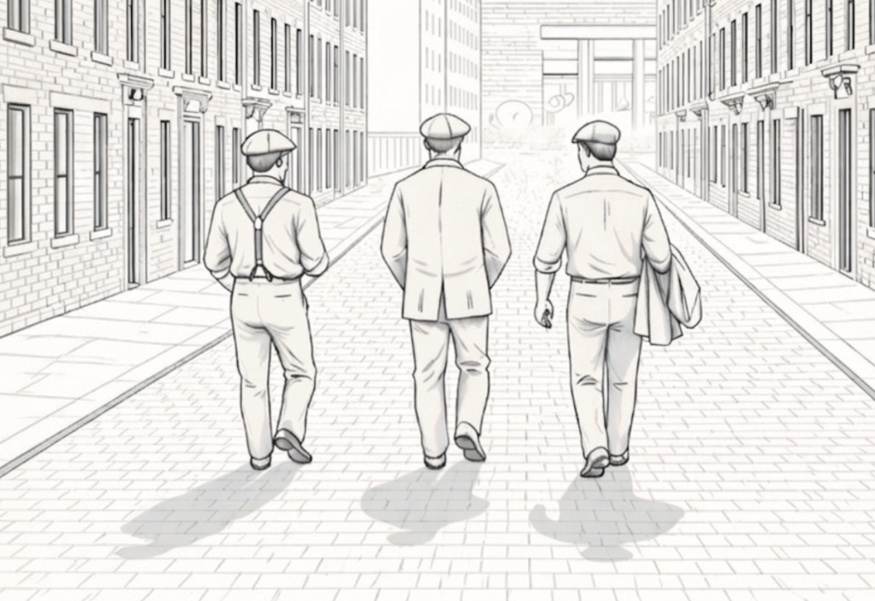
I've often heard that East End children played out until the street light came on. They clearly hadn't visited Juniper Street at night.
The street's lighting was appalling. There were few lamp posts, and little or no lighting fixed to buildings. Consequently, the street was perpetually dark, especially when fog rolled in. Juniper Street formed a valley, sloping down from King David Lane at one end and up towards Glamis Road at the other. While these hills gave us hours of childhood fun, the valley setting compounded the effect of the inadequate light.
"A rumour suggested one resident had tapped into a street lamp to power his flat"
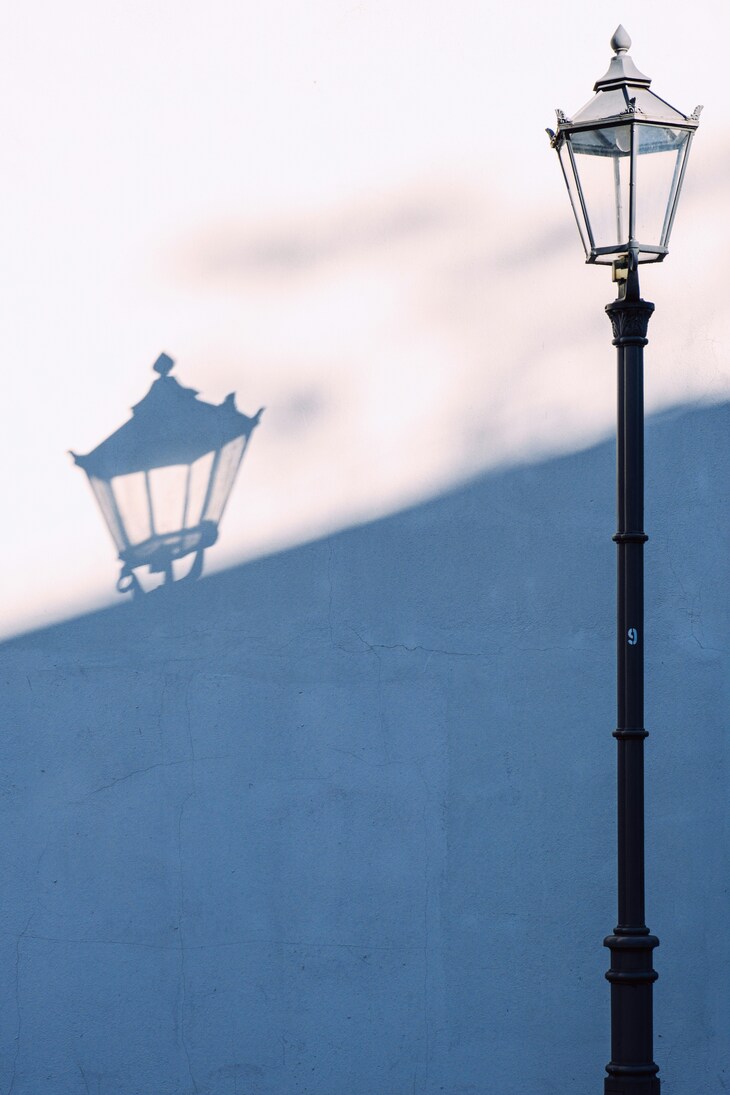
The ancient lamp posts hadn't been updated since the early 1900s. They held weak incandescent bulbs, little better than a domestic lamp, and instead of reflectors, each was topped with an enamelled "Chinese hat." They were so dim that even moths couldn't be bothered. Most leaned at peculiar angles, never having been set correctly into the ground. A persistent rumour suggested one resident had somehow tapped into the public supply via a street lamp to power his flat. Could it be true? Maybe.
If the main street was dark, the back of Drews Buildings, Sun Tavern Place and Hunt's Mews were like a coal mine. Dark doesn't even describe it. It was certainly a no-go area for me, yet the poor people who lived in the third entrance to Drews Buildings along Hunt's Mews had to navigate it every day.
But these ancient cast iron posts had their uses. Children would practise gymnastics, shinning up the pole. If a post had a crossbar or bracket, they could swing their legs over and hang upside down; I confess, the girls seemed better at that. Another use was to tie one end of a skipping rope to a post, allowing just two children to skip together, one to turn and the other to skip.
The lighting for the entrances and stairs in both Juniper Street and Drews Buildings barely existed. It felt like a miser was penny-pinching. But did it feel homely? Yes, it did. You could look out and see your friends' bedroom lights turning on, knowing they were there, and that you would see them tomorrow. People were preparing their children for bed and because the bedrooms faced onto the street, there was a constant hive of reassuring activity. You could sleep easy in your bed tonight.
"The telltale sign of a cigarette was a little red light glowing and moving up and down"

There were always people walking somewhere: maybe a docker on a late shift, a lighterman leaving to take a craft on the tide, or a print worker heading in for the next morning's newspaper. The mix of people, trades, and shifting work patterns meant the street was always busy. If a docker failed to get a day's work, he would be home all day, adding to the constant activity and buzz of life. East End life. On the other hand, sometimes men needed to work through twenty-four hours, to get a ship loaded and out to sea.
The shadowy entrances were useful. A couple of girls might be found there, giggling and drawing on a crafty shared cigarette taken from their mum's pack. The telltale sign was a little red light glowing and moving up and down.
Another person who took advantage of the lack of light: the bookie's runner. He was a moving target, often standing in the entrance doorway of Drews Buildings, or sometimes in a Juniper Street entrance, always heading for the middle of the street. I remember him wearing a heavy dark blue overcoat, perhaps for camouflage. He had to be super careful, as policemen were always patrolling to and from the Police Section House.
Frequently, people would walk up to the entrance, enter the shadows, spend about four minutes with him, and leave, looking quickly left and right. I later learned he acted as an agent to illegally collect bets from punters, written on scraps of paper or cigarette packets, before taking them to a bookmaker. People obviously met up with him again at some point to collect their winnings, though I never witnessed that part. The whole clandestine activity instantly reminded me of the film The Third Man, Harry Lime, when I saw it later in life.
I doubt he ever operated towards King David Lane. Not only were police walking about, but the Lane itself had a bright yellowy-orange glow. For reasons known to themselves, the Council had installed bright sodium lighting there, which stood in sharp contrast to Juniper Street's blackness. Looking up to King David Lane from our buildings always reminded me of the opening of a spaceship door.
"I thought he was selling dogs. It was only years later I was told he was announcing the greyhound results!"
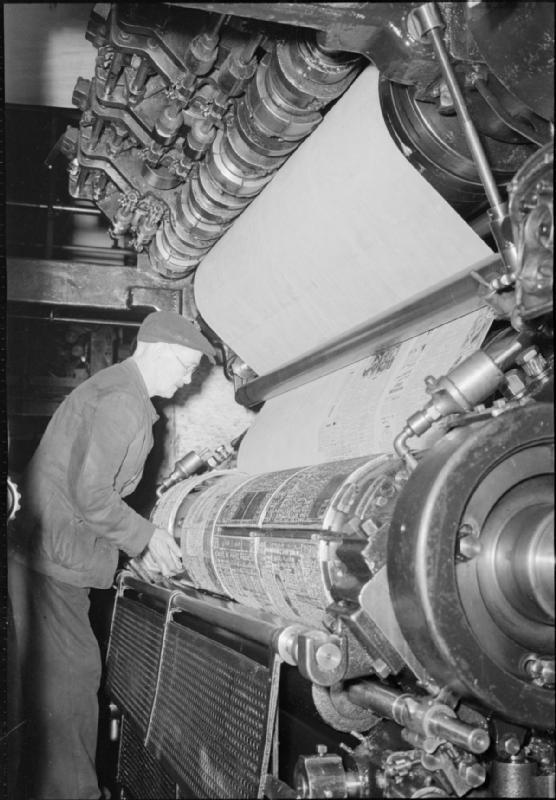 Ministry of Information Photo Division Photographer via Public domain">
There were rituals that defined the time of day. The paper man would walk through the streets about five o'clock in the evening with the latest news. No 24-hour news stations then. Occasionally he surprised us by coming back later, sometimes quite a bit later, shouting: "Extra! Extra! Extra!"
This happened especially if a big story had broken after the last regular edition. Though I always thought it was a bit of a con trick. You didn't get a completely new paper; instead, a narrow column at the bottom of the page carried the new story, printed sideways, at a right angle to the main columns. I think it was called the "Stop Press" column, or something like that. Because most papers were much taller than wide, it took some manoeuvring to read the brief story without turning your head, or the paper, completely around.
Strangest of all was a very late seller. If I had woken up late at night and was trying to get back to sleep, I could just hear a faint, drawn-out cry. I couldn't understand the words, but gradually he would get louder:
"Dogs! Dogs! Dogs!"
Honestly, I thought he either wanted to sell you a dog, buy one, or both. It was only years later I was told, "No, it’s the greyhound racing results!" The last race was pretty late, so they must have had a slick operation to get those results out so quickly.
Juniper Street E.1.: A Life in London's East End by Henry Say, published by Prime Cadence