Taken from Sam Robert and Roy Reed's book London's Ghost Signs, we take a closer look at 10 of the capital's most eerily beautiful ghost signs, still lingering in plain sight.
1. Nestlé | Boro, Killyon Road SW8 (corner of Wandsworth Road)
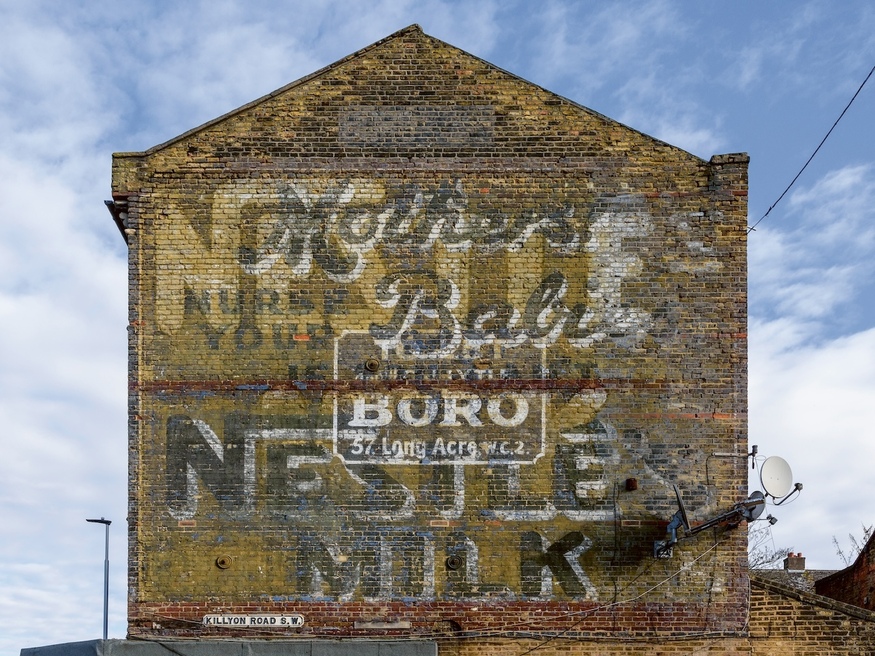
There are two layers of Nestlé signage on this wall, with the slogan on one dating it to the early 1920s. This is noteworthy for its explicit endorsement of breastfeeding — in the 1970s, the company was widely condemned for aggressively marketing its formula to mothers in the developing world. Two additional signs on the wall, for the billposting company Boro, boasted of their thousands of sites and sought customers to advertise on the wall. They, or a subsequent contractor, later installed billboards on the building, the last of which was removed in about 2015.
2. J.S. Foster & Co., Tisbury Court W1 (corner of Rupert Street)
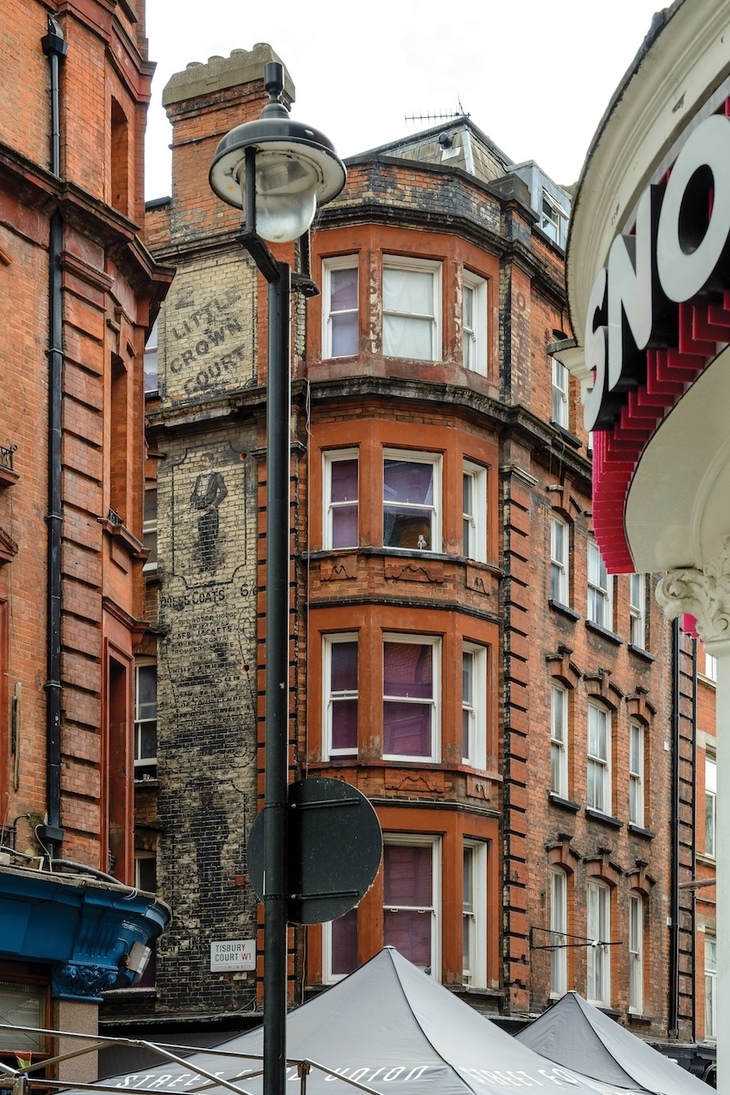
J.S. Foster & Co. was a hosier and outfitter, and here from at least 1910 until 1925. This elongated sign pre-dates 1936, when Little Crown Court was renamed Tisbury Court. It was part of a larger composition that wrapped around the corner of the building, but this wall's more northerly orientation and shielded position have helped preserve it. What remains are decadent pictorials in scalloped panels, and a scroll containing copy written in English and French. This was to attract the French catering and hospitality trade that thrived in Soho at the beginning of the 20th century.
3. Peterkin, Corner of St John’s Hill and Sangora Road SW11
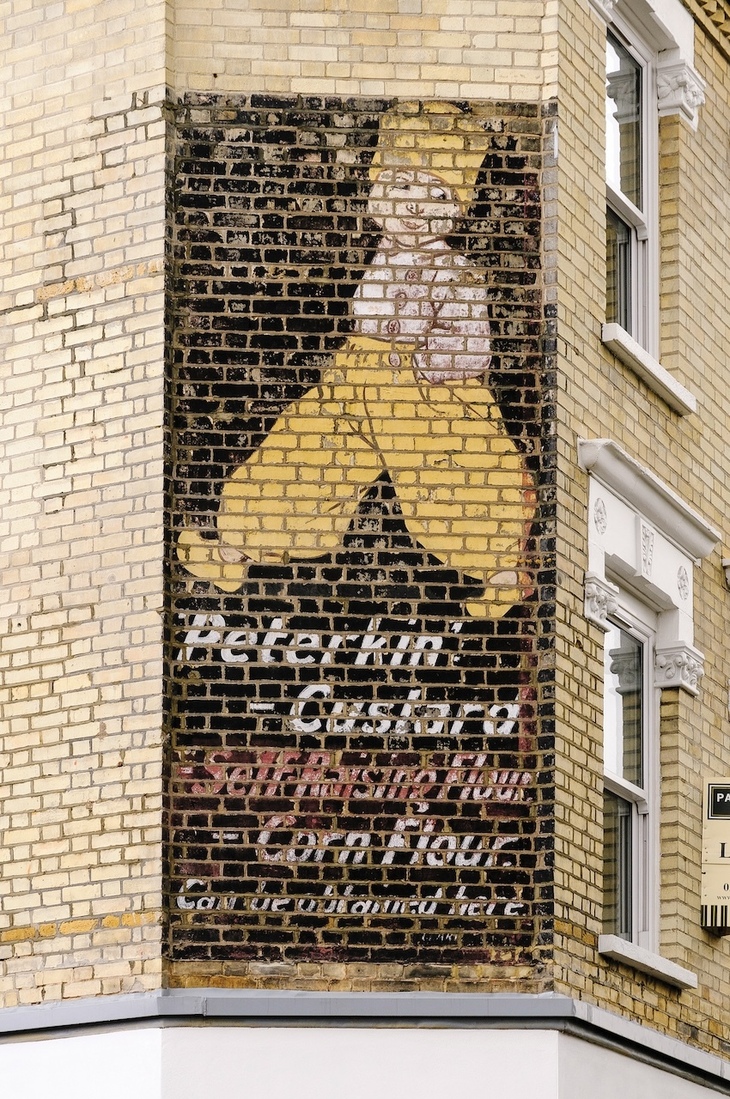
This well-loved ghost sign advertised Peterkin's products made at the nearby Battersea Mills. For a couple of years from 1919 the business was run by Joseph Arthur Rank, later of Rank Films fame. His milling-magnate father, Joseph Rank, supported him in this endeavour despite being on the record calling his son 'a dunce'. The brand was taken over by the King's Own Cereal Company in about 1921 and was all but gone by 1930. Early 1920s advertising for Peterkin's custard refers to it as 'liquid gold', accompanied by bold claims about its 'real egg' content. This was in contrast to egg-free brands such as Bird's. However, a court case in 1926 revealed that the actual egg content was far from substantial. Ultimately no conviction was made, on the grounds that customers shouldn't expect too much given the product's low price. The sign was locally listed by Wandsworth Council after its nomination by a local historical society in 2016. The Dutch boy pictorial partly explains its popularity, and appears to be based on similar Peterkin (meaning 'little Peter') characters from children's stories. Although unrelated, similar iconography was also used by the Dutch Boy Paint brand in the USA. While it might be reasonable to assume the sign was a privilege for a local grocer or baker, these were in fact the premises of the Cato family, oil and colourmen based here at least from 1891 to 1941. They sold goods including paraffin, ironmongery, and paints and thinners. While these seem unlikely bedfellows with Peterkin's products, wallpaper paste can also contain cornflour, the basis for most custard powders.
4. Boots, Camden High Street NW1 (just south of Parkway)
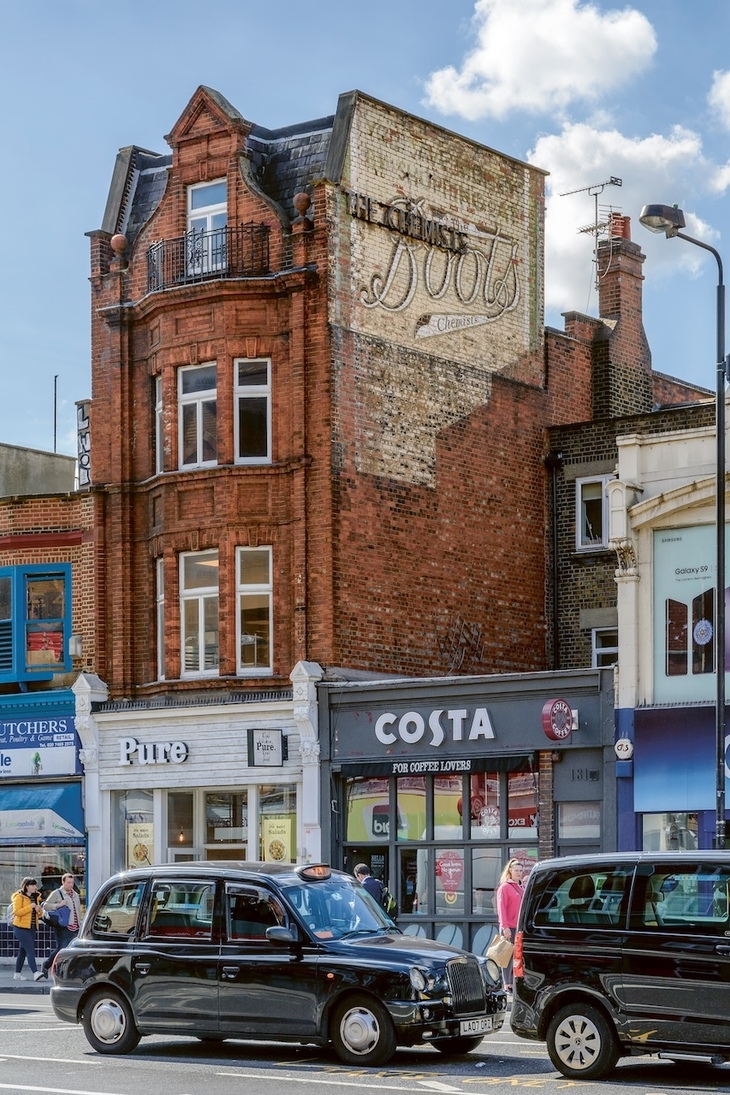
Boots had a branch here from 1932 to 1969, and the sign pre-dates 1953, when it was painted over and replaced with an illuminated installation. It's ironic that the painted sign is now back and holding up well, whereas its successor only partially remains. The handwritten logotype, broadly unchanged today, is said to have been designed by Jesse Boot, a long-term owner of the business and son of John Boot, who founded the company in 1849. Soon after opening here on Camden High Street, the Nottingham-based chemist opened its thousandth shop. It was a period of significant expansion driven by providing affordable health products to the nation. At one time this included lending libraries — 'healthy mind, healthy body', we presume. Boots still has a shop on Camden High Street, just a couple of doors down from the building hosting this sign.
5. Gillette, Queensway W2 (by Bayswater station)
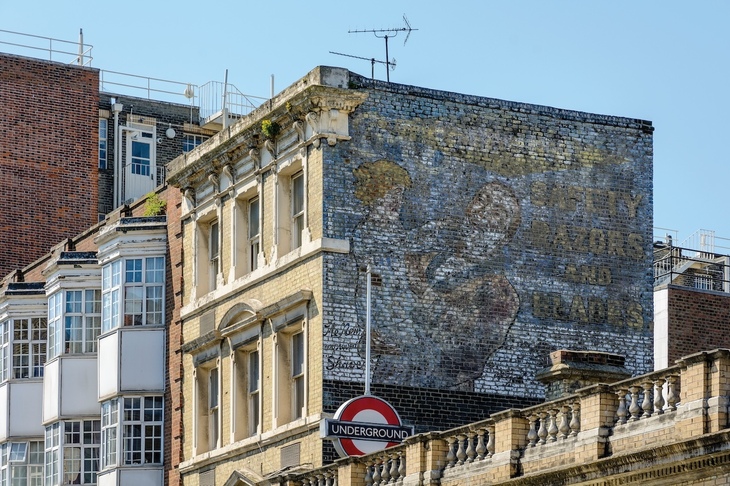
The detailed pictorial shows a man being shaved by his young child to demonstrate just how safe Gillette’s safety razors were. An early 20th century campaign went further, depicting a shaving baby accompanied by the line, 'Begin early, shave yourself'. This sign is also distinctive for featuring the Gillette logotype at a relatively small size, and sitting within a yellow diamond shape at the top of the wall.
6. London & North Eastern Railway (LNER), South End Road NW3 (between Heath Hurst Road and Maryon Mews)
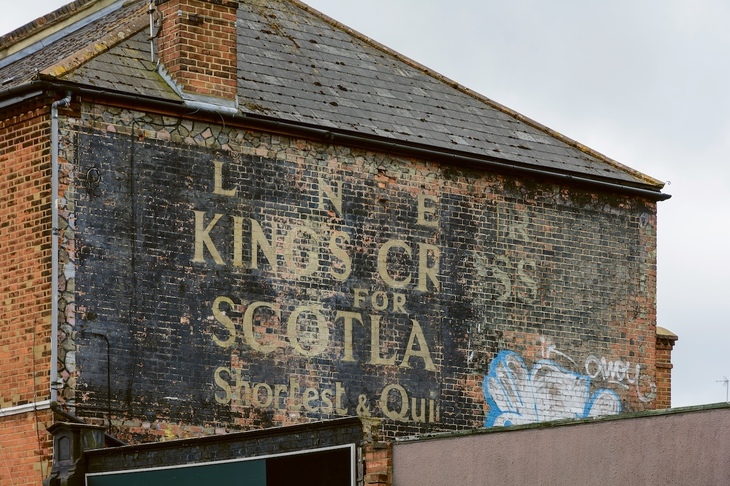
This sign was positioned to reach those walking back to the station from Hampstead Heath, and sought to encourage longer-distance leisure travel via the railway. It can be dated to between 1923, when the London & North Eastern Railway (LNER) was founded, and 1929, when its head of advertising, C.G. Dandridge, rolled out Gill Sans as the corporate typeface. Gill Sans was then adopted by British Railways after nationalisation in 1948. Two thirds of the sign was protected by a billboard, and the right third's longer exposure has resulted in its more faded appearance, and graffiti.
7. Cakebread, Robey & Co., Tyssen Road N16 (corner of Stoke Newington High Street)
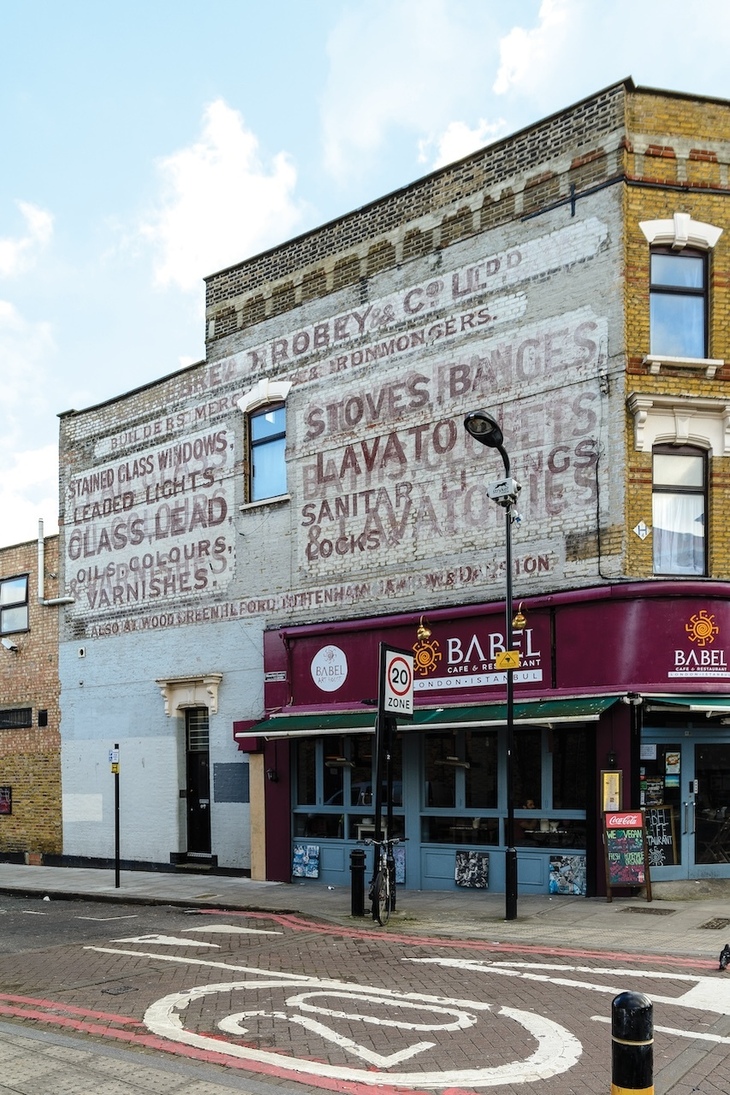
Cakebread, Robey & Co. builders' merchants was founded in 1882 by George Cakebread and Arthur Robey. It remained in Stoke Newington until 1965, but from 1914 its manufacturing took place at the Caroba Works on Wood Green High Road. The business was wound up in 2000, with the assets acquired by Neville Lumb and then Saint-Gobain. The company made a name for itself producing stained and etched windows and mirrors. These survive in pubs and churches around the UK, and as far afield as Barbados. A relatively local example can be found in the well-preserved stained glass at the Salisbury Hotel pub on Green Lanes. There are at least three layers of signage on this wall, creating a palimpsest that represents the development of the business. Each repainting added new products, necessitating smaller letters to fit them in. For each iteration a whitewash or primer was used to cover the older sign, and these are now fading to reveal earlier layers.
8. Bloom's Pianos, Kingsland Road E2 (adjacent to the Museum of the Home)
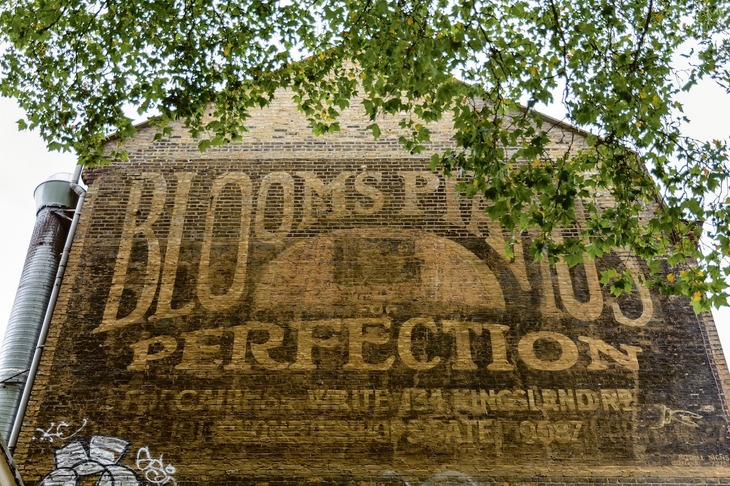
Bloom was the adopted name of Russian immigrant and master cabinetmaker Philip Blumhert, who spent most of the 1930s here. This sign has a little bit of everything: scale, illustration, confident language, elastic lettering and the signwriter's signature. It’s also in palimpsest, but the older layer is impossible to make out. The wall regularly catches the eye of passersby and has featured in ghost signs projects from photographers Tom Bland and Martin Thompson. In 2012 the sign was added to the Local List at Hackney Council in recognition of its artistic and aesthetic merit, and historical value. This probably offers less protection than its north-facing orientation, and hasn't prevented the graffiti that is gradually creeping up the wall.
9. Hovis/Warner Bros | Swan Laundry, Inchmery Road SE6 (corner of Sandhurst Road)
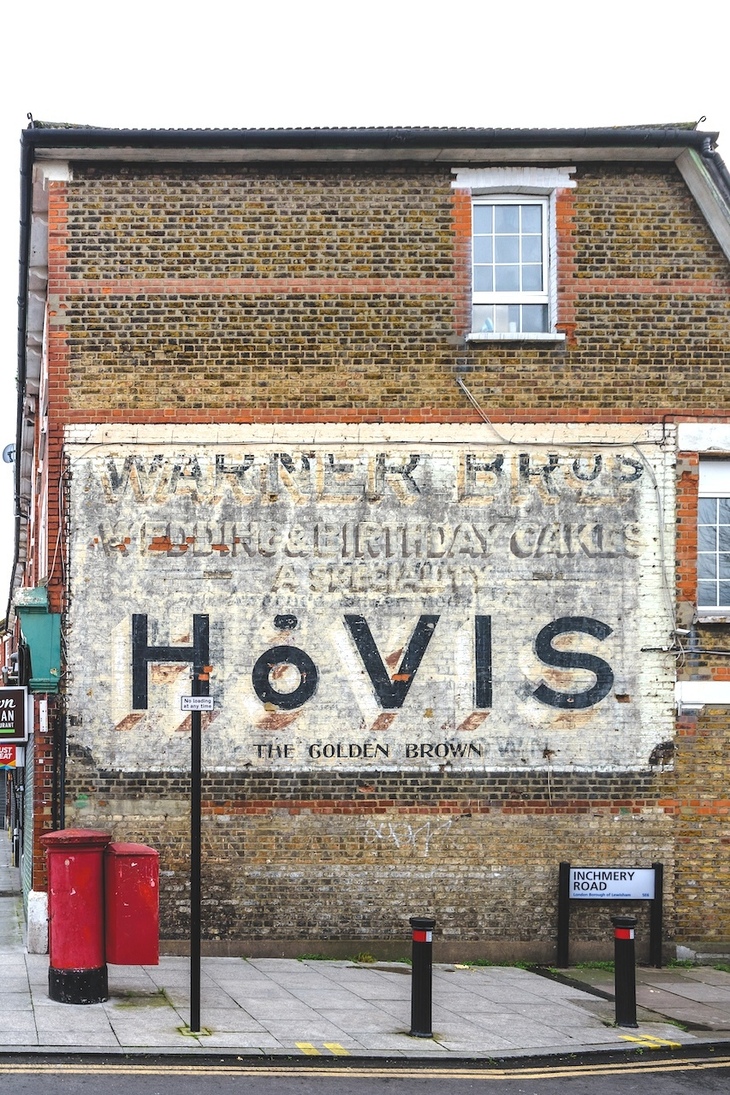
A remarkable trio of signs advertised the Warner brothers, who took over the bakery here in the late
1930s. The main piece on the corner was protected by a billboard until about 2019, while the other two
straddle perpendicular walls on a smaller, connected structure at the back of the premises. This was
probably where the baking took place, with the shop displaying and selling the goods on the main road.
Below the main corner sign is a smaller, incomplete piece, which directed customers to the Swan
Laundry further along Inchmery Road. Records show that in 1934 this was run as a partnership by two men,
George Sydney and William Craddock.
10. Evelyn Gowns, High Street Walthamstow E17 (opposite Westbury Road)
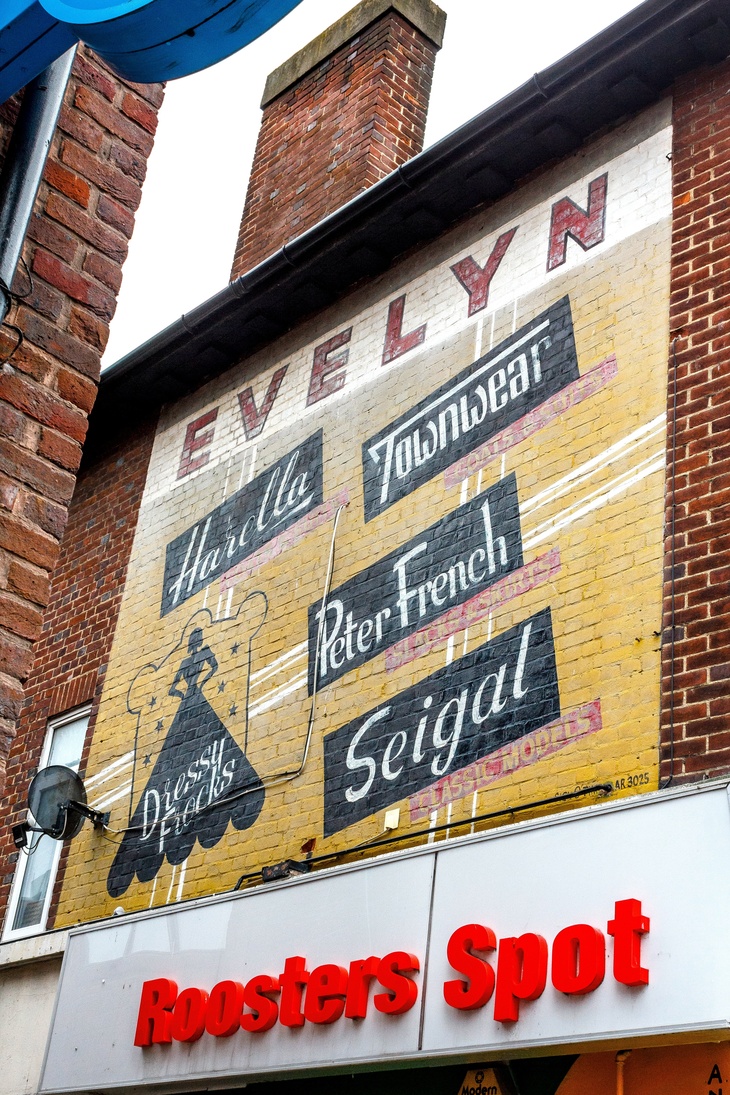
A branch of this women’s outfitter was based in the building next door for more than 50 years from the early 1930s. However, the featured clothing brand logotypes and the signwriter's phone number place the sign in the 1950s. Its good condition is thanks to the protection given by the buildings opposite.
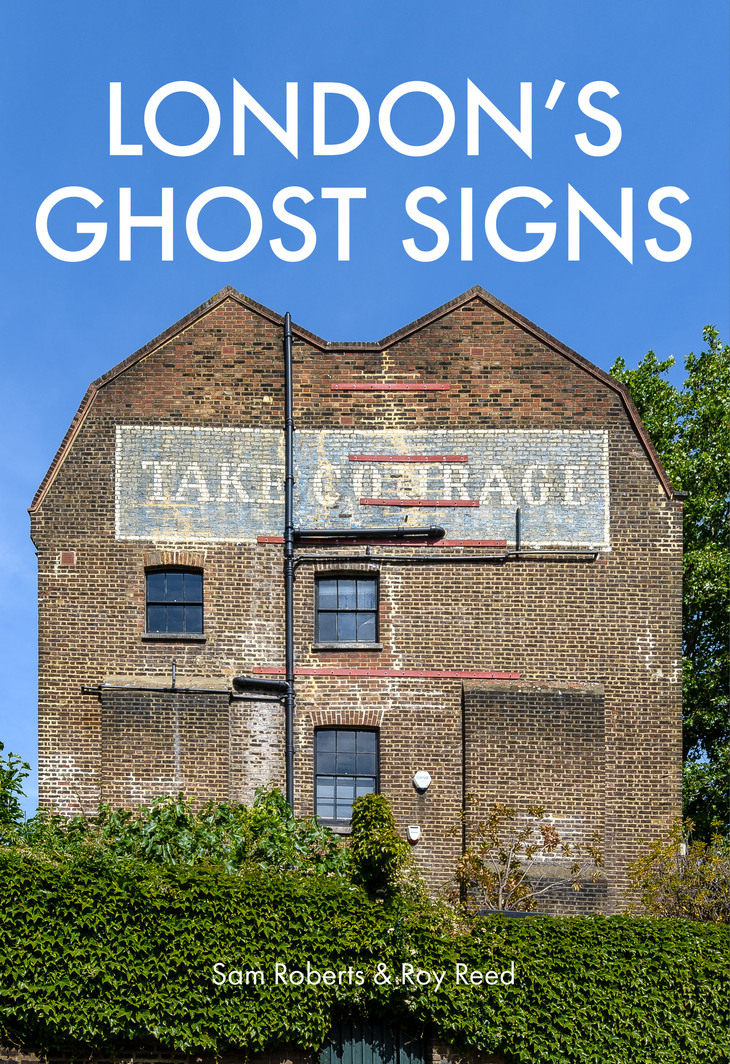
London's Ghost Signs, by Sam Roberts & Roy Reed, published by Metro Publications Ltd
We featured this book because we know it's the kind of thing our readers will enjoy. By buying it via links in this article, Londonist may earn a commission from Bookshop.org — which also helps support independent bookshops.