Adapted from a feature that first appeared in July 2025 on Londonist: Time Machine, our much-praised history newsletter. To be the first to read new history features like this, sign up for free here.
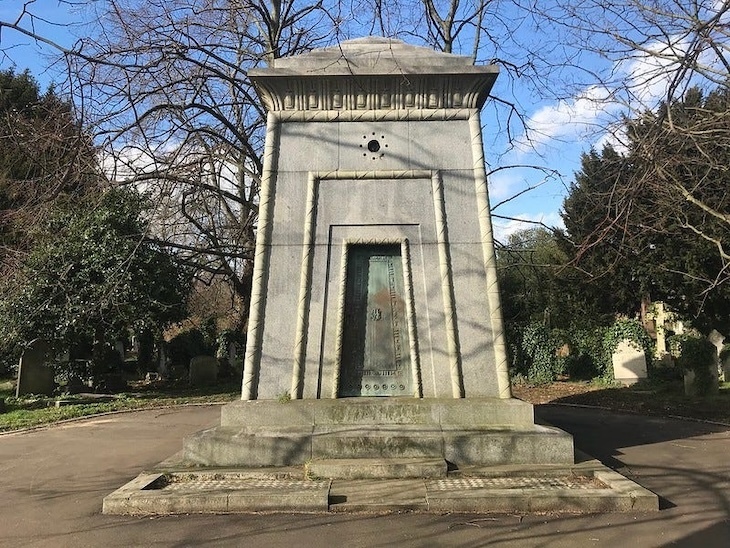
It has to be one of London’s largest tombs. It’s certainly one of the least-noticed. This is the Kilmorey Mausoleum in Richmond. Locked away behind a three-metre-high wall in the rarely-visited suburb of St Margaret’s, it remains little known outside the local area. Yet this mighty structure has a very peculiar backstory because, to go alongside the other superlatives, this is also London’s most peripatetic mausoleum.
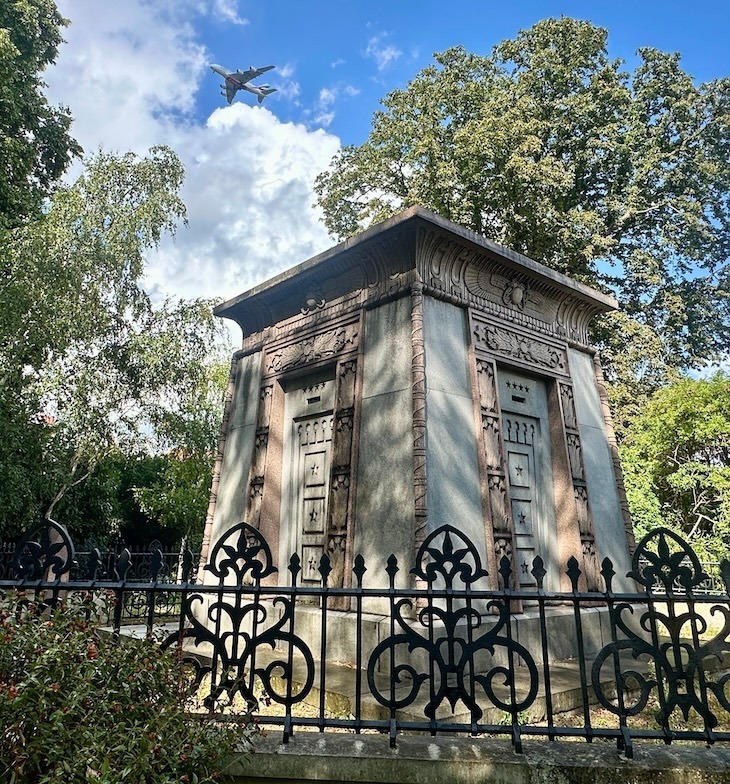
In the summer of 2025, a group of 20 Londonist: Time Machine readers were given special access to this furtive landmark. We not only got to see inside the walled garden, but were also able to step within the tomb. I would like to thank at the outset local historian Andrew George, who led the tour with such sparkle.
Before we look at the tomb itself, we need a bit of backstory…
Who was this Kilmorey fellow?
The Egyptian-style tomb was built in the 1850s at the behest of this man, Francis ‘Black Jack’ Needham, 2nd Earl of Kilmorey:
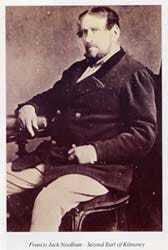
Kilmorey was one of those aristocratic gads-about-town, with money to burn, wagers to contend, and women to woo. He briefly served as an MP and a sheriff but, otherwise, the first half of his biography might be abridged as “a catalogue of sporting anecdotes”.
The defining moment of his life came in 1843 when the Earl, then aged 56, eloped to France with his ward Priscilla Anne Hoste (aged 20). This was scandalous. Not because of the age gap, but because Kilmorey was already married to Jane Gunn-Cunninghame (though they had long ago separated).
They soon returned to England but, for the sake of unmarried propriety, dwelt in adjacent houses. The controversial couple would not, however, live happily ever after. Priscilla suffered from a heart condition and began to slip away. When it became clear that she would not recover, the Earl commissioned the elaborate tomb, designed to one day hold both their bodies. Priscilla passed away on 21 October 1854 and was placed within the sepulchre.
The Earl would live another 26 years, remarrying yet regularly returning to the tomb. It would, in June 1880, become his final resting place, too.
The wandering tomb
I say “final resting place”, but with the Kilmorey tomb you never can tell. Its current site in St Margaret’s is actually the fourth location in which it has stood.
The tomb, designed by Henry Edward Kendall, was put together at the Alexander MacDonald’s works in Aberdeen, making use of local pink and grey granite. It would have been assembled at the firm’s yard, to check all the pieces knitted together properly. It was then disassembled and shipped down to London.
The Earl initially had it erected in Brompton Cemetery in 1853, just in time to receive the earthly remains of Priscilla the next year. Here it stood close to the similar, though smaller, tomb of Hannah Courtoy, which my good friend Stephen Coates would have you believe is a working Victorian time machine.
I think Stephen’s chasing the wrong tomb, however. The Courtoy mausoleum has remained stationary since it was erected in 1854. Kimorey’s monument could not sit still for a decade before it was transported, Priscilla and all, to Woburn Park near Weybridge in Surrey, some 17 miles away. The Earl had bought a new house, and wanted his late mistress to move in with him… well, into the garden at any rate.
Here, the partially corporeal couple remained for a little more than a decade. Kilmorey remarried in 1867. His new wife Martha must have been a very understanding woman, to accommodate her husband’s obsession with his ensepulchred mistress. When they moved to St Margaret’s in 1868, the tomb came with them.
(See also: London buildings that have moved around)
According to legend, the Earl had a tunnel built between his house and the parcel of land where the mausoleum now stood. This seemed to be one of those “ha, pull the other one” stories until, in 1966, the passage was rediscovered.
There’s more to say about the Earl and the many women in his life. Andrew George has written a brief account of Kilmorey here, while Daisy Pullman has discovered much about Jane, Priscilla and Martha. But I think it’s time we stepped into the tomb…
Tomb with a view
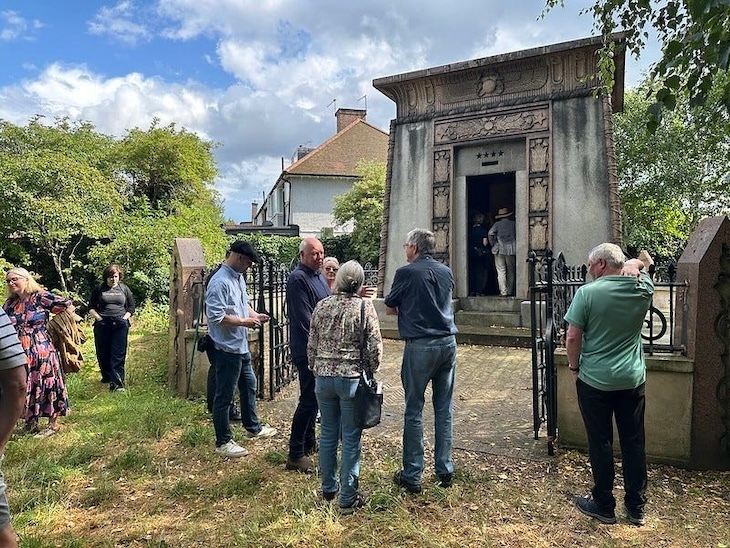
You don’t need to be a stonemason to appreciate the craftsmanship of the Kilmorey Mausoleum. Its slanted granite walls are solid and sleek, and look like they could withstand a nuclear blast. Granite is a tough stone. Carving those elaborate Egyptian patterns must have taken much effort. The Earl spent £30,000 on it, which the National Archives currency converter suggests would be worth about £2.5 million today.
The door is made of bronze and weighs a tonne. Even so, it swings with ease upon its 170-year-old hinges — another testament to the craftsmanship. Now, I’ve never stepped inside a tomb before, so I wasn’t entirely sure what to expect when that door opened. This was my first glimpse:
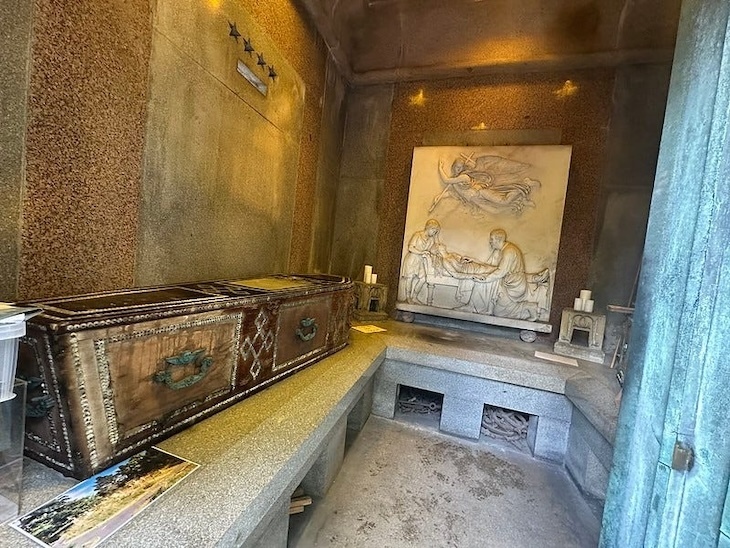
Yes, that’s an actual coffin. The 2nd Earl of Kilmorey lies within. Meanwhile, Priscilla’s older coffin is to the right of the door, and has fared rather the worse over the years:
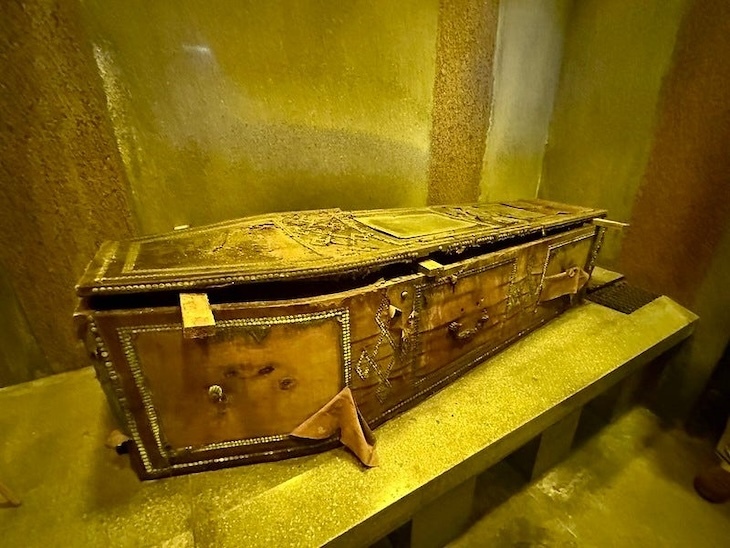
Yikes! Fortunately, Priscilla’s remains are contained in an inner-coffin, and cannot be seen through the gap.
The other object of interest within the tomb is this exquisite marble bas-relief:
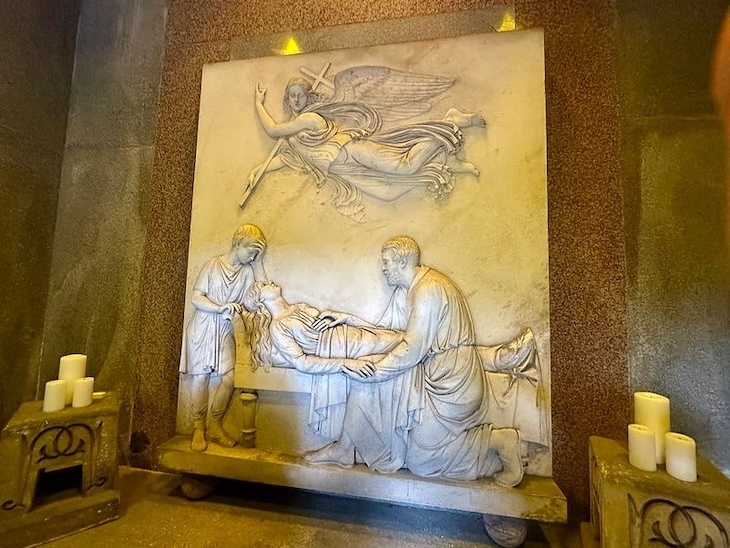
Carved by the noted Rome-based sculptor Lawrence Macdonald, it shows Priscilla on her deathbed. The Earl holds her hands, while their son Charles looks forlornly at his stricken mother. Above, an angel points the way to heaven… or perhaps Weybridge.
The chamber is bathed in a ethereal yellow light, issuing from four stars in the ceiling.

It’s coincidence, but I like to think that they symbolise the four resting places of the Kilmorey Mausoleum: Aberdeen, Brompton, Weybridge and St Margarets. As final resting places go, they don’t get much grander than this.
Our visit over, we leave the tomb and the walled garden and cross the road to the wonderful Ailsa Tavern, which claims to have remnants of Kilmorey’s tunnels in its cellar. Here we raise a toast to the Earl, Priscilla, their wandering tomb, the Habitats and Heritage charity who look after the mausoleum, and to our wonderful guide Andrew George, who made our visit possible.
Want to see inside yourself? The mausoleum holds annual open days when the public can see inside. It is also sometimes open as part of September's Open House Festival.
My thanks once again to Andrew George, who has written a couple of short books about the mausoleum.