
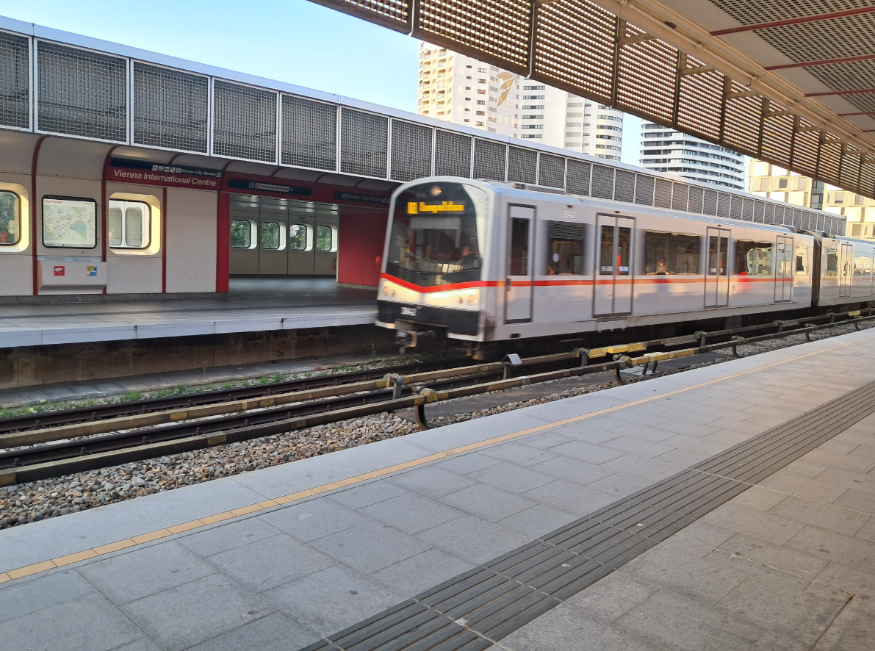
We love London, but occasionally it's good to venture elsewhere, and when we do, we find ourselves sizing things up with our own beloved city. Here, we compare the Tube to Vienna's U-Bahn, the Austrian capital's subway system.
Note that in addition to the U-Bahn, Vienna also has the S-Bahn (a regional railway network, like our own National Rail) along with buses and trams, all operated by Wiener Linien, Vienna's equivalent of TfL. For simplicity, we're just referencing the U-Bahn in this article.
Size
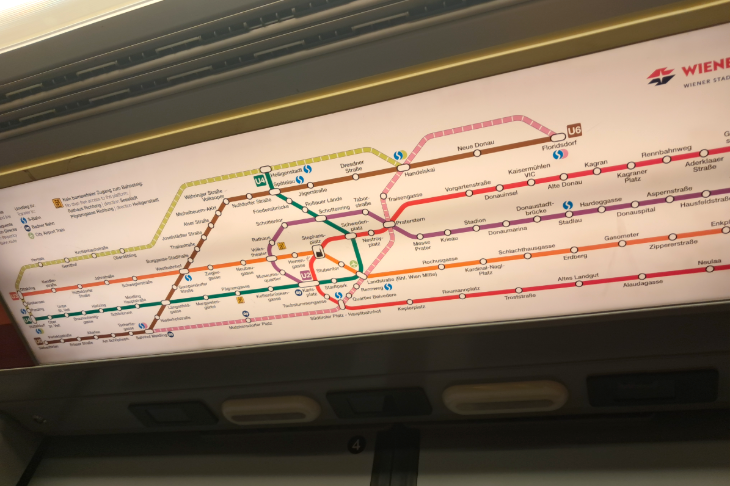
As befits a city the size of the Austrian capital (population around two million compared to London's eight million+), Vienna has a smaller public transport system. As of 2025, the U-Bahn covers 51.6 miles of route, serving 109 stations, compared to London's 272 Tube stations... meaning you won't end up quite so far from home if you happen to fall asleep after a few Ottakringers.
The U-Bahn consists of five lines: U1 (red), U2 (purple), U3 (orange), U4 (green) and U6 (brown), while London has 11 Tube lines. Why no U5? It's currently under construction, the first stations due to open in 2026, and an extension due to open in 2032. Still, it's probably never going to catch up with London.
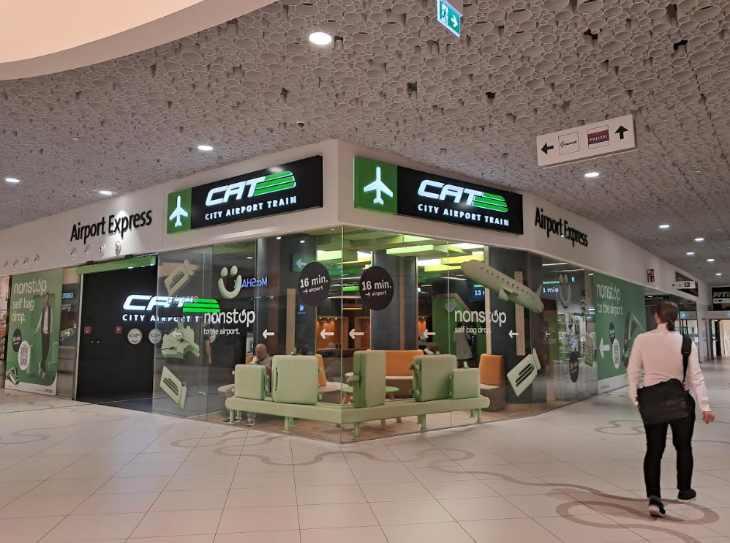
As a tourist or visitor in Vienna, you can get pretty much anywhere you'd need to* including all major tourist sites using just the U-Bahn.
(*With the exception of the airport, which isn't covered by the U-Bahn but can be reached by the S-Bahn 7, or the City Airport Train. The CAT is a privately-run line, much like the Heathrow Express, and is the easiest-to-use method of airport to city centre public transport we've experienced anywhere in the world. Good work, Vienna.)
Ease of navigation
As non-German speakers, we find the Vienna U-Bahn SO easy to navigate. It helps that each of the lines is just that — a simple line — with none of the complicated loops or splits that we love to hate about the London Underground. Each line is simply numbered (and coloured) rather than named, which keeps station signage clean and simple, and there's none of this "northbound" or "eastbound" nonsense which often confuses tourists on the Tube. Signs are placed quite high up along corridors in stations, making them easy to read from a distance, giving you plenty of time to work out which way you're going, and avoiding people coming to a crashing halt and causing a pedestrian pile-up.
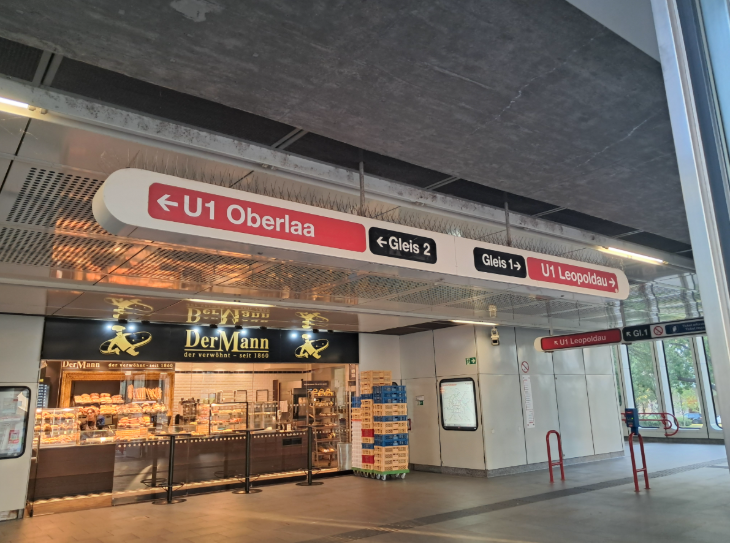
As long as you know the name of the station at the end of the line in whichever direction you want to travel, you're sorted. So if you're boarding the U1 at Stephansplatz, right in the middle of the line, trains are signposted to either Leopoldau (one end of the line) or Oberlaa (other end of the line). Hop on in the right direction, and stay on until your stop. Not sure which station is at your end of the line? Maps are mounted on the walls throughout the station, so you can easily find out.
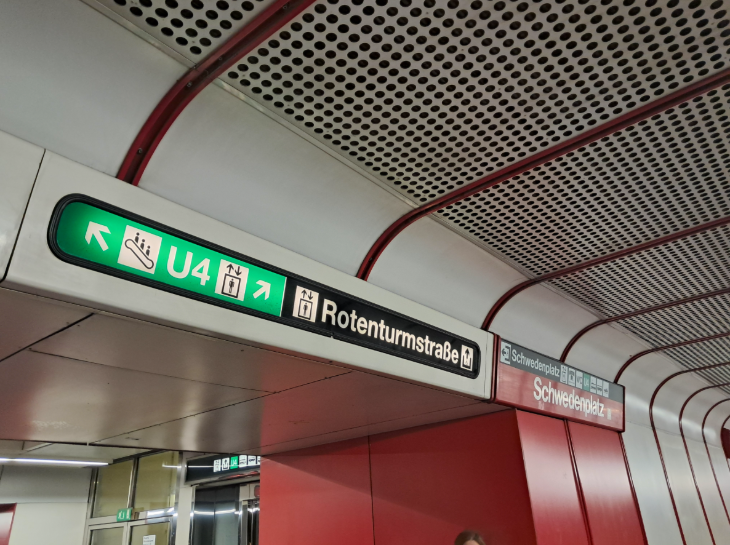
Sometimes, as you pull into a platform and you're craning your neck to spot the name of the station, things get complicated. In addition to the station name, platforms carry signs directing you to the station's various exits, which each have their own name. It's easy to confuse these names for the name of the station, then panic because you can't find a station named Rotenturmstraße on your U-Bahn map. Spoiler alert: it doesn't exist.
Trains
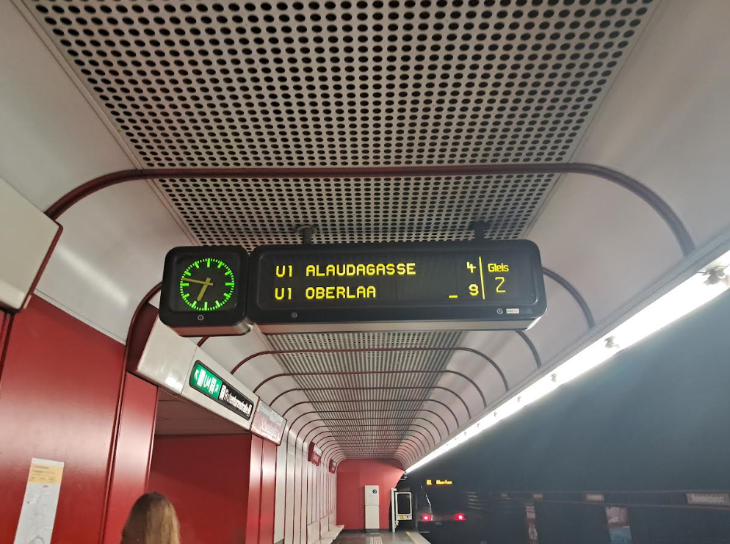
As with the London Underground, the Austrian U-Bahn operates various trains of varying ages. All carriages are walk-through, a high proportion are air-conditioned, and they generally consist of sets of four seats configured with two facing two, like the old Bakerloo line carriages, with a few bench-style seats at each end. The main functional difference on each train is the doors: some open using proper door handles which have to be pulled sharply to open, and put us in mind of the UK's old slam-door trains; others are button-style, but strangely to a London mind, you need to press the button a few seconds before the train pulls into the station; or fully automatic, like the Tube. Just cop onto what the locals are doing each time and you'll be grand.
We've travelled on the Vienna U-Bahn at all times of day and night, including morning and evening rush hours, and the small hours of the morning, and we've never been on an overcrowded carriage. Sure, there are times when no seats are available (though this is rare) and a handful of people are standing, but we've never experienced the squished-up-against-the-windows crowdedness that occurs daily hourly on the Tube.
Stations and decor
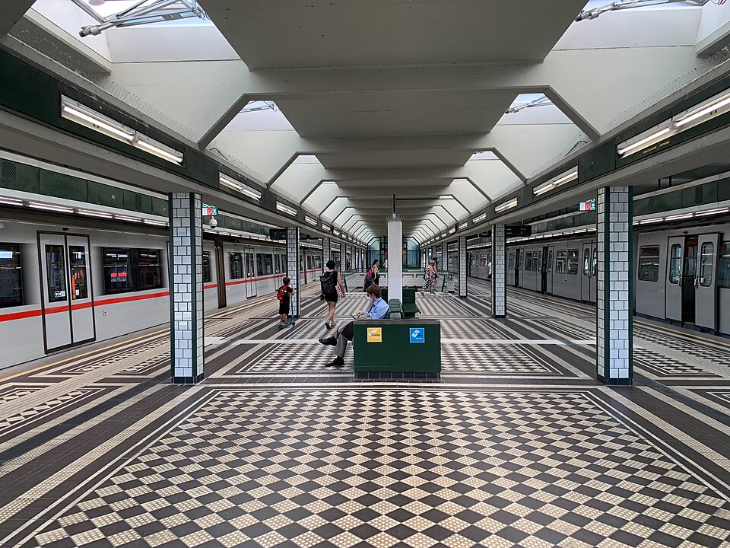
Vienna U-Bahn stations feel spacious, in part because the lack of barriers means crowds don't build in the same way that they do in London. The platforms in Vienna are much wider and with plenty of seating, so they never feel too crowded, and trains arrive up to every two minutes (every 15 minutes on the dot throughout the night on Fridays and Saturdays), moving people on quickly.
The one area where we find the Vienna U-Bahn lacking is decor. Many of the stations are functional, and sometimes pretty enough, but little else -— neither dripping with history (the majority of the network was built in the 1970s) nor laden with snazzy modern design features, with a few minor exceptions, such as the Hütteldorf station floor, pictured above. That said, the few remaining surface-level station buildings designed by prolific Vienna architect Otto Wagner in the late 19th century for the U-Bahn's precursor — including Stadtpark and Schönbrunn — have a certain ornate charm to them.
Stephansplatz has become Instagram-famous as "the world's most beautiful subway/metro exit" for the views of St Stephen's Cathedral as you ride the escalator up to exit (though similar claims have also been made about Cologne and various other locations worldwide).
View this post on Instagram
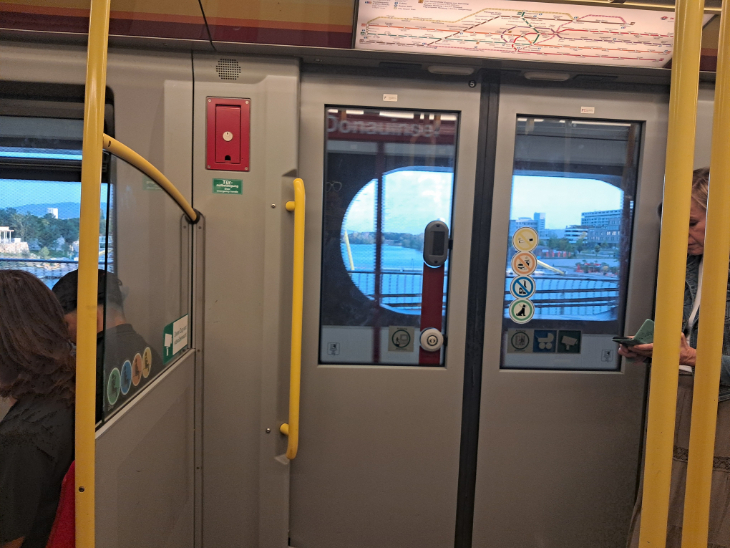
We have a soft spot for Donauinsel, a station on the U1 located on an island in the middle of the Danube. Coming from central Vienna, the underground darkness is briefly pierced by oval-shaped gaps in the concrete, giving you the briefest glimpses of daylight reflecting off the river below, before you're thrown back into the darkness. Like Blackfriars, but in Brutalist mode.
Tickets and fares
The immediate obvious difference between the London Underground and the Vienna U-Bahn is that there are no barriers or turnstiles on the latter. The whole network is free-flowing, with people able to wander into the station and down onto the platforms without tapping in — but that doesn't mean you don't need a ticket. Ticket inspections do happen, often by plain-clothed conductors who make themselves known halfway through the journey, though we've never experienced it ourselves.
Most Viennese have season tickets or mobile tickets, and they're also available to tourists in periods of 24, 48 or 72 hours, or seven or 31 days, in the form of either a paper or mobile ticket. Just making the odd journey? Single paper tickets are available from machines at every station, though once you've bought one, you need to timestamp it at one of the validator machines at the entrance to the platforms, something which many visitors miss.
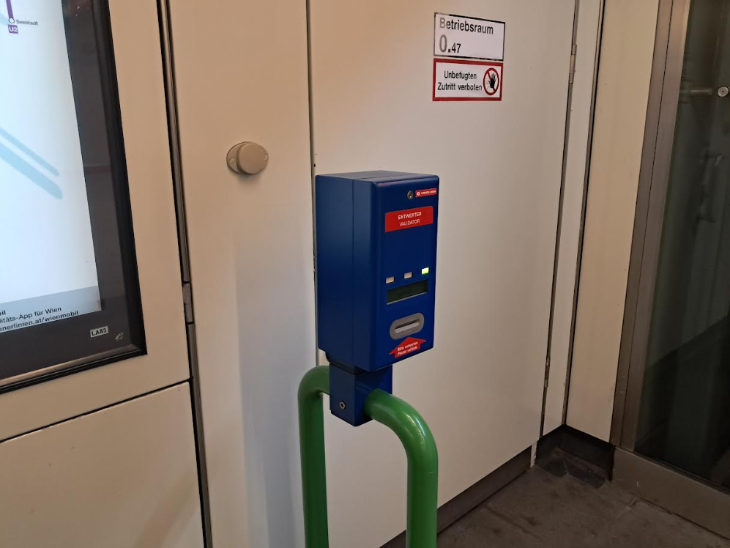
Unlike London, Vienna doesn't have zones, with almost the entire city coming under one core transport area. The exception to this is the airport: the core zone ends at Schwechat, a station on the S-Bhan 7 which is just two stops before the airport. Travel further than this and you need a separate ticket (similar to travelling on London's Elizabeth line beyond West Drayton), something which catches many tourists out.
Accessibility
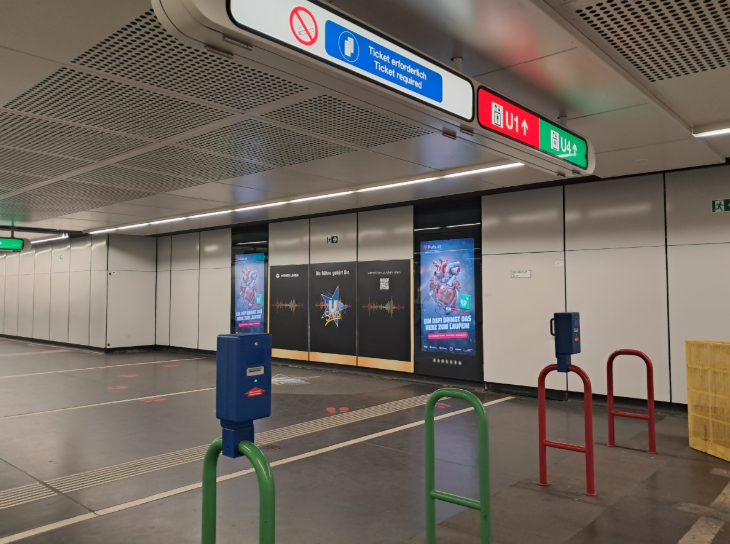
Rather impressively, almost the entirety of the U-Bahn network is barrier-free for those with disabilities, with all stations accessible by either lift or ramp, and trains almost entirely wheelchair-accessible. The exception is when lifts are occasionally out of order, but on such events, this is announced via tannoy in both German and English, with directions for an alternative route given (and because all stations have wheelchair access, it's often just a case of travelling one station further on, rather than the convoluted diversions disabled passengers often have to take on the Tube). All stations have guiding strips for the visually impaired, showing the way to stairs, escalators and elevators.
The results
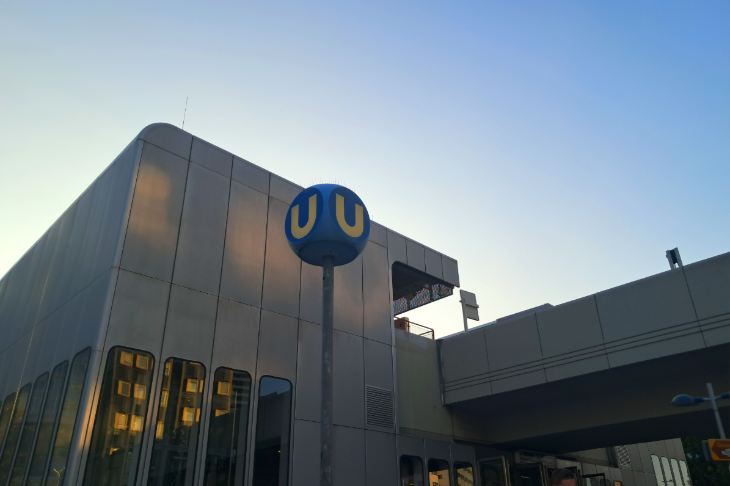
We're pretty smitten with the Vienna U-Bahn (and the city as a whole). The lack of barriers makes for a much less crowded experience, though we're not sure an honesty-based system would work in London. Vienna's transport system has youthfulness on its side, having been built far more recently, allowing space for features such as wider platforms and step-free access to be built in. Its simplicity too is admirable, and something we as tourists are very grateful for.
All photos by Londonist, unless otherwise stated.
In the past, we have compared London's Tube to other mass transit systems around the world, including the Paris Metro, the Moscow Metro, the Beijing Subway, the Tokyo Metro and the New York Subway. Just bear in mind that as these articles were written several years ago, information within them may no longer be accurate.





.jpg)