We went to Glasgow to meet the London Underground's slightly younger (but still very old) sibling.
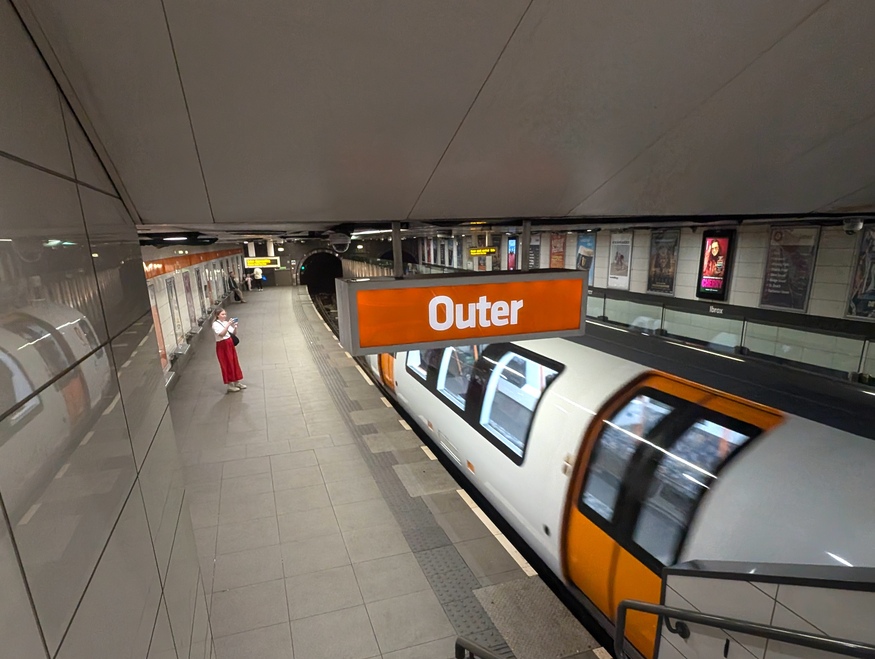
Someone from Londonist has been away again, haven't they? You know it.
What've you found this time? The Glasgow Subway, aka the 'Clockwork Orange'.
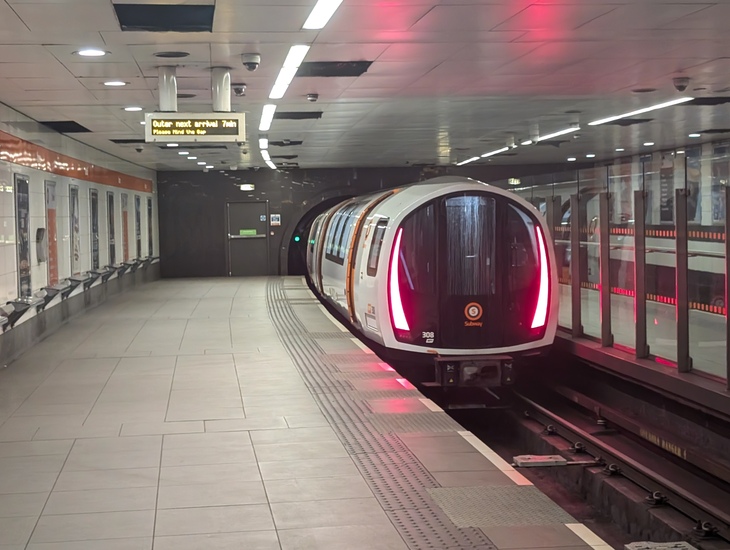
Why's it called that? It runs in a clockwise (and for that matter, anti-clockwise) ring around inner Glasgow. Not unlike the Circle line, but a darned sight less confusing. Also, it's orange. Although not as orange as some of its previous incarnations. Truth be told, the train's livery is now more in line with the white/orange of the London Overground. But yeah, still a lot of orange going on.
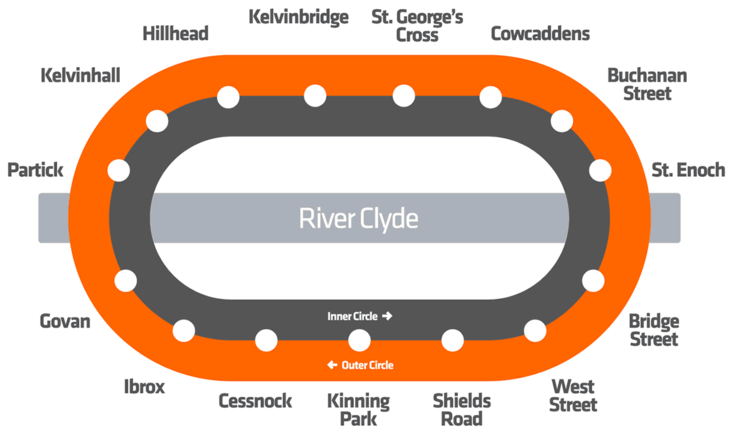
Why's it so important? It might be small (it's only got 15 stations, and its annual ridership is less than the London Underground gets in a week) but Glasgow's metro system is the third oldest in the world, after London's (1863) and Budapest's (1896). When it opened in December 1896 as the Glasgow District Subway, it proudly boasted: "Round the City in Half an Hour." To this day, that's how long it takes to loop the whole network. The Tube Challenge version of this must be dull.
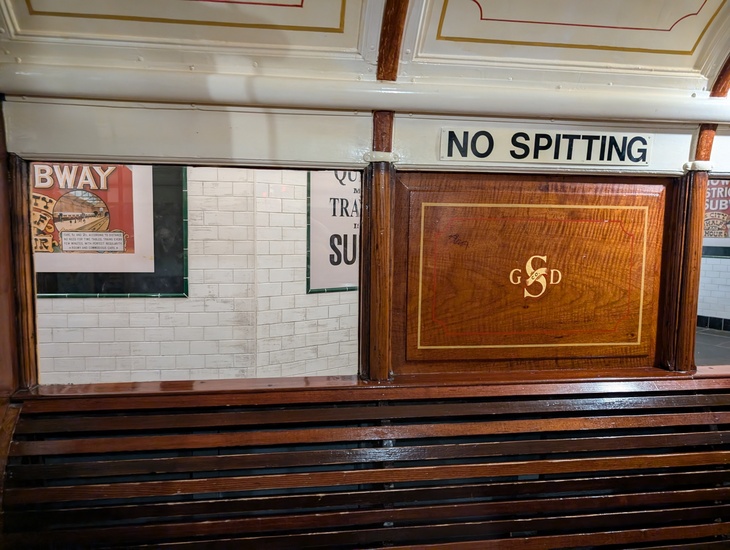
How was it powered originally? While the London Underground had steam trains in the beginning, and Budapest went with electricity, Glasgow plumped for a third way: a cable system, which literally strung the trains along. A powerhouse on Scotland Street whirred cables around huge drums, feeding them back into the tunnels. The machinery itself was steam driven. The Glasgow Subway ran like this until 1935 when it finally switched to electric. A year later, it was officially renamed the Glasgow Underground, although everyone kept calling it the Glasgow Subway — and in 2003 the name was readopted.
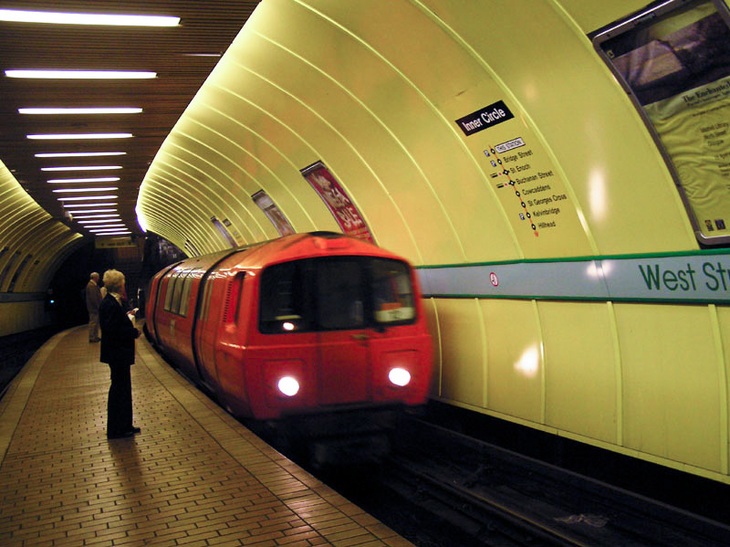
It looks pretty cute... It really is! The entire network is just two lines (it's the only subway network never to have expanded), with an island platform between them — and the trains feel diddy compared to Tube trains. It's like clambering aboard a little toy town train.
So has it always been utterly beloved by Glaswegians? Apparently not the ones in the early 1960s who dubbed it "useless and inefficient", "a rotten smelling cellar" and "a stinking tomb".
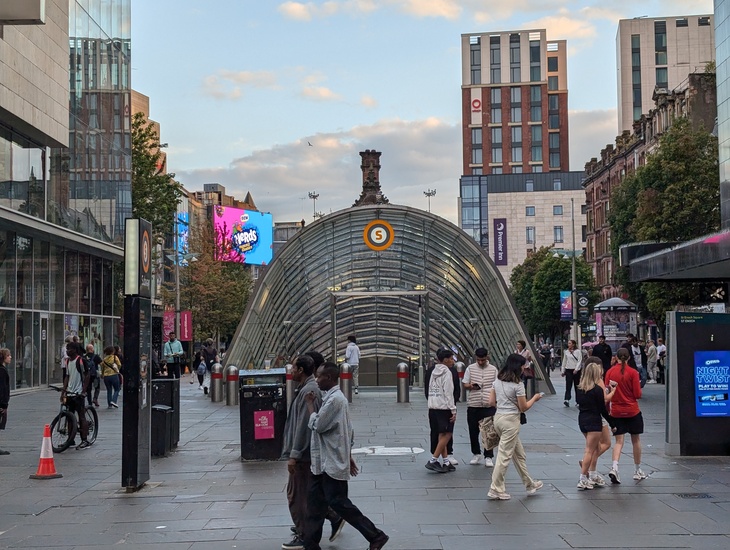
Has it got its own moquette? It does — a grey landscape of concentric circles, which obviously hint at the inner/outer lines, but also suggest bubbles in a sepia bottle of Irn Bru. It's a pleasant design, although in our opinion, nowhere near as sexy as the Russell Stuart-designed moquette for the Subway's 1981 refurb.

The Glasgow Subway's not as iconic as the London Underground though, it is? It is in Glasgow! People wear 'Inner/Outer' t-shirts and drink from Glasgow Subway branded mugs/water bottles. The Riverside Museum is particularly packed with hoodies, totes, cushions, posters, etc. (Note in the photo below how much gear they've got decked out in the old moquette design.) Not a Tube roundel in sight in this part of the world, chum.

So the system has its own museum? Not quite its own museum, but at the Glasgow's aforementioned Riverside Museum — a superb (and free) museum dedicated to the city's transport, there is a healthy amount on the Glasgow Subway, including the chance to step on board one of the original train carriages.
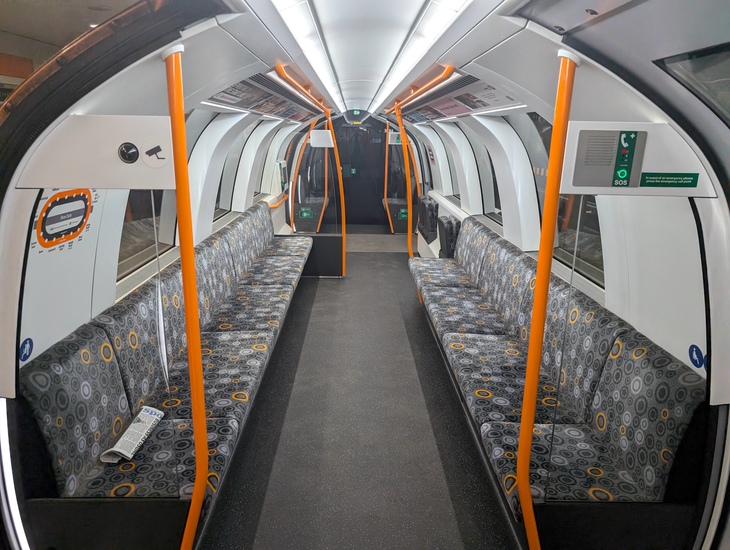
Why's it better than the London Underground?
- Newer (the Stadler Rail trains were introduced in 2023)
- Cleaner
- Quieter
- Virtually foolproof; if you get lost on the Glasgow Subway, you've had one to many Tennent's
- Cheaper (it's £4.45 for an unlimited day travel ticket)
- Only takes two minutes between each stop.
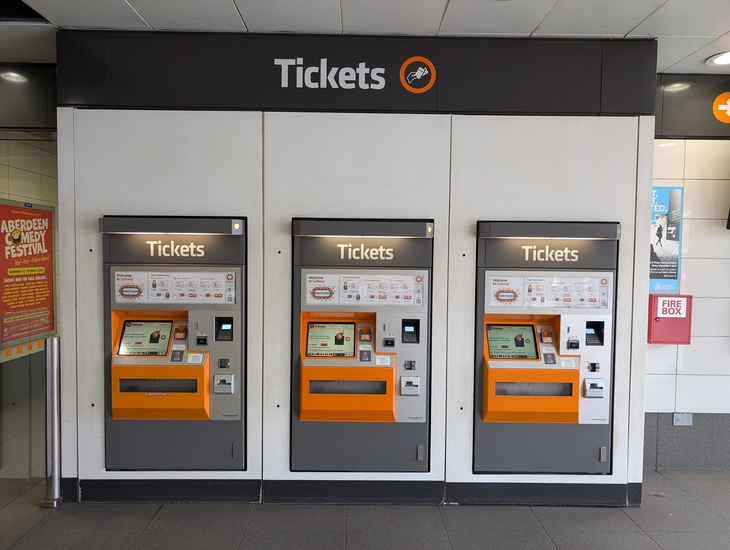
Why's it worse than the London Underground?
- The stations are one-note
- If you're tall, there's not enough room to stand up (although you do always seem to get a seat, unless there's a match on at Ibrox)
- On Sundays it only runs from 10am-6.12pm — wtf?!*
- It doesn't go to Glasgow Airport
- It doesn't go to London. Which might not prove a problem for many Glaswegians tbf.
Images by Londonist, unless otherwise stated.
A reader, Greg, points out that this is a temporary thing, owing to upgrades being made to the network.