"The new Tube train pulls to a standstill and the doors are flung apart. Here is the first example of the new era of travel ushered in. What a thrill indeed! The doors shut again, we sit back on the comfortably upholstered seats and speed away through the tunnel to Bounds Green station, on again until daylight suddenly appears, and the open country at Arnos Grove comes into view. Few could resist the exhilaration experienced at this the first ride in the Tube that has been talked about for the past two years. Here, indeed, is the finished article, more sleek and beautiful than one ever dared hope for."
It was September 1932, and a dashing new epoch of the London Underground — in this case, acclaimed by the Wood Green and Southgate Weekly Herald — was pulsing through north London.

The Piccadilly line extension — stretching out the original 1906 line northward from Finsbury Park to a clutch of new stations culminating in Cockfosters — brought with it eye-opening touches such as airy new ticket offices, and escalators with emergency stop capability. The eight new stations — each a beacon of modernity — were drafted by Charles Holden; including Southgate, which looked like it'd zoomed off the screen of some sci-fi picture playing at the Premier Cinema. What a time to be alive.
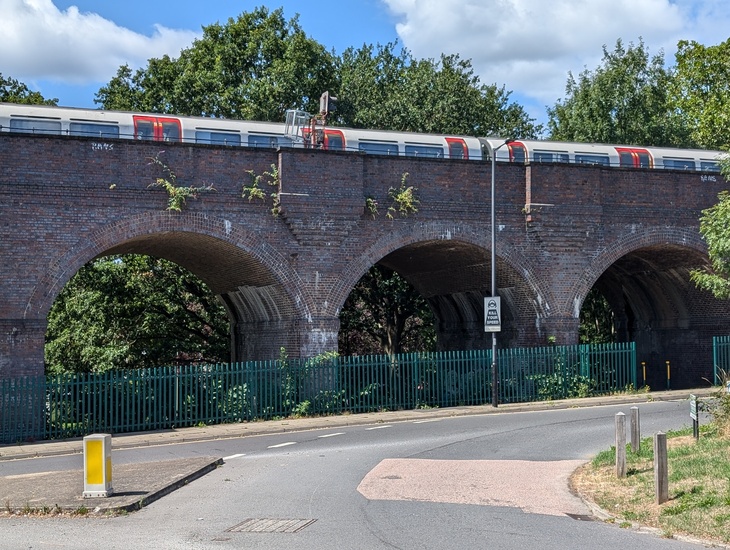
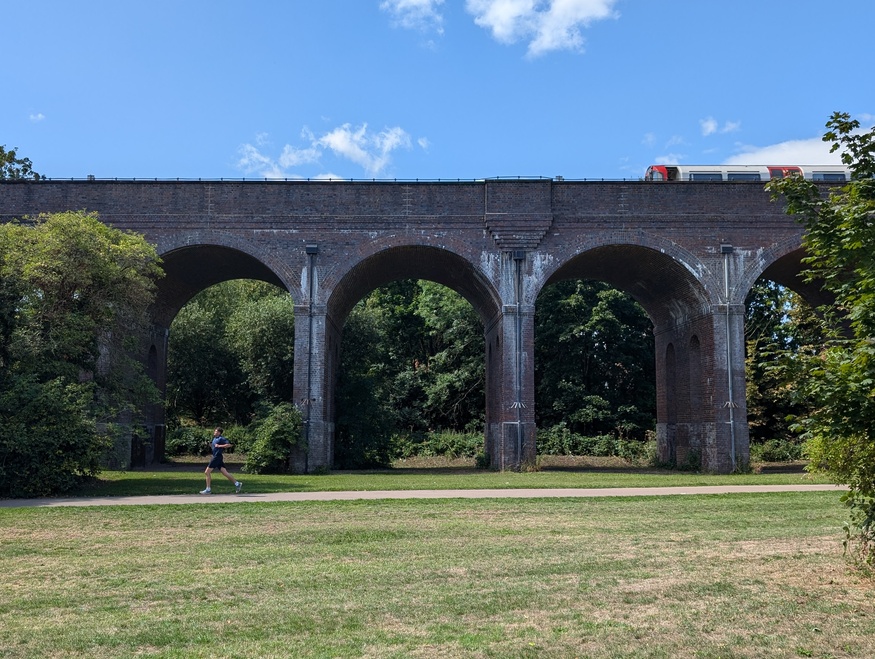
For all the clay that had to be chewed out for the extension — tunnelling often went on for 24 hours a day — in parts, it was a case of going over rather than under. Enter Sir Harley H. Dalrymple-Hay — a man who'd already designed an entire underground system for Kolkata (sadly scrapped, as the money wasn't there). Bridging the Pymmes Brook Valley between Arnos Grove and Southgate, Dalrymple-Hay's span of 34 redbrick arches sliced through the western portion of Arnos Park, conveying Tube trains high above the heads of parkgoers — before plunging back down below the London clay to reach Southgate station.
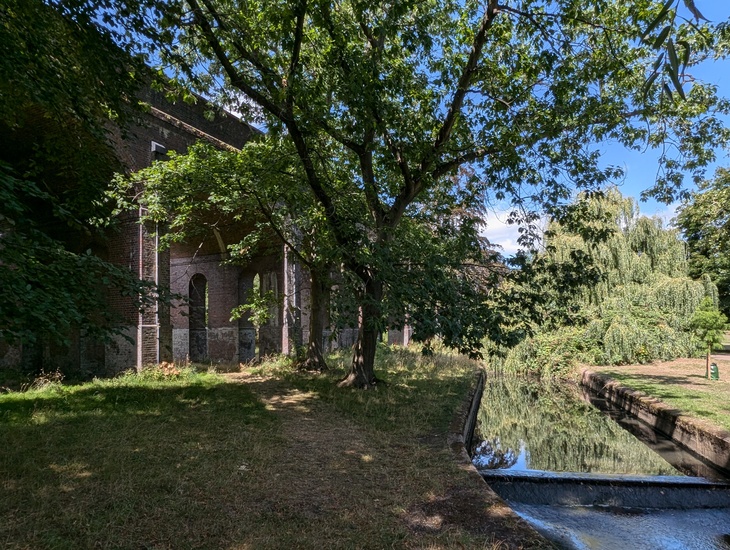
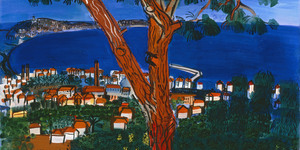
A pre-build mock-up of the viaduct depicted a chocolate box fantasy, with a church spire poking through the trees, and the glassy brook sweeping through one of the arches — and the reality wasn't all that far off.
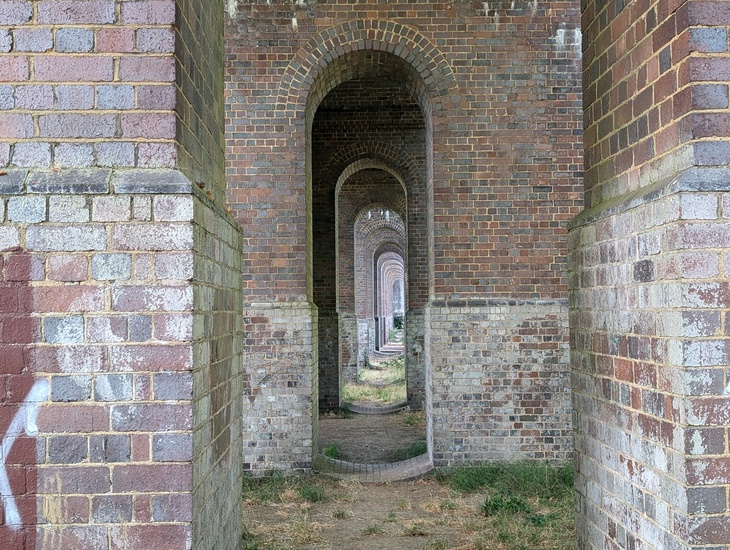
Not everyone felt favourably about the new viaduct. In August 1936, our friends at the Wood Green and Southgate Weekly Herald wrote about opposition to a footpath cutting across Arnos Park, that would remain open 24 hours a day to allow expedient access to Arnos Grove Tube station: "The Council say "No" to the proposal, being of the opinion that the viaduct has already done enough damage."
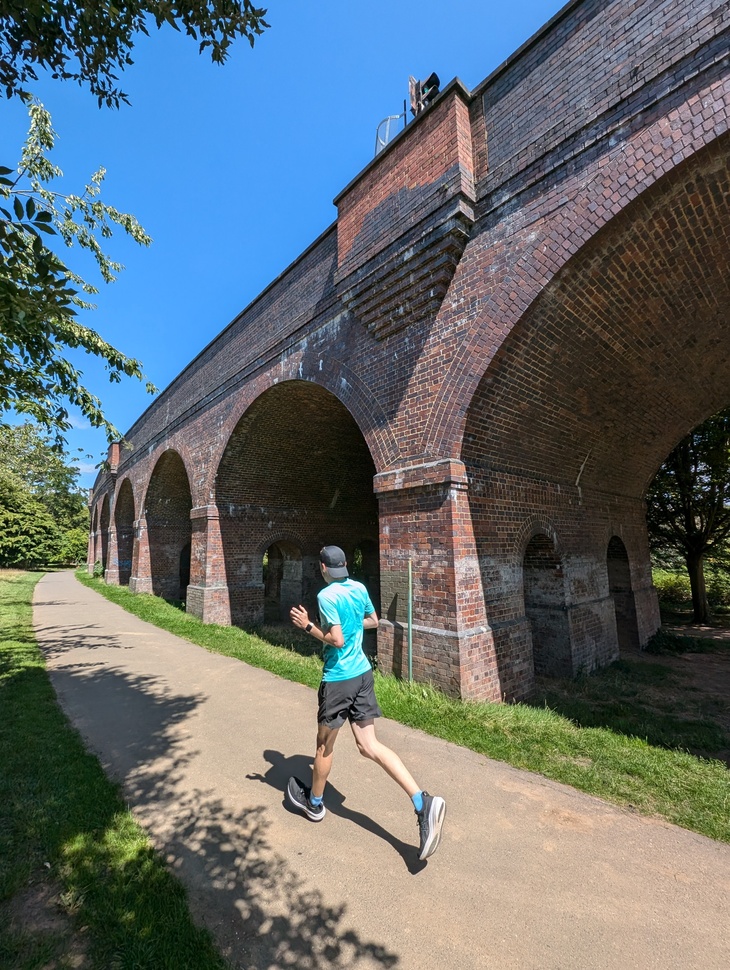
The viaduct has also claimed at least one life; in April 1954, a group of young boys broke through the fencing and clambered up onto the viaduct to play on the tracks, four-year-old Thomas Baldwin being fatally struck by a train.
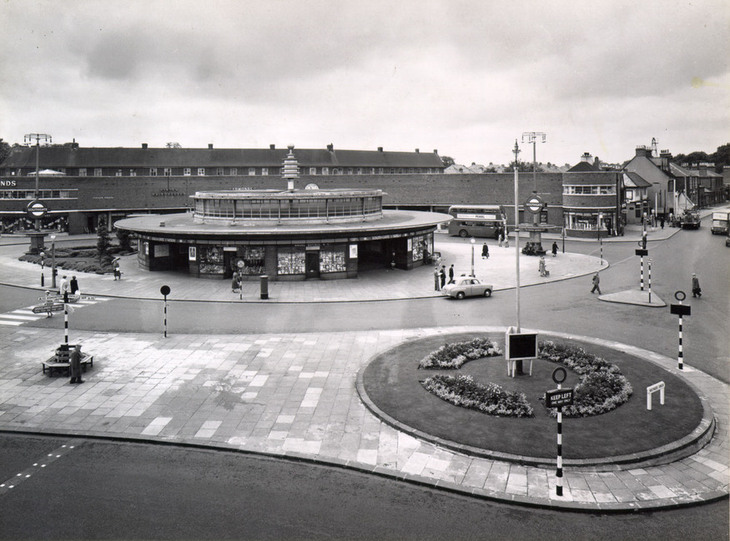
While the Wood Green and Southgate Weekly Herald had referred to the "finished article" back in September 1932, the viaduct was only first put to use when Southgate station opened in March 1933. Not long after this, two Northmet showrooms were opened in the station, "where guests will sit comfortably in basket easy chairs while they are shown the workings of the various labour-saving devices, such as electric cookers, washers, refrigerators, clothes dryers and the innumerable gadgets with which the modern home can be equipped." When the Cockfosters terminus opened at the end of that July, the Tube network's latest foray into a suburbia that was now growing apace, was complete.
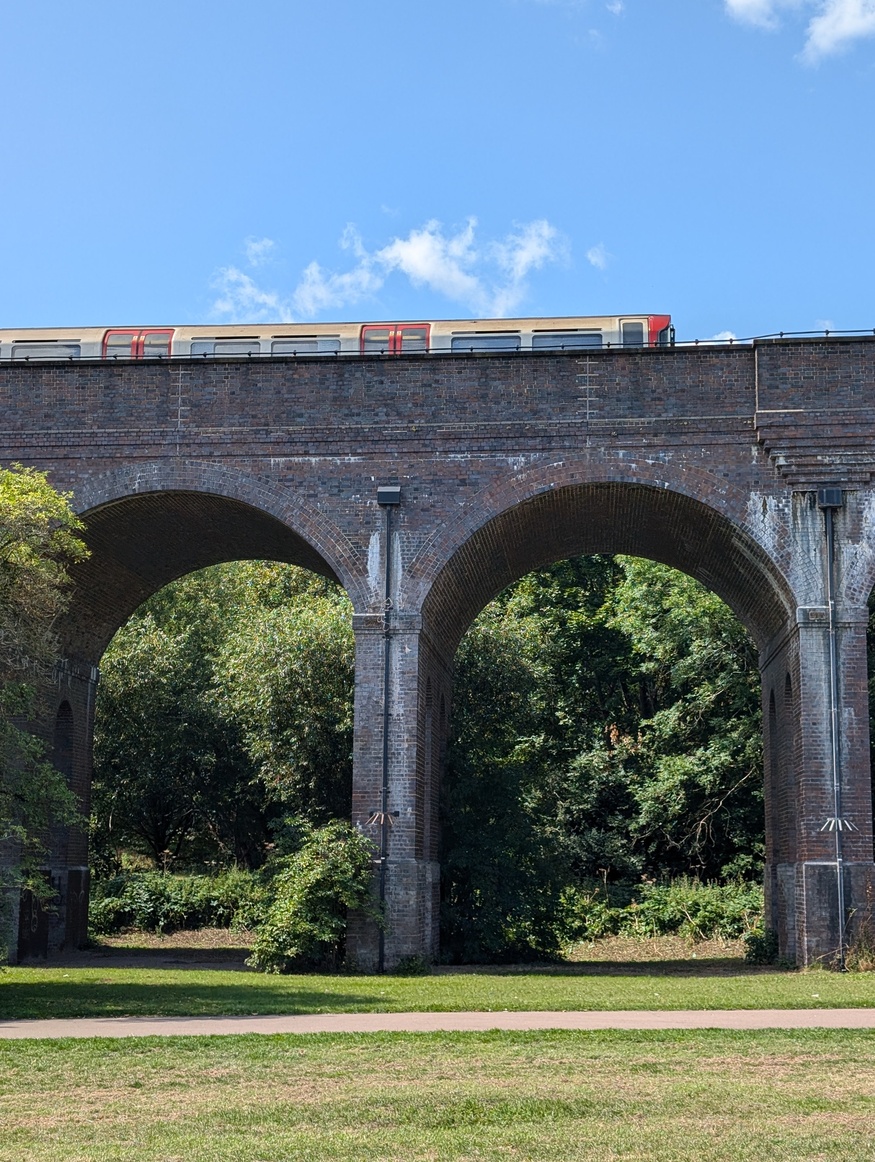
Just shy of a century on, you can't imagine many locals have beef with the viaduct now; as the red and white of each train rumbles softly above, it's soothing if anything, complemented by the swoosh of the A406, and the occasional Heathrow-bound jet. Here is a singularly beautiful London park, in which the rolling vegetation of the Middlesex countryside collides with the arrow-straight urgency of the London Underground. It's a great place to take photos, too.