Sequestered off the bustling thoroughfare of Piccadilly, you'll be familiar with the Royal Academy of Arts, which lies through a grand, putti-flanked archway.
But while passing through said archway, have you ever veered off to the left, skipped up the steps and pushed this posh doorbell?
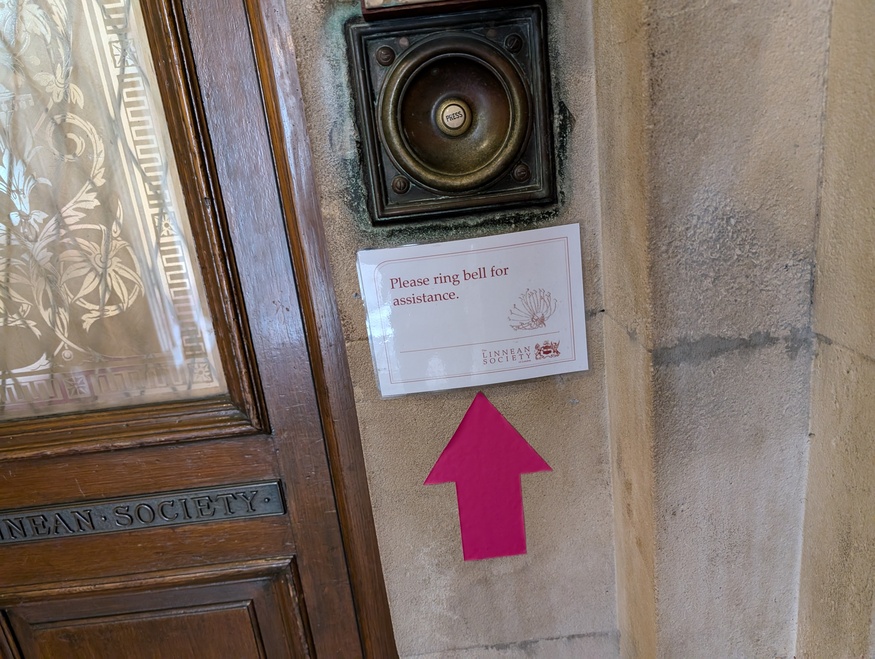
Do so, and within seconds you'll be buzzed into the home of the Linnean Society — and what a home it is.
Named for the Swedish naturalist Carl Linnaeus, aka the 'father of taxonomy', the Linnean Society was in fact founded by the botanist Sir James Edward Smith in 1788; upon Linnaeus' death that year, Smith acquired his various collections, establishing with them a learned society devoted to the science of natural history.
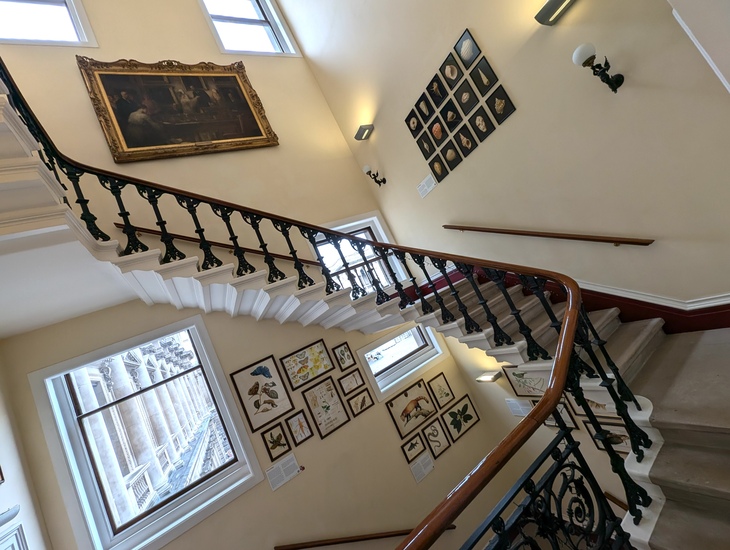
In 1857, the Society moved here, to Burlington House, the same address occupied by the Royal Academy, alongside the Royal Society of Chemistry, the Geological Society of London, the Royal Astronomical Society and the Society of Antiquaries. You can barely move around here without bumping into some learned fellow or other.
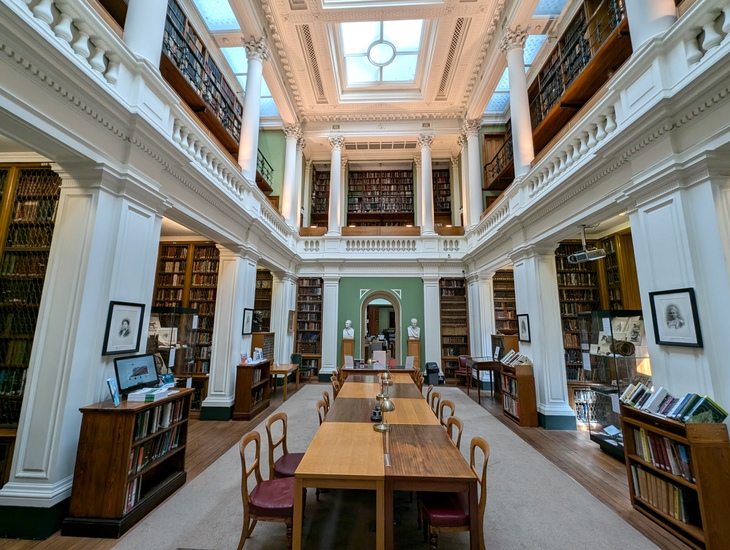
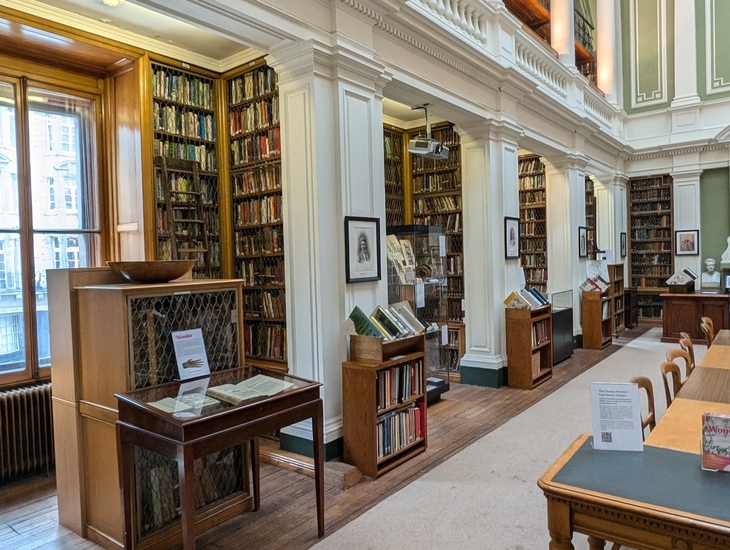
Up the stairs — lined with images from the likes of Flora Graeca — is the Society's library, a two-tiered wedding cake of Corinthian columns, scattered with busts of notable botanists and naturalists, such as Alfred Russel Wallace, and lined with book-filled cages. There are few better places to swot up on flora and fauna than here — even as the traffic of modern day London rolls by outside.
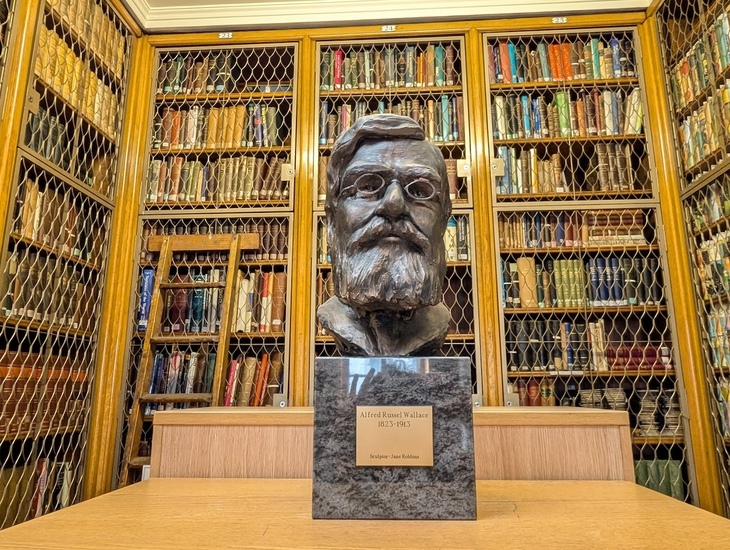
Anyone can book the space for quiet study (as you can see from the photos, when we visited it was very quiet), and to study the collections from Tuesday-Friday; you needn't be a member, but you must book a slot in advance. It certainly beats swotting up in a Pret.
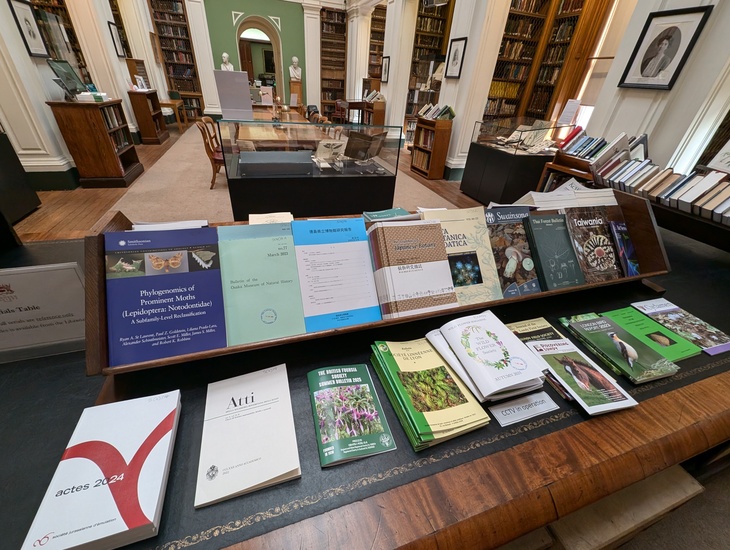
Aside from accessing the vast collection of books and periodicals (the latter mailed in from around the world, and kept right up to date), it's also possible to arrange to see biological specimen, although this must be overseen by a curator.
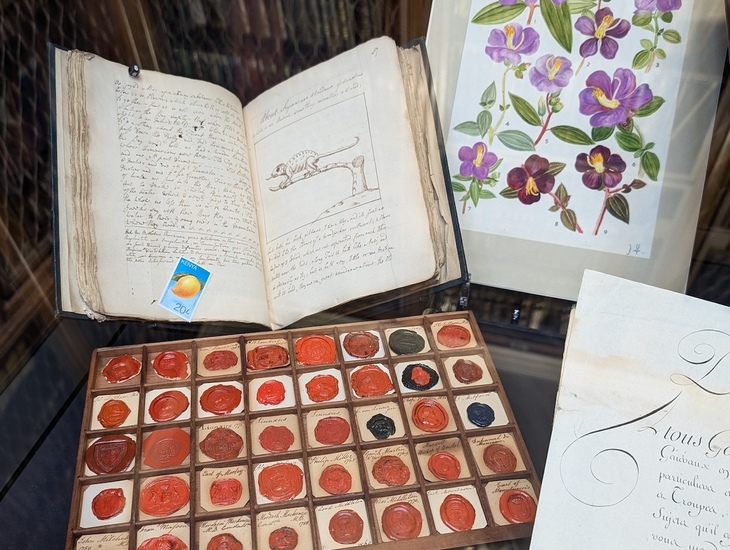
For the more casual visitor, the library also doubles up as a museum; vitrines dotted around the fringes contain various specimens and writings from Society's substantial archives. Until 6 March 2026, the exhibition is Wonder — a wunderkammer-inspired display of over 100 of the Society's lesser-seen objects.
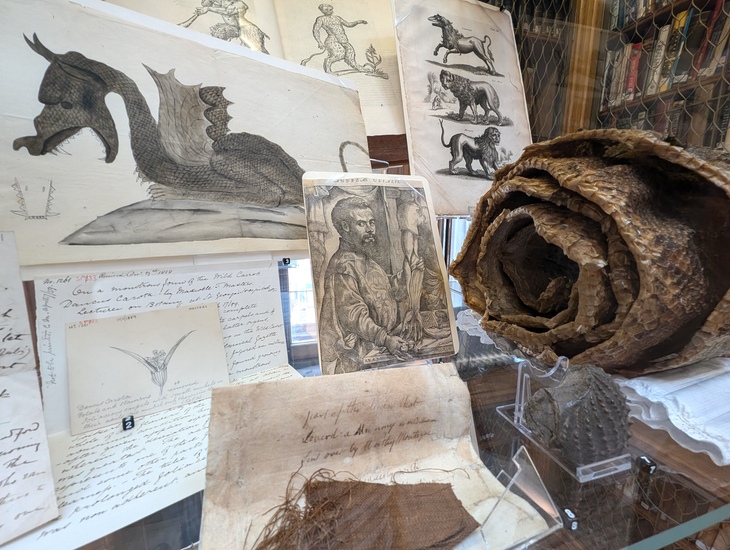
Among the treasures on show are a length of python skin, a letter from a 18th century physician prescribing a pint of asses' milk infused with red roses, a specimen of a fish sent to Carl Linnaeus (and cut in half so it would fit in the post), a watercolour of a dragon, and Carl Linnaeus' carved walking stick.
By the way, if you buy one of the cards from the gift shop at the foot of the staircase, then use one of the library desks to scribble a quick note inside, you can send it using this ornate wooden post box, stationed just outside the front of the Linnean Society:
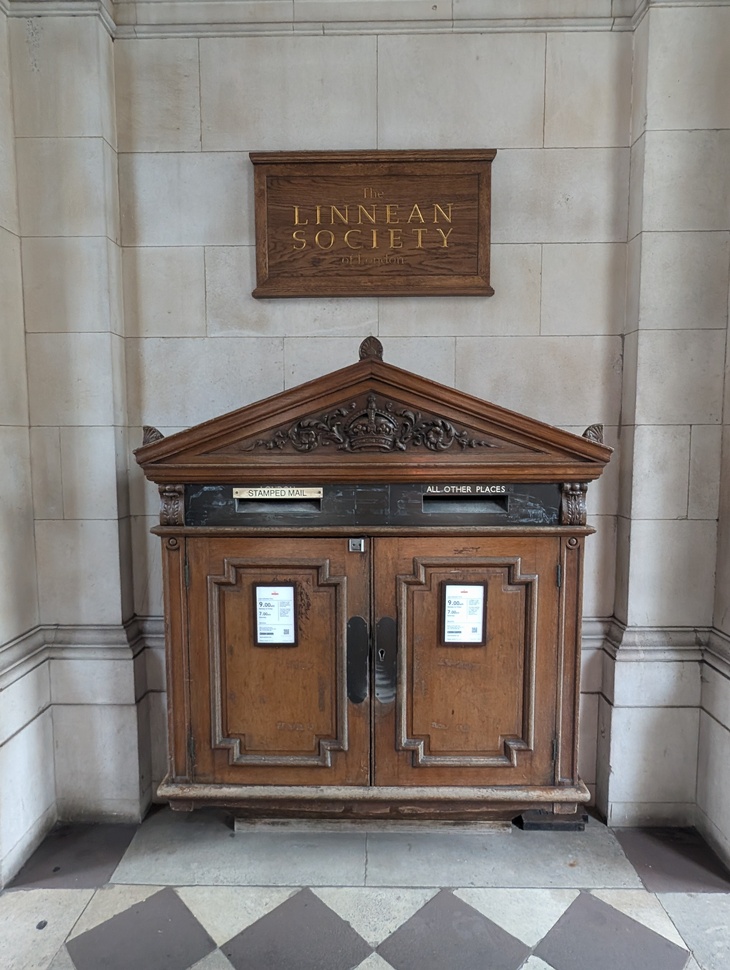
A lovely way to tell someone you've visited a lovely library.
The Linnean Society, Piccadilly
All images by Londonist.